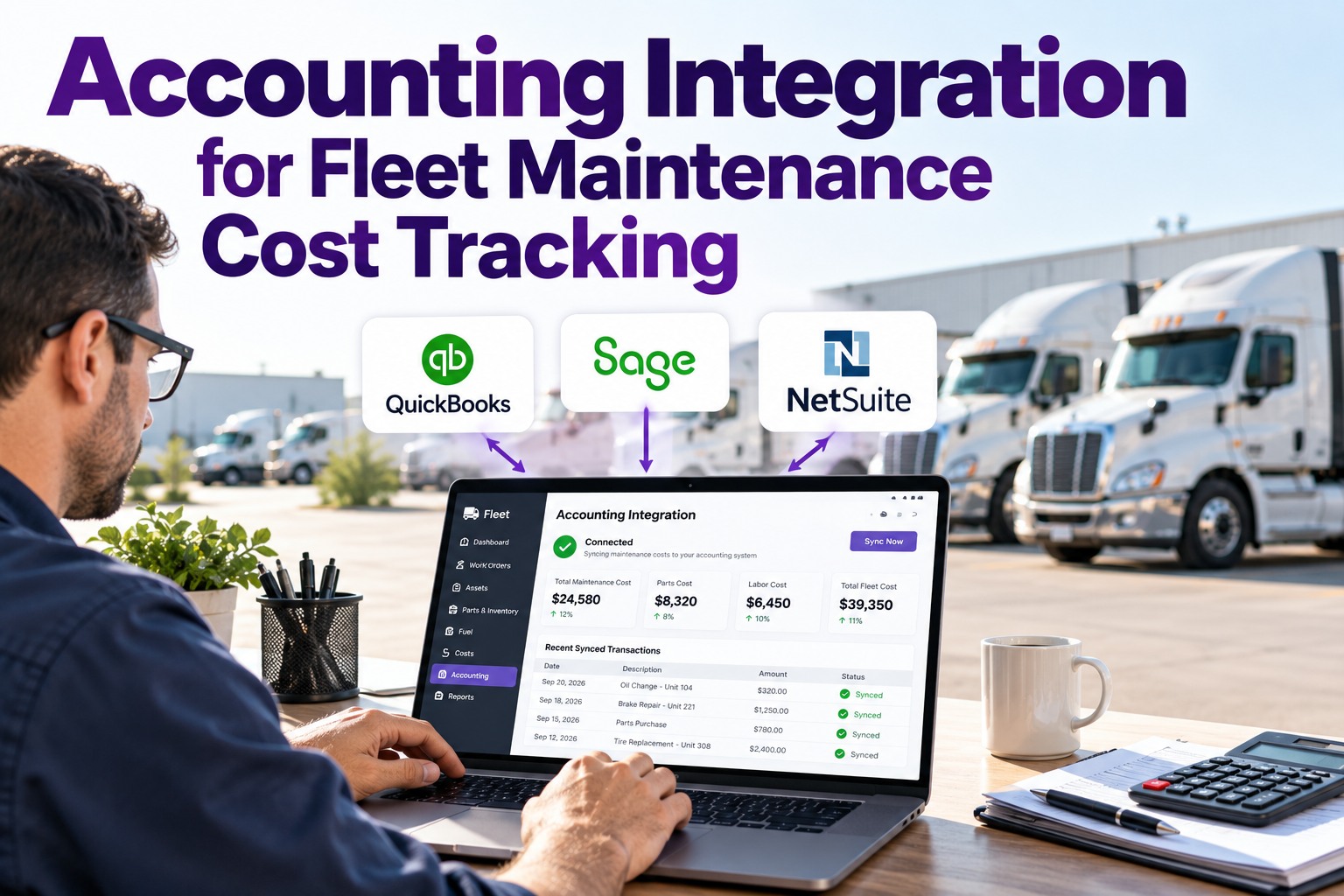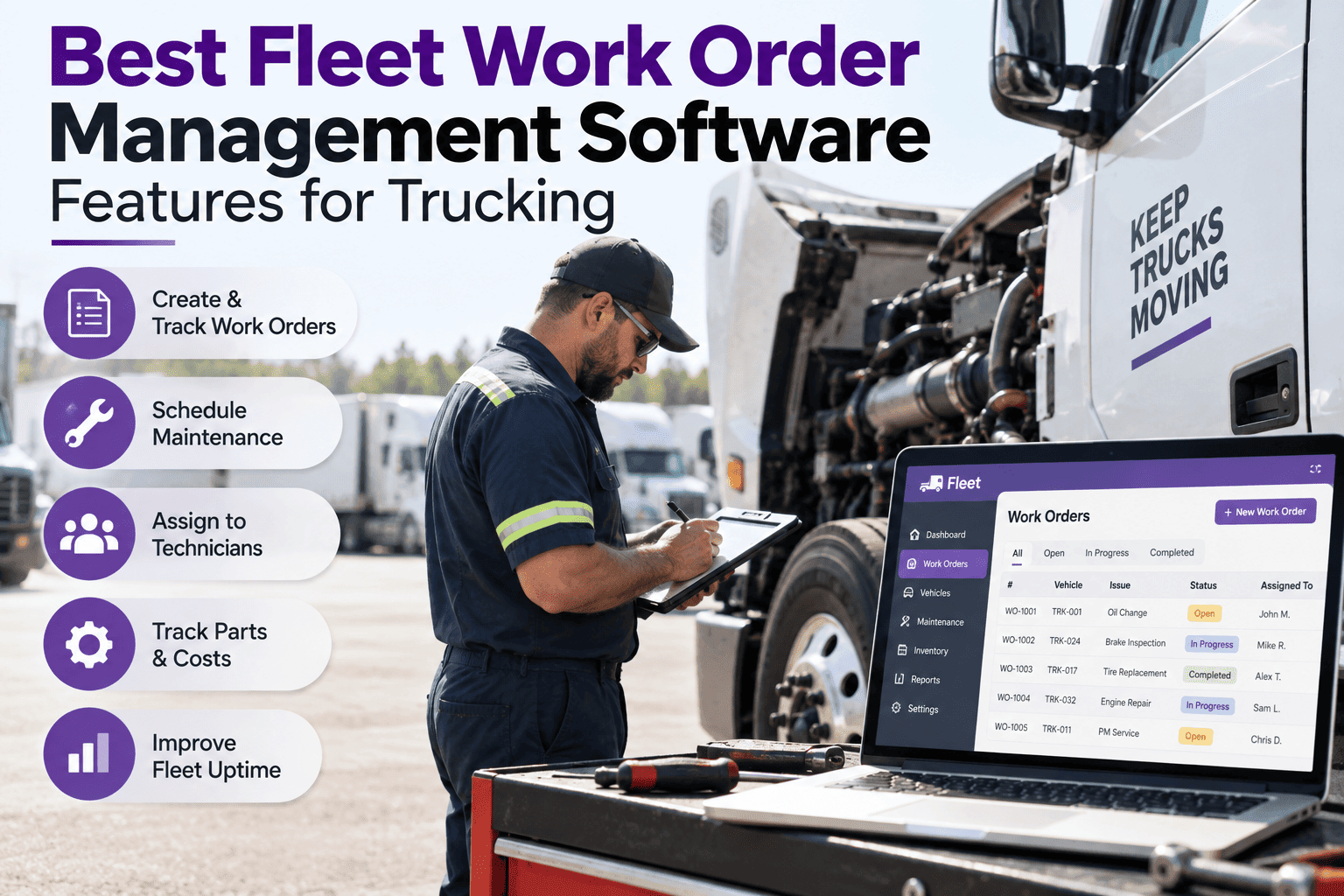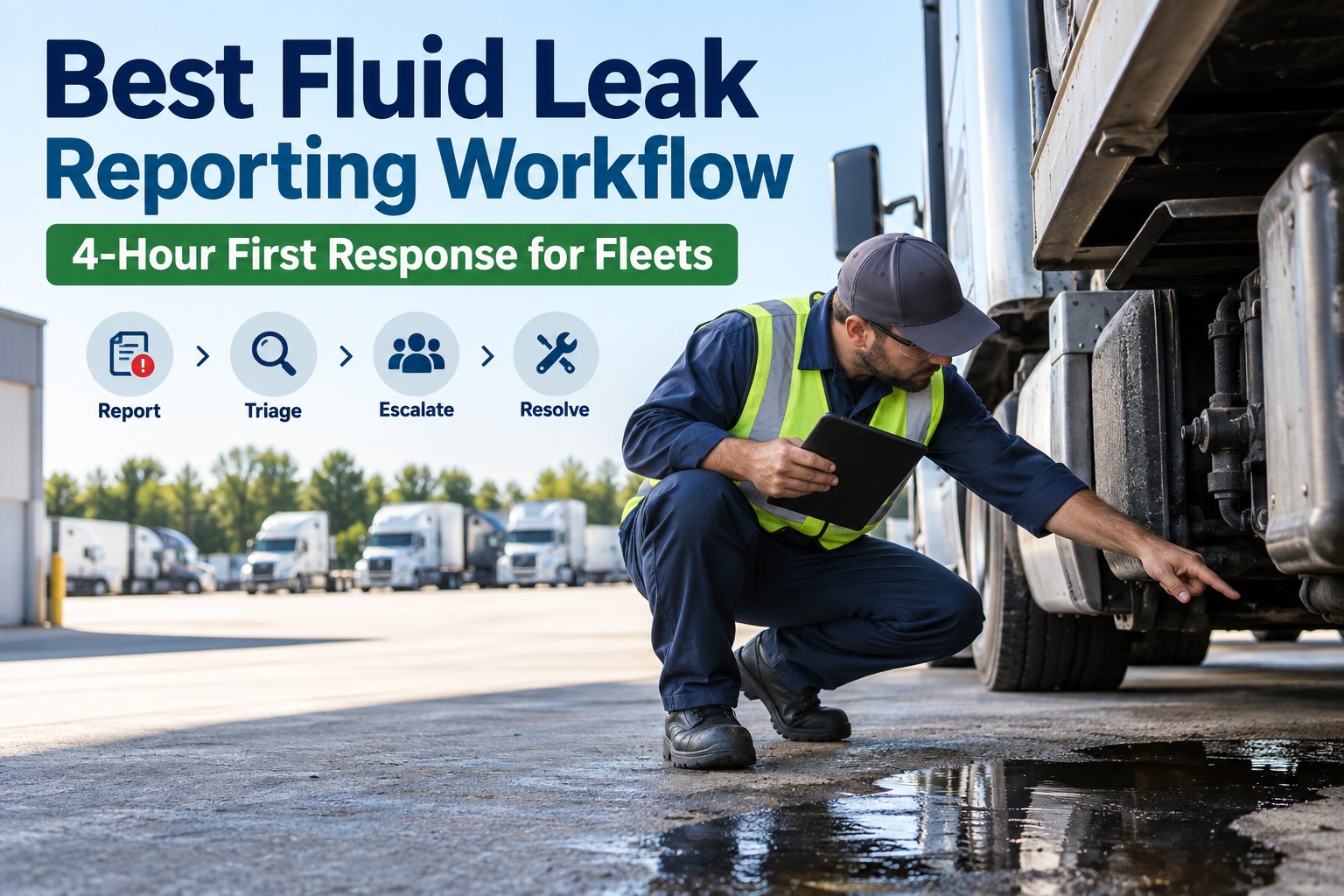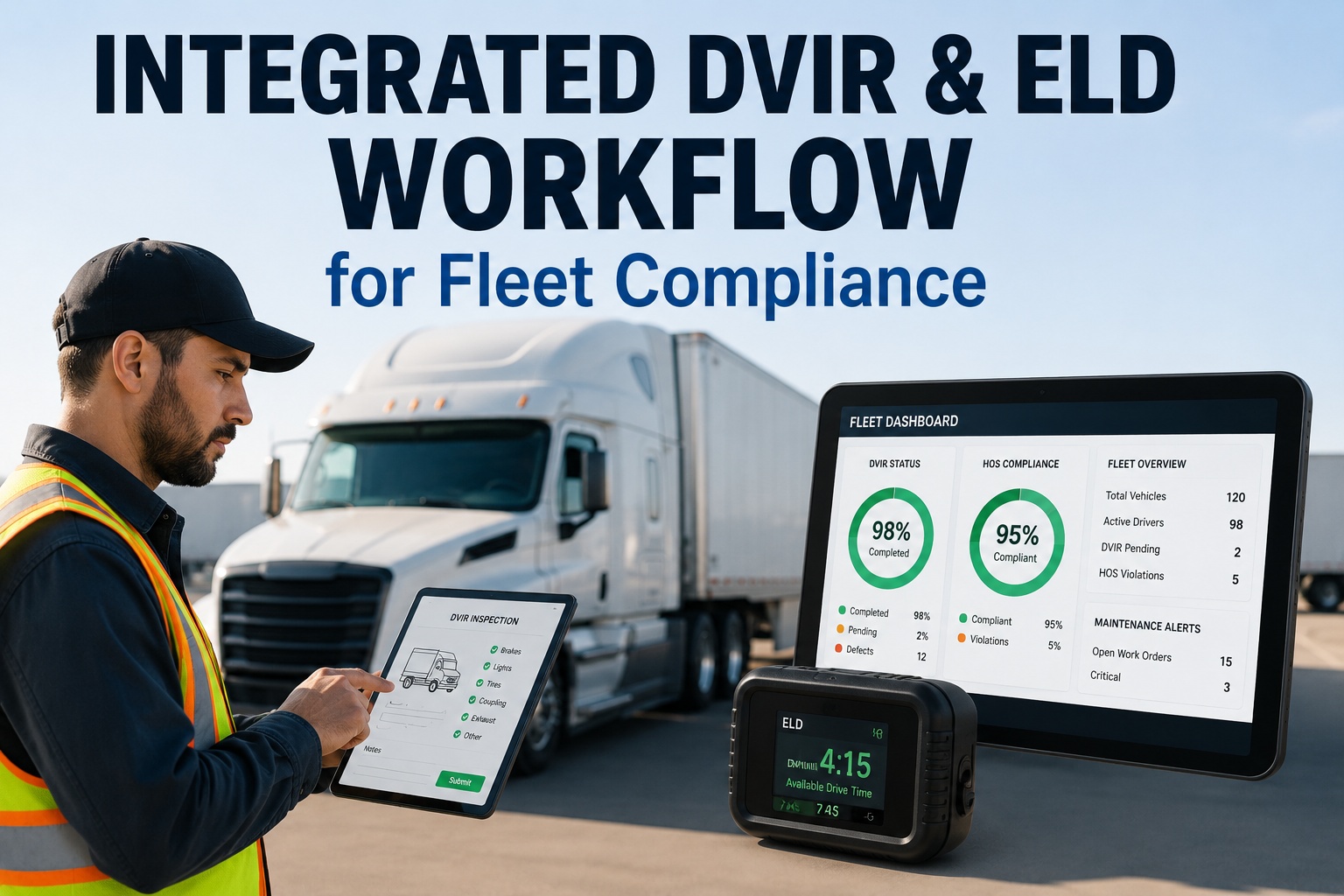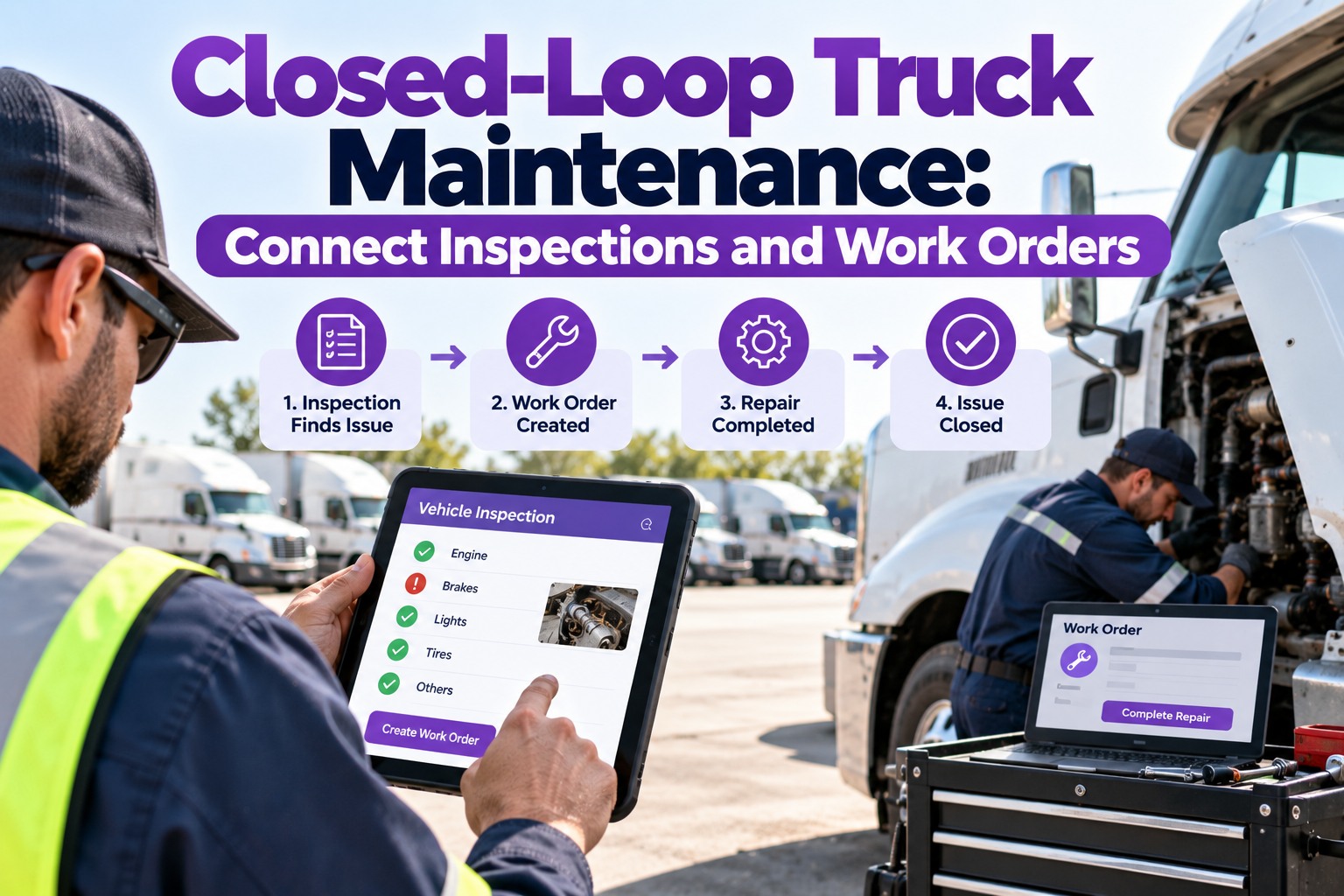
A driver writes up a soft brake pedal at 6 a.m. The DVIR goes in a tray. The mechanic never sees it, the truck rolls, and three days later that pedal is a roadside inspection. The defect was found — it just never closed. That gap between "noticed" and "fixed and verified" is where most fleet maintenance quietly breaks down, and closing it is what closed-loop maintenance is about: every defect that enters the system has to come out the other side as a repair someone signed off on. Start free and close the loop on every defect your drivers find.
A Defect Found Isn't a Defect Fixed. Close the Loop.
Open defects sitting between a driver's DVIR and the shop are how fleets rack up roadside violations, missed dispatches, and repeat breakdowns on the same truck. Truck Inspection & Maintenance Management Software connects the whole chain — the inspection raises the defect, the defect becomes a graded work order, the repair is logged against the unit, and the truck doesn't clear until someone verifies the fix. Nothing falls through the cracks because there are no cracks to fall through.
What "Closed-Loop" Actually Means
An open loop is a chain where any link can drop a defect on the floor: a DVIR on paper, a work order no one assigned, a repair no one verified. A closed loop is the same chain with every handoff tracked, so a defect raised at inspection can't disappear before it's fixed and confirmed. It isn't a new idea — it's exactly what the regulations already require. The point of connecting your software is to make the loop the only way work can flow, instead of the version everyone hopes is happening.
Where the Loop Breaks in an Open Workflow
Every dropped defect has a specific break point — a handoff where the information stopped moving. Paper DVIRs, siloed spreadsheets, and text-thread repairs all fail the same way: the defect is recorded somewhere, but nothing forces it forward to the next stage. These are the four places fleets lose defects most often.
The driver notices a problem but the paper form has no clear field for it, so it becomes a mental note that never gets written down.
The DVIR reaches a tray or an inbox, but no one turns it into an assigned job. It waits — sometimes until the next breakdown.
A repair gets made but never certified, so there's no record the defect was actually resolved — only that someone touched the truck.
The fix is done but the truck returns to service with no acknowledgment, so the next driver inherits a defect history they never saw.
The Regulation Is Already a Closed Loop
This isn't just good practice — 49 CFR 396.11 describes a closed loop in law. A driver reports a defect; a mechanic either certifies the repair or certifies that no repair is needed; the next driver acknowledges that certification before the vehicle returns to service. Three sign-offs, in order, with the record kept for three months. An open workflow routinely skips the middle and last steps. A connected system can't — it holds the truck at each gate until the sign-off exists.
Writes up the defect specifically — what, where, which system — on the post-trip DVIR.
Signs that the defect was repaired, or that no repair was needed for safe operation.
Reviews and signs the prior certification before the truck returns to service.
The certification chain is a federal requirement, not a software feature. The software's job is to make skipping a link impossible and the three-month record automatic.
One System, No Handoffs to Lose
The loop breaks at handoffs — between paper and shop, between shop and dispatch. Truck Inspection & Maintenance Management Software removes the handoffs by keeping every stage in one place: the inspection raises the defect, the defect opens a graded work order on its own, the repair is logged against the unit, and the truck can't clear until the certification chain is complete. Managers see every open defect and how long it's been open, so nothing ages quietly in a tray.
How the Connected Loop Runs
When the stages share one system, each one triggers the next automatically — the defect doesn't wait for someone to remember it. Here's what each link looks like when the loop is closed by software instead of by hope.
Open Loop vs. Closed Loop
The difference isn't effort — open-loop fleets often work harder, chasing paper and re-finding the same defects. The difference is whether the workflow carries each defect forward on its own, or leaves that to memory.
| Stage | Open loop | Closed loop |
|---|---|---|
| Defect capture | Vague line on a paper form | Structured record with photo and zone |
| Work order | Created manually, if at all | Opens automatically from the defect |
| Prioritization | Whoever shouts loudest | Graded ground-truck vs schedule |
| Repair record | Scattered across notes and texts | Logged against the specific unit |
| Verification | Often skipped | Required sign-off before close |
| Return to service | Truck just rolls | Certification acknowledged first |
| Audit trail | Reconstructed under pressure | Complete and retained automatically |
Frequently Asked Questions
What is closed-loop maintenance in simple terms?
How is this different from just using DVIR software?
Does closing the loop actually satisfy the regulations?
Where do defects most commonly fall through the cracks?
How does the software keep a defect from being closed early?
Connect Every Inspection to Its Repair
Truck Inspection & Maintenance Management Software runs the full loop in one place: the guided inspection raises the defect, the defect opens a graded work order, the repair is logged against the unit, and the truck doesn't clear until the certification chain is complete and acknowledged. Managers see every open defect and how long it's been open, and the three-month record builds itself. That's how fleets stop losing defects between the driver and the shop — and keep every truck audit-ready without chasing paper.