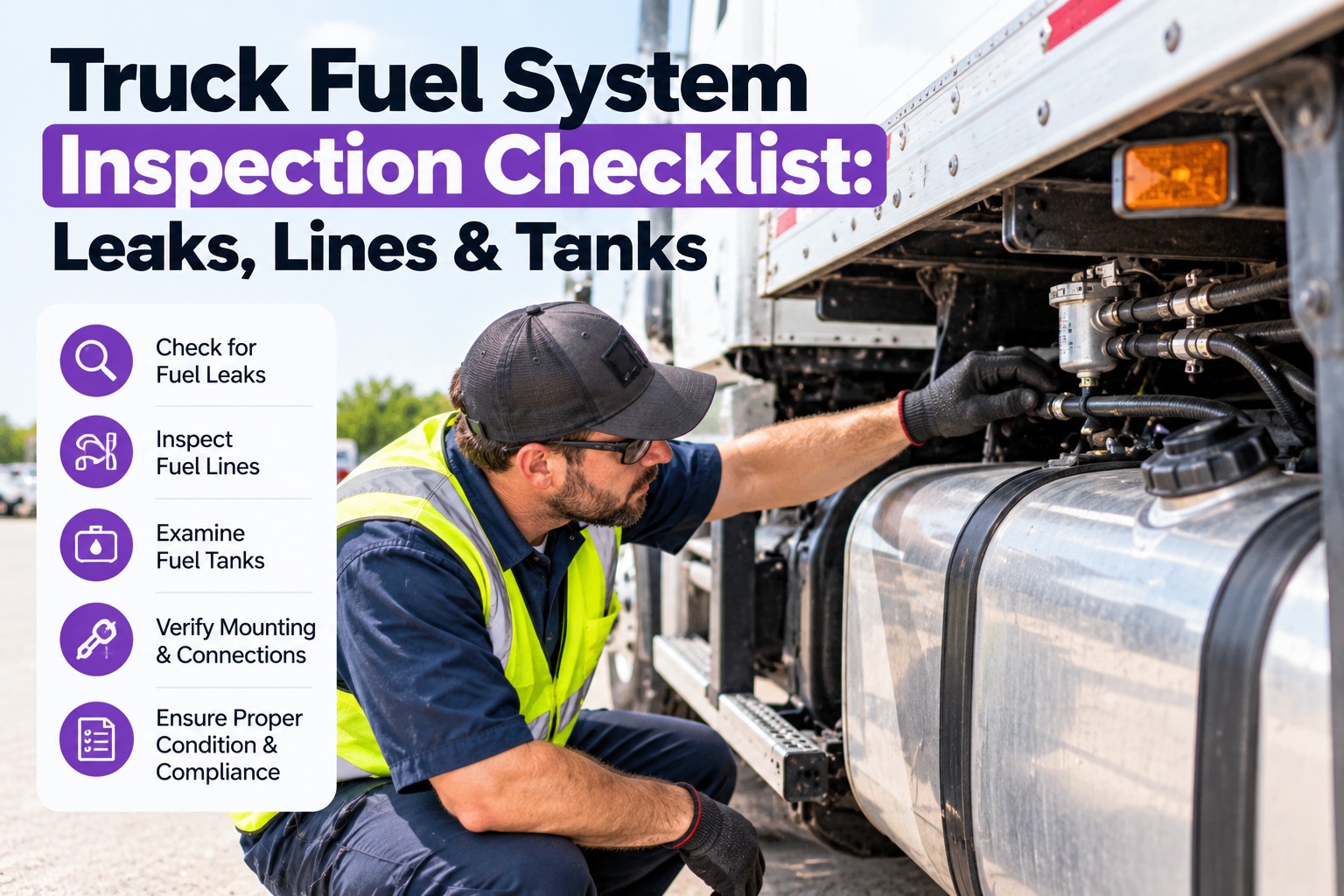
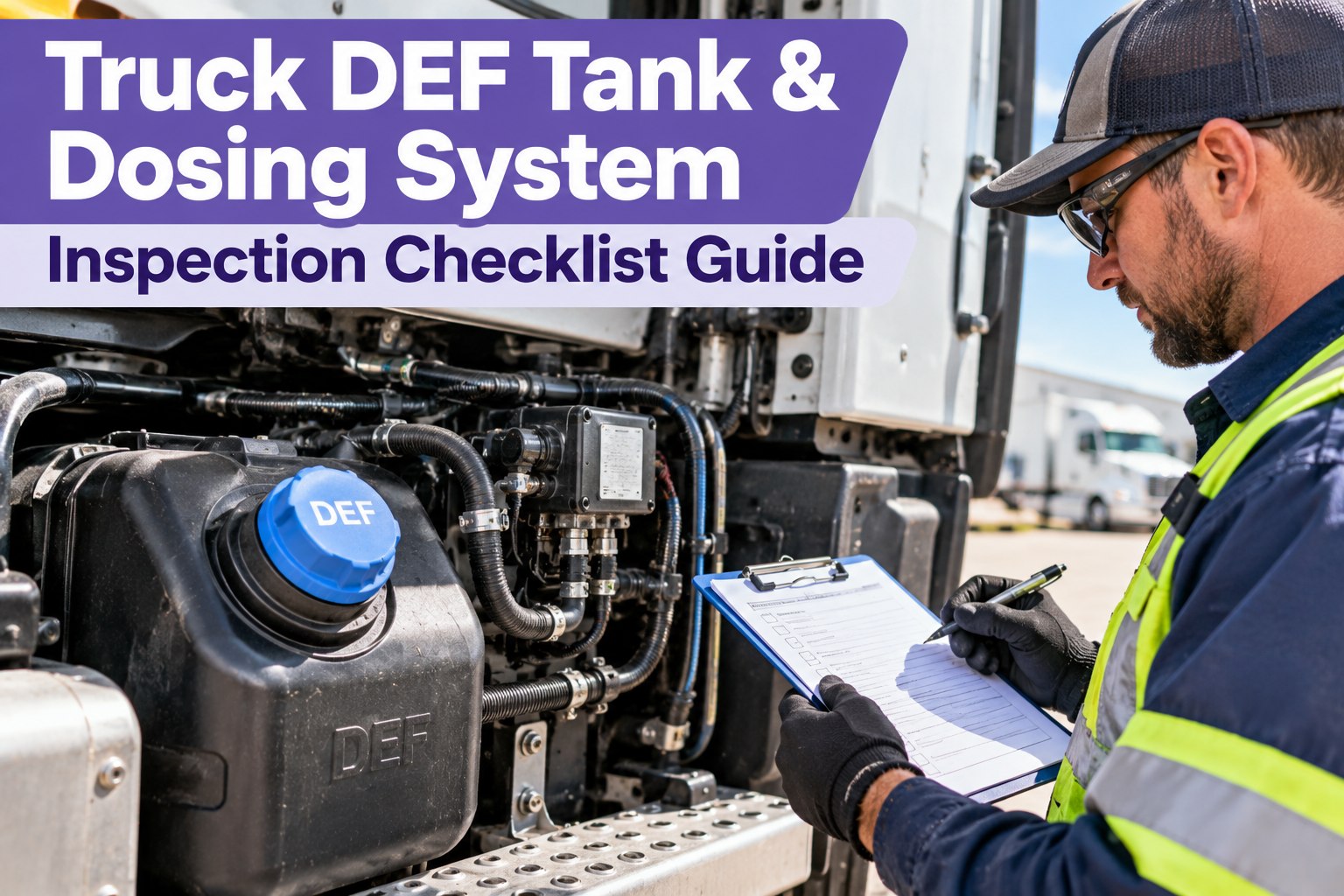
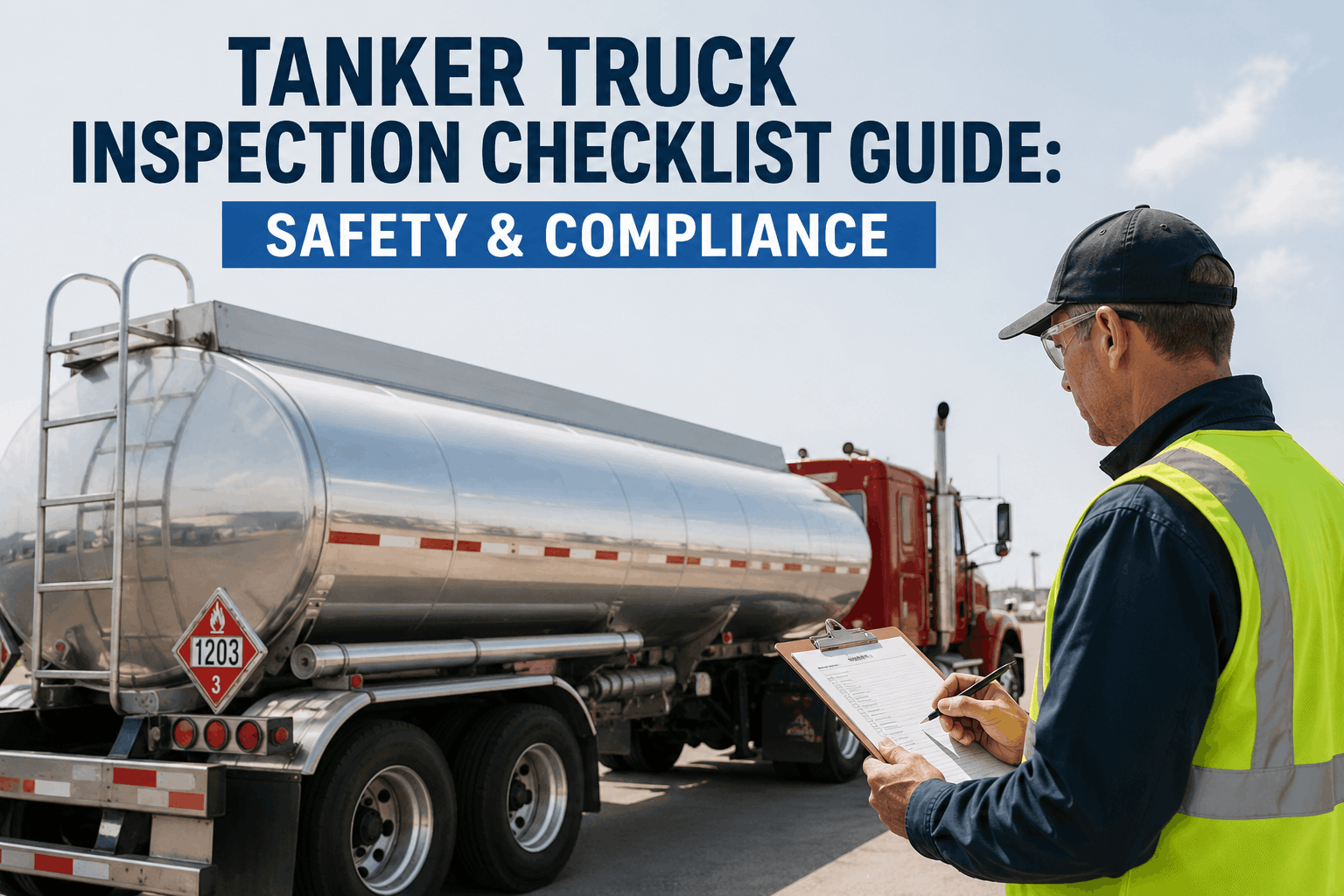
Truck Fuel System Inspection Checklist: Leaks, Lines & Tanks
By William Jerry on October 15, 2026
Most truck defects give you a warning — a noise, a wobble, a slow drift in a gauge. A fuel leak doesn't. It's an automatic out-of-service the moment an inspector sees a drip, and a fire risk every mile it goes unnoticed. The fuel system is also one of the quickest areas to inspect and the easiest to skip, which is exactly why leaks sneak through. This checklist walks the whole system — tanks, lines, fittings, and mounts so you catch the drip in your yard. Start free and put this fuel-system check on every truck.
Tanks · Lines · Fittings · Mounts
A Fuel Leak Isn't a Repair Item — It's an Out-of-Service Order
One drip at a fitting and the truck is grounded on the spot — no warning, no grace period. Truck Inspection & Maintenance Management Software turns this fuel-system walk into a guided check on the driver's phone, flags any leak or loose mount the instant it's logged, and routes it straight to a work order — so a seep gets caught at the tank, not after it's a puddle under a parked load.
Before the checklist, understand why this system gets zero tolerance where others get a schedule-later note.
!Instant groundingA fuel leak is a stated out-of-service condition — the truck doesn't move until it's fixed, no matter how small the drip looks.
!Fire exposureLeaking fuel near a hot exhaust or electrical fault is the start of a vehicle fire — the risk is the reason the rule has no tolerance band.
!Silent lossA weeping fitting or cracked line bleeds fuel and money every mile, long before it's big enough to spot in a puddle.
The Fuel System Inspection Checklist, by Subsystem
Walk it in this order — tank, mounting, lines, fill point, then a close look for active leaks. Tick each item you verify; anything you can't tick is a defect to act on before the truck rolls.
Not every damp spot is the same, but with fuel the line is drawn tight. Here's how to grade what you find — and why most of it ends with the truck parked.
Seep / weep
A damp film with no bead forming. Still a defect — it's how a leak starts. Tag it, find the source, repair before it grows.
Drip
Fuel beading and falling in drips. This is a stated out-of-service condition — the truck is grounded until repaired.
Stream / puddle
A steady run or pooling fuel. Do not move the vehicle — shut it down, isolate the source, and repair before anything else.
The rule has no tolerance band With most components there's a measurable threshold — tread depth, pushrod stroke, lining thickness. Fuel is different: any leak of liquid fuel is a defect, and a dripping leak grounds the truck outright. That's why the fuel walk is less about measuring and more about seeing — and why a timestamped photo at each tank is the record that proves the check happened. Truck Inspection & Maintenance Management Software captures that photo at every fuel checkpoint, so a clean tank is documented and a leak becomes a work order the instant it's logged.
Where Fuel Systems Fail First
If prep time is short, these are the spots that account for most fuel-system defects — check them before anything else.
Fittings & connectionsWeeping threads and loose unions — the most common slow leak, and the easiest to miss.
Chafed linesLines rubbed thin where they cross a bracket or frame rail, finally splitting through.
Mounting strapsRusted or stretched straps that let the tank shift, stressing lines and seams.
Fill cap & ventA missing or bad-gasket cap that lets fuel slosh out and dirt in.
Turn the Fuel Walk Into a Logged, Photo-Backed Check
Truck Inspection & Maintenance Management Software puts every item above on the driver's phone as a guided fuel-system inspection, requires a photo at the tank, and routes any leak or loose mount straight to a graded work order — grounding the truck automatically when the defect is a dripping leak. It also keeps fuel-system checks on each vehicle's PM schedule, so chafed lines and tired straps get caught on a calendar instead of on the shoulder.
Does a small fuel leak really put a truck out of service?
A leak of liquid fuel is a stated out-of-service condition — a dripping leak grounds the vehicle until it's repaired, regardless of size. The reasoning is fire risk: fuel near heat or an electrical fault doesn't scale its danger to the size of the drip. That's why the fuel check is pass/fail on sight rather than measured against a threshold the way tread or brakes are.
What do inspectors look at on the fuel tank and mounting?
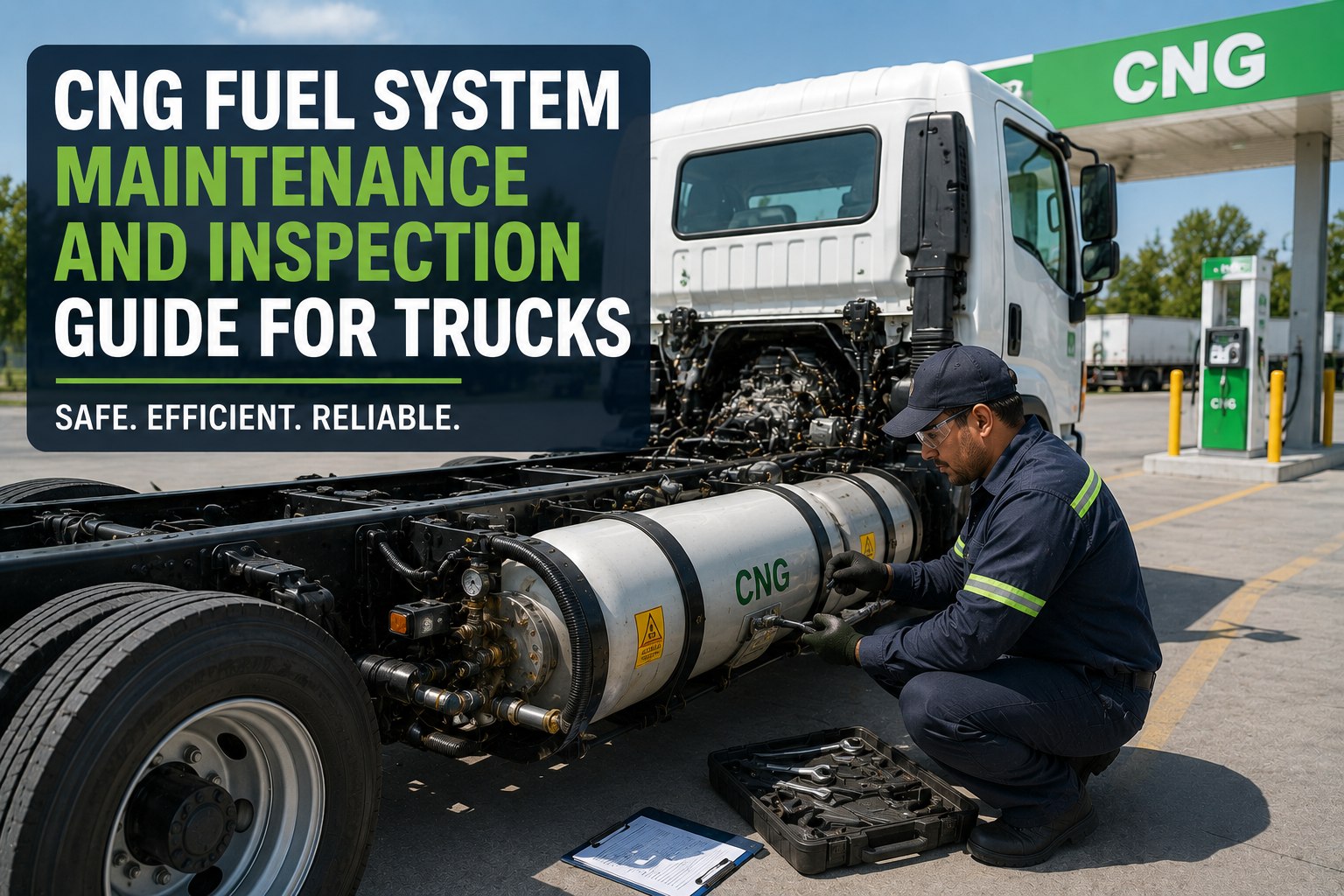
Under §393.65 and §393.67, the tank must be securely mounted, properly located, and protected — so inspectors check the brackets and straps for cracks, rust, and looseness, the tank body for damage or seepage, and the fill cap and vent for correct sealing. A tank that shifts, a strap worn through, or a cracked mounting weld are all defects even before any fuel escapes, because they're what leads to a leak.
How often should the fuel system be inspected?
The visible parts — leaks, tank, cap — are part of every daily pre-trip walkaround, and the full system is covered in the annual periodic inspection. Between those, putting fuel-line and mounting checks on a preventive-maintenance interval catches the slow failures, like a chafing line or a tiring strap, before they become a leak. Daily looking plus scheduled checking is what keeps fuel defects off the road.
What's the difference between a fuel seep and a leak that grounds the truck?
A seep is a damp film with no bead forming — still a defect to tag and repair, because it's an early leak. A leak that drips, runs, or pools is the out-of-service condition: fuel actively escaping. The practical rule is that if fuel is leaving the system as a drip or worse, the truck stops; if it's just a stain or film, you fix it on a schedule you control before it gets there. Contact us to set fuel-system checks across your fleet.
See It · Log It · Ground It if It Drips
Catch the Leak in the Yard, Not on the Shoulder
Truck Inspection & Maintenance Management Software runs this full fuel-system checklist as a guided, photo-backed inspection, grounds any truck with a dripping leak automatically, and keeps lines, mounts, and tanks on a preventive-maintenance schedule. Fleets use it to keep fuel defects — the ones with no warning and no tolerance band — from ever reaching the road.