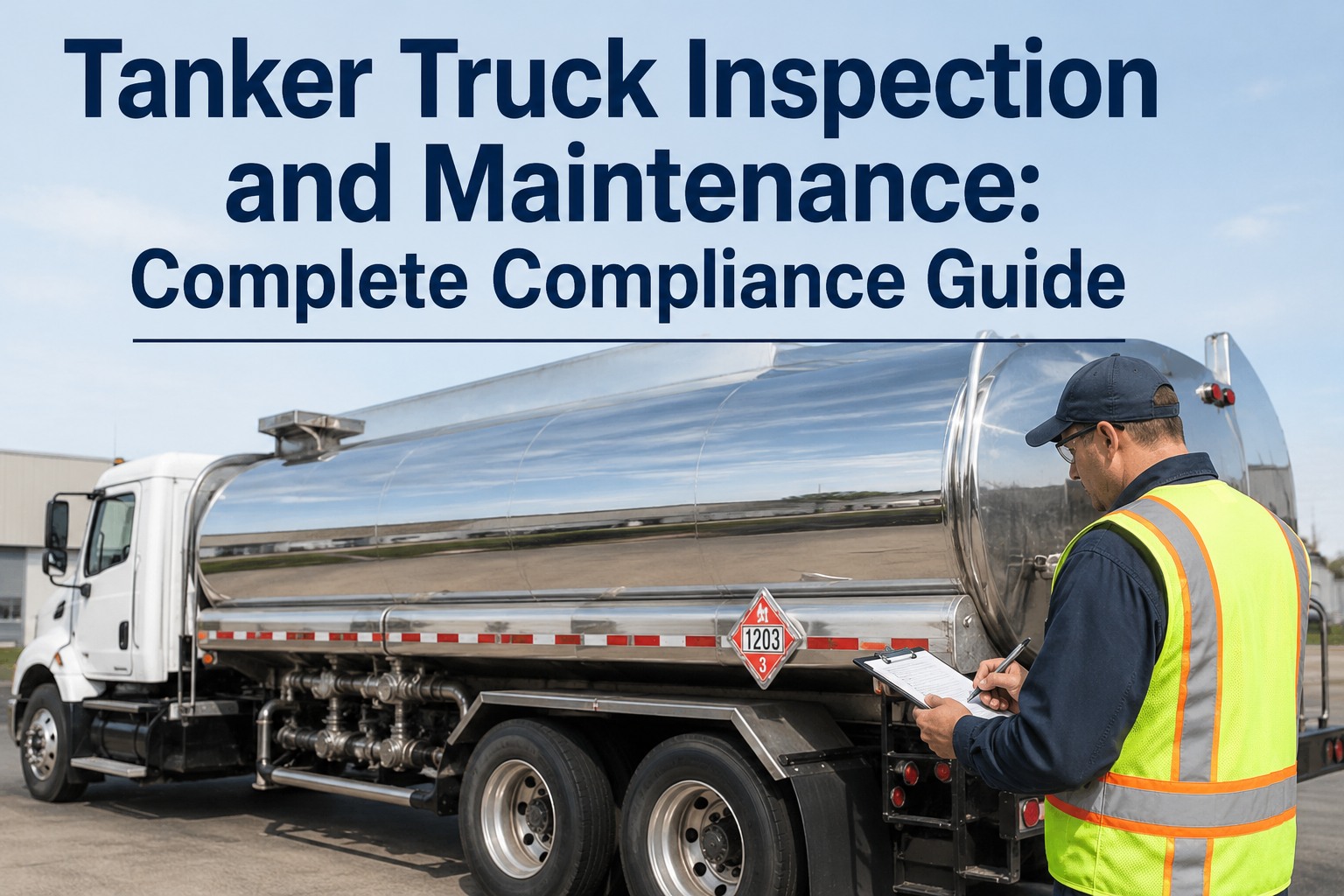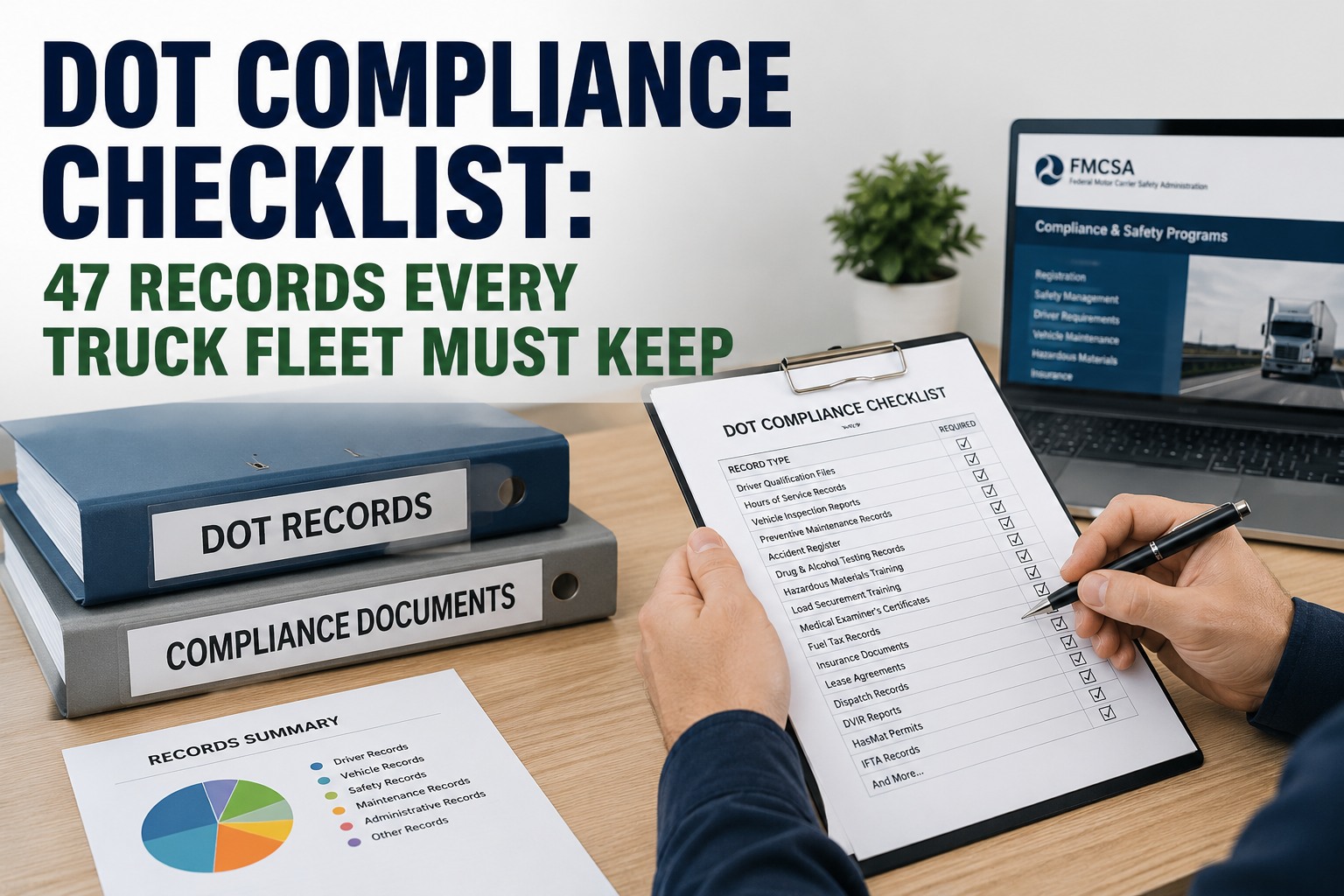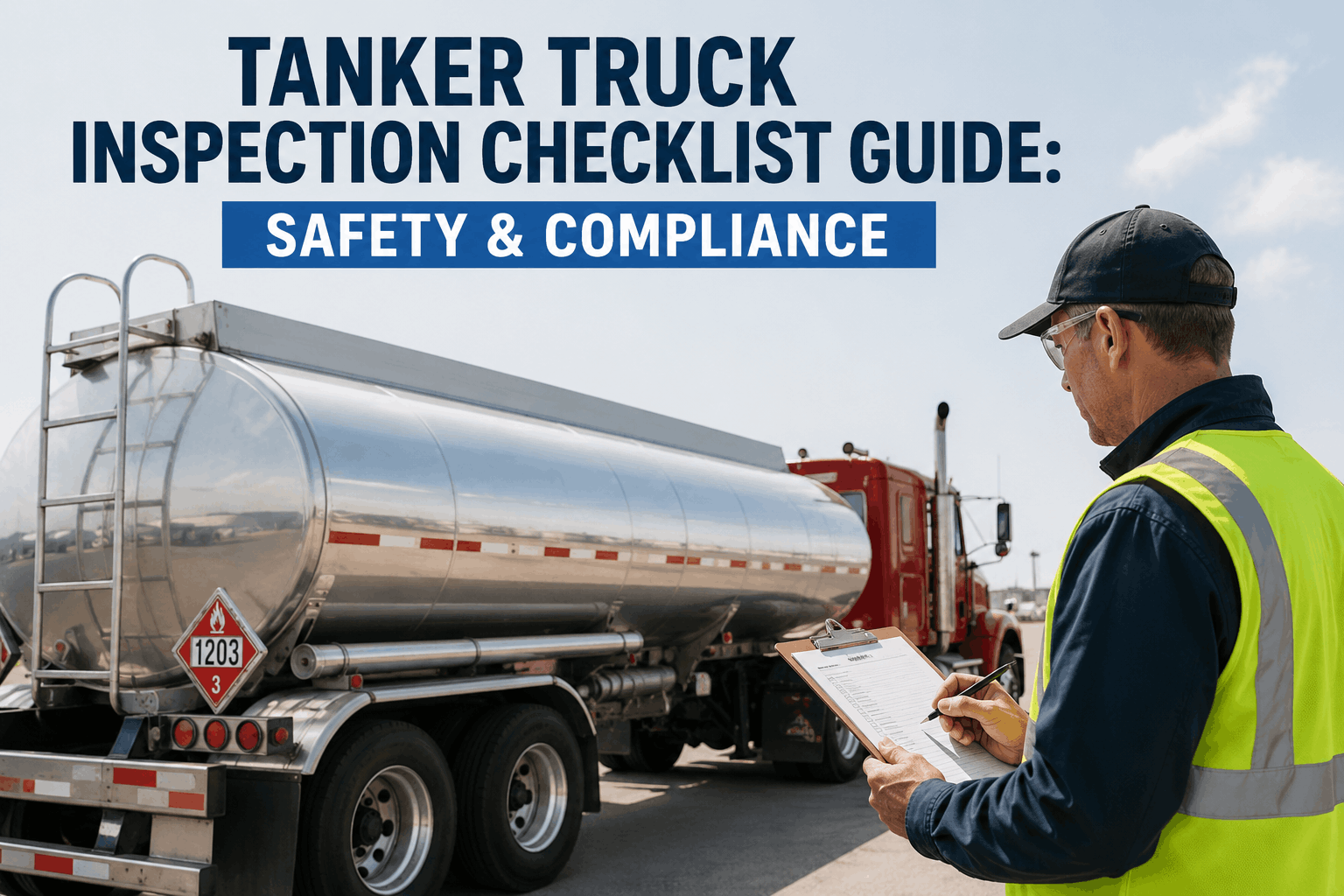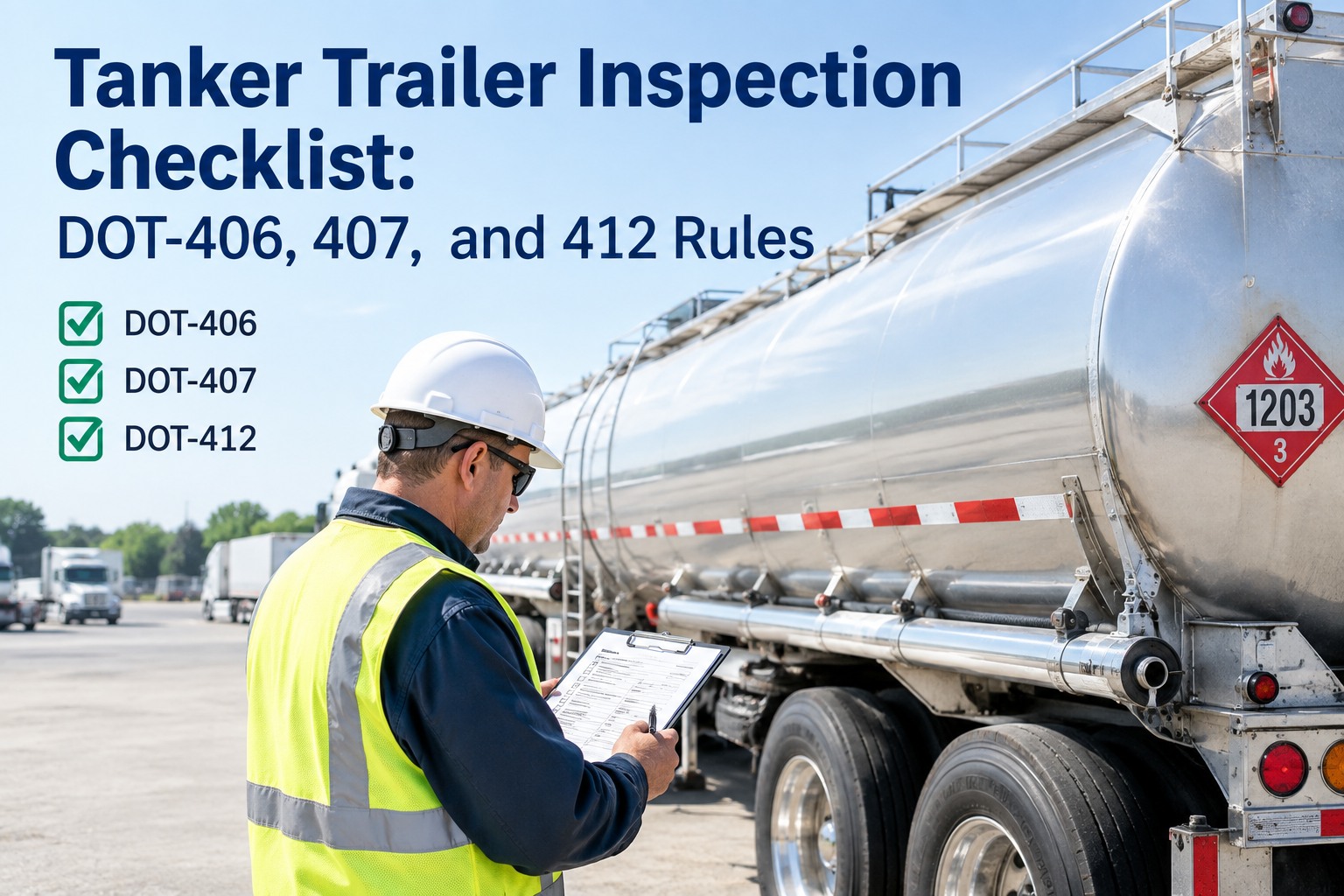
A tanker isn't one trailer — it's three, and the spec plate on the shell decides everything about how it must be inspected. A DOT-406 hauling gasoline at near-atmospheric pressure, a DOT-407 running chemicals at 25–40 psi, and a DOT-412 carrying acids in a lined shell each answer to a different corner of 49 CFR §180.407. Miss the interval on a corrosive-service internal, or run past a periodic pressure test, and you're not looking at a citation — you're looking at a leak of hazardous material on a public road. This guide separates the three specs, lays out the federal test schedule they share, and covers the daily checks a driver owns — and how Truck Inspection & Maintenance Management Software (TIM) tracks every periodic test and DVIR per unit so no date slips. Start free and keep every tanker's test schedule audit-ready.
The Spec Plate Decides the Inspection. Read It Before You Touch the Tank.
You want the right test on the right tank at the right interval — a fuel tanker, a chemical hauler, and an acid trailer don't follow the same schedule. This guide sorts the three specs and the §180.407 test calendar they share, and TIM makes it operational: every external, internal, leakage, lining, thickness, and pressure test scheduled per unit by its due date. Every defect logged gets a first response within 4 hours — acknowledged, graded, and assigned — so a periodic test never lapses.
The Three Specs — Same Family, Very Different Trailers
Start here, because everything downstream depends on which spec you're looking at. The three cargo-tank specifications differ in what they carry, how much pressure they hold, their shape, and their construction — and those differences drive the inspection regime.
The §180.407 Test Calendar — Six Tests, Different Clocks
Federal law sets six qualification tests for specification cargo tanks, each on its own interval. The intervals below are the baseline; corrosive service and insulation tighten several of them. Read every row as "or sooner if the tank is damaged or out of hazmat service a year or more."
| Test | Baseline interval | Tightened when… |
|---|---|---|
| External visual | Annual | Every 6 months for vacuum-load tanks with full-opening rear heads |
| Internal visual | Every 5 years | Annual if insulated or hauling lading corrosive to the tank |
| Lining inspection | Annual | All lined tanks in corrosive service (think DOT-412) |
| Leakage test | Annual | Every 2 years for MC 330/331 in chlorine service |
| Pressure test | Every 5 years | Annual if insulated w/o manhole or insulated-and-lined |
| Thickness test | Every 2 years | For tanks hauling corrosive materials — annual if wall thins to limit |
Intervals summarize 49 CFR §180.407 for common cargo-tank service; specific tanks (MC 330/331/338 and dedicated propane) carry their own rules. Always confirm against the tank's spec plate and the current regulation for your service.
What Triggers an Inspection Before Its Due Date
The calendar isn't the only clock. A tank can be pulled into requalification early — and knowing the triggers keeps a damaged shell off the road before it leaks. These are the conditions §180.407 flags.
Dents, cuts, gouges, or corroded/abraded areas on the shell or heads.
Evidence of leakage from the tank, its fittings, or its piping.
Out of hazmat transportation service for one year or more.
After a repair, modification, or an accident affecting the tank's integrity.
The Daily Layer — What the Driver Owns Every Shift
The periodic §180.407 tests are the shop's job; the daily walkaround is the driver's. On a tanker, the pre- and post-trip DVIR carries extra weight because the failure mode is a hazmat release. These are the tanker-specific touchpoints on top of the standard 11-point DVIR.
Walk for fresh dents, gouges, corrosion streaks, or weeping seams.
Internal/external valves seated, caps secure, no drips at the outlet.
Covers latched, gaskets intact, vents and pressure-relief clear.
Correct hazmat placards, spec plate legible, emergency info present.
Loading hoses, camlocks, and grounding cable sound and stowed.
Rollover protection intact; bottom piping (406/407) undamaged.
Six Test Clocks Per Tanker Is Not a Calendar-on-the-Wall Job
TIM assigns each tanker its spec (406/407/412) and schedules all six §180.407 tests by due date — external, internal, lining, leakage, pressure, thickness — with automatic alerts before each lapses. The daily DVIR runs on the driver's phone; a fresh dent or a weeping valve gets photographed, opens a work order, and holds the unit out of service until it's certified. Every periodic test and every defect lands in one searchable record an auditor can pull in seconds.
Frequently Asked Questions
Right Test, Right Tank, Right Interval — Every Time
Three specs, six periodic tests, and a daily DVIR that catches the trigger conditions early. TIM schedules every test by unit and due date, routes daily defects to the shop, and keeps a record that stands up when a DOT auditor asks for the tank's qualification history.