Truck driver turnover is the quiet tax that eats a fleet's margin alive. At large truckload carriers it routinely runs 90% or higher — meaning a carrier can replace nearly its entire driving force in a single year — while well-run fleets that prioritize driver stability hold turnover as low as 10–15%. The gap between those two numbers is pure profit or pure loss, because replacing one driver costs anywhere from $5,000 to over $20,000 in recruiting, onboarding, and lost productivity. And in 2026 the stakes are higher still: federal enforcement actions have triggered a "capacity crunch" estimated to shrink the qualified driver pool by as many as 200,000, making the drivers you already have more valuable than ever. The encouraging truth is that turnover is largely controllable. Below are 12 proven retention strategies — grouped by what actually makes drivers stay — including the equipment and respect factors fleets most often overlook. Truck Inspection & Maintenance helps with one of the biggest. Talk to our team about the equipment side of retention.
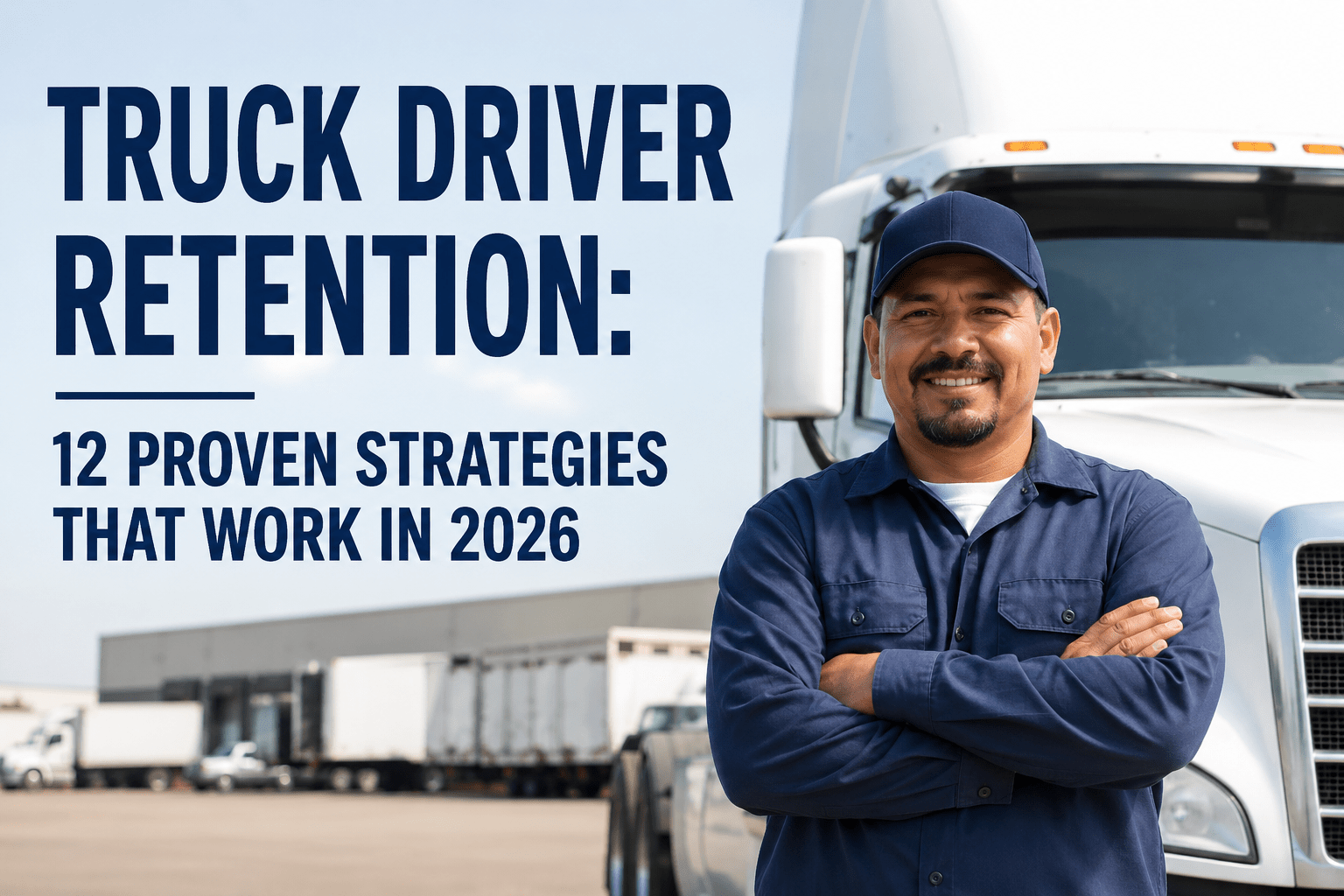
Truck Driver Retention: 12 Proven Strategies
What actually makes drivers stay — pay, home time, equipment, and respect.
Why Drivers Really Leave
Before the strategies, understand the root causes — because retention efforts aimed at the wrong problem waste money. The data is clear: turnover is driven by predictability, not just pay. Drivers leave when they can't count on consistent miles, reliable equipment, and straight communication. Most turnover isn't drivers quitting the industry — it's job-hopping between carriers chasing something better. Fix these four root causes and the rest follows.
Unpredictable pay
62.8% of job-seeking drivers cite unpredictable weekly income as a top reason they look elsewhere. It's not always about more — it's about reliable.
Lack of home time
Weeks away with only days home burns drivers out. Home time is repeatedly named the single biggest retention factor.
Detention & wasted time
Drivers lose 135M+ hours a year waiting at docks — unpaid, frustrating, and a top reason to quit a carrier.
Bad equipment & disrespect
Breakdown-prone trucks and dismissive dispatchers signal a driver isn't valued — a quiet but powerful push out the door.
The 12 Strategies, Grouped by What Works
These twelve tactics cluster into four levers. The highest-performing fleets pull all four — but even one or two, done well, move the turnover needle fast. Start a free account to tackle the equipment lever today.
Pay competitively — and predictably
82% of drivers want predictable pay. Transparent, consistent weekly income beats a higher rate that swings unpredictably.
Guarantee consistent miles
Inconsistent miles mean inconsistent pay. Reliable freight and minimum-mile guarantees remove a top reason to leave.
Pay for detention & delays
Compensate the hours lost waiting at docks. Paying for a driver's time signals respect and offsets a huge frustration.
Guarantee predictable home time
One carrier's "Home Run" program of guaranteed regular home time cut turnover 15%. Predictability beats frequency.
Offer flexible scheduling
Younger drivers and those with families increasingly value flexibility and reliable home visits over marginal pay.
Explore relay / regional routes
Relay systems and regional lanes get drivers home more often by swapping loads at the midpoint instead of running coast to coast.
Keep trucks well-maintained
Drivers judge how much they're valued by the equipment they're given. Reliable, breakdown-free trucks are a genuine retention factor — and roadside failures are a top frustration.
Provide modern, comfortable rigs
Updated equipment with quality cabs and tech makes the daily grind livable and signals investment in the driver.
Empower drivers with easy reporting
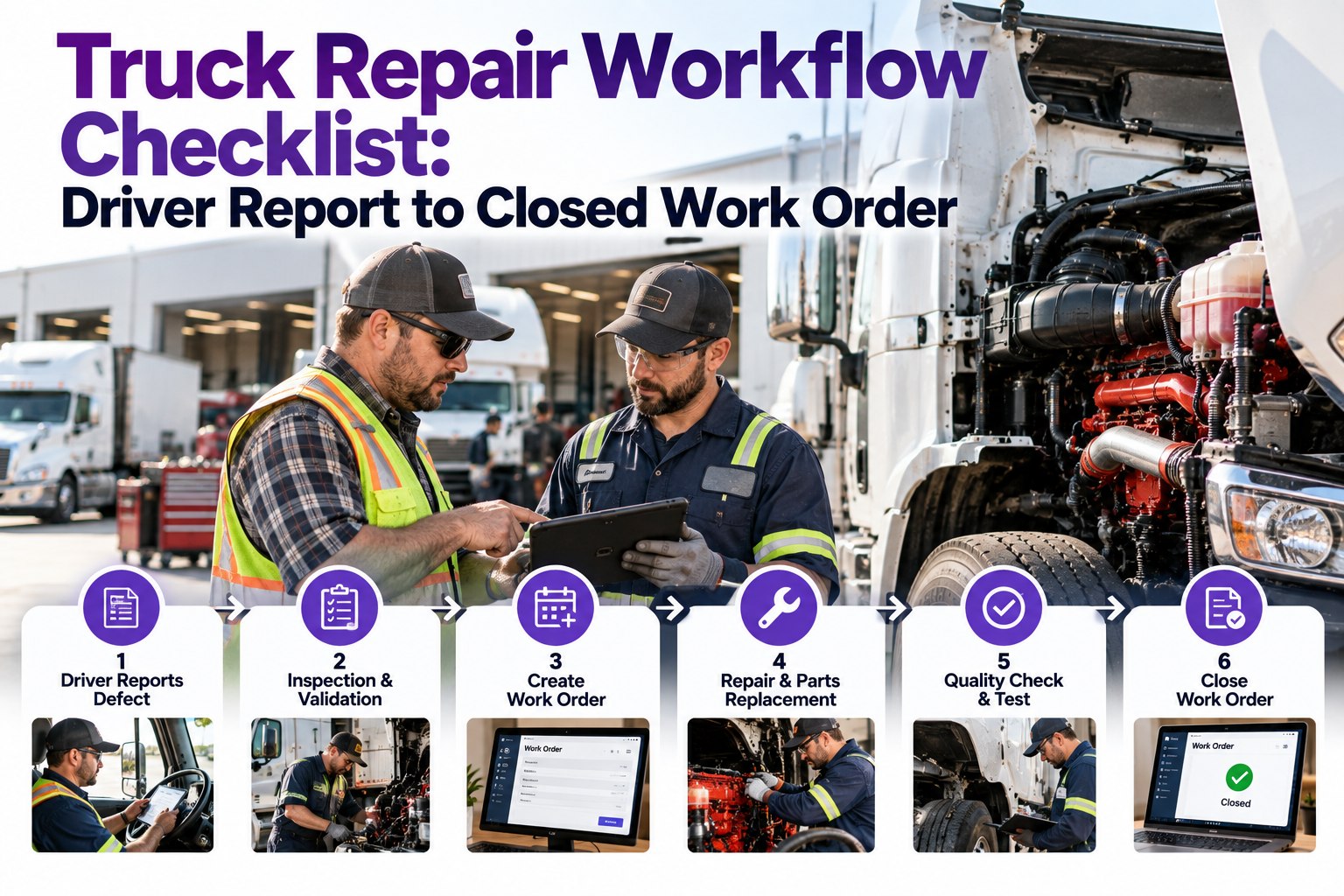
Mobile defect reporting that actually gets acted on tells drivers their safety concerns matter — and keeps their truck reliable.
Train empathetic dispatchers
The dispatcher relationship makes or breaks the job. Respectful, responsive communication is consistently named a top satisfaction driver.
Recognize & reward tenure
Safety bonuses, milestone recognition, and longevity rewards make drivers feel seen and give them a reason to stay another year.
Invest in growth & mentorship
Paid CDL training, mentorship programs, and clear advancement paths turn a job into a career worth keeping.
Reliable trucks keep drivers — and we keep trucks reliable
Truck Inspection & Maintenance gives drivers one-tap defect reporting that actually gets acted on, plus PM scheduling that prevents the roadside breakdowns drivers hate. Show your drivers their equipment — and their concerns — matter. Sign up free and strengthen the equipment lever of retention.
The Cost of Doing Nothing
Retention isn't a soft HR nicety — it's hard math. Every driver who walks out the door takes real money with them, and at 90% turnover those costs compound across the whole fleet. Here's what the churn actually adds up to. Reach our team to model your fleet's turnover cost.
Frequently Asked Questions
What's the #1 reason truck drivers quit?
It's not simply low pay — it's a lack of predictability. Drivers leave when they can't count on consistent miles, reliable equipment, and straight communication. Surveys show 82% want predictable pay and 62.8% cite unpredictable weekly income as a top reason to look elsewhere, while home time is repeatedly named the single biggest factor. Most turnover is job-hopping between carriers, not leaving the industry. Start a free account to fix the equipment piece.
How much does driver turnover actually cost?
Replacing a single driver runs roughly $5,000 to over $20,000 once you add recruiting, advertising, background checks, onboarding, and lost productivity. At large carriers where turnover exceeds 90%, that means replacing nearly the entire driving roster every year — an enormous, largely avoidable expense. By contrast, the best-run fleets hold turnover to 10–15%, capturing that money as margin. Talk to our team about cutting churn.
Does equipment really affect retention?
Yes — more than many fleets realize. Drivers judge how much a company values them by the equipment they're handed, and breakdown-prone trucks are a real frustration that pushes drivers out. Well-maintained, modern, comfortable rigs signal investment in the driver. Paired with mobile defect reporting that actually gets acted on, good equipment management is a genuine, often-overlooked retention lever. Sign up free to strengthen it.
Why is retention even more critical in 2026?
Because the qualified driver pool is shrinking. Federal enforcement actions across 2025–2026 — Clearinghouse CDL downgrades, non-domiciled CDL restrictions, and English-language-proficiency enforcement — have created a "capacity crunch" that analysts estimate could remove as many as 200,000 drivers. Replacing qualified drivers is getting harder and more expensive, which makes keeping the ones you have the smartest investment available.
Is home time or pay more important?
Both matter, but they serve different drivers. Some still prioritize higher earnings — more than half say they wouldn't take a pay cut for more home time. But younger drivers and those with families increasingly value predictable home time and flexible scheduling. The winning approach is predictability across both: consistent pay and reliable home time. One carrier's guaranteed-home-time program alone cut turnover 15%.
What can a small fleet do without a big budget?
Plenty. Predictable scheduling, paying for detention time, empathetic dispatching, recognizing tenure, and keeping trucks reliable cost far less than constant re-recruiting — and they're exactly what drives loyalty. Reliable equipment and responsive defect handling are within reach of any fleet through good maintenance practices. The cheapest retention is the breakdown and the turnover you prevent. Contact us for low-cost, high-impact ideas.
Reliable equipment is retention you can control today.
Truck Inspection & Maintenance gives drivers one-tap defect reporting that gets acted on and PM scheduling that prevents the breakdowns they hate — showing them their equipment and concerns matter. Free for up to 3 vehicles, no hardware, no contracts.