Trucking dispatch software replaces the dispatcher's whiteboard, spreadsheet, radio checks, and paper rate confirmations with one system that links every load to a driver, truck, route, and schedule in real time. At its core, it answers three questions on every load: who drives it, which truck moves it, and what's the best route. But the gap between a basic dispatch tool and a great one is enormous — and it shows up in empty miles, dispatcher hours, and revenue per mile. Deadhead miles alone, the empty runs between a delivery and the next pickup, quietly drain profit on every lane. The right feature set turns dispatching from a reactive scramble into structured optimization. This guide walks the ten features that actually matter in 2026, the empty-miles business case, how dispatch differs from a TMS and load boards, and the pricing reality — plus the one input great dispatch depends on that lives outside the dispatch tool: truck availability. Talk to our team about keeping trucks dispatch-ready.
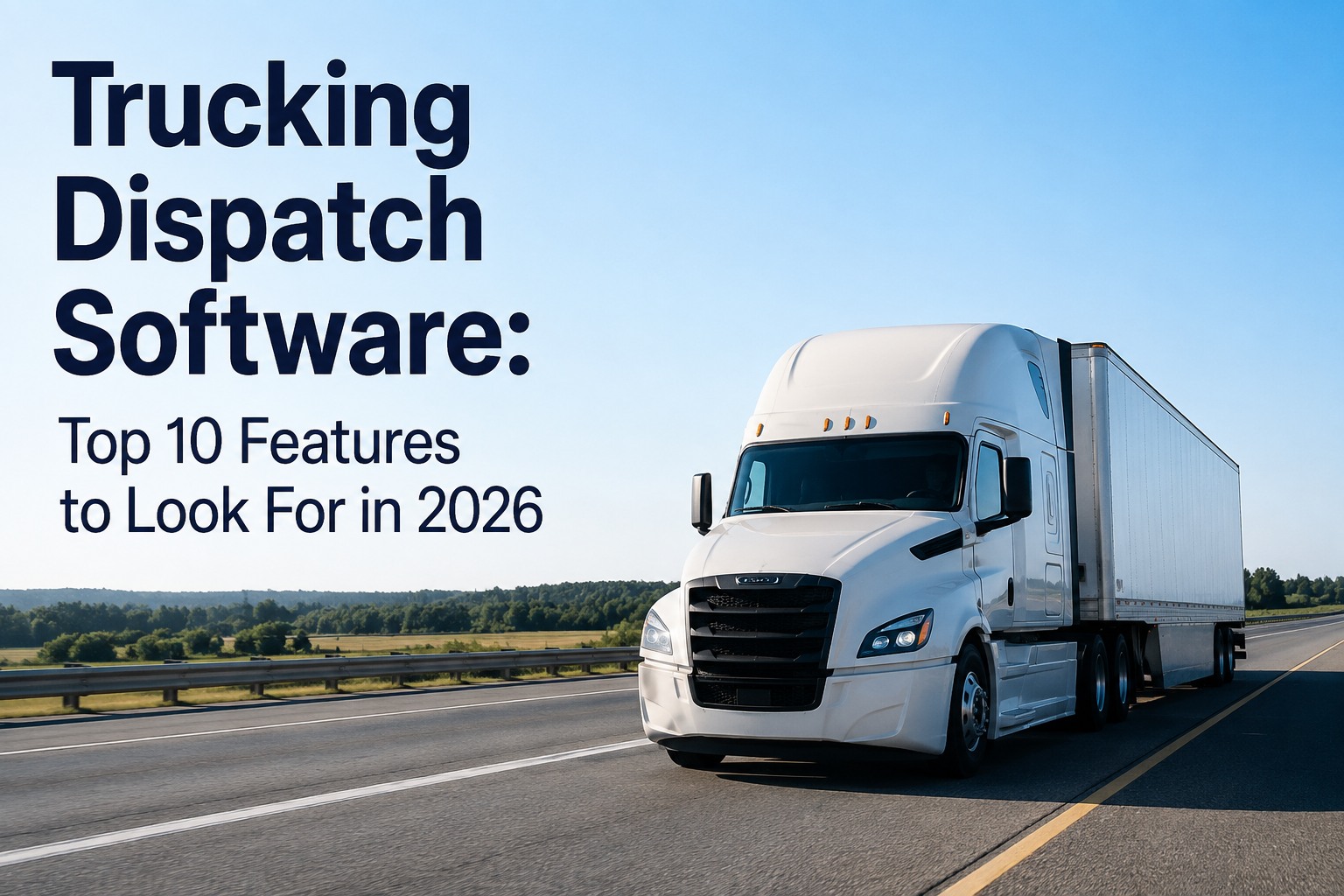
Trucking Dispatch Software: Top 10 Features
What separates a whiteboard replacement from a profit engine.
The 10 Features That Matter
Every vendor claims a long feature list. These ten are the ones that move empty miles, dispatcher productivity, and revenue per mile — score every platform against them. Start a free account to keep the truck-availability data dispatch depends on accurate.
Smart load assignment
Assign loads manually, by rules, or with AI that matches freight to the right driver and truck automatically based on your business rules.
Return-load / backhaul matching
Surfaces return loads matching a driver's location, equipment, available HOS, and home terminal before delivery — the #1 lever against empty miles.
Load board integration
Pulls real-time loads from DAT, Truckstop, Amazon Freight, and broker APIs, scoring each against the driver's situation.
Truck-legal route optimization
Routes built for trucks — weight limits, low bridges, tolls, and restrictions — not consumer GPS. Cuts miles, fuel, and fines.
Real-time tracking & dynamic ETAs
Live location and status with ETAs that update on traffic and weather — so you stay ahead of problems before they cost you.
Driver communication
One mobile app for dispatchers, drivers, and customers — ending phone tag and keeping everyone aligned on the next job.
HOS & compliance visibility
Surfaces each driver's available hours at assignment time, preventing illegal dispatches and protecting CSA scores.
Automated billing & settlements
Generates invoices and driver settlements from completed loads — rate changes flow downstream without re-keying data.
Reporting dashboards
Track load factor, lane utilization, and cost per mile to pinpoint where waste and deadhead trips occur.
Fleet-system integration
Connects to ELD, telematics, fuel, accounting, and maintenance so dispatch decisions use live, complete data — not silos.
Dispatch is only as good as your truck availability
You can't dispatch a truck that's down for an unplanned repair. Truck Inspection & Maintenance keeps every unit dispatch-ready with digital DVIRs, PM scheduling, and defect-to-work-order routing — and integrates with your dispatch stack so planners see real availability. No hardware, no contracts. Sign up free and stop dispatching around surprise breakdowns.
The Empty-Miles Business Case
The clearest ROI in dispatch software is killing deadhead. Empty miles burn fuel, hours, and equipment for zero revenue — and they usually happen when a driver waits for an assignment or travels off-route to the next load. Four moves close the gap. Reach our team to keep trucks running so those miles stay loaded.
Line up the next load early
Surface return-load options before the current delivery completes, so the truck is never sitting empty waiting.
Consolidate & multi-stop
Combine compatible shipments into one trip to raise load density — especially powerful for regional and LTL lanes.
Measure the leaks
Track load factor, lane utilization, and cost per mile to find unbalanced lanes and low-volume regions creating deadhead.
Tighten communication
Real-time dispatch-to-driver updates ensure the next job is lined up before the truck goes empty.
Dispatch vs TMS vs Load Boards
These three get conflated constantly, and buying the wrong one wastes money. Here's what each actually owns — many fleets use all three, connected. Open a free account to connect the maintenance data they all rely on.
Find the freight
Marketplaces (DAT, Truckstop) to source and price available loads. The supply of work — not the system that runs it.
Run the loads
Assigns loads to drivers/trucks, plans routes, tracks in real time, and communicates. The operational engine of daily movement.
Manage the business
The broader hub — dispatch plus billing, settlements, accounting, EDI, and analytics. Dispatch is often a module within it.
The Pricing Reality
Dispatch pricing scales with fleet size and whether it's standalone or part of a TMS. Match the tier to your operation. Talk to our team about the maintenance layer that keeps any tier productive.
Small fleet (5–25 trucks) / month
Core dispatch, load assignment, tracking, driver communication, and ELD integration. The growing-fleet starting point.
Established fleet (25–100+) / month
Full TMS with advanced dispatch, AI load matching, analytics, settlements, and multi-terminal coordination.
Load boards & freight matching
Often free with premium tiers; feeds available loads into dispatch. Budget separately from the dispatch platform itself.
Frequently Asked Questions
What does trucking dispatch software actually do?
It links every load to a driver, truck, route, and schedule in one real-time system — replacing whiteboards, spreadsheets, radio checks, and paper rate confirmations. At its core it answers three questions per load: who drives it, which truck moves it, and what's the best route. Advanced platforms add automated load matching, invoicing, real-time tracking, and compliance monitoring on top. Start a free account to keep truck availability accurate for dispatch.
How does dispatch software reduce empty miles?
Primarily through return-load matching: before a driver completes a delivery, the system surfaces backhaul opportunities — from integrated load boards or its own load pool — that fit the driver's location, equipment, available HOS, and home terminal. Add multi-stop consolidation, lane-utilization analytics, and real-time driver communication, and trucks spend far less time running empty or waiting for the next assignment. Talk to our team about maximizing loaded miles.
What's the difference between dispatch software and a TMS?
Dispatch software runs daily load movement — assignment, routing, tracking, communication. A TMS is the broader business hub that includes dispatch plus billing, driver settlements, accounting, EDI, and analytics; dispatch is often a module within it. Load boards are separate again — marketplaces that supply the freight. Many fleets use all three, connected. The right choice depends on whether you need just dispatching or full back-office management. Sign up free to connect maintenance data to any of them.
Why does truck-legal routing matter?
Because consumer GPS routes cars, not trucks. Truck-legal routing accounts for weight limits, low-clearance bridges, toll costs, and road restrictions — preventing fines, dangerous detours, and missed deliveries while cutting unnecessary miles and fuel. Integrated routing engines also factor real-time traffic to keep ETAs accurate. It's a core dispatch feature, not a nice-to-have, for any fleet running larger equipment. Contact us about route-ready fleet uptime.
How much does dispatch software cost?
For small fleets of 5–25 trucks, expect roughly $200–$500 per month for core dispatch with load assignment, tracking, and ELD integration. Established fleets of 25–100+ trucks running a full TMS with advanced dispatch and analytics typically pay $500–$2,000+ per month. Load boards are usually free with premium tiers and budgeted separately. Match the tier to your fleet size and complexity. Start free on the maintenance side.
How does maintenance affect dispatch?
Directly — you can't dispatch a truck that's down. Unplanned breakdowns blow up the dispatch board, force last-minute reassignment, and create the empty miles and missed loads dispatch software exists to prevent. Feeding real truck availability and health into your dispatch decisions — through digital inspections and PM scheduling — means planners assign loads to trucks that will actually roll. Maintenance is the silent input behind reliable dispatch. Contact us to keep trucks dispatch-ready.
Great dispatch starts with trucks that actually roll.
Truck Inspection & Maintenance keeps every unit dispatch-ready with digital DVIRs, PM scheduling, defect-to-work-order routing, and live fleet health — integrated with your dispatch stack so planners assign loads to trucks that won't break down. Free for up to 3 vehicles, no hardware, no contracts.