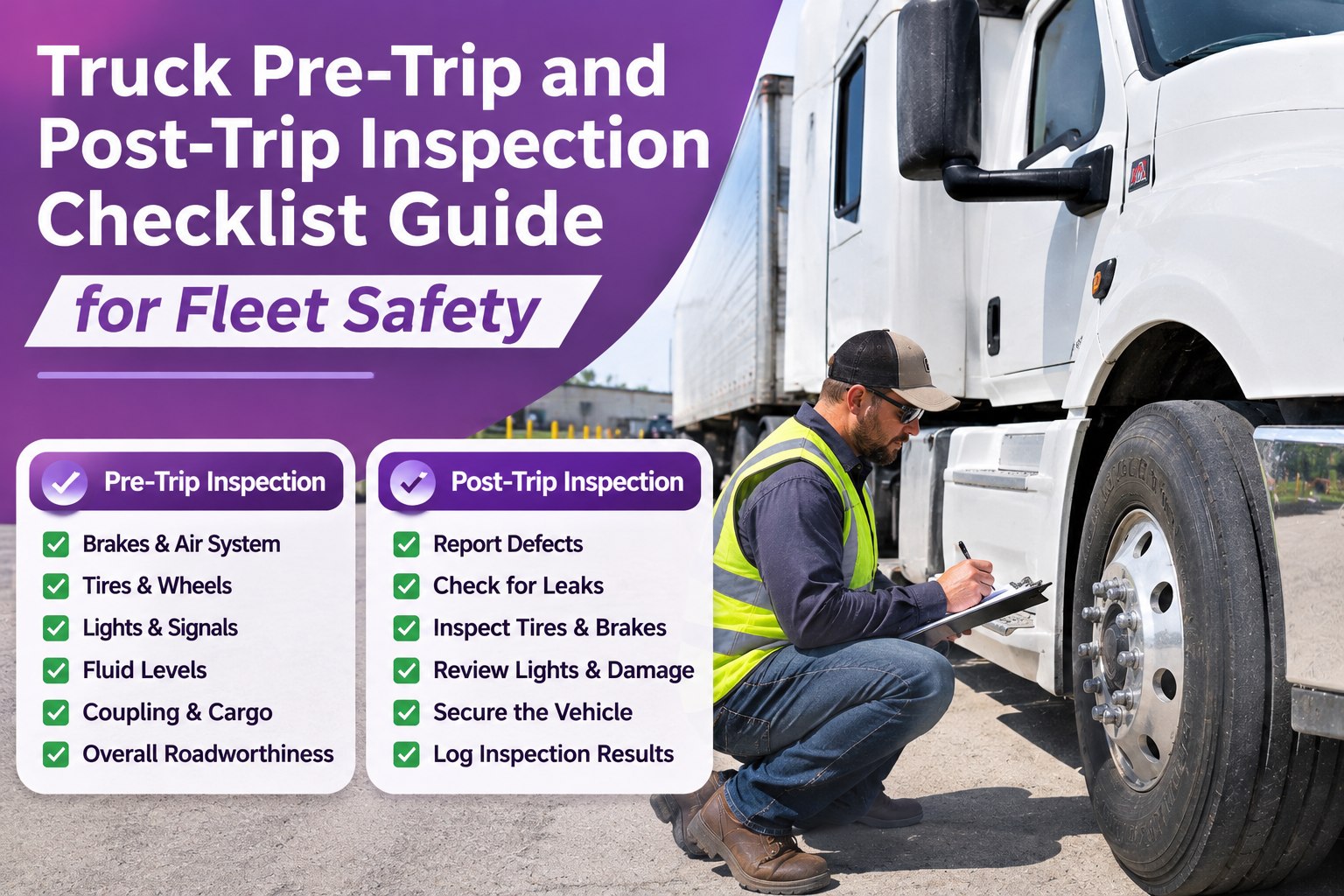
A leak inspection isn't really about fluids — it's about walking the truck in an order that doesn't miss a spot. Work top-down and front-to-back, because a drip you find under the cab may have run back from the engine, and an axle seal only shows at the wheel. This checklist walks the whole truck by location, so every leak point gets eyes on it and nothing hides behind "it was probably condensation." Start free and log every leak check against the truck.
Engine Bay → Underbody → Axles
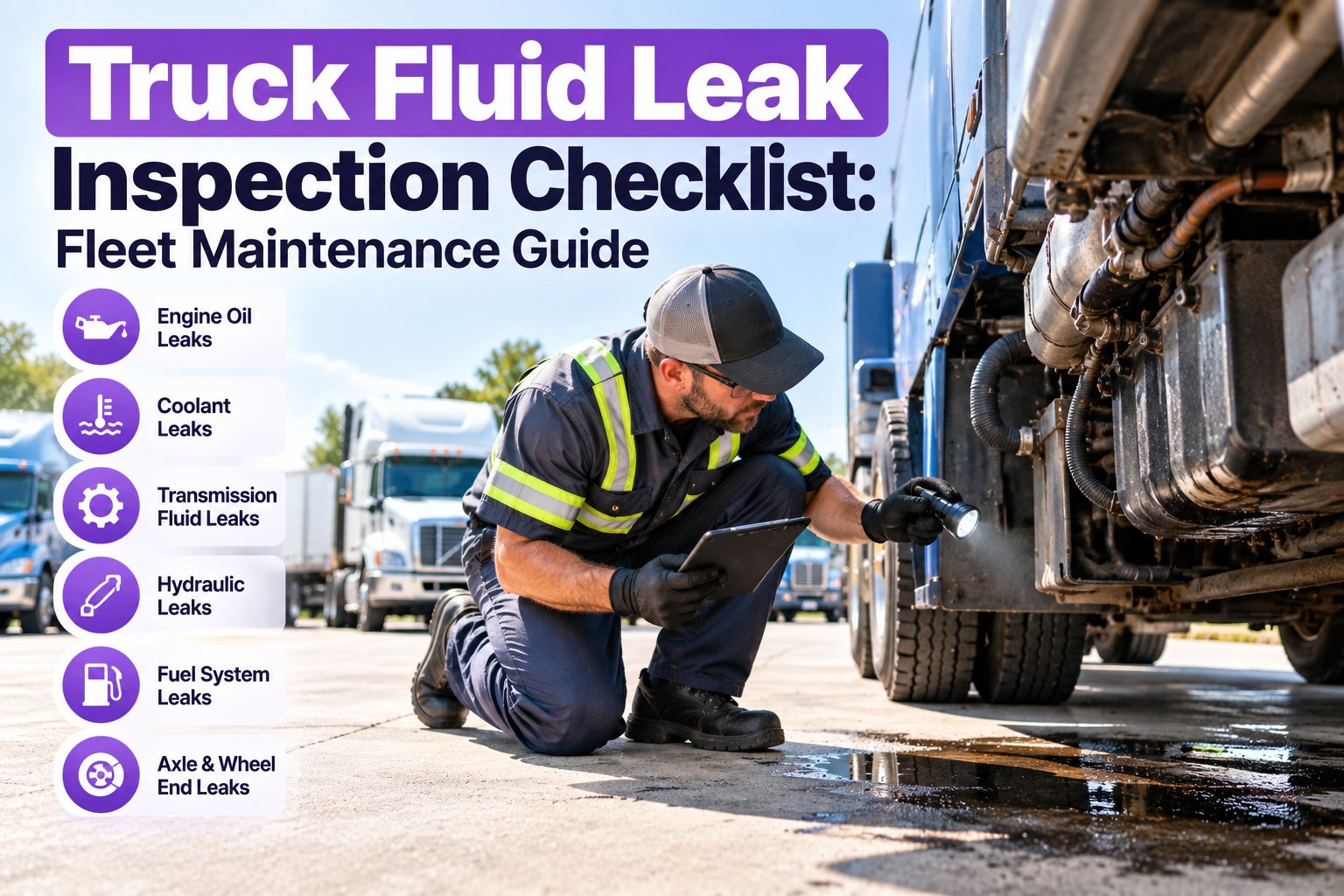
Truck Fluid Leak Inspection Checklist: Fleet Maintenance Guide
A clean leak inspection is a route, not a guess — down through the engine bay, along the driveline, out to the wheel ends. Truck Inspection & Maintenance Management Software puts this walk on the driver's phone, lets them flag a leak with a photo where they find it, and turns it into a dated work order before a weep becomes a stream.
5inspection zones, front to back
Top-downtrace a drip up — gravity moves it before you see it
Weep ≠ streamone you monitor, one stops the truck
Before You Start — Two Things That Make the Check Honest
A leak walk only works if you set it up right. Park on clean, level ground and the clues read true.
01Park over clean groundA clean spot overnight shows fresh drips and their colour — a stained yard hides them. Lay cardboard if the floor's already dirty.
02Rule out condensation firstClear, watery, odourless fluid under the cab is usually A/C condensation — normal. Colour, smell, and feel separate a real leak from a harmless drip.
Zone 1 — Engine Bay & Top End
Start up high: oil and coolant leaks here run down and show up lower, so catch them at the source.
Zone 2 — Under the Engine
Go under the front: this is where gravity collects what the top end sheds, plus the pan and main seal.
Zone 3 — Mid-Chassis & Driveline
Move along the frame: the transmission, its cooler lines, and the driveline each leave their own trail.
Zone 4 — Axles & Wheel Ends
Out to the wheels: axle and hub seals only show here, and a leak at the wheel end can reach the brakes.
Zone 5 — Trailer, Hydraulics & Air
Finish at the back: reefer, lift gate, wet-kit hydraulics and the air system all hold fluid or pressure that can leak.
For every leak you findGrade it before you move on
WeepA damp film, no beads. Log it, note the level, monitor over a few days.
DripForming beads, a spot overnight. Book the repair soon; keep the level topped.
StreamRunning leak, fast-falling level, fuel or brake fluid. Don't dispatch — park it.
Software That Turns the Walk Into a Record
Helping with exactly this is the job. Truck Inspection & Maintenance Management Software puts the five-zone leak walk on the driver's phone in order, with a photo field and a severity grade at each point. A weep goes on a watch list with the level noted; a stream opens a priority work order the shop sees before the truck moves. Every leak stays tied to its truck and zone, so a seal that keeps weeping in the same spot becomes an obvious pattern instead of a note lost between drivers.
The Leaks You Never Let Roll
Most leaks can wait for a shop slot. These can't — any one of them, as a real stream, is a safety or engine-ending call.
⊘FuelA diesel stream near hot exhaust is a fire risk; air in the fuel can stall the engine.
⊘Brake fluidA hydraulic leak and a soft pedal is a stopping emergency — don't drive it.
⊘Oil at a wheel endGear oil on a brake is contamination — a braking-performance and safety flag.
Frequently Asked Questions
How should I inspect a truck for fluid leaks?
Walk it by location rather than hunting at random: top-down and front-to-back, from the engine bay, under the engine, along the mid-chassis driveline, out to the axles and wheel ends, and finishing at the trailer, hydraulics, and air system. The order matters because leaks move — oil or coolant from up high runs down and shows lower, so finding the drip and tracing it up is how you reach the real source. Park over clean, level ground first so fresh drips and their colour read clearly.
Is every drip under a truck a problem?
No — the most common harmless one is clear, watery, odourless fluid under the cab, which is usually air-conditioning condensation and perfectly normal. Colour, smell, and feel are what separate it from a real leak: amber-to-black and slick is oil, bright green or orange with a sweet smell is coolant, red is transmission or power steering fluid, and a straw-coloured fluid with a strong smell is diesel. Once you've identified the fluid, the zone it's in points you to the likely source.
How do I know if a leak is safe to drive on?
Grade it by flow. A weep — a damp film with no beads — can usually be logged and monitored while a repair is scheduled. A drip that forms a spot overnight should be booked soon and topped up in the meantime. A stream, a fast-falling level, or any fuel or brake-fluid leak means the truck doesn't roll until it's fixed. The simple rule is that a weep gets watched and a stream gets the truck parked, and fuel, brake, and wheel-end leaks are never the ones to gamble on.
Why check the wheel ends and brakes on a leak inspection?
Because an axle or hub seal leak only shows at the wheel, and when it does, the gear oil can reach the brake drum, shoes, or pads. Fluid on a friction surface is a braking-performance and safety issue, not just a maintenance one — which is why the wheel-end zone is its own stop on the walk rather than something glanced at with the tyres. A fluid film on the inner rim, tyre sidewall, or backing plate is the tell to look for.
Contact us to put the zoned leak walk on your fleet.
Walk · Grade · Log
Catch the Leak in the Yard, Not on the Shoulder
Truck Inspection & Maintenance Management Software puts the five-zone leak walk on every driver's phone, captures each leak with a photo and a severity grade, and opens a work order the moment one needs it. Fleets run it to stop a weep from becoming a breakdown — and keep the stop-now leaks off the road.
No credit card required. Free for up to 3 trucks. Built for FMCSA-compliant fleets.