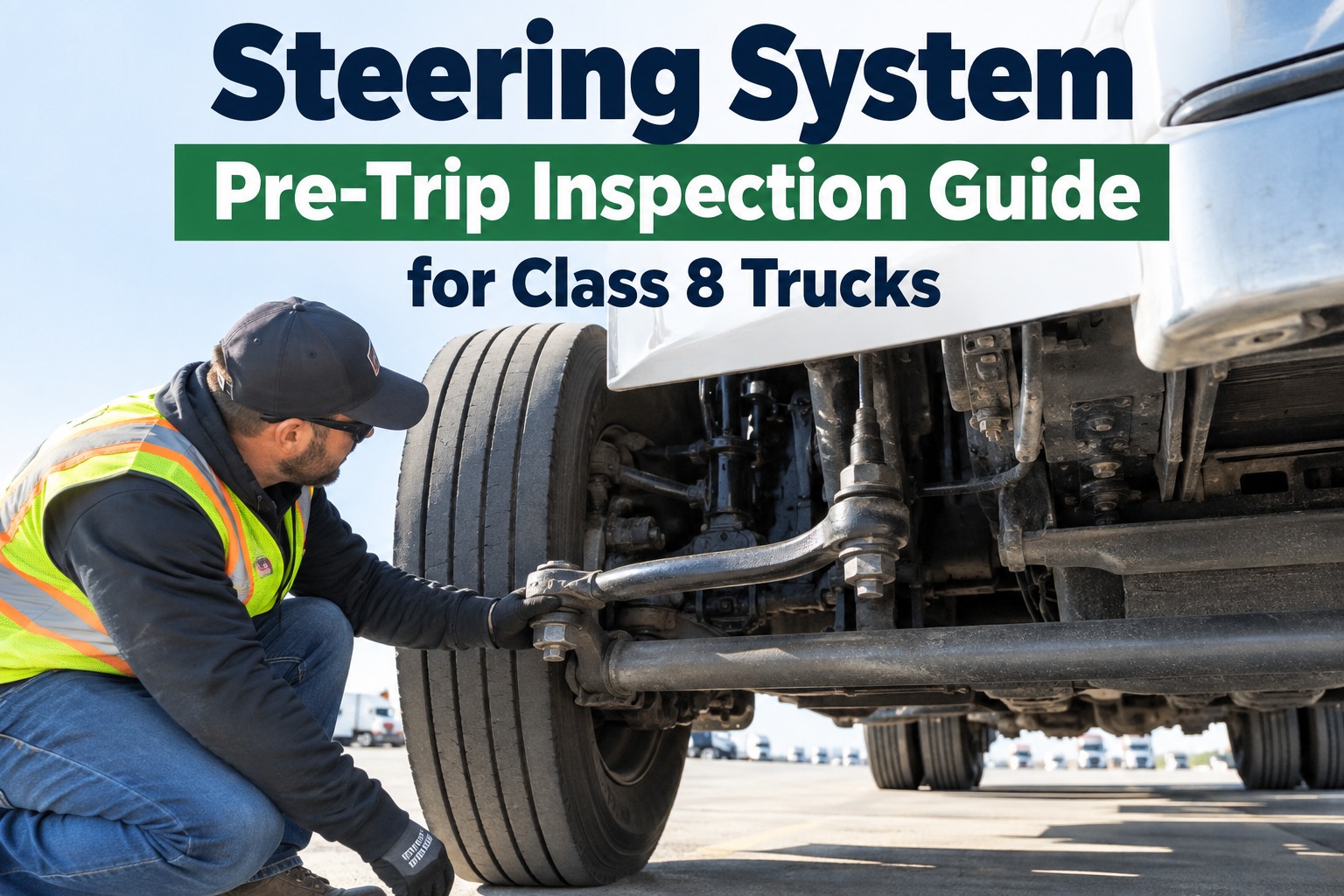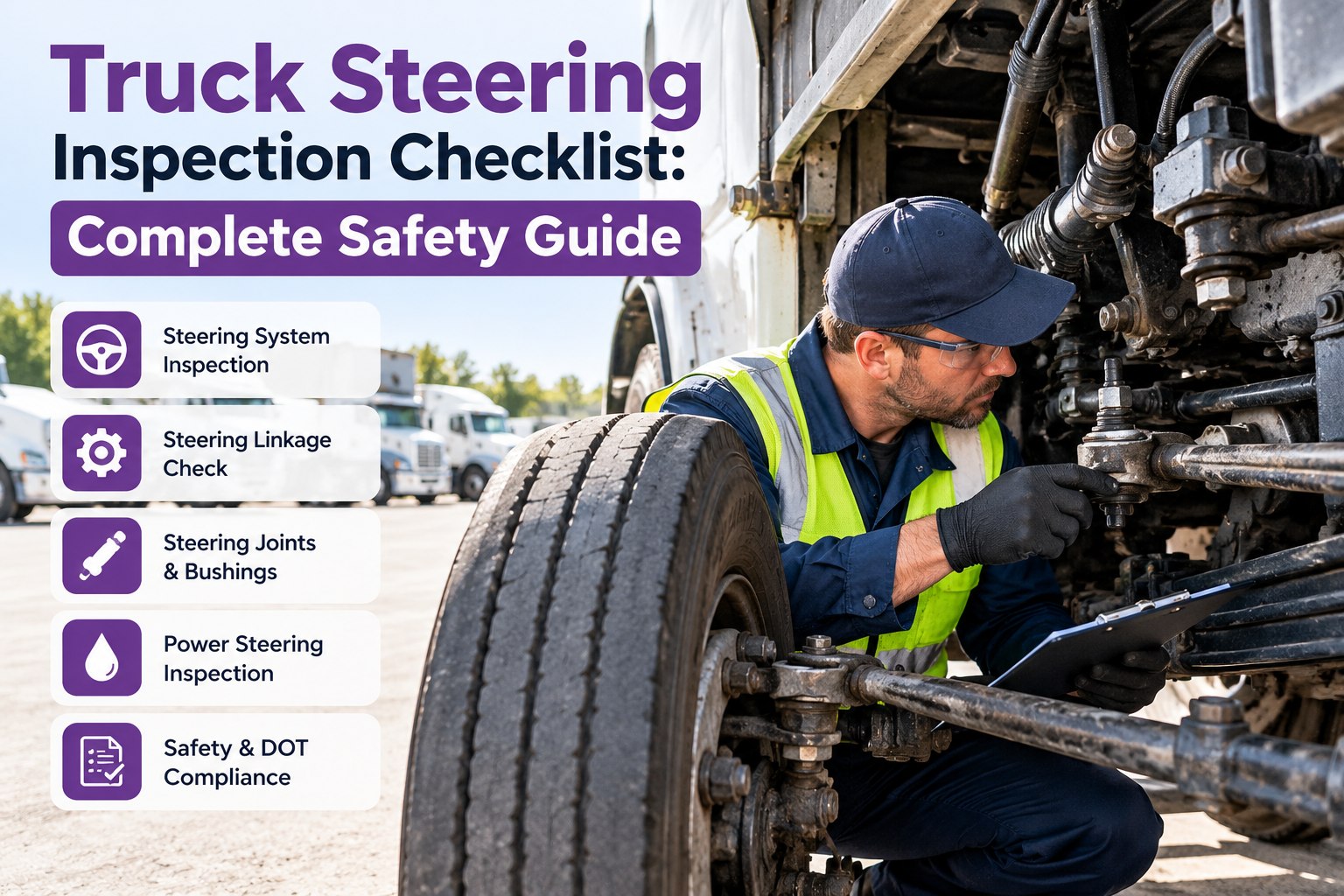
Steering is the one system you can't "limp home" without. A weak brake still slows you down, but a loose tie rod end or a failing power steering hose takes away your ability to point 80,000 lbs where you want it to go. This truck steering inspection checklist walks the full path from the steering wheel to the tire, with what to look for, what fails an inspection and what to do next. The steering rules sit in 49 CFR 393.209, and the driver's duty to check the vehicle is in 392.7 and 396.13. Knowing the checklist is half the job. The other half is making sure a failed item doesn't die on a clipboard, and that is the part Truck Inspection & Maintenance Management Software handles.
A Loose Steering Joint Noted on Paper Is Still a Loose Steering Joint on the Road
Most steering defects get noticed. Far fewer get graded, assigned and fixed before the truck rolls. Truck Inspection & Maintenance Management Software runs the whole loop: a guided steering inspection on the driver's phone, a graded defect the moment something fails, a work order for the shop, and a recurring PM so it gets checked again.
The Steering Chain: Where Every Part Sits
Think of steering as a chain. Your hands turn the wheel, and each part passes that motion to the next until the front tires turn. If any link is loose, worn or leaking, the whole chain gets sloppy. Inspect it in this order, from the cab to the wheels, so nothing is skipped. In the software, each link below is a checkpoint the driver has to complete before the inspection can be submitted.
The Checklist, Step by Step
Do this with the engine off first, then finish with the engine running. A flashlight and a few minutes are all you need. Each card below is one stop in the walkaround, and each item can be marked pass or fail in the app, with a photo when something looks wrong.
- Wheel turns smoothly with no binding or notchy spots
- Free play is within the §393.209 limit for your wheel size and steering type
- Column is solid, with no wobble or loose mounting
- Telescoping and tilt locks hold firm
- No unusual noise or vibration when turning
- Reservoir is at the correct level, and the fluid is clean, not milky or foamy
- Hoses are firm, with no bulges, cracks or chafing
- Fittings and clamps are dry, with no drips on the ground
- Pump belt is tight, with no glazing or fraying
- With the engine running, turn lock to lock and listen for groaning or whining
- Gearbox mounting bolts are tight, and there are no cracks in the frame mount
- Pitman arm nut is secure, with a cotter pin in place
- Drag link ends have no play, and the boots are intact
- No fresh grease or fluid streaks at the seals
- No bent, rubbing or repaired (welded) steering parts
- Have a helper rock the wheel while you watch the joints, and any visible movement in a tie rod end is a defect
- Clamps and bolts are tight, and the tie rod is straight
- Boots and dust covers are not torn or missing grease
- Kingpin and bushing play is checked on a lifted axle
- Steering stops are present and not damaged
- Tread depth is at least 4/32" on every steer tire
- Wear is even, and feathering or cupping points to alignment or worn parts
- Inflation is correct, and both steer tires match in size and type
- No missing lug nuts, rust streaks or hub oil leaks
- No bulges, cuts or exposed cord
- Truck tracks straight with no pulling or wandering
- No shimmy or shake at low or highway speed
- Steering returns to center after a turn
- No clunks over bumps or in tight turns
- Power assist feels the same in both directions
Pass, Watch or Park: How Serious Is It?
Not every finding means the truck stops. Use this three-level guide to decide fast and keep the argument out of the yard. Always confirm against current out-of-service criteria and your shop's procedures. In the software, the same three levels are built into the defect, so a driver logging a failed item starts the right next step.
- Slightly low power steering fluid, topped up with no leak found
- Minor boot seepage with no joint play
- Early uneven tire wear
- Active power steering hose weep
- Torn tie rod boot or missing grease
- Steering wheel play near the limit
- Loose or worn tie rod end, drag link or pitman arm
- Missing nut or cotter pin on a steering joint
- Cracked or welded steering component
- Steer tire below 4/32"
- Steering wheel lash over the §393.209 limit
Symptoms Your Truck Is Telling You
Drivers usually feel a steering problem before they see it. Match what you feel to the likely cause, then inspect that part first.
| What You Notice | Likely Cause | Check First |
|---|---|---|
| Wandering or "loose" feel | Worn tie rod ends or drag link, or excess wheel lash | Rock test, and measure wheel play |
| Groaning when you turn | Low fluid, air in the system or a failing pump | Reservoir, hoses and belt |
| Shimmy at highway speed | Imbalanced tire, worn kingpin or loose wheel bearing | Steer tires and wheel ends |
| Pulling to one side | Alignment, uneven tire pressure or a dragging brake | Tire pressure and wear pattern |
| Clunk over bumps | Loose gearbox mount, worn joint or bushing | Gearbox bolts and the drag link |
| Heavy steering effort | Power assist loss from a leak or a slipping belt | Fluid level, belt and pump |
From Checklist to Repair: How the Software Runs the Loop
A checklist only protects you if what it finds gets acted on. Here is how a single steering finding moves through Truck Inspection & Maintenance Management Software, from the driver's phone to the shop floor.
One Record From Walkaround to Repair
Instead of a paper form that gets lost or a text message nobody tracks, every steering inspection, defect, photo and repair lives in one place. Your drivers know what to check, your shop knows what to fix, and you can show when each step happened.
Where Steering Problems Cost Fleets, and How the Software Helps
Frequently Asked Questions
Turn Every Steering Check Into a Repair That Actually Happens
Start free and run your first guided steering inspection on one truck, or talk to our team about fitting this checklist to your DVIR and PM process.