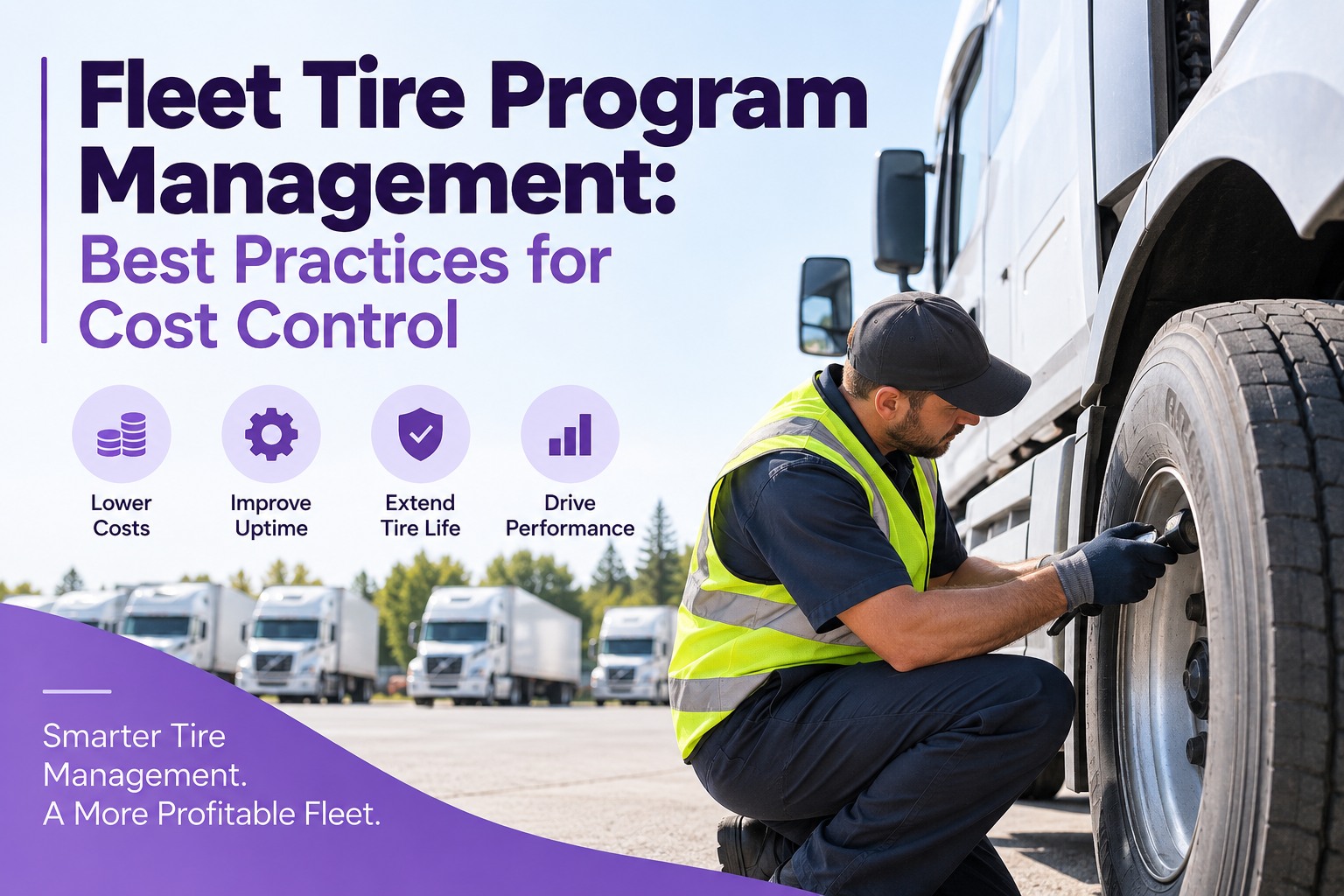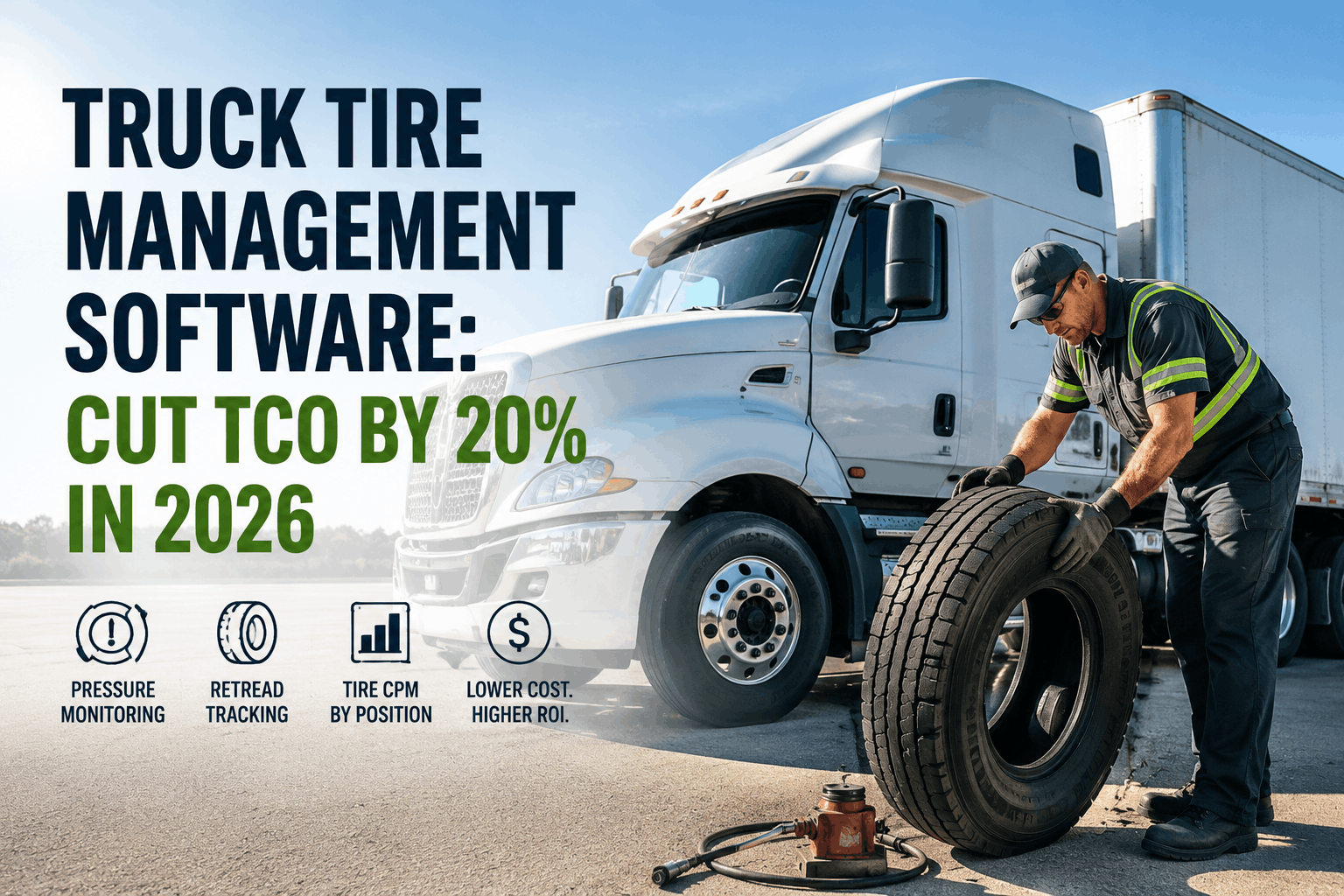
Tires are the most underestimated line item on a fleet's books — the third or fourth highest cost per mile, roughly 4–5 cents of every mile run, and the single most controllable one. The proof is in the spread: fleets running a systematic tire program spend about $28 per tire per month, while those winging it run $47 — for the exact same equipment. The difference isn't luck or supplier; it's data. Improper tire management quietly costs the average commercial fleet $2,500–$4,000 per vehicle every year through premature replacements, wasted fuel, and avoidable blowouts that run $850 to $5,000 per incident. Tire management software closes that gap by turning tires from a disposable expense into a tracked asset — and fleets that do it cut tire-related total cost of ownership by up to 20%. This guide breaks down where the money leaks, the must-have features, the cost-per-mile math, and the new-vs-retread decision. Truck Inspection & Maintenance builds tire tracking into every inspection. Talk to our team for a walkthrough.
Truck Tire Management Software
Turn tires from a consumable into a tracked asset — and cut TCO up to 20%.
The 4 Tire Budget Leaks
Tire spend bleeds out in four predictable ways — and they share one trait: every one is invisible without per-tire digital records. A fleet checking pressure on paper can't trend a slow leak before it becomes a highway blowout; a fleet tracking rotations on a whiteboard can't hit intervals by actual odometer reading. Surface these four and you've found nearly all the waste.
Under-inflation
The biggest leak. Wastes fuel, accelerates wear, and causes blowouts. U.S. DOT estimates underinflated tires waste ~5 million gallons of fuel daily nationwide.
Missed rotations
Skipped rotations create uneven wear that shortens tire life 30–40% — thousands in needless replacement spend per truck each year.
Over-spec on retreads
Buying a $550 new tire when a $130 retread would do — because casing eligibility wasn't tracked before the tire was run past pull-point.
Reactive blowouts
Waiting for failure instead of trending wear. A single blowout runs $850–$5,000 in service, labor, downtime, and cargo risk.
The 6 Must-Have Features
These six capabilities turn tire management from a reactive scramble into a data-driven system. Score every platform against them. Start a free account to build tire checks into every inspection.
Pressure monitoring & alerts
Live PSI per position via TPMS (Doran, Pressure Pro, OEM) or mobile inspection — instant alerts when pressure drops outside the vehicle-specific safe range.
Mileage-based rotation
Auto-schedule rotations by actual odometer reading, not calendar guesswork — with axle-by-axle pattern instructions on the work order.
Tread depth trending
Record tread per position at every PM, calculate wear rate per 1,000 miles, and project replacement date 30+ days ahead for planned procurement.
Retread eligibility tracking
Flag casings for retread before they're run past pull-point — capturing the $130 retread instead of the $550 replacement.
Cost-per-mile by position
Every tire cost divided by actual miles — compare brands, positions, and retread providers with real data, not assumptions.
Inventory & lifecycle records
A digital record per casing from purchase to retirement — every mount, dismount, retread, and repair, plus spare-stock levels.
Catch the slow leak before it's a blowout
Truck Inspection & Maintenance puts tire pressure and tread-depth fields in every digital pre-trip — with photo gates, auto work orders on low-pressure flags, and per-position history. No more paper checks that can't trend a leak. No hardware, no contracts. Sign up free and start tracking tires as assets.
The Cost-Per-Mile Math
Cost per mile is the metric that ends tire-buying guesswork: total tire cost — purchase, retread, service, road calls — divided by actual miles delivered. It's also where the savings show up. Here's the gap a program closes on a single tire position. Reach our team to model your fleet's tire CPM.
Same trucks, same suppliers — the ~$19/tire/month gap is pure management. Across a fleet's tire count, that's the path to a 20% tire-TCO cut, driven by pressure discipline, rotation compliance, and data-driven retread decisions.
New vs Retread — The Casing Decision
The single highest-return tire decision is whether you preserve a casing well enough to retread it. A retread runs about $130 against $450–$650 for a new Class 8 tire — but only if the casing is caught before it's damaged beyond eligibility. That's why tread trending and pressure discipline aren't just safety items; they protect the asset you'll retread.
- Required when casing is damaged
- Best on steer-axle positions
- Full tread life from new
- Highest per-unit cost
- Needs a sound, tracked casing
- Best on drive & trailer, Class 6–8
- Ideal for highway & regional routes
- Up to ~75% saving vs new
Frequently Asked Questions
How much can tire management software really save?
Fleets running a systematic, software-driven tire program cut tire-related total cost of ownership by up to 20%. The gap is stark: managed fleets run about $28 per tire per month versus $47 for those without a program — same equipment, same suppliers. With improper management costing $2,500–$4,000 per vehicle annually, the savings across even a modest fleet are substantial and repeatable. Start a free account to begin capturing them.
What's the single most important tire action?
Pressure discipline. Implement a pressure check at every fueling stop or every two weeks, whichever comes first — it addresses under-inflation, the most common and highest-cost source of tire waste. Underinflated tires waste an estimated 5 million gallons of fuel daily nationwide and cause blowouts. Fleets with TPMS automate it; others should add a required tire-pressure field to the pre-trip DVIR immediately. Talk to our team about pressure tracking.
How does the software calculate cost per mile?
It divides every tire cost — purchase price, retread, service calls, road calls — by the actual miles that tire delivered, tracked from odometer readings. That lets you compare cost per mile across brands, axle positions, vehicles, and retread providers using real data instead of assumptions. You learn which tires deliver value, which trucks destroy them fastest, and which routes cause the most wear. Sign up free to see CPM per position.
When does a retread make sense over a new tire?
When the casing is sound and tracked. A retread costs around $130 versus $450–$650 for a new Class 8 tire — up to a 75% saving — but only if the casing is caught before being run past pull-point or damaged. Retreads perform best on drive and trailer positions for Class 6–8 vehicles on highway and regional routes; steer axles typically take new tires. Tracking eligibility per casing is what captures the saving. Contact us about retread tracking.
Do I need TPMS hardware to manage tires?
It helps, but it isn't required to start. The fastest win — pressure discipline — can run on mobile inspections with a required pressure field and photo verification in every pre-trip, no hardware. TPMS sensors (Doran, Pressure Pro, OEM) add real-time PSI and automate the check entirely, with the strongest ROI on long-haul where a single blowout costs $3,000–$5,000. Start with digital inspections, layer TPMS as ROI justifies. Start free with no hardware.
How do tires affect my CSA score in 2026?
Directly. Under the February 2026 CSA overhaul, "Vehicle Maintenance: Driver Observed" is a separate compliance category — and tire violations a driver should have caught during a walk-around (low inflation, visible damage, insufficient tread) now score in that bucket. Fleets using digital inspections with required tire-pressure fields and photo gates catch these before a roadside officer does, protecting both the budget and the score. Contact us to tighten walk-around tire checks.
Turn your top-four cost into a managed one.
Truck Inspection & Maintenance puts pressure and tread-depth tracking in every digital inspection, auto-creates work orders on low-pressure flags, trends wear per position, and feeds cost-per-mile reporting — the system behind a 20% tire-TCO cut. Free for up to 3 vehicles, no hardware, no contracts.