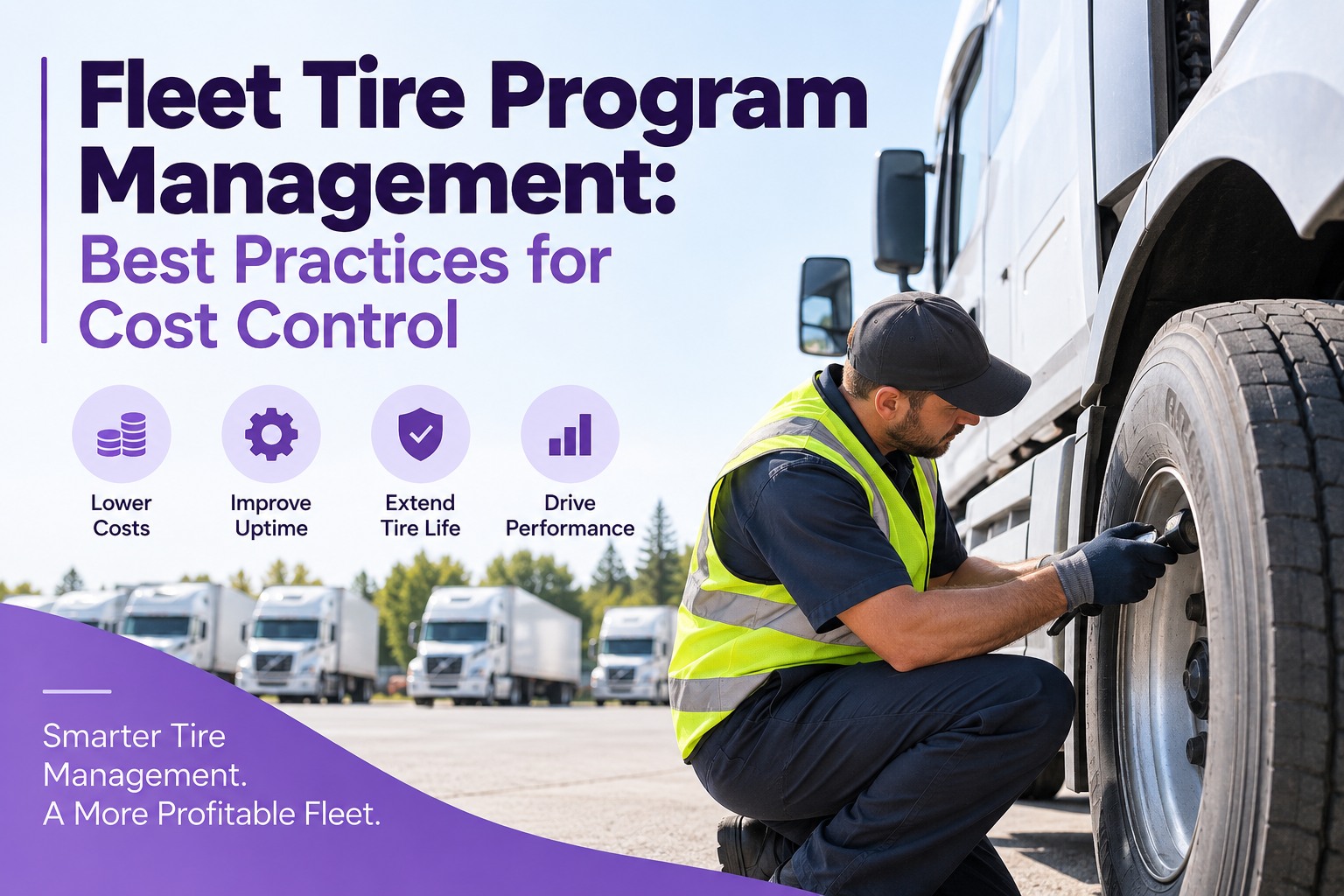
Tires are usually the second- or third-largest line item on a fleet's maintenance budget, right behind fuel, and yet most shops still manage them by whoever happens to notice a bald tire in the yard. A tire pulled two positions too early or a slow leak nobody catches for a month doesn't look like an emergency on any given day — it just quietly drains thousands of dollars per truck every year until someone adds it up. This guide covers the four disciplines that actually move cost per mile, and how to track them without a spreadsheet falling apart at 50 trucks. Start free and track tire cost per mile across your whole fleet automatically.
Inflation · Rotation · Alignment · Retread
Your Tire Budget Is Only a Mystery Because Nobody's Tracking It Per Tire
Most fleets know their total annual tire spend and almost nothing else — not which position wears fastest, which casings were scrapped early, or which truck is quietly running underinflated. Truck Inspection & Maintenance Management Software tracks every tire from mount to removal — pressure, tread depth, rotation history, and retread eligibility — so cost per mile stops being a guess and becomes a number you can actually manage down.
Trackedevery tire logged by position, not by guess
Flaggedunderinflation & wear caught before failure
Scoredretread eligibility surfaced automatically
The Four Disciplines That Actually Control Tire Cost
Tire spend doesn't run away from one big mistake — it runs away from four small habits that are easy to skip when a yard gets busy. Fix these four and cost per mile moves; ignore them and a tire program becomes whatever the last invoice happened to be.
1InflationThe single cheapest fix with the biggest payoff — underinflation quietly costs both fuel economy and tread life on every mile it runs
2RotationTires rotated on a mileage schedule consistently outlast the same set left in its original position and run to failure
3AlignmentEven a small alignment deviation on a steer axle drags a tire sideways with every rotation, cutting expected life dramatically over time
4RetreadingA casing scrapped a few 32nds too early throws away value that a structured retread program would have recovered
Why inflation comes first A tire running noticeably underinflated wears its shoulders faster, runs hotter, and burns more fuel per mile — and none of that shows up as an obvious problem until the tire is already scrapped early. A calibrated gauge and a few seconds per tire is the entire fix, which is exactly why it's the most commonly skipped step on a busy yard. Our software's per-wheel pressure field at every inspection makes that check impossible to quietly drop.
New Tires vs. Retreads — The Math Fleets Skip
Retreading has an old reputation problem that doesn't match modern practice. Large fleets running national freight networks retread extensively on drive and trailer positions, because most of a tire's cost is in the casing — and retreading reuses that investment instead of throwing it away.
New Tire
- Full casing plus fresh tread
- Required on steer positions
- Highest upfront cost per tire
- Full manufacturer warranty
Retread
- Reuses the majority of the original casing
- Best suited to drive & trailer positions
- Meaningfully lower cost per mile than new
- Needs casing inspection before approval
Where the savings disappear A retread program only pays off if a casing is pulled before it's damaged beyond eligibility — which means tread depth has to be tracked per tire, not eyeballed at the yard gate. A casing scrapped for new instead of sent for retread is money left on the table every single time it happens.
Tracking It Without a Spreadsheet Falling Apart
The math above only works if every tire's history is actually recorded — position, pressure readings, tread depth over time, and rotation dates — tied to that specific tire, not just the truck it happens to be on today.
Every tire tracked by positionPressure and tread depth logged per wheel at every inspection, not averaged across the axle
Rotation triggers on mileageA rotation work order fires automatically based on real odometer data, not a technician's memory
Wear patterns flag alignment issuesUneven wear across positions surfaces as a trend before it costs a full tire's life
Retread eligibility surfaces automaticallyA casing approaching its scrap threshold is flagged for retread review before it's pulled by default
Every Tire, Tracked From Mount to Removal
Our Truck Inspection & Maintenance Management Software logs pressure, tread depth, rotation history, and retread eligibility for every tire on every truck, so your tire program runs on data instead of whoever last glanced at the tread. Cost per mile becomes a number you can see and manage, not a total you only discover at year-end.
Frequently Asked Questions
How often should tire pressure actually be checked on a working fleet?
Pressure drifts constantly with temperature and small leaks, so it needs to be part of the routine pre-trip and PM checks rather than a separate task that's easy to skip — checking it consistently at every scheduled inspection catches slow leaks long before they become a blowout or a scrapped tire.
Start free and make pressure checks a required field at every inspection.
Are retreads safe for a long-haul fleet to run?
Quality retreads built to industry casing-inspection standards are used extensively by major national fleets on drive and trailer positions and perform comparably to new tires in those positions. The reputational concern around retreads is mostly tied to poor tire care generally — underinflation and overloading — rather than the retreading process itself.
What's the most common mistake fleets make with their tire program?
Treating tires as a consumable that gets replaced when someone notices a problem, rather than as a tracked asset with a history. Without a per-tire record, there's no way to know whether a casing was scrapped too early, whether a rotation schedule is actually being followed, or which position on which truck is chronically running low on pressure.
Do rotation schedules really make a measurable difference in tire life?
Yes — front and rear positions wear differently, and a tire left in one position for its entire life wears unevenly compared to one that's rotated on a set mileage interval. Fleets that rotate consistently generally see meaningfully longer tire life than fleets that don't rotate at all.
Contact us to set up automatic rotation triggers for your fleet.
Inflation · Rotation · Alignment · Retread — All Tracked
Turn Tire Spend From a Surprise Into a Managed Cost
Our Truck Inspection & Maintenance Management Software tracks every tire on every truck from mount to removal — pressure, tread depth, rotation, and retread eligibility — so your team catches the small habits before they become the big expense.
No credit card required. Free for up to 3 trucks.