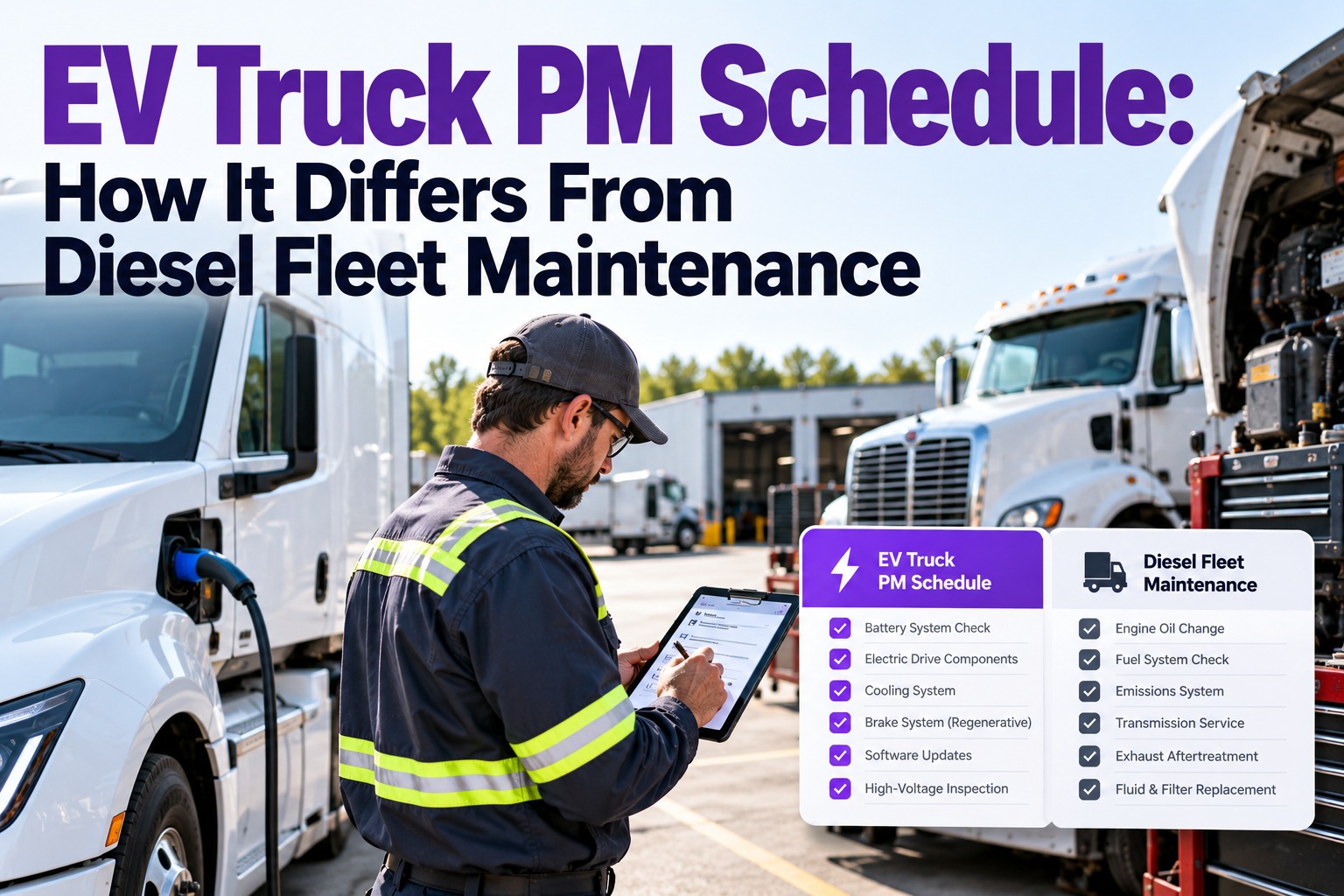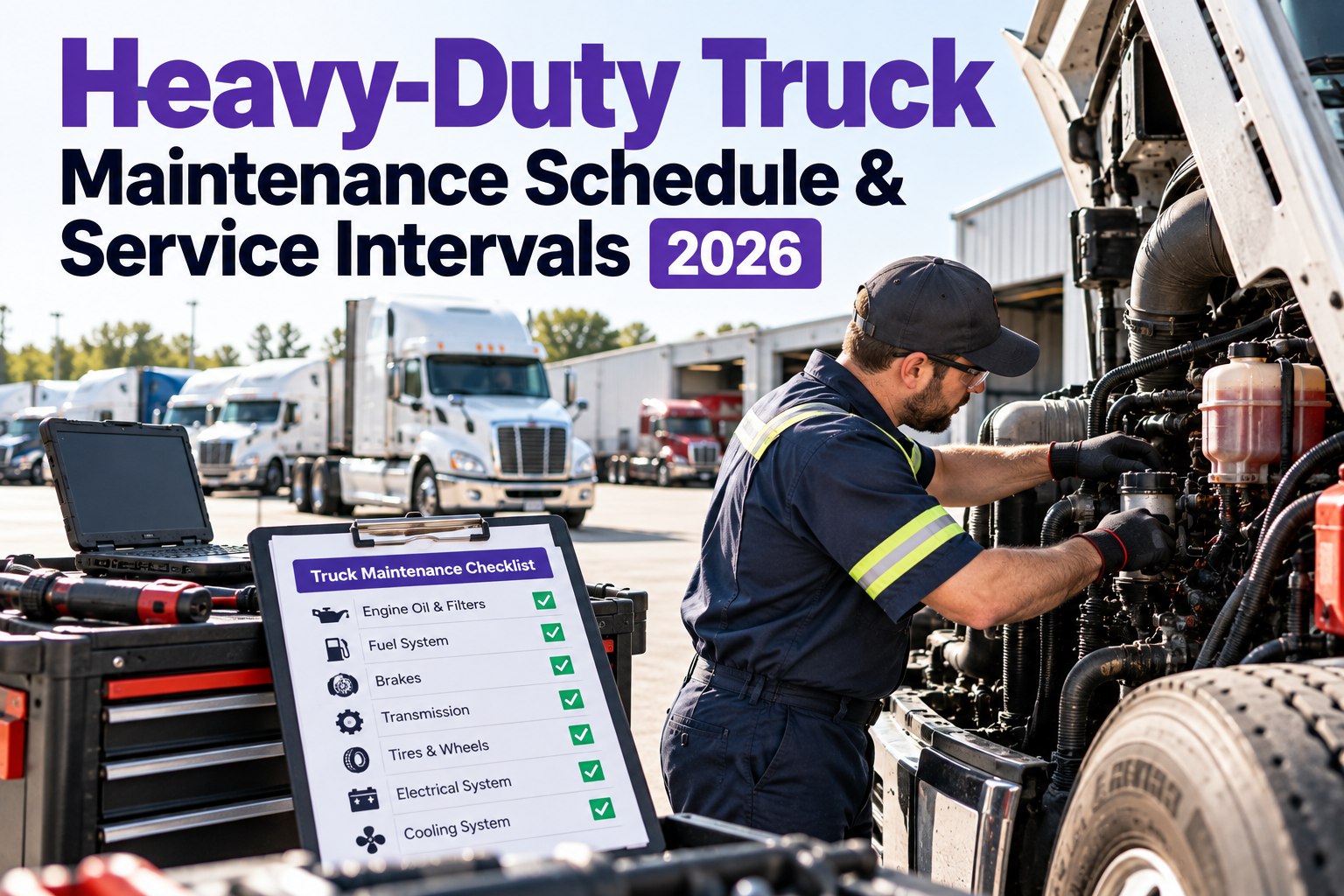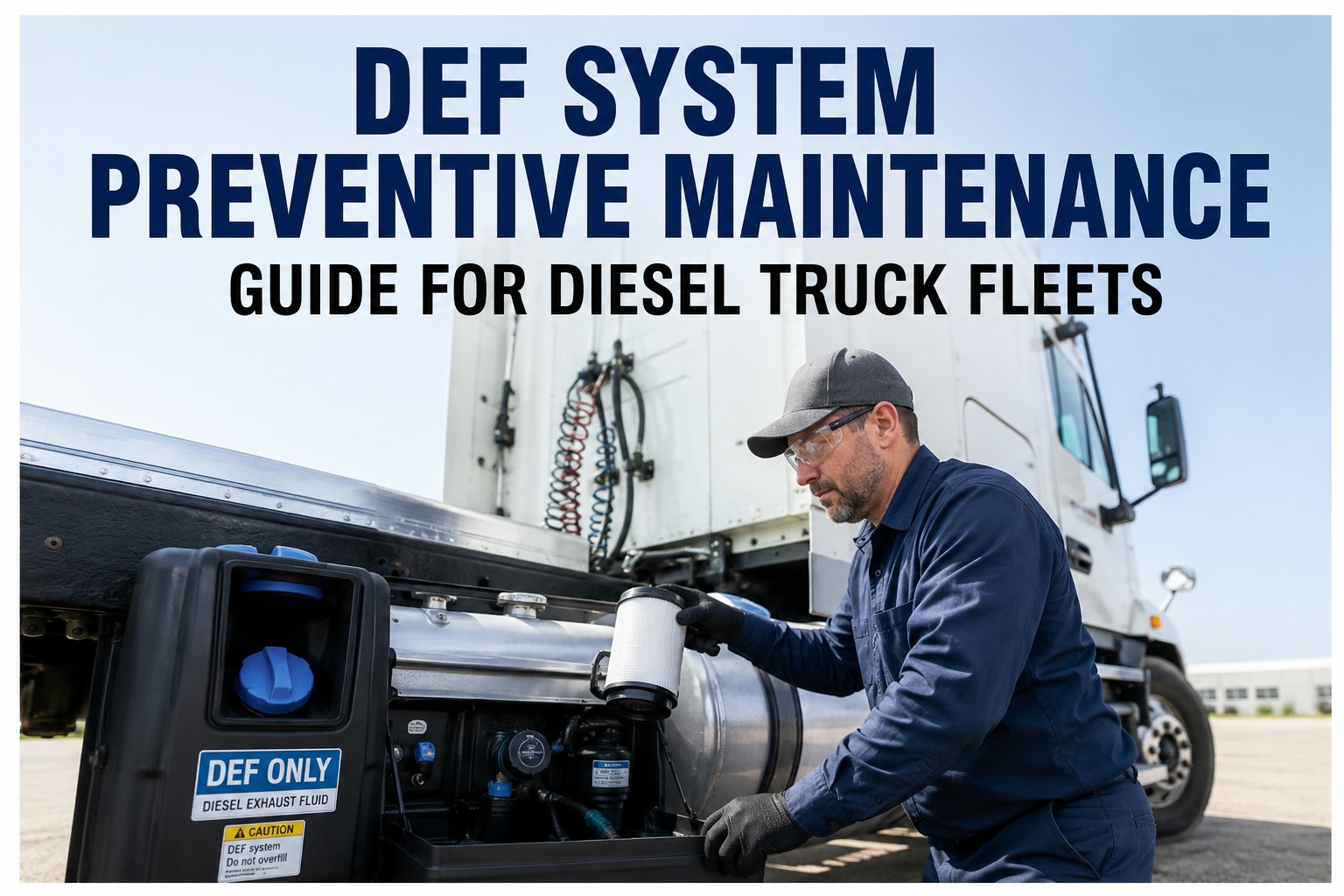
If you've spent any time around trucking operations, you've heard "PM service" thrown around like everyone already knows what it means. The reality: most fleet owners use the term loosely, and that ambiguity costs the industry billions annually in unnecessary breakdowns, premature equipment replacement, and avoidable insurance claims. Truck PM service — Preventive Maintenance service — is the systematic, scheduled care of commercial vehicles designed to prevent failures before they happen. According to the American Trucking Association, every $1 invested in preventive maintenance prevents $4 to $8 in unplanned repair costs. Fleets running structured PM programs see 70-85% reduction in breakdowns and 25-35% lower overall maintenance costs. Yet 70% of fleets still rely primarily on reactive maintenance — paying the highest possible cost per repair because they have no proactive system. That's the gap Truck Inspection & Maintenance closes: automated PM scheduling, multi-trigger logic (mileage OR hours OR calendar), digital service records, and real-time visibility that turns PM service from an abstract good intention into a measurable profit driver. Talk to our team for a PM program assessment on your fleet.
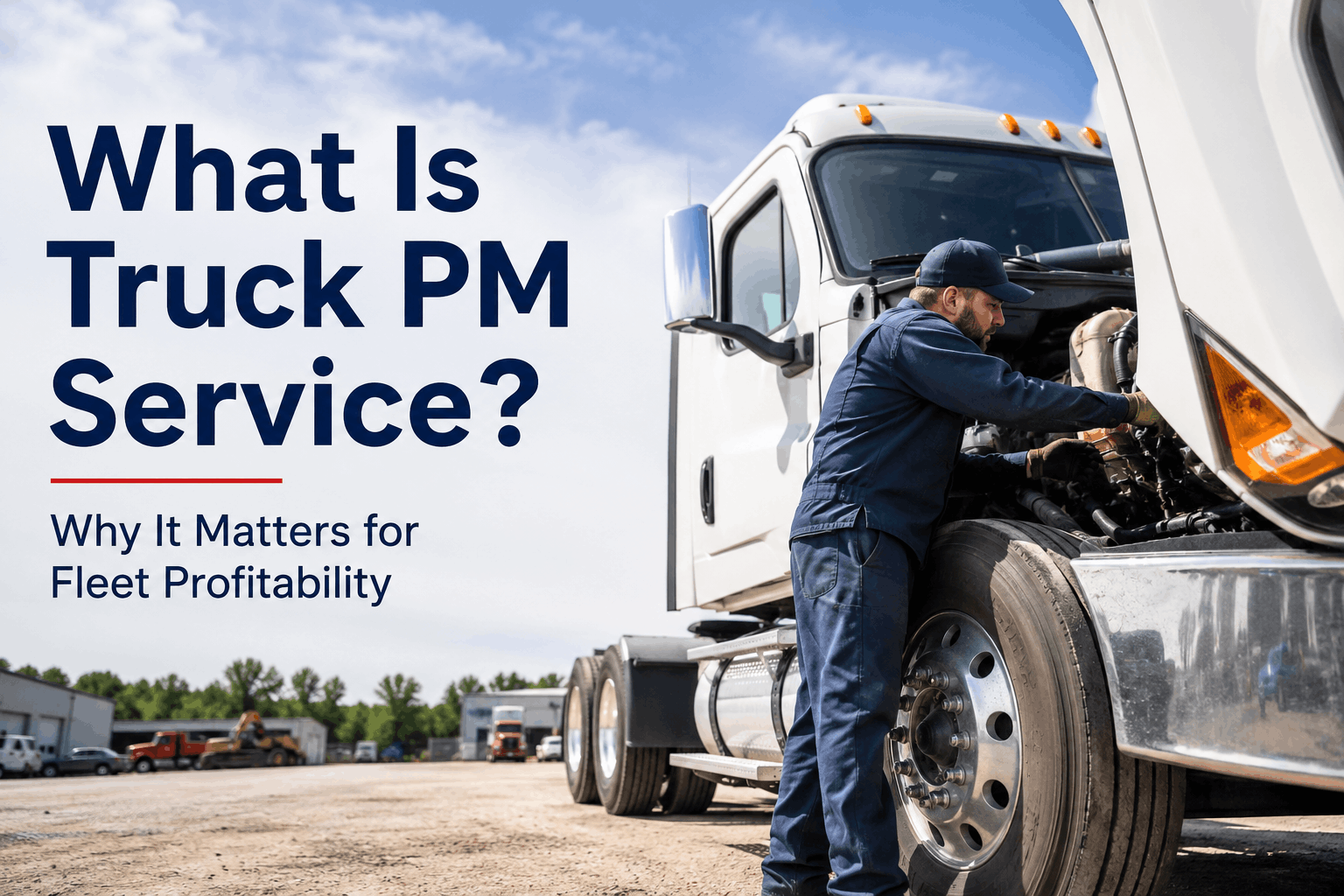
What Is Truck PM Service & Why It Matters
Definition, types, intervals, and the ROI math — built around Truck Inspection & Maintenance.
The PM Service Definition
PM service is the structured, scheduled, repeatable care of a commercial vehicle aimed at preventing failures before they cause unplanned downtime. The three operational principles that separate true PM from "fixing it when it breaks":
The 4 Types of Truck Maintenance — PM is One of Them
To understand PM service, you have to understand where it fits in the broader maintenance picture. Fleets use four distinct maintenance approaches — and Truck Inspection & Maintenance supports all of them in a single platform:
Reactive (Run-to-Failure)
Fix it after it breaks. Highest cost per repair, highest downtime, biggest insurance risk. Industry average: 45% of maintenance load. Top fleets keep this under 20%.
Preventive (PM Service)
Scheduled service at fixed intervals to prevent failures. The "PM service" this article is about. ATA data: every $1 prevents $4-8 in unplanned repairs. Goal: 70-80% of total maintenance load.
Predictive (Data-Driven)
AI + sensor data forecasts failure 2-4 weeks before it happens. Truck Inspection & Maintenance integrates telematics to flag at-risk components. 85-95% accuracy on major component predictions.
Corrective (Defect-Triggered)
Repair a specific defect found during inspection or roadside check. Triggered by DVIRs in our platform. Every defect auto-routes to a corrective work order.
The PM Service Trigger Methods
PM intervals are set by three measurement methods. Truck Inspection & Maintenance uses multi-trigger logic — whichever threshold hits first wins, so no vehicle ever slips through:
The Standard PM Tier Framework
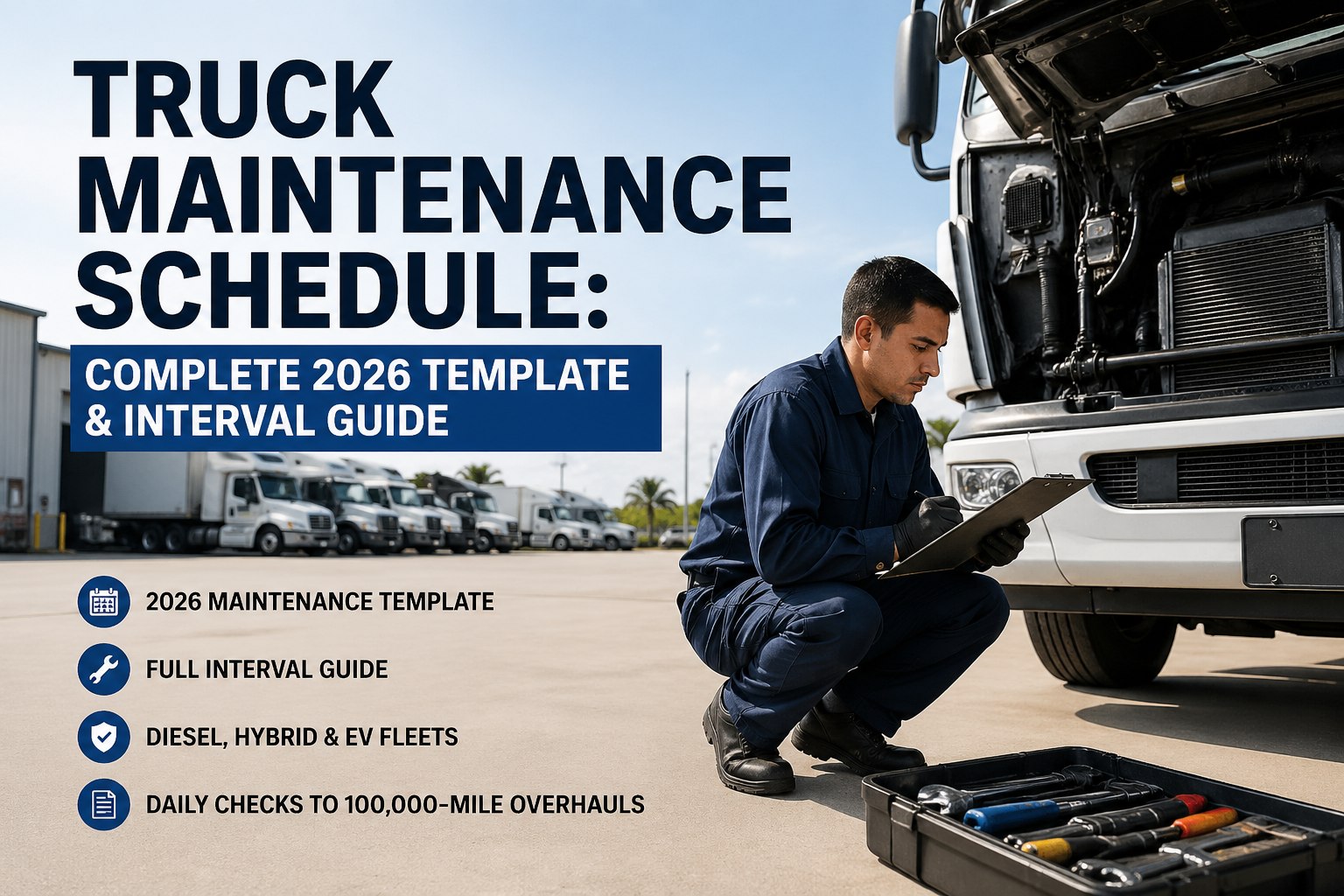
Most fleets organize PM service into 4 escalating tiers (A through D). Each builds on the prior tier with deeper component checks. Truck Inspection & Maintenance ships with all four templates ready to deploy:
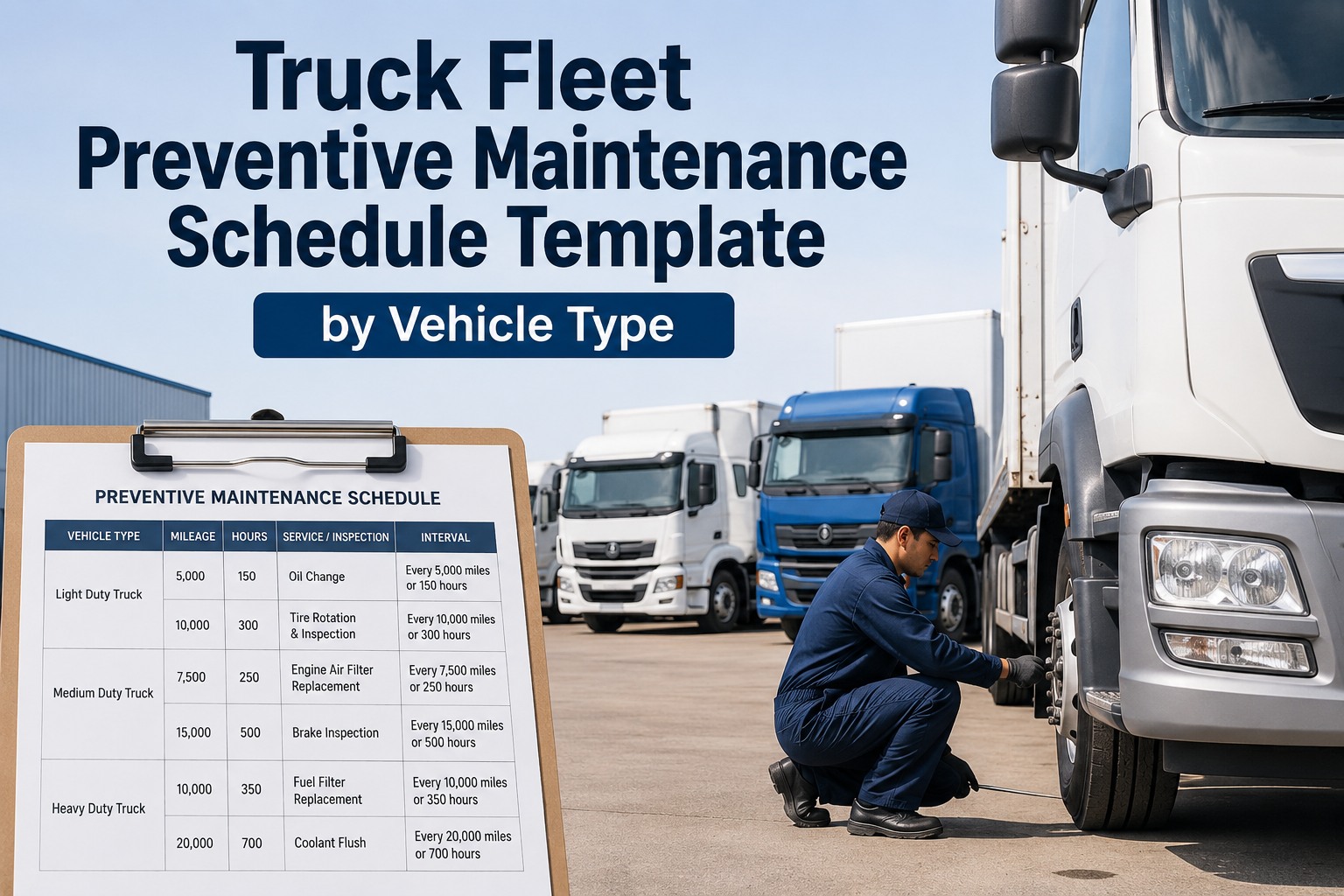
Light Service
Every 10-15K mi / 250 hrs / 30 days. Oil & filter, fluids check, basic walk-around, brake inspection. 2-3 hour service.
Standard Service
Every 25-30K mi / 500 hrs / 90 days. All PM-A items + air filters, fuel filter, chassis lube, deeper brake check. 4-6 hour service.
Annual Major
Every 50-60K mi / 1,000 hrs / annual. All PM-B items + transmission service, coolant, DPF cleaning, full safety inspection. Full-day service.
Major Overhaul
Every 100K mi / 2,000 hrs / biennial. Major service — clutch, injectors, turbo, emissions system rebuild. Multi-day downtime planning required.
Why PM Service Matters — The Profitability Math
PM isn't just about safety or compliance — it's a profit lever. The fleets running structured PM consistently outperform reactive fleets on every financial metric. Truck Inspection & Maintenance makes the math work for fleets of any size:
The Cost of Skipping PM Service
Every PM deferred has a downstream cost — and the downstream cost is always larger. Industry data shows the multiplier effect is brutal. Truck Inspection & Maintenance prevents this by making PM impossible to forget:
The rule of thumb: Every $1 in deferred PM compounds to $4-$8 in unplanned repair within 12-18 months. Truck Inspection & Maintenance auto-triggers PMs at threshold so deferrals don't quietly accumulate.
Turn PM service from intention into automation
Truck Inspection & Maintenance auto-triggers PM at mileage, hours, OR calendar thresholds. Pre-built templates for every vehicle type. Multi-trigger logic so no truck slips through. Sign up free on your first 3 vehicles in 10 minutes.
What a Standard PM Service Actually Covers
The components inspected during a typical PM-A or PM-B service. Our platform's checklist templates cover all of these systematically — no item missed, no shortcut taken:
Oil & filter, air filter, coolant level, belts, hoses, fuel system, electrical connections, mounts
Pads, rotors, drums, air pressure, slack adjusters, lines, ABS function, parking brake
Tread depth, pressure, wear pattern, lug nuts, hub seals, alignment indicators
Tie rods, ball joints, kingpins, shocks, springs, U-bolts, alignment check
Transmission fluid, U-joints, driveshaft, differential, axle lube, clutch adjustment
Battery, alternator, starter, all exterior lights, marker lamps, ABS warning, HVAC
Mirrors, wipers, windshield, doors, seatbelts, mounting hardware, fifth wheel
Fire extinguisher, reflectors, registration documentation, emergency triangles, first aid
How Truck Inspection & Maintenance Runs Your PM Program
Manual PM tracking works for 5 vehicles. By 15 trucks, things slip. By 25, you've already missed PMs you don't know about. Here's what our platform delivers that spreadsheets can't:
Frequently Asked Questions
PM stands for Preventive Maintenance. PM service is the systematic, scheduled care of commercial vehicles designed to prevent failures before they cause unplanned downtime. The opposite is reactive maintenance — fixing trucks only when they break, which costs 3-9x more per repair. Truck Inspection & Maintenance automates PM tracking so no service window slips through. Contact our specialists to see how it works.
Industry standard: PM-A every 10-15K miles / 250 hours / 30 days, PM-B every 25-30K / 500 hours / quarterly, PM-C every 50-60K / 1,000 hours / annual, PM-D at 100K or biennial. Truck Inspection & Maintenance uses multi-trigger logic — service fires on whichever threshold hits first, so high-idle and low-mileage vehicles don't slip through.
American Trucking Association data: every $1 invested in preventive maintenance prevents $4-$8 in unplanned repairs. Fleets running structured PM programs see 70-85% breakdown reduction and 25-35% lower total maintenance costs. Most fleets recover the cost of Truck Inspection & Maintenance multiple times over in year one through prevented breakdowns alone.
Yes. FMCSA 49 CFR 396.3 requires a systematic preventive maintenance program for all commercial motor vehicles. Records must be retained for 1 year while the vehicle is in service plus 6 months after. The annual periodic inspection under 49 CFR 396.17 is required regardless of mileage. Sign up free to automate FMCSA-compliant PM tracking on your fleet.
Yes — but the software doesn't prevent breakdowns directly. What it prevents is the missed PMs, deferred service, and undocumented defects that cause breakdowns. Truck Inspection & Maintenance enforces the PM schedule, routes every DVIR defect to a work order, and tracks completion — eliminating the gaps where breakdowns originate. Industry data consistently shows 70-85% reduction within 12 months of structured CMMS deployment.
Documented PM programs typically translate to 10-20% lower insurance premiums at renewal. Underwriters credit verifiable digital records — paper logs assume worst-case. Truck Inspection & Maintenance generates the PM adherence reports, DVIR completion data, and defect cycle times underwriters request. Talk to our team for an insurance-readiness assessment based on your current PM practices.
The fleets that prosper run PM by the calendar, not the catastrophe.
Truck Inspection & Maintenance turns PM service from intention into automation. Multi-trigger scheduling. Pre-built templates. Three-stage alerts. Photo-verified completion. DOT-ready records. Free for up to 3 vehicles.