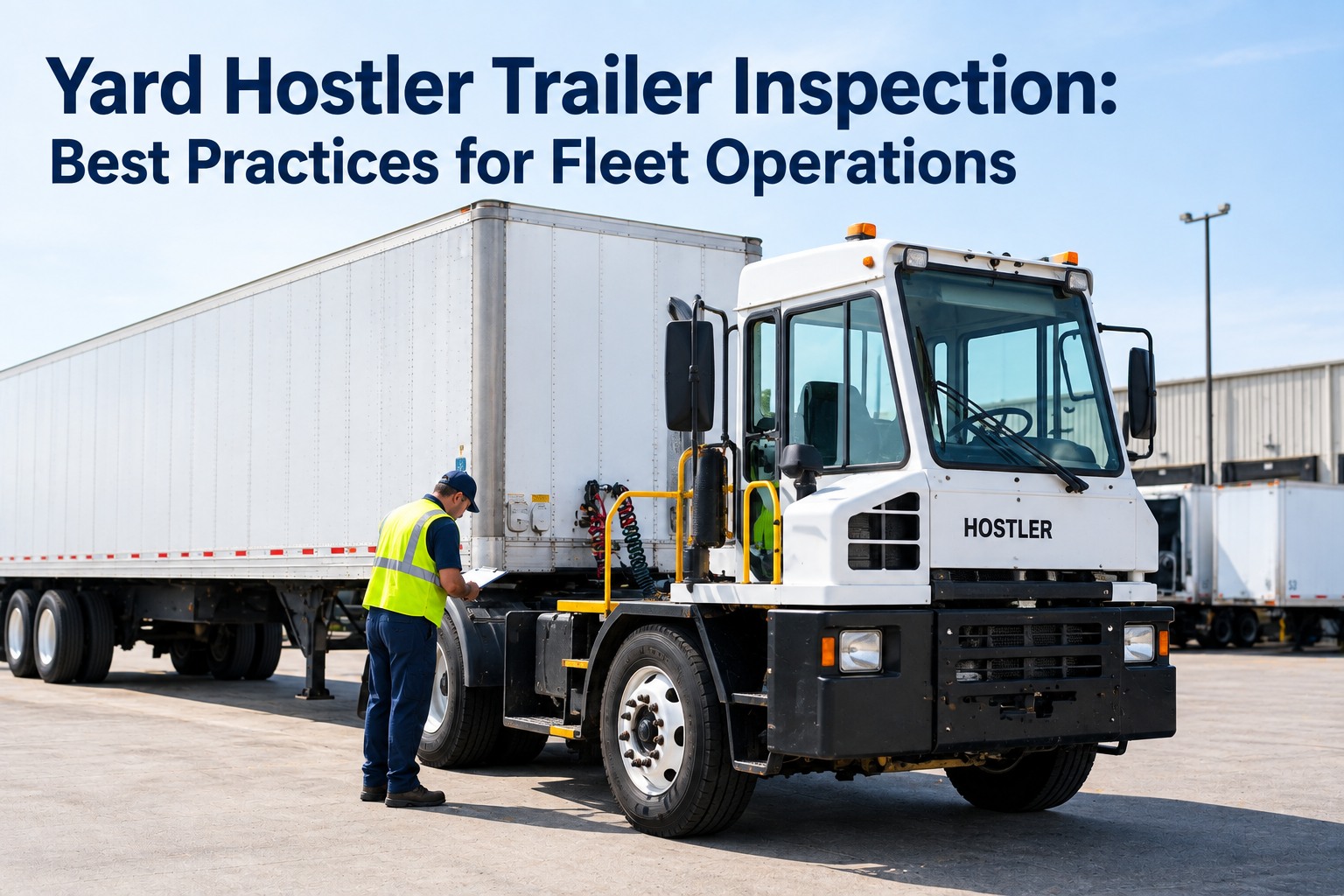
Your yard hostler couples and uncouples a trailer well over a hundred times a shift. Every one of those hookups puts a trained operator's eyes and hands on a kingpin, a set of glad hands, a light cord, and a landing gear crank — the exact components that put trailers out of service at roadside. Most fleets treat that as wear. The best fleets treat it as the highest-frequency trailer inspection asset they own. This article lays out how to design a hostler-driven trailer inspection program: the duty-cycle reality, the moves that double as inspections, the defects hostlers are positioned to catch first, and the workflow that turns yard moves into audit-ready records. Start a free trial and turn every yard move into a logged inspection.
The Yard Hostler Trailer Inspection Program
A hostler is the only person who touches nearly every trailer in your yard, every day, at the exact coupling points that fail roadside. Designed right, the hostler becomes your first line of trailer defect detection — not just a mover of freight.
Why the Hostler Is Your Best-Positioned Inspector
Over-the-road drivers inspect one or two trailers a day and often rush the trailer walk-around after the tractor check. The hostler is the opposite: constant, repetitive, hands-on contact with the whole fleet's trailers — at the coupling points that matter most.
A road driver hooks a trailer once or twice a shift. A hostler does it 100+ times — the same motion, over and over, across dozens of trailers. Patterns of wear become visible to someone who sees them daily.
Every coupling puts hands on the kingpin, glad hands, light cord, and landing gear — precisely the components behind coupling-separation incidents and lighting OOS orders. The hostler touches them all, every move.
The hostler sees the trailer before it's staged for dispatch — the last controlled moment to catch a defect on-site, in a yard, near a shop, instead of at a roadside scale 300 miles away.
The Moves That Are Already Inspections
The good news: you don't need to add a separate inspection step. The hostler's normal moves already require eyes and hands on the right components. The program just captures what the operator is already seeing.
The Trailer Defects a Hostler Catches First
These are the components most responsible for trailer out-of-service orders — and every one of them is something the hostler is positioned to spot before the trailer ever reaches a highway.
Dragging brakes, uneven pull, or an audible air leak on coupling are all felt or heard by the hostler. Brake defects are the single most common trailer OOS finding at roadside.
Tail, stop, turn, clearance, and marker lights plus conspicuity tape. A dead light shows the moment the hostler connects the cord and taps the pedal — lighting is the top vehicle-defect category at Roadcheck.
Cracked or worn kingpins and failed locking jaws cause trailer-separation incidents. The hostler backs under and locks in on every single move — the best possible checkpoint for coupling integrity.
Low pressure, flats, sidewall damage, and loose lug nuts. Tire failures cause a meaningful share of large-truck crashes, and a hostler pulling a trailer feels a soft tire long before a scale catches it.
Turn Every Yard Move Into a Logged Inspection
Truck Inspection & Maintenance gives your hostlers a mobile trailer check they run in seconds — tap the defect, snap a photo, and the platform routes it straight to the shop as a work order. Paper DVIRs and clipboard checks are replaced with per-trailer digital records, so every coupling in the yard becomes a documented, audit-ready inspection instead of a missed opportunity.
Designing the Program: Four Building Blocks
A hostler inspection program isn't a form — it's a workflow. These four pieces turn constant yard contact into a compliance asset that lifts your Vehicle Maintenance CSA scores.
Don't hand the hostler a 57-point DVIR. Build a tight trailer check around what they already touch — kingpin, glad hands, lights, landing gear, tires, doors. Fast enough to run every move, focused on the defects that matter.
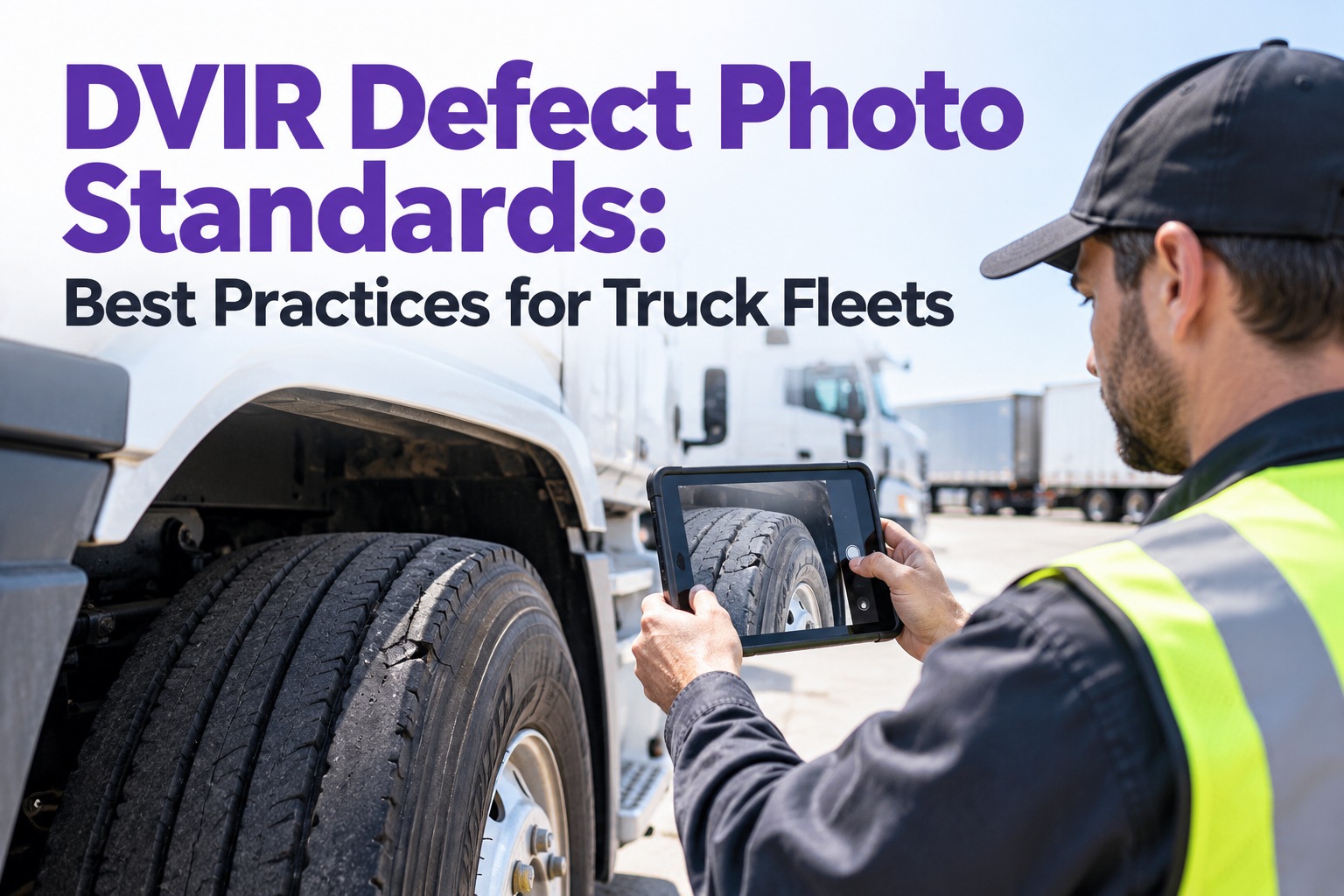
The moment a hostler spots a low tire or dead light, it has to be logged before the next move — or it's forgotten. Mobile capture with a photo turns a passing observation into a permanent record and an instant shop notification.
A caught defect only helps if it reaches the shop before the trailer is dispatched. Route flagged trailers straight to a work order and hold them from staging until repaired — the yard becomes a filter, not a leak.
Each trailer accumulates its own inspection record — recurring defects, annual inspection currency, kingpin wear over time. That history feeds PM scheduling and gives you an audit-ready trail for every asset in the yard.
The KPIs That Prove It's Working
A hostler inspection program should move real numbers within a quarter. These are the metrics to watch as the yard turns into a defect filter.
Share of trailer defects found in the yard vs. at roadside. Rising is the goal — every defect caught in the yard is one that never became a violation.
Roadside out-of-service orders on your trailers, trending down as brake, light, and tire defects get caught at coupling instead of at the scale.
Percent of yard moves with a logged trailer check. Closing the gap here is what turns 34%-of-fleets documentation risk into an airtight program.
Hours from a hostler flagging a defect to the work order closing. Instant routing collapses this from days of paper shuffle to same-shift turnaround.
Frequently Asked Questions
No — it strengthens it. FMCSA § 392.7 requires the driver to be satisfied that trailer brakes, lights, tires, and coupling devices are in good working order every time a trailer is hooked, and § 396.11 governs the end-of-day DVIR. A hostler program adds a high-frequency layer upstream of dispatch, catching defects while the trailer is still in the yard so the road driver's inspection finds a clean, staged trailer instead of a surprise. Think of it as pre-filtering the fleet, not replacing federal requirements. Start free and run both layers on one platform.
Only if you hand them a long form. The whole design principle is to capture what the operator already observes during coupling, air-line connection, and landing-gear cranking — not to add a separate walk-around. A well-built mobile check is a handful of taps plus a photo when something's wrong. In practice, the yard runs faster overall, because defects get caught on-site instead of causing a bounced dispatch or a roadside breakdown later.
Keep it tight and coupling-focused: kingpin and fifth-wheel lock, glad hands and air lines, light cord and all trailer lamps, landing gear operation, tires and lug nuts, and door hardware with reflective tape. Those map directly to the components the hostler already touches and to the top trailer out-of-service categories — brakes, tires, lights, and coupling. A software platform lets you build this as a per-vehicle-type checklist so trailers, chassis, and reefers each get the right items.
Consistent trailer inspections and prompt defect correction directly improve the Vehicle Maintenance BASIC in CSA, and catching brake, light, and tire defects in the yard cuts the roadside OOS orders that drive those scores. On the audit side, a digital program gives you a searchable, per-trailer record of every check, defect, and repair — with DVIR retention and annual-inspection currency tracked automatically. Talk to our team about building a hostler program on Truck Inspection & Maintenance.
Make Your Yard the First Line of Trailer Defense
Truck Inspection & Maintenance turns your hostlers into your highest-frequency inspectors — mobile trailer checks in seconds, one-tap defect capture with photos, automatic routing to the shop, and per-trailer PM and compliance history in one place. Replace paper DVIRs and clipboard checks with a mobile-first platform that keeps every trailer audit-ready and every yard move on the record.