Farm Truck & Trailer Inspection Program for Seasonal Operations
By Sarah Johnson on October 16, 2026
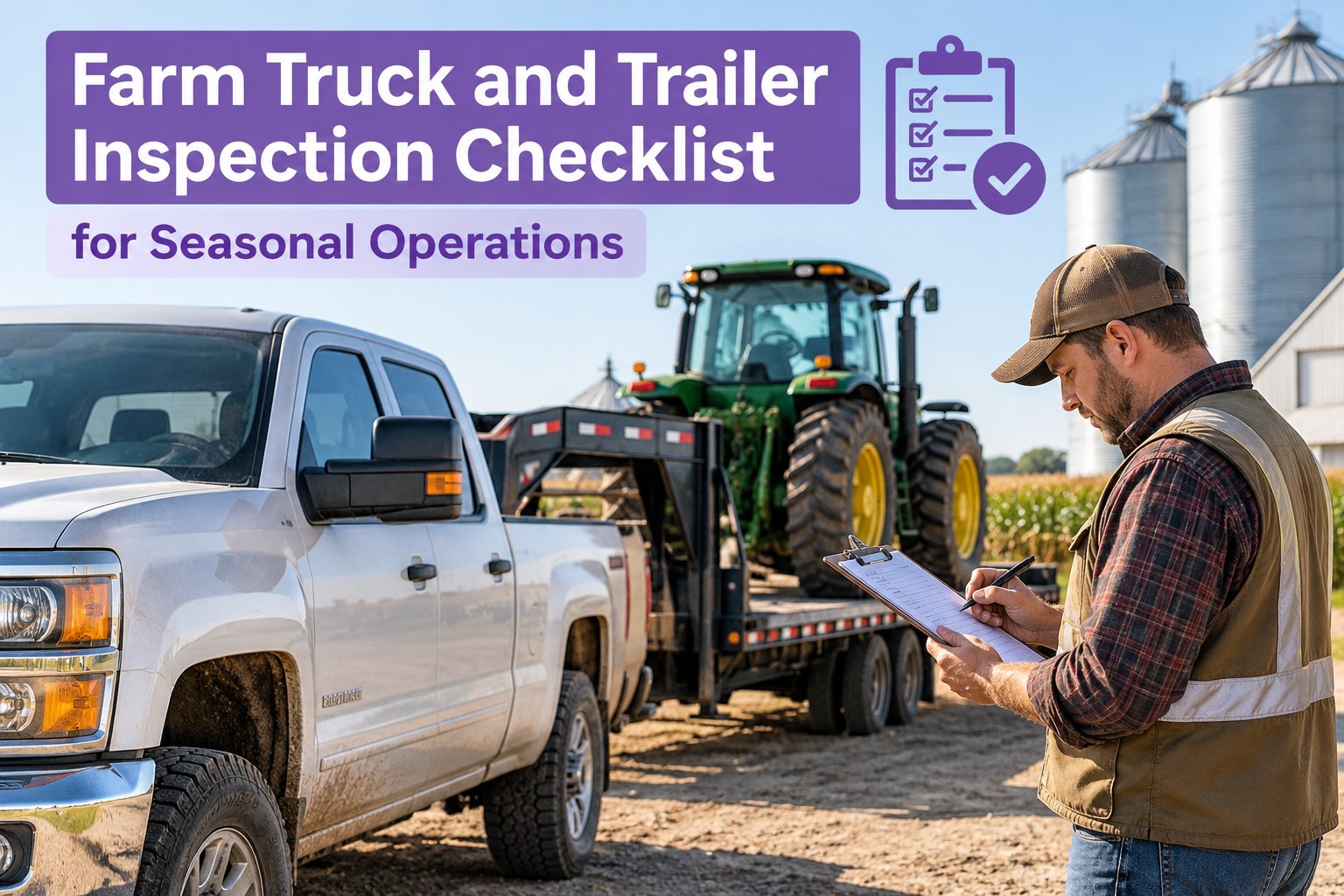
Farm transport runs in bursts. A grain truck and its trailer sit idle for months, then work dawn to dark for the few weeks the weather allows — and that's exactly when a breakdown costs the most, because the window doesn't wait. The fix is to inspect on the season's clock: wake the rig up before the run, keep it running through the push, and put it away right so next season starts clean. This checklist covers the truck and the trailer together, built around the planting-and-harvest calendar. Start free and run every seasonal check on TIM.
TIM · Farm Truck & Trailer Seasonal Inspection
Farm Truck & Trailer Inspection Program for Seasonal Operations
A truck that sat all winter doesn't fail in the yard — it fails loaded, mid-harvest, on the one dry day you had. Flat-spotted tires, a dead battery, seized brakes, a worn hitch: all of it hides until the rig is working hard. What you want is a season that runs on plan, not on luck. That's the loop Truck Inspection & Maintenance Management Software (TIM) runs for you — the pre-season check flags each defect, it becomes a graded work order, the repair is tracked to a verified close, and the truck and trailer stay on a schedule through the whole run.
Season-ready, provenEvery truck and trailer cleared before the run and tracked through it — so a breakdown doesn't cost you the weather window.
Farm transport isn't maintained year-round like a highway fleet — it's maintained in three phases around the run. Get each phase right and the rig is ready when the field is, and it starts clean next year.
PHASE 1
Before the seasonWake the rig from lay-up: full inspection, fluids, brakes, tires, hitch, and lights before the first load moves.
Pre-season wake-up
→
PHASE 2
During the seasonQuick daily walkaround through the push — tires, lights, hitch, leaks — so a small fault doesn't strand a loaded truck.
In-season daily
→
PHASE 3
After the seasonPut it away right: clean, grease, top fluids, note the repairs, so lay-up damage doesn't greet you next spring.
Idle isn't rest — it's its own kind of wear. These are the failures a parked truck and trailer develop between seasons, and the first things to wake up before the run.
◷Flat-spotted tiresMonths on one spot leave a thump and a weak point; old rubber cracks at the sidewall.
▢Dead or weak batteryA winter of self-discharge and cold leaves it unable to turn a cold diesel over.
◉Seized or rusted brakesShoes stick to drums, slack adjusters freeze, and air lines weep after sitting damp.
◇Stale fuel & fluidsDiesel gels or grows water, and oil and coolant settle or weaken over months.
⌁Chewed wiringRodents nest over winter and strip insulation from lights and harness runs.
◌Dried seals & hosesRubber shrinks and cracks unused, so leaks show up the moment pressure returns.
Work the truck first, then the trailer, then the shared safety gear. Tap each box as you clear it. Run the whole list before the season, and the quick in-season items each working day. Anything you can't clear is a defect to fix before the rig hauls a load.
THE TRUCKpower unit — brakes, tires, lights, engine
4 checks07 · Seasonal Safety & Fire Readinessharvest
30 Checks Between Lay-Up and a Loaded Run
The season is short and the rig has to be ready the day the field is. TIM holds the whole seasonal plan on one record per unit — the pre-season wake-up, the daily in-season checks, and the post-season lay-up — turning any failed item into a work order and keeping the history so next year's prep starts from what you found this year.
A farm rig doesn't need year-round fleet overhead — it needs to be ready on time, reliable through the run, and put away clean. TIM fits that rhythm, keeping the truck and trailer on one record through every phase of the season.
Truck & trailer togetherEach rig's power unit and towed unit share one record, so nothing on either half is missed.
Seasonal checklistsSeparate pre-season, in-season, and lay-up lists so each phase gets the right check.
Photo a defect, raise a jobA failed item becomes a work order with a photo — fixed before the rig hauls a load.
Wake-up remindersPrompt the pre-season inspection before the run, so no rig goes to the field cold.
History across seasonsLast year's findings carry forward, so this year's prep starts from what you already know.
Works from the fieldInspect from the cab on a phone, offline, and sync when back in signal range.
On the season's clock, in three phases. Do a full inspection before the season — the pre-season wake-up — because the rig has usually sat idle for months and that's where most failures hide. Through the run, do a quick daily walkaround of tires, lights, brakes, hitch, and leaks so a small fault doesn't strand a loaded truck. And at the end, put the rig away right — clean, grease, top fluids, log the repairs — so lay-up damage doesn't greet you next season. The pre-season check is the one most often skipped and the one that prevents the most breakdowns.
What fails most on a truck that sat all winter?
Idle causes its own wear. The usual suspects are flat-spotted or cracked tires from sitting in one spot, a battery too weak to crank a cold diesel, brakes seized or rusted to the drums, fuel that has gelled or taken on water, fluids that have degraded, wiring chewed by rodents nesting over winter, and seals and hoses that dried and cracked unused. None of these show up parked — they show up loaded, in the field, on your busiest day. A pre-season wake-up catches them cold in the yard where they're cheap to fix.
What's the most important thing to check on a farm trailer?
The hitch and coupling. Everything else on the trailer matters, but the coupling is what holds the loaded trailer to the truck — a worn kingpin or pintle, a cracked hitch, or missing safety chains is how a trailer comes loose. Check that it locks securely and is free of wear and distortion, that the safety chains or cables are rated and sound, and that the breakaway system works. After that, the brakes, frame, floor, tires, and bearings all deserve a close look, especially coming off a season of lay-up.
Why is fire a bigger risk during harvest?
Because harvest combines dry crop, chaff, and hot equipment working long hours. Crop residue and dust build up on hot engine and exhaust surfaces, and it only takes a hot bearing or a spark to start a fire that spreads to a dry field fast. That's why a charged, in-date fire extinguisher on every truck is non-negotiable during harvest, and why blowing accumulated chaff off hot areas should be part of the daily routine in the fall run. It's a seasonal risk that planting doesn't carry to the same degree.
Do farm trucks and trailers need to be road-legal?
When they travel on public roads, the safety basics apply regardless of any farm exemption from federal paperwork — working brakes, tires, and lights, a secured load, a visible SMV emblem for slow travel, and sound coupling hardware. A covered farm vehicle may be relieved of certain federal requirements, but the brakes on a loaded grain truck and the family in the car behind it don't know that. Treat every road trip from field to elevator as a run that has to be safe and visible, and inspect accordingly. Start free and keep every rig road-ready with TIM.
Wake-Up · In-Season · Lay-Up · Truck · Trailer
Be Ready the Day the Field Is
The season gives you a narrow window and no patience for a breakdown. Wake the rig from lay-up with a full pre-season check, run the quick daily list through the push, and put it away clean — truck and trailer, on one record. Let TIM keep the plan and the history so next year's prep starts ahead. It's free to start on your first three rigs.