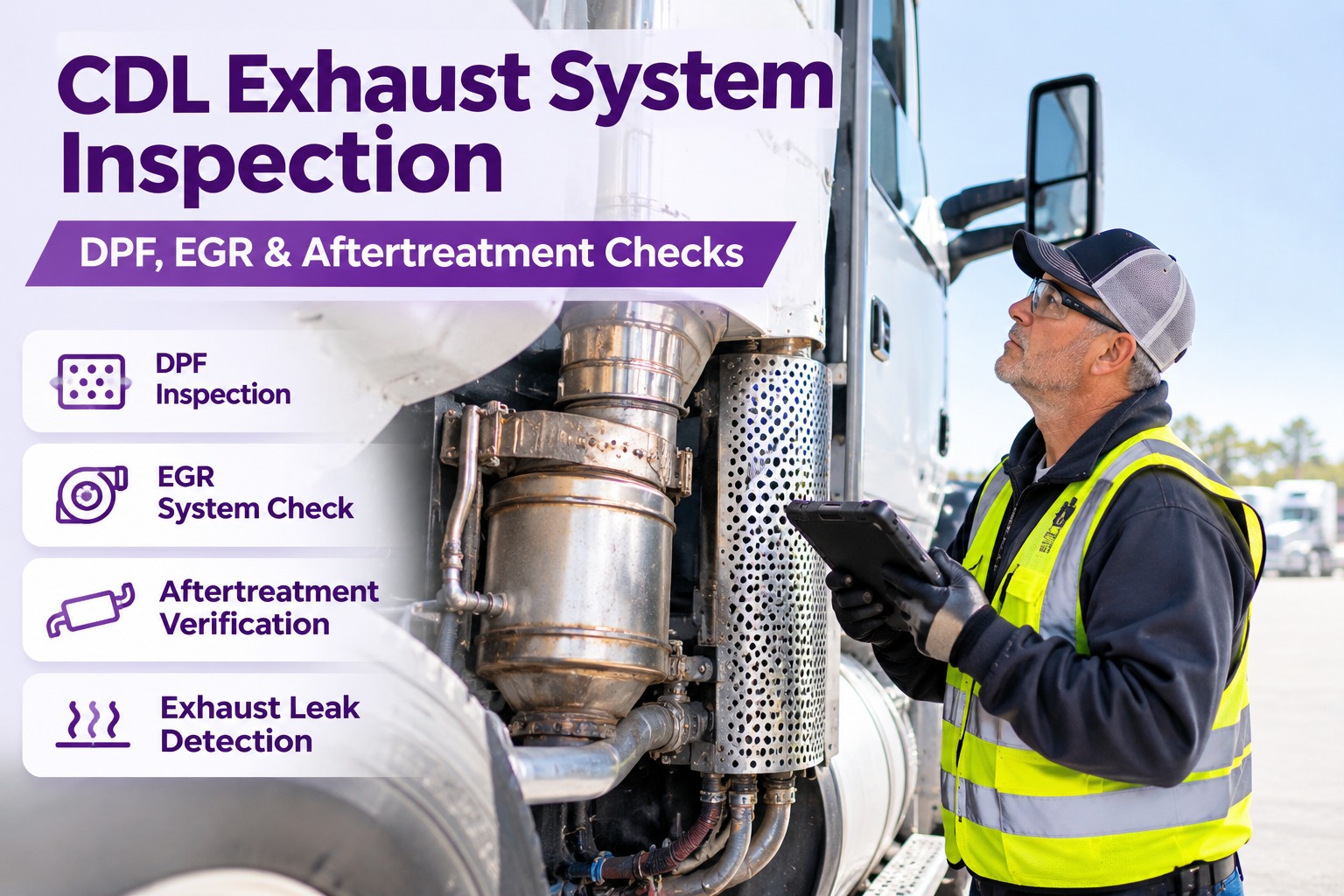
Ask a driver what is on the pre-trip checklist and exhaust rarely comes up first. Then a dash lamp comes on, power drops to a crawl, and a truck that looked fine at the yard is a tow call. Exhaust and aftertreatment problems are now one of the most expensive surprises in a modern diesel: a clogged DPF, a leaking EGR connection, or a loose muffler mount can lead to an engine derate, a failed roadside inspection, or an out-of-service order. This guide gives CDL drivers and fleets a simple front-to-back exhaust walkaround, a traffic-light system for grading defects, and a decoder for the dash lamps that matter. Start free and add exhaust checks to every driver's pre-trip.
CDL Exhaust System Inspection: DPF, EGR & Aftertreatment Checks
A five-minute cold-engine check can save a tow, a failed inspection, and a day of downtime. Truck Inspection & Maintenance Management Software puts the exhaust walkaround on the driver's phone and turns any defect into a graded work order.
The Front-to-Back Exhaust Walk
Follow the path the exhaust itself takes, from engine to tailpipe. Each stop is a place where a defect tends to show up first.
What to Look For at Each Stop
- Loose or cracked tubes, hoses, and clamps
- Black soot streaks around joints, a sign of leaking exhaust gas
- Coolant seepage or crusty residue near the EGR cooler
- Wiring and connectors secure and undamaged
- Housing free of dents, cracks, and corrosion holes
- Clamp bands tight, with no gaps or soot trails
- Sensors and wiring intact and clear of hot surfaces
- No signs of damage from impact or road debris
- Tank cap secure and the level adequate
- Lines and heater connections free of leaks
- White crystalline buildup near the doser or fittings
- No damaged, kinked, or rubbing lines
- Brackets, hangers, and clamps tight with no cracks
- Heat shields present and secure
- Exhaust outlet directed away from the cab, tires, and fuel tank
- No rattles, loose parts, or fresh rub marks
The Traffic-Light Defect Guide
Not every exhaust finding stops the truck. Use this simple grading so drivers and shops make the same call every time. When in doubt, treat it as the higher level and ask your maintenance lead.
- Light surface rust on the housing or stack
- Minor soot staining with no active leak
- Cosmetic heat shield dents that do not touch components
- Loose or cracked clamps and brackets
- Small exhaust leak aft of the cab
- Visible DEF crystals or minor line seepage
- Early coolant residue near the EGR cooler
- Exhaust leak at or ahead of the cab or sleeper
- Components touching wiring, fuel lines, or hoses
- Missing or detached muffler, pipe, or heat shield
- Fire, smoke, or fuel smell near the exhaust
Federal rules (49 CFR 393.83) restrict exhaust placement near fuel, wiring, and combustible parts, and CVSA out-of-service criteria address exhaust leaks near the driver compartment. Confirm the current criteria and your company policy.
Turn a Finding Into a Fix in One Tap
Drivers log the defect with a photo, the app grades it, and the shop gets a work order right away. No lost notes, no "I thought someone told maintenance." Start free or book a demo.
Dash Lamp Decoder: What the Truck Is Telling You
Lamp symbols and behavior vary by make and model, so check your owner's manual. These are the general meanings drivers should know.
Do and Don't: Exhaust Edition
- Inspect with the engine cool
- Take a photo of every defect you find
- Report warning lamps the same day
- Use only the correct DEF and approved parts
- Ignore a repeated regeneration or DPF lamp
- Park over dry grass or debris during a regen
- Remove or alter emissions equipment, which violates federal law
- Patch a leak with a temporary fix and dispatch
Frequently Asked Questions
Put Exhaust Checks on Every Pre-Trip
Guided inspections, photo defects, traffic-light grading, and automatic work orders, built for trucking fleets. Start free or book a demo with our team.