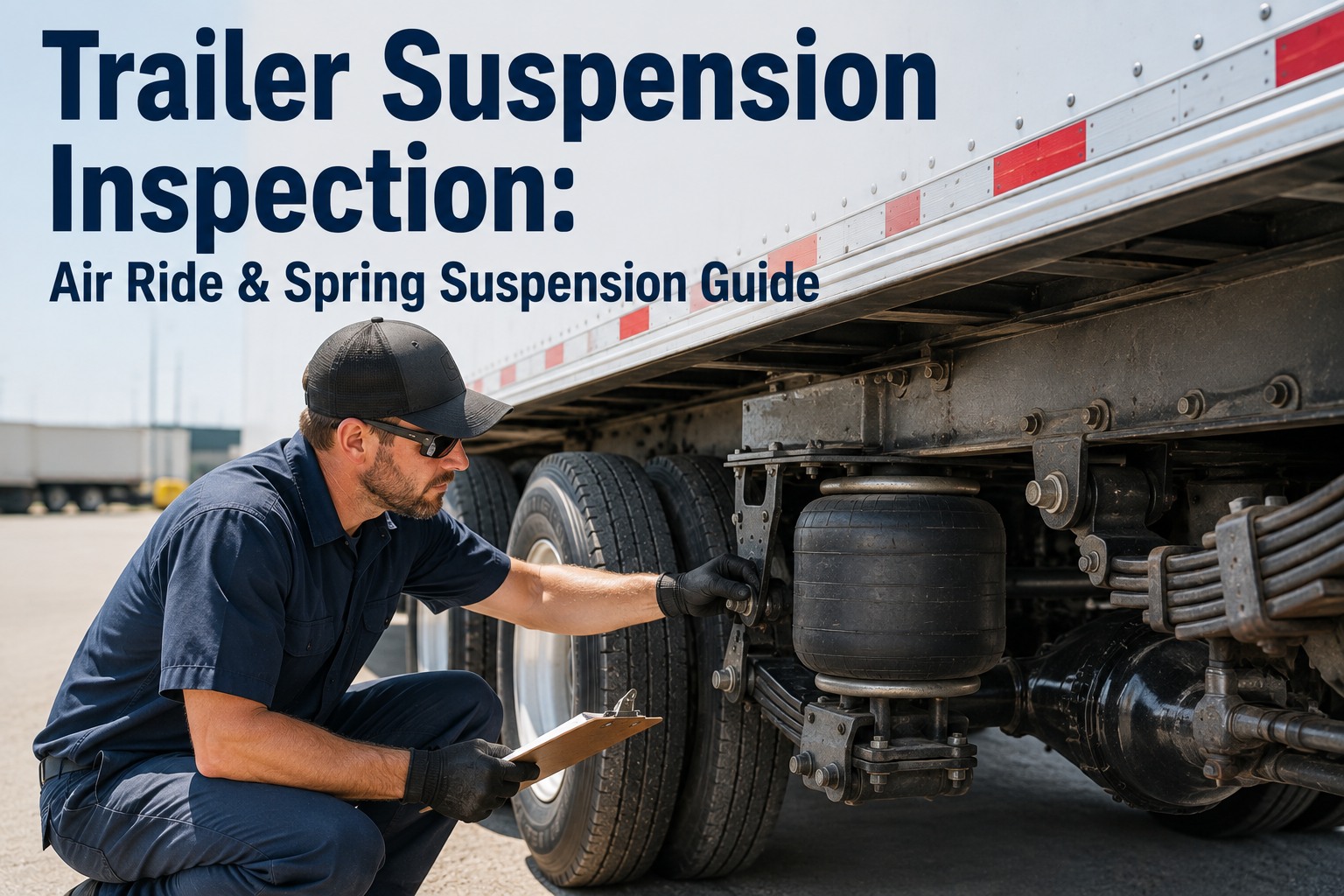
A cracked leaf or a slow-leaking air bag rarely announces itself. The first thing most fleets notice is a tire wearing to the cords on one side, a trailer sitting a little low at rest, or a load that rode rougher than it should have. By then the suspension has already been quietly chewing through tires and shocks for weeks. Flatbed suspensions come in two very different flavors — steel leaf spring and air ride — and each wears, fails, and gets inspected its own way. This guide covers both, side by side. Start free and put suspension checks on every trailer's record.
Flatbed Trailer · Suspension Maintenance
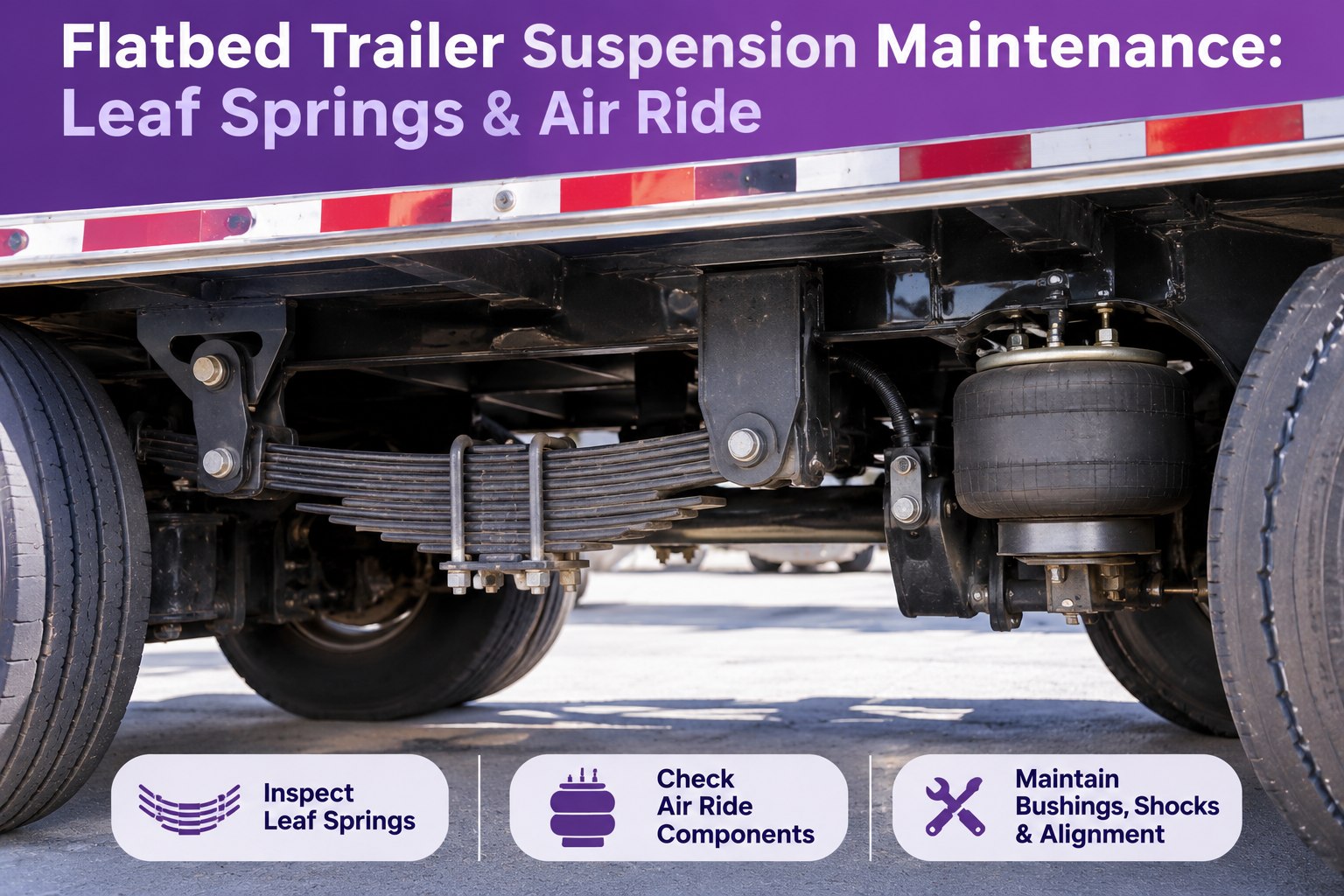
Flatbed Trailer Suspension Maintenance: Leaf Springs & Air Ride
A worn bushing or a tired air bag does not trip a warning light — it shows up as uneven tire wear, a failed roadside check, and an out-of-service order. Truck Inspection & Maintenance Management Software runs the loop that catches it first: a suspension walkaround on every digital inspection, each worn part logged to the trailer's DVIR, any defect turned into an assigned work order, and the next service scheduled — so leaf-spring and air-ride trailers alike stay aligned, torqued, and provable before they roll.
Leaf Spring
Leaf packs · U-bolts · hangers · shackle & eye bushings · equalizers
vs
Air Ride
Air springs · height control valve · air lines · shocks · pivot bushings
~100k micommon shock replacement point — in pairs, never one side
#1 causeof air spring failure is overextension from a worn shock
§393.207the FMCSA suspension-system standard inspectors work to
40–100 psitypical air-spring operating range on a trailer
Two Systems, Two Maintenance Jobs
Before the component detail, it helps to see how the two systems differ in what they ask of you — because a leaf-spring shop habit does not keep an air-ride trailer safe, and the reverse.
Leaf Spring
Absorbs viaStacked steel leaves flexing
Core taskRetorque U-bolts, check bushings
UpkeepLower — durable, fewer wear parts
Watch forLost arch, cracked leaves, lean
Air Ride
Absorbs viaAir springs on valves & lines
Core taskVisual checks, ride height, leaks
UpkeepHigher — more wear parts
Watch forLeaks, uneven height, bag cracks
Both share the same two big wear items — shocks and bushings — and the same enemy, misalignment that quietly eats tires. Book a demo to run the right checks per trailer type.
Leaf Spring: What to Inspect
Fasteners and bushings are the most important items on a leaf-spring suspension — a loose fastener left to work for any length of time causes damage that spreads. Check the whole assembly, both sides.
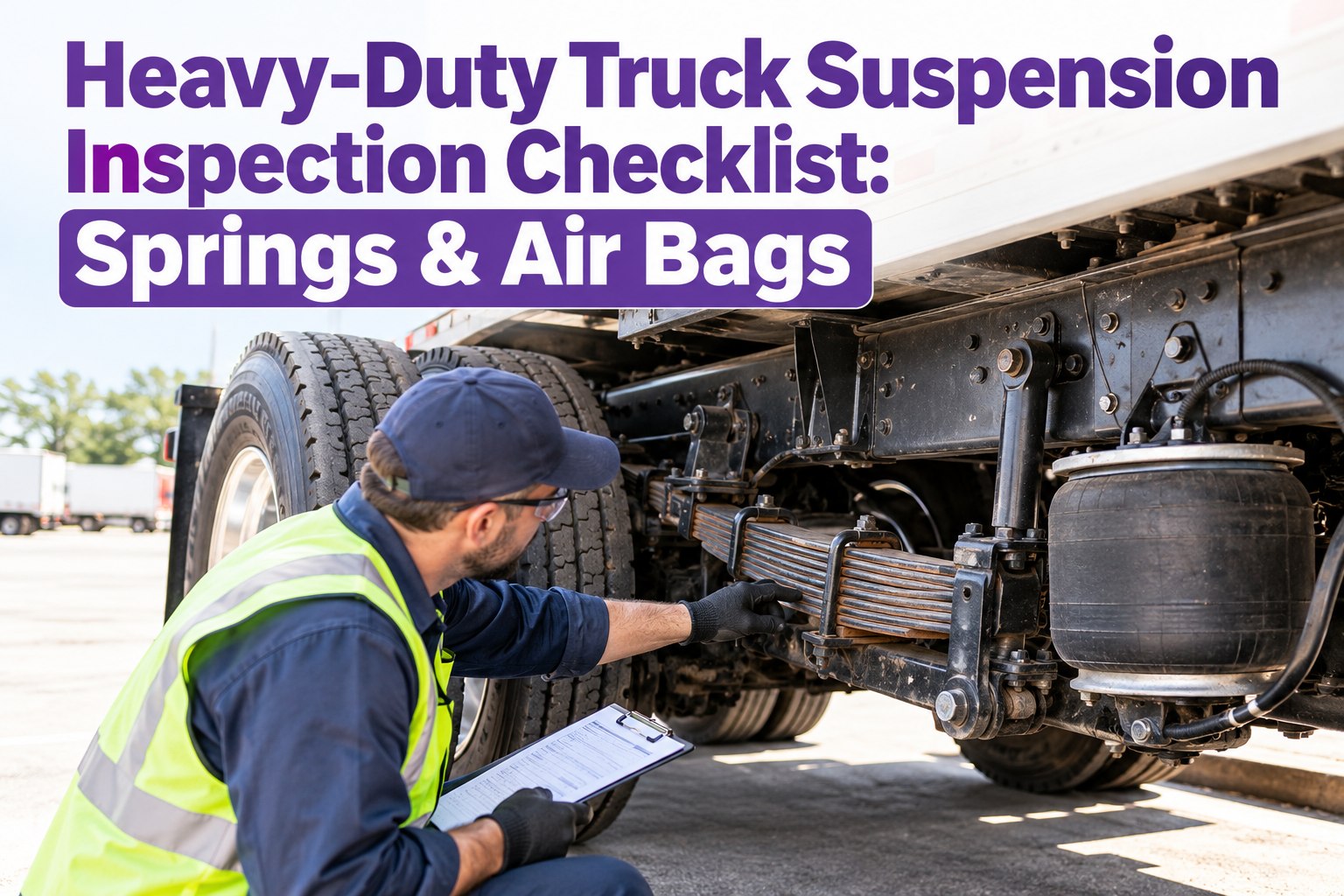
01Leaf packEach leaf tightly compressed, smooth arch retained. Flat or lost arch, cracked or broken leaves mean replacement.
02U-bolts & spring seatsCorrect torque, no cracking or looseness at the seat — a sign of insufficient U-bolt torque.
03Hangers & shacklesNo cracks, elongated holes, or shifted springs in their mounting hangers.
04Spring-eye & equalizer bushingsNo crumbling, play, or missing bushings. Grease spring pins as specified.
A trailer leaning left or right at rest, or a helper spring already engaged while empty, points straight at a sagging or broken pack. Start free and log every leaf-spring finding by trailer.
Air Ride: What to Inspect
Air ride carries more wear parts, so it rewards a routine. The three trouble spots are the air spring, the air valve, and the shock — inspect the bags at least weekly.
01Air springs (bags)Scan for cracks, bulges, abrasion from rubbing air lines, and fine surface cracks — "weather checking," or dry rot — on older bags.
02Ride heightRun each bag at its designed ride height. Uneven height points to a leaking bag, a bad height control valve, or restricted air to one side.
03Height control valve & linesNo leaks; lines routed clear of the bags so they can't abrade them. Confirm bags inflate on the pre-trip.
04Pivot & trailing-arm bushingsNo play or wear that would misalign the air spring and tear the bellows.
On a sliding tandem, confirm the locking pins are fully engaged every time — a half-set pin is its own out-of-service hazard. Book a demo to standardize the air-ride routine.
Shocks & Bushings: The Parts Both Systems Share
Whatever the suspension, two items wear out quietly and take other parts with them when ignored.
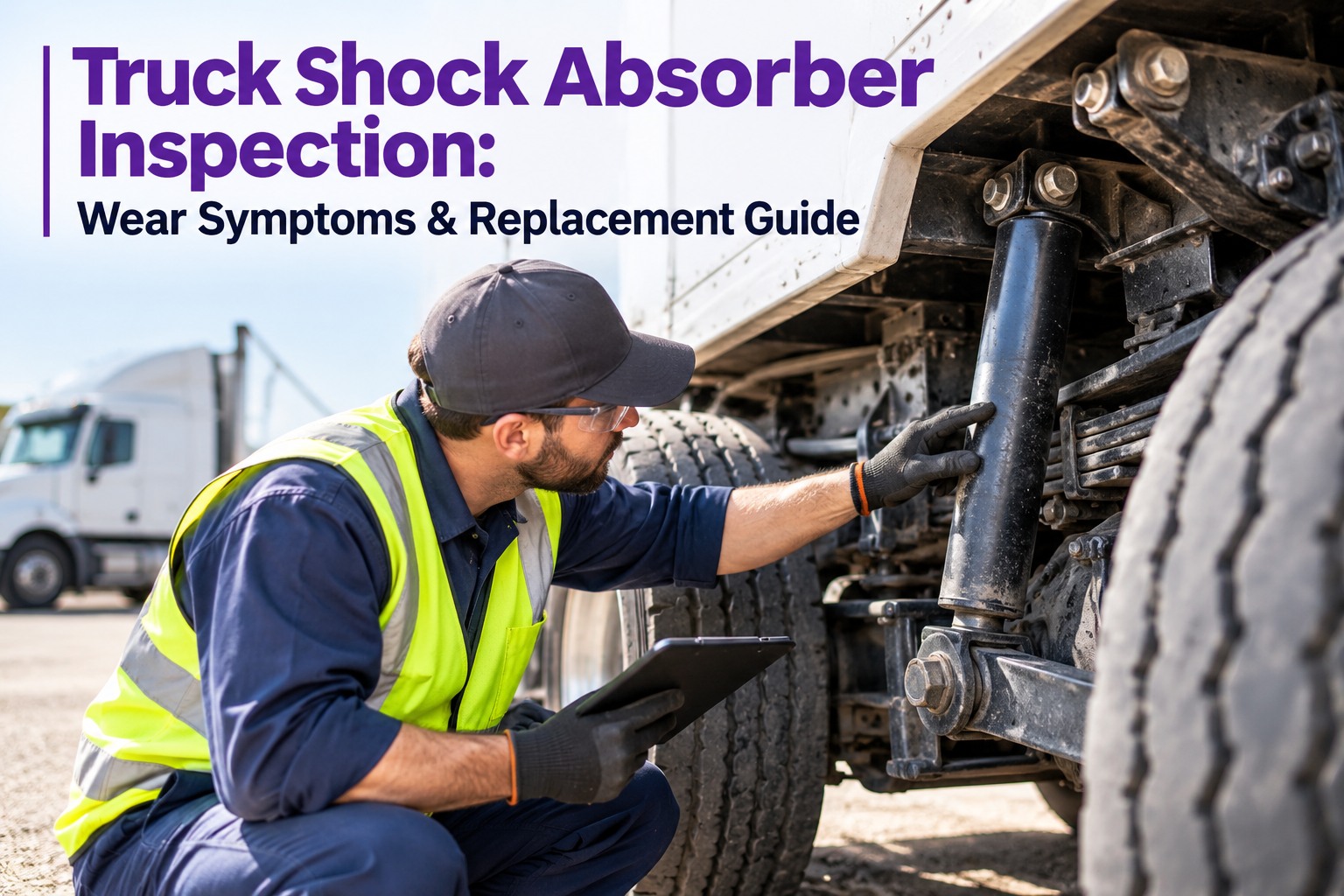
Shock absorbers
- Expect replacement around 100,000 miles, sooner if worn
- A worn shock is the number-one cause of air-spring overextension failure
- Test: feel each shock after a short drive — warm is good, oil leakage is not; misting is acceptable
- Replace in pairs so both sides damp equally
Bushings & alignment
- Worn bushings allow play that throws axle alignment off
- Uneven or one-sided tire wear is the tell — have alignment checked
- Replacing leaf springs can shift alignment; verify it afterward
- Bad alignment can feed false data to ABS and stability systems
Suspension Wear That the Record Catches First
The cheapest suspension failure is the one caught on a walkaround, not on the shoulder. Truck Inspection & Maintenance Management Software routes the right checks to each trailer type, turns a worn bag or cracked leaf into a work order, and keeps the dated history that proves the trailer was roadworthy when it rolled.
Warning Signs You Can Catch From the Ground
Trailer leans at rest
→
Broken leaf or sagging air bag on the low side
Uneven or one-sided tire wear
→
Misalignment from worn bushings or a bent component
Rougher ride, excess sway
→
Worn shocks or fatigued springs no longer damping
Air leak you can hear, bag won't hold
→
Stop and repair — a bag that won't inflate is out of service
Each of these is visible before you ever lift the trailer — which is exactly why a disciplined walkaround pays. Book a demo to flag these the moment a driver spots them.
Frequently Asked Questions
1Which is lower maintenance — leaf spring or air ride?
Leaf spring. It has fewer wear parts, costs less to keep up over a trailer's life, and mostly needs its U-bolts retorqued and bushings checked. Air ride rides better and levels the load across axles, but carries more wear items — air springs, height control valves, shocks and more bushings — so it needs a steadier inspection routine. Neither is maintenance-free.
Book a demo to set a routine for each type.
2How often should trailer shocks be replaced?
Plan on roughly 100,000 miles, or sooner if a check shows wear — and always replace them in pairs so both sides damp the same. Shocks matter more than most drivers think: a worn shock is the single biggest cause of air-spring failure, because it lets the bag overextend and tear. A quick feel-test after a short drive catches a leaking shock early.
Book a demo to track shock mileage per trailer.
3What are the signs a leaf spring needs replacing?
A flattened or lost arch, cracked or broken leaves, a trailer sitting low or leaning to one side at rest, excess sway, or a helper spring already engaged while the trailer is empty. Any of these means the pack is no longer doing its job. Replace with OE-approved springs, and check alignment afterward since a new pack can shift it.
Book a demo to log leaf-spring condition over time.
4Why does suspension wear cause uneven tire wear?
Because worn bushings, a sagging spring or a bent component shift the axle out of alignment, and a misaligned axle scrubs the tire unevenly as it rolls. One-sided or scalloped wear is often the first visible symptom of a suspension problem, not a tire problem — so when you see it, have the alignment checked rather than just rotating tires.
Book a demo to connect tire wear to its root cause.
Aligned · Torqued · Leak-free · On record
Keep Every Trailer Riding Right — and Provable
Truck Inspection & Maintenance Management Software routes leaf-spring and air-ride checks to the right trailers, opens a work order on any worn part, and keeps the dated suspension record that stands up at a roadside inspection — across your whole flatbed fleet.
No credit card required. Free for up to 3 trucks. Built for flatbed and open-deck fleets.