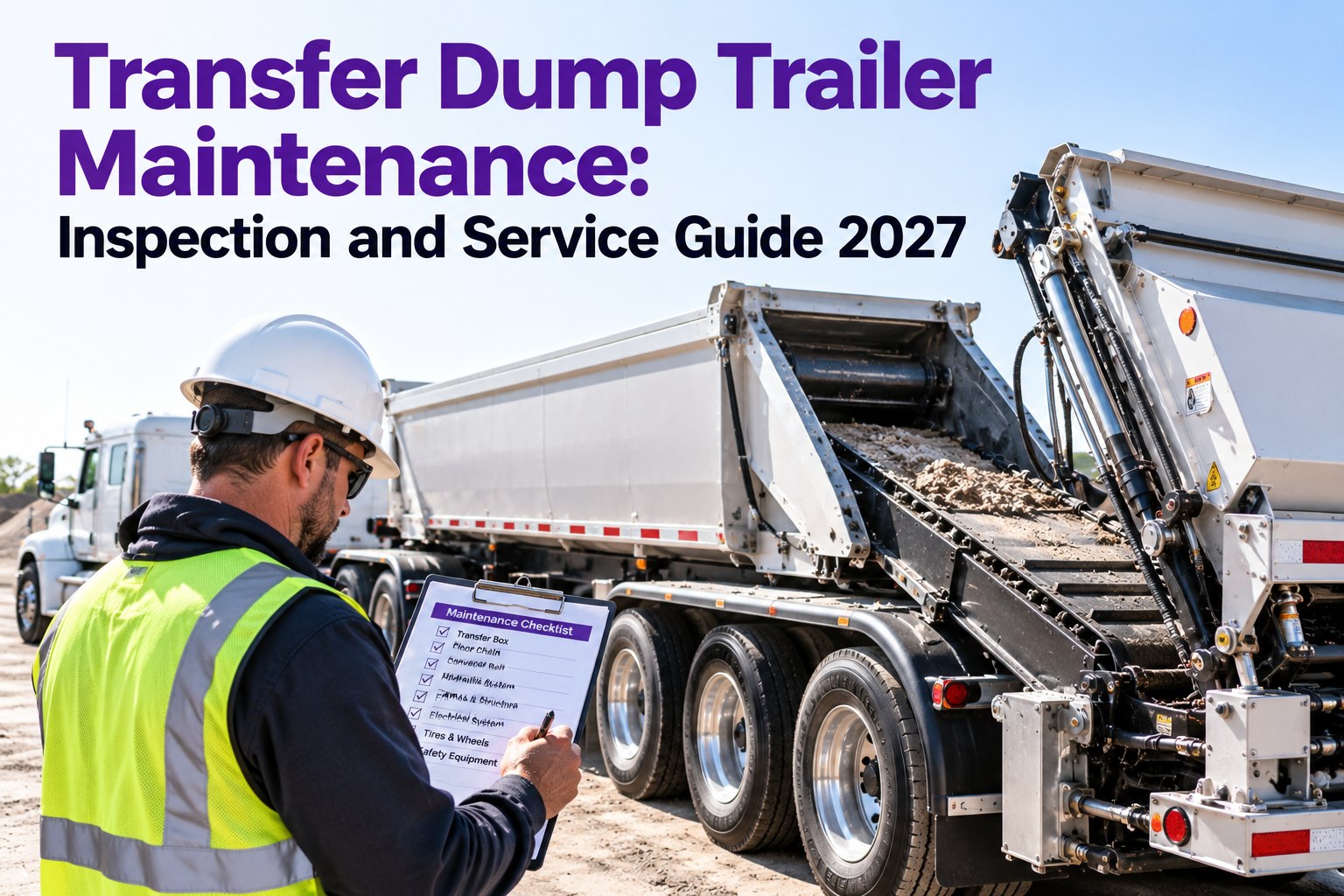
A transfer dump trailer earns its place by doing something a plain dump truck can't: the truck and its trailer carry two loads, and the trailer's box is drawn onto the truck's box by a hydraulically driven chain. That clever system also adds parts a standard dump trailer never has: a chain drive, a movable box riding on tracks, an alignment connection and extra hydraulic circuits. Those are the parts that fail quietly, then fail all at once on a job site with a full load and a crew waiting. This guide covers what makes these trailers different, a daily, weekly, monthly and annual service clock, a symptom-to-cause troubleshooting table and the stop rules to follow before any transfer. It also shows how Truck Inspection & Maintenance Management Software turns each finding into a tracked work order. Start free and put your transfer trailers on a service schedule.
Transfer Dump Trailer Maintenance: Inspection and Service Guide 2027
Transfer trailers work hard in dust, grit and tight job sites, and the specialized parts wear out of sight. TIM gives every trailer its own inspection checklist, turns each defect into a work order, and schedules the weekly, monthly and annual service your manual calls for, so small problems get fixed before they stop a truck.
Anatomy of a Transfer Rig: What's Different
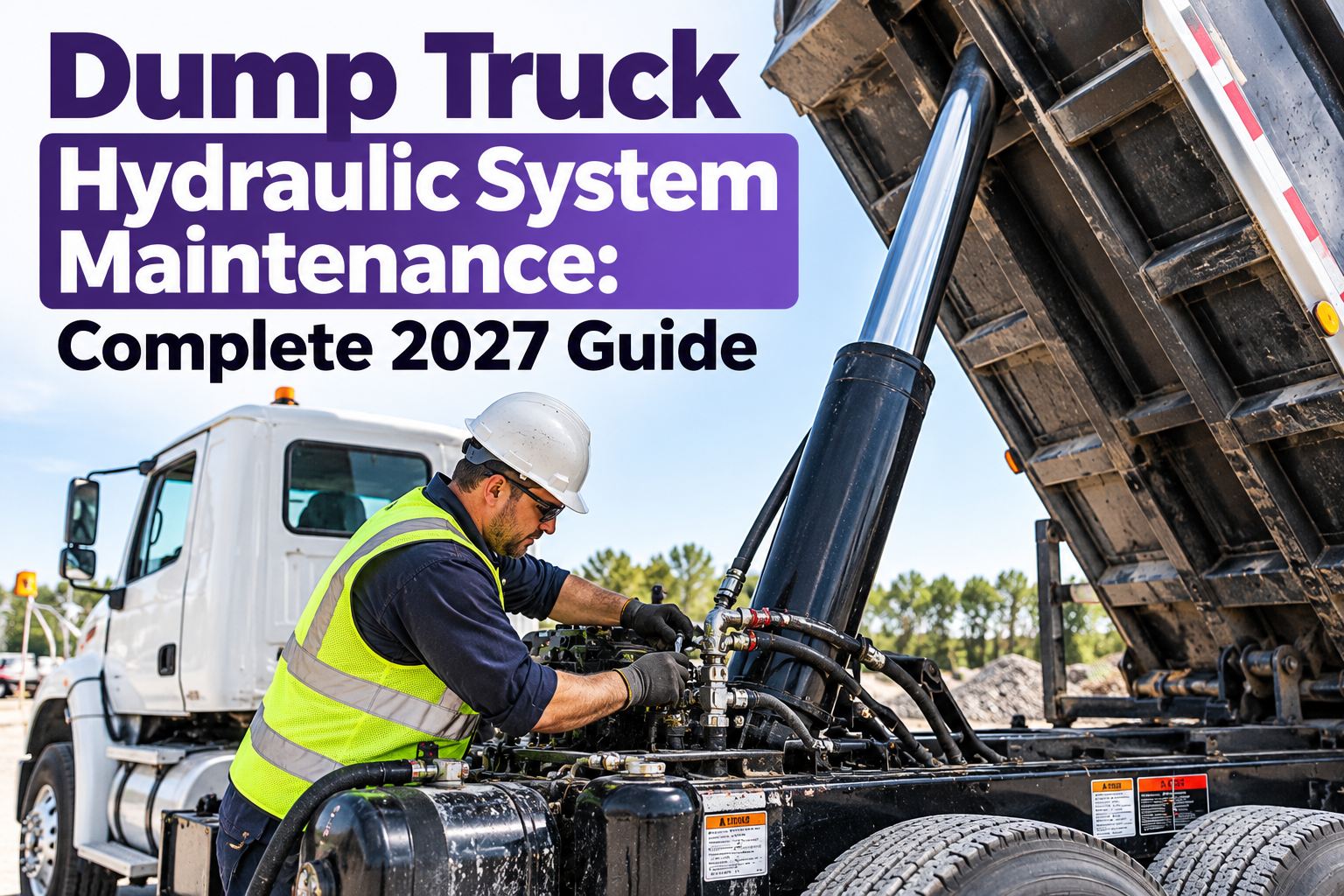
The trailer is essentially a second box riding behind the truck. When it's time to transfer, the driver connects the hydraulics, and a hydraulic motor and chain on the trailer pull the transfer box onto the truck box, where its wheels ride on tracks. A high-lift tailgate on the truck lets the box pass through, and an alignment connection keeps everything in position. Ask your manufacturer about your exact configuration, because designs vary.
The Service Clock: Daily to Annual
Intervals below are a practical starting rhythm. Your trailer manufacturer's manual always wins for torque values, lubrication points, chain wear limits and fluid specifications.
- Leaks at hoses, couplers and the hydraulic motor
- Chain: no broken links, missing pins or obvious slack
- Box wheels and tracks clear of debris and damage
- Alignment dowel and tailgate latch in good order
- Hydraulic fluid level
- Tires, brakes, lights and coupling secure
- Grease every point your manual lists
- Lubricate the chain as specified
- Check wheel torque
- Look at chain tension and sprocket teeth
- Inspect hoses at chafe points
- Clean tracks and rollers
- Hydraulic fluid condition and filter
- Wheel seals and hub oil
- Measure chain wear against the OEM limit
- Sprocket, idler and bearing condition
- Fasteners and drive mounts
- Wear plates and floor condition
- Hydraulic pressure and performance check
- Hose replacement by age and condition
- Weld, crossmember and frame inspection
- Annual vehicle inspection (49 CFR 396.17)
- Corrosion treatment and touch-up
- Review the year's repair history
One Transfer, Five Checkpoints
Each step of a transfer is also a chance to catch a problem. Watch and listen as the work is done.
Symptom, Likely Cause, What to Do
| What you see or hear | Likely cause | Action | Status |
|---|---|---|---|
| Box moves jerky or slow | Low fluid, air in system, worn chain, dirty tracks | Check fluid and leaks; inspect chain and tracks | Fix soon |
| Chain skips or climbs a sprocket | Chain stretch or worn sprockets | Measure against OEM limit; replace as a set | Stop |
| Box doesn't enter truck straight | Worn dowel or alignment, bent track | Inspect the connection before the next transfer | Stop |
| Leak at hose or coupler | Worn seal, chafed hose, loose fitting | Relieve pressure; replace the part | Stop |
| Hot fluid or whining pump | Contaminated fluid, restriction, pump wear | Check filter and fluid; service the circuit | Fix soon |
| Belt mistracks or slips (belt types) | Tension, worn rollers, material buildup | Adjust per manual; inspect rollers and belt edge | Fix soon |
| Wheel end hot or leaking | Seal or bearing failure | Take out of service and repair | Stop |
Safety Rules Before You Touch the System
Turn Findings Into Tracked Work
Truck Inspection & Maintenance Management Software gives each transfer trailer its own record: inspection checklists with photos, defects logged against the unit, work orders for the shop, and recurring PM for the weekly, monthly and annual service. Every logged defect is acknowledged, graded and assigned within 4 hours.
Plan Your 2027 Service Calendar
Frequently Asked Questions
Keep Every Transfer Trailer Working, Not Waiting
Start free to give each trailer its own checklist, defect log and service schedule, or book a demo and we'll walk through your transfer fleet together.