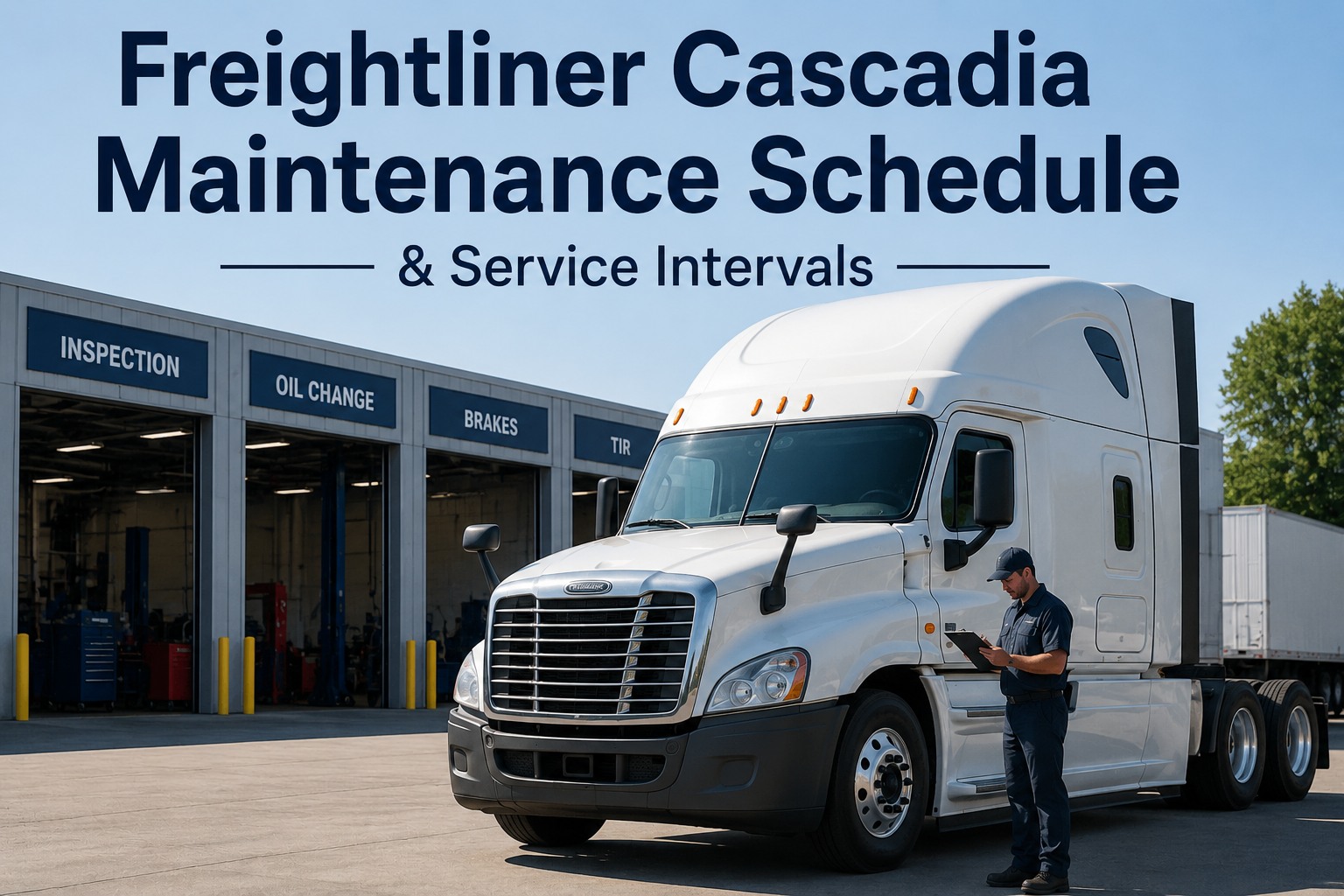
The DEF lamp flickers on the pre-trip. The driver mentions it, the note goes nowhere, and three days later the Cascadia is derated on the highway. This guide covers how Cascadia DPF, DEF and SCR systems fail, what to inspect and when. It also shows how Truck Inspection & Maintenance Management Software turns each pre-trip finding into a graded work order and a scheduled PM. Start free and run your Cascadia aftertreatment checks in one place.
DVIR → Defect → Work Order → PM
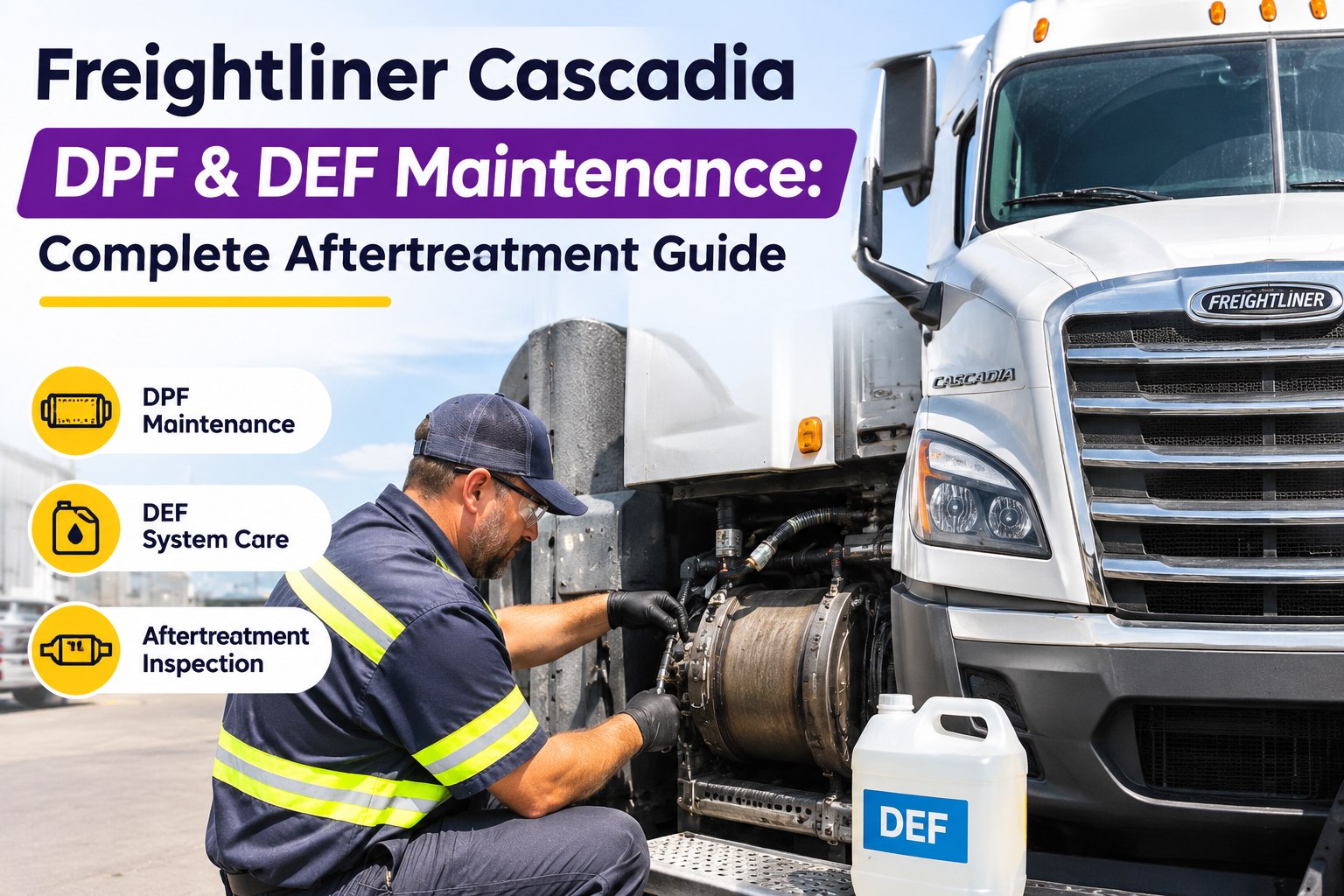
Freightliner Cascadia DPF & DEF Maintenance: Complete Aftertreatment Guide
A DEF warning nobody owns becomes a derate on the highway. Truck Inspection & Maintenance Management Software turns every DPF, DEF or SCR finding from the pre-trip into a graded work order, then schedules the PM that prevents the next one.
Our promise on this page: every aftertreatment defect gets an owner, a priority and a due date, before it becomes a roadside call.
1 · DVIRDriver logs the DEF lamp, leak or crystals on the digital inspection
2 · DefectFinding is graded by severity and attached to the truck
3 · Work orderCreated and assigned, with parts availability visible
4 · PMDPF, doser and DEF services scheduled by miles or hours
Follow the Exhaust: How Cascadia Aftertreatment Works
Think of the system as a relay race. If one runner stumbles, the whole team slows down. Exhaust leaves the engine and passes through each stage in order.
1Turbo & engineHot exhaust leaves the cylinders carrying soot and NOx.
2DOCOxidizes hydrocarbons and helps heat the DPF.
3DPFTraps soot, then burns it off during regeneration.
4DEF doser + SCRDEF is sprayed in and the catalyst converts NOx to nitrogen and water.
5TailpipeCleaner exhaust exits. Sensors check every stage.
How the software helps: Each stage of the exhaust path becomes an inspection item on the digital DVIR, so a driver can flag the exact component instead of writing “truck feels weak.”
Warning Signs: What the Truck Is Telling You
Aftertreatment problems rarely appear without notice. Train drivers to report these symptoms on the pre-trip, not at the end of the week.
DPF lamp or frequent regensLikely cause: soot loading, short-haul duty cycle, failing sensor. Action: check regen history, inspect sensors, schedule a parked regen or service.
DEF warning or crystals at the doserLikely cause: dirty or clogged doser, leaking line, poor DEF. Action: inspect the doser and lines, test DEF quality.
Lost power or high exhaust tempsLikely cause: restricted DPF or SCR catalyst. Action: pull fault codes, check backpressure, plan cleaning.
DEF use looks too high or too lowLikely cause: contaminated DEF, bad NOx sensor, injection fault. Action: refractometer test and sensor check.
How the software helps: Defects are graded when logged. A DEF warning with visible leaks is ranked above a cosmetic item, and a work order is created for the right truck.
Three Kinds of DPF Regeneration
Regeneration burns trapped soot to ash. How it happens decides whether the driver notices.
PassiveHappens while drivingHighway heat burns soot automatically. This is the goal on long-haul runs.
ActiveEngine triggers itThe ECU raises exhaust temperature when soot builds up. Never interrupt it repeatedly.
ParkedDriver or tech starts itUsed when the lamp is on or soot load is high. Needs a safe, ventilated spot and time.
Regeneration does not remove ash. Ash is the non-burnable residue from oil additives, and only a professional DPF cleaning removes it. Check your engine maintenance manual for the right cleaning interval for your duty cycle and oil.
How the software helps: Add DPF ash cleaning and doser inspection as recurring PM tasks by miles or hours, so they are due on a schedule instead of being remembered.
DEF System Care: Do This, Avoid That
Do
- Buy DEF that meets ISO 22241 / API certification
- Test quality with a refractometer when in doubt
- Keep caps and funnels clean and dedicated to DEF
- Store DEF out of direct sun and extreme heat
- Inspect the doser, lines and tank for crystals or leaks
Avoid
- Topping off with water or diluted DEF
- Using old DEF stored for a long time in heat
- Putting DEF in the fuel tank, or diesel in the DEF tank
- Ignoring crystal build-up around the doser
- Clearing fault codes without finding the cause
How the software helps: Add DEF quality tests, doser and line inspections to your PM checklist. Repeat findings show up in the truck’s history, so you can see patterns.
The Derate Ladder: How a Small Warning Becomes a Big Problem
Aftertreatment faults escalate in steps. Exact behavior varies by model year and calibration, but the pattern is consistent.
Step 1Dash warningEasy fix, no lost time
Step 2Reduced powerSlower trips, higher fuel use
Step 3Speed limitedMissed delivery windows
Step 4Tow or roadside callHighest cost and downtime
How the software helps: Defects that reach Step 2 or 3 move to the top of the shop queue, so the truck is repaired before it reaches a tow.
Cascadia Aftertreatment PM Timeline
Every pre-tripCheck DEF level, dash lamps, visible leaks and exhaust condition.
Every PM serviceInspect doser, DEF lines, heater, tank cap and wiring. Review fault codes and regen frequency.
PeriodicTest DEF quality, check NOx and temperature sensors, inspect SCR and exhaust clamps.
By mileage / hoursDPF ash cleaning and doser or catalyst service per the engine manual and duty cycle.
Always confirm intervals with Detroit and Freightliner documentation for your exact engine and model year.
How the software helps: Every pre-trip check, PM and repair is recorded against the truck, giving you a clear service history for audits and warranty conversations.
The Cost of Waiting
Scheduled cleaning is a planned line item. A failed DPF or SCR with a tow and downtime is an emergency.
Illustrative cost range, scheduled vs. failure
FailureTow + replacement parts + days of downtime
Illustrative comparison. Actual prices vary by shop, region and parts. Aftertreatment replacement parts can cost thousands of dollars.
One Loop for Every Cascadia: Inspect, Grade, Repair, Prevent
Truck Inspection & Maintenance Management Software connects the pre-trip DVIR to defects, work orders and PM schedules. Aftertreatment issues get an owner and a due date, and every repair stays on the truck’s record.
Frequently Asked Questions
How often should a Cascadia DPF be cleaned?
It depends on engine, oil, duty cycle and fault history. Follow the interval in your engine maintenance manual and clean sooner if you see frequent regens or backpressure faults.
Start free and set mileage-based reminders.
Can bad DEF cause a derate?
Yes. Contaminated or diluted DEF can trigger quality faults, damage the SCR system and lead to power reduction. Test questionable DEF before it goes into the tank.
Why does my truck regen so often?
Common reasons are short routes, lots of idling, sensor faults, injector or EGR problems, or a DPF with heavy ash. Look at the pattern and fix the cause instead of just forcing regens.
How does the software help with DPF and DEF maintenance?
Drivers log aftertreatment findings on the digital DVIR, defects are graded and become work orders, and recurring services like ash cleaning and doser inspection are scheduled by miles or hours. It doesn’t repair the truck, but it makes sure nothing slips.
Book a demo to see the loop in action.
Pre-trip finding · Work order · Scheduled PM
Stop Letting a Dash Lamp Become a Derate
Run your Cascadia inspections, defects, work orders and PMs in one workflow, so DPF, DEF and SCR issues are handled in the shop, not on the shoulder.
No credit card required. Free for up to 3 trucks.