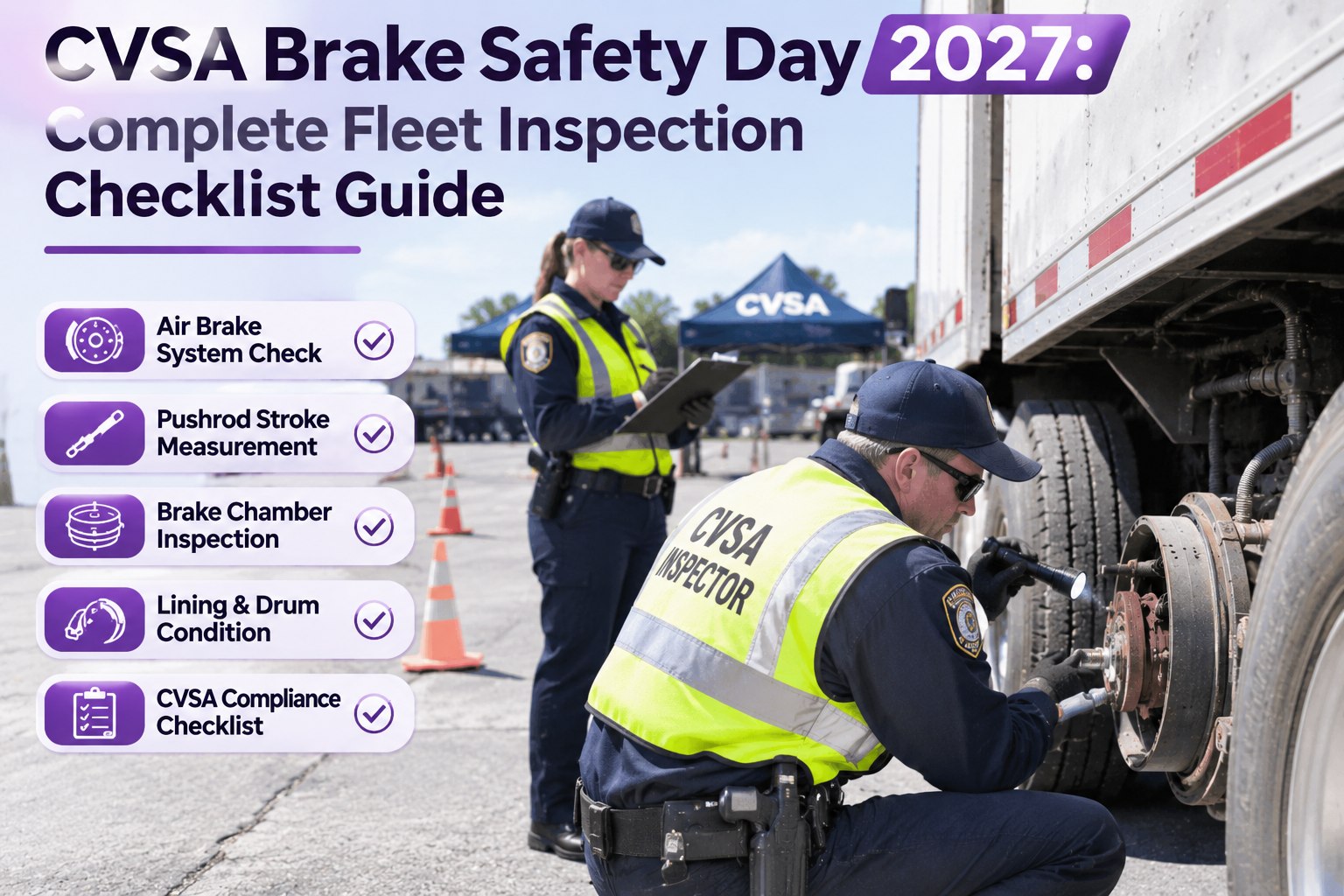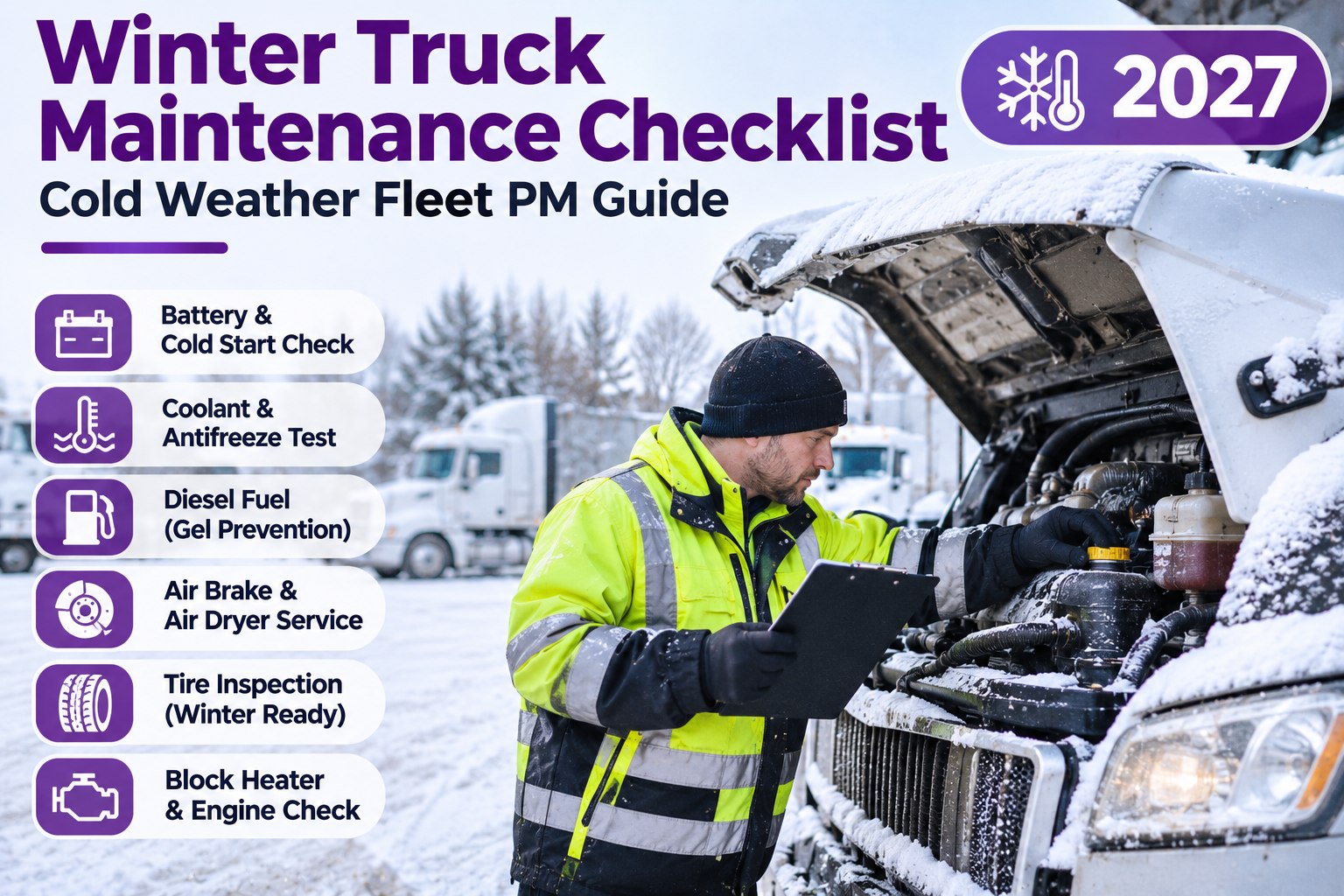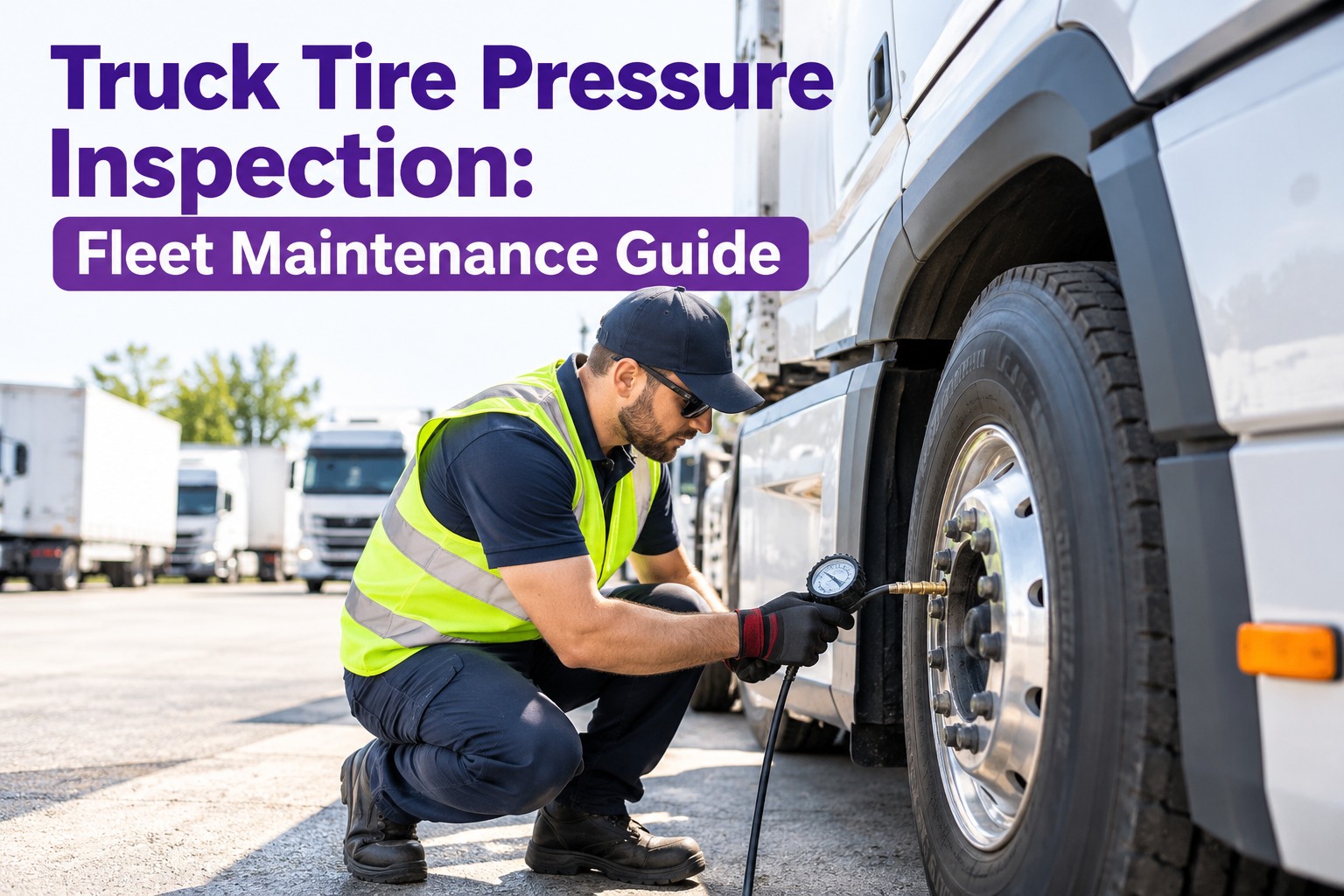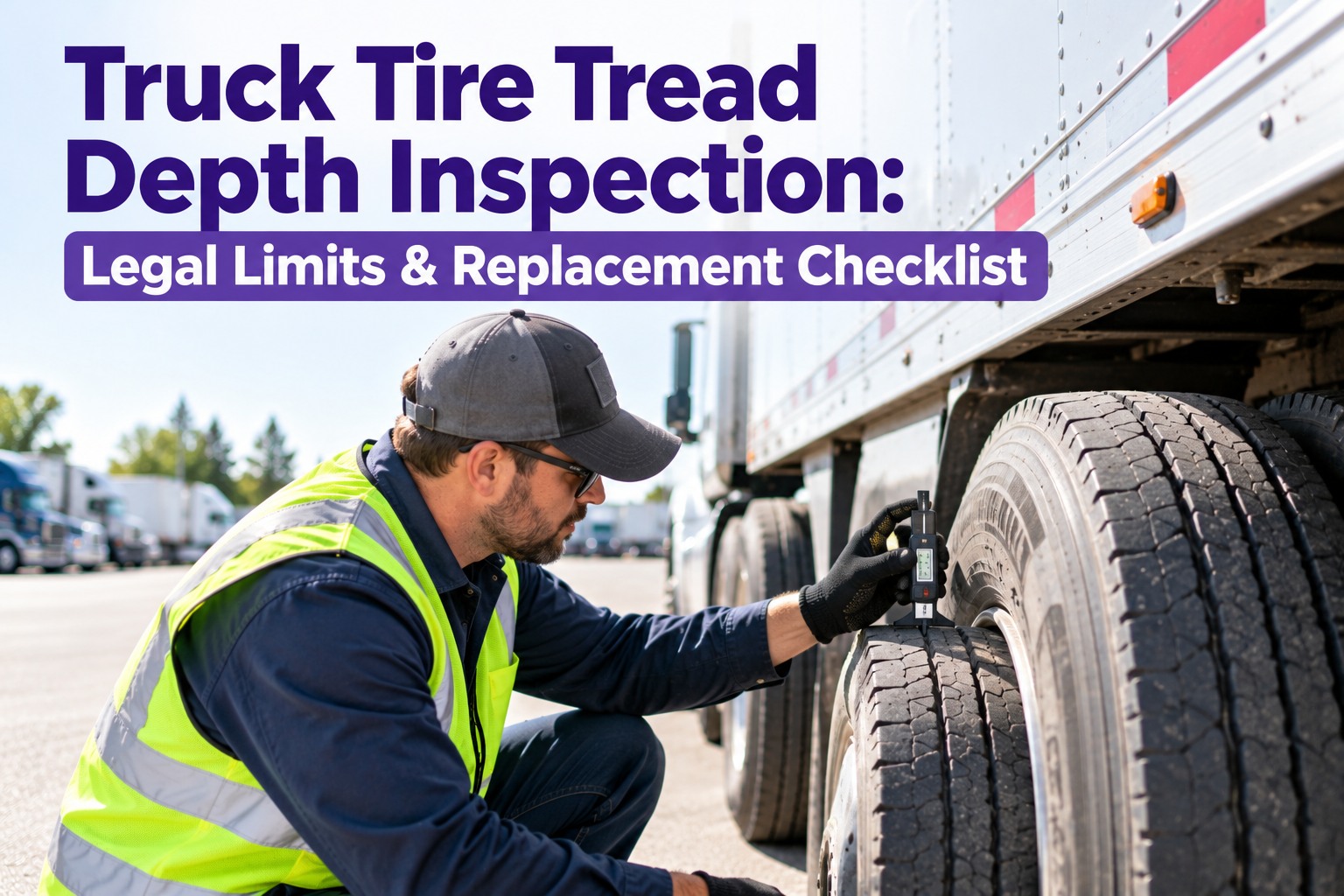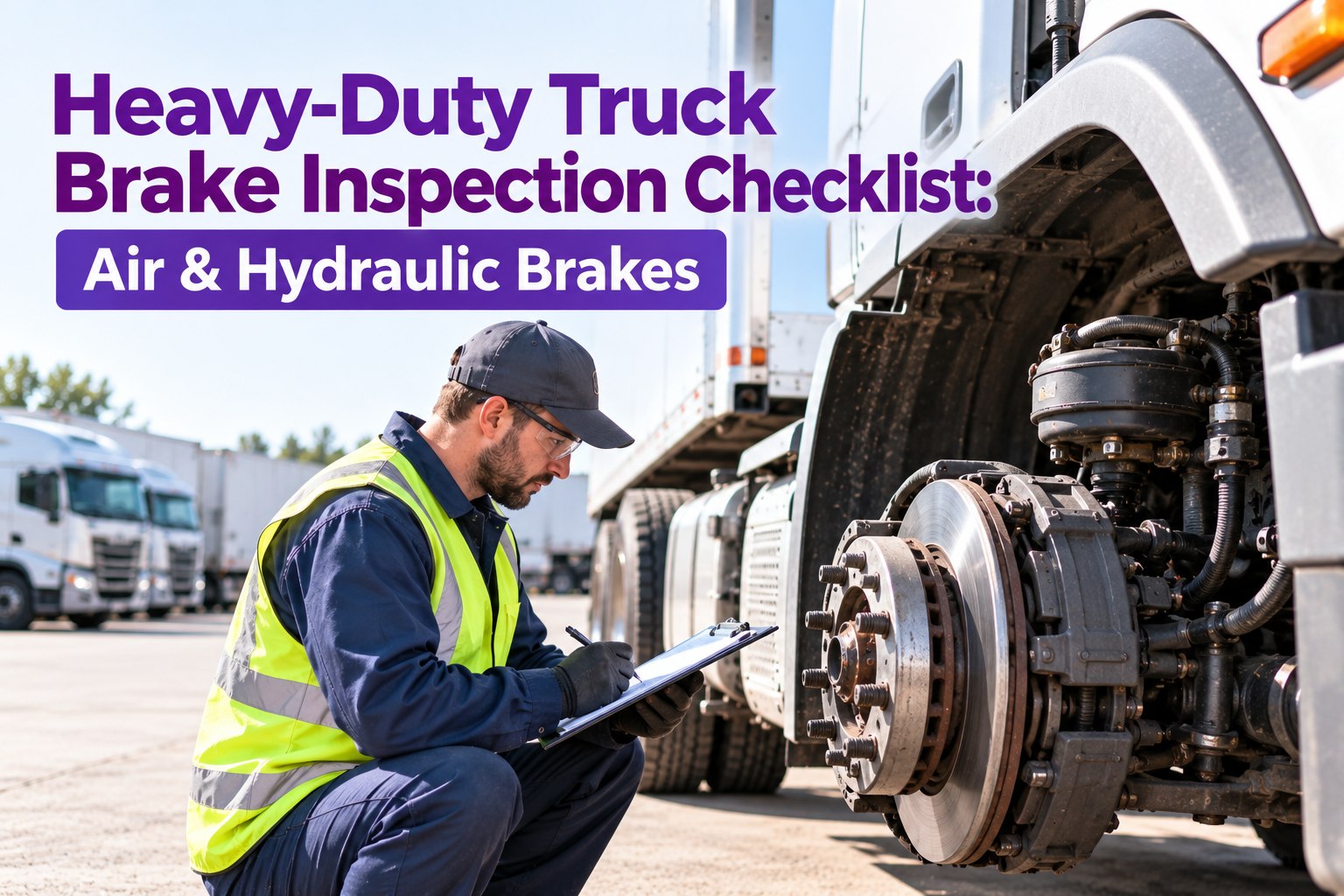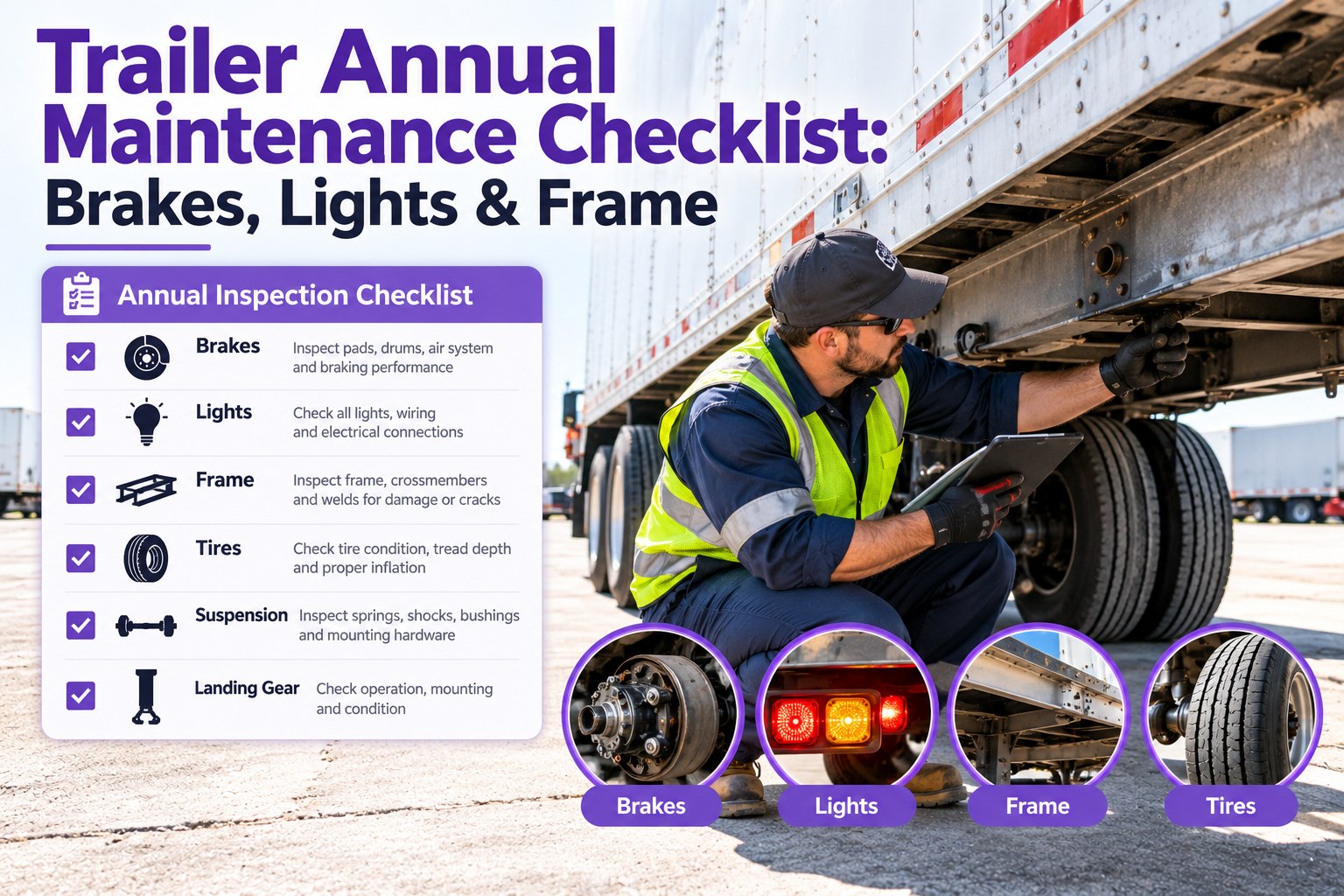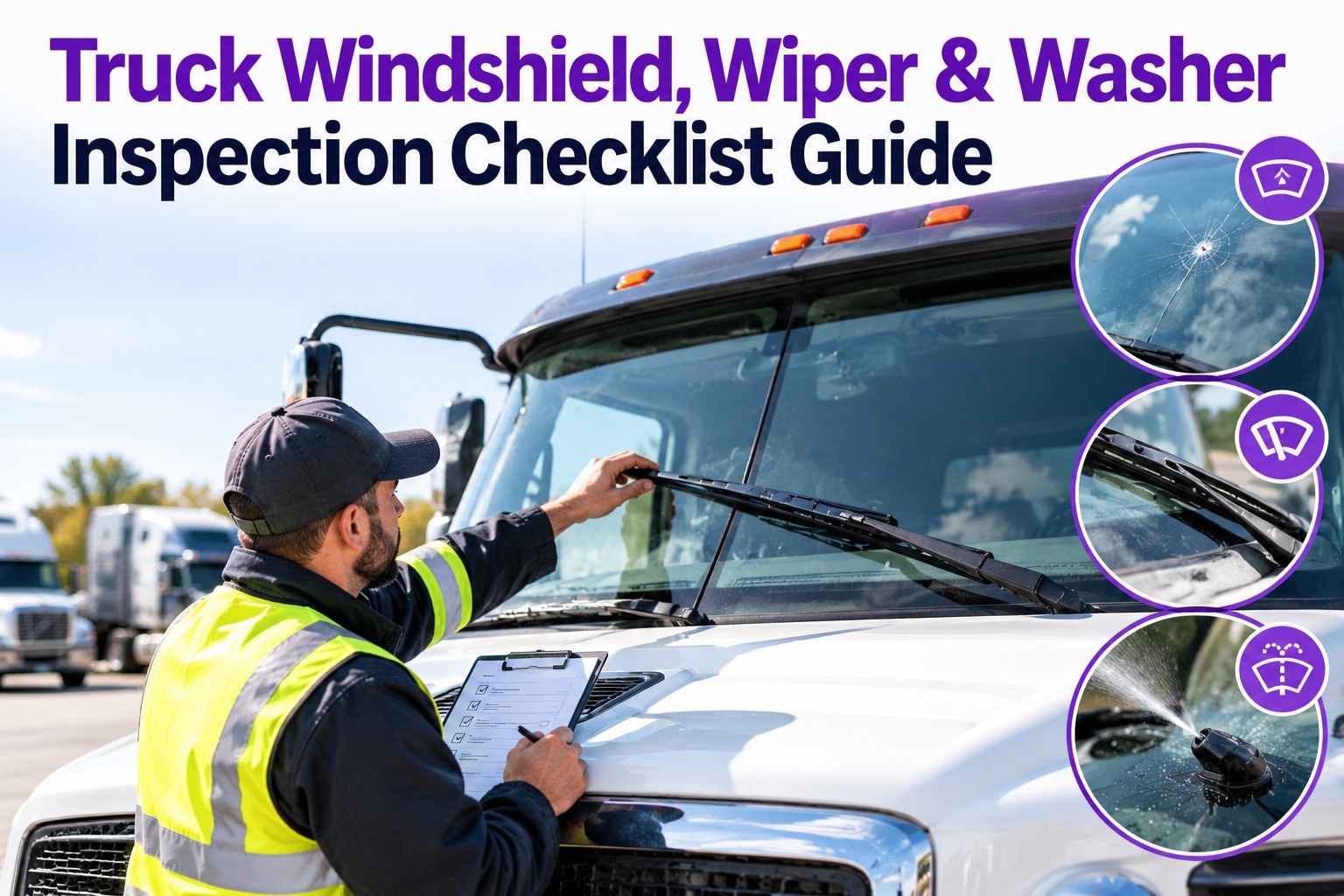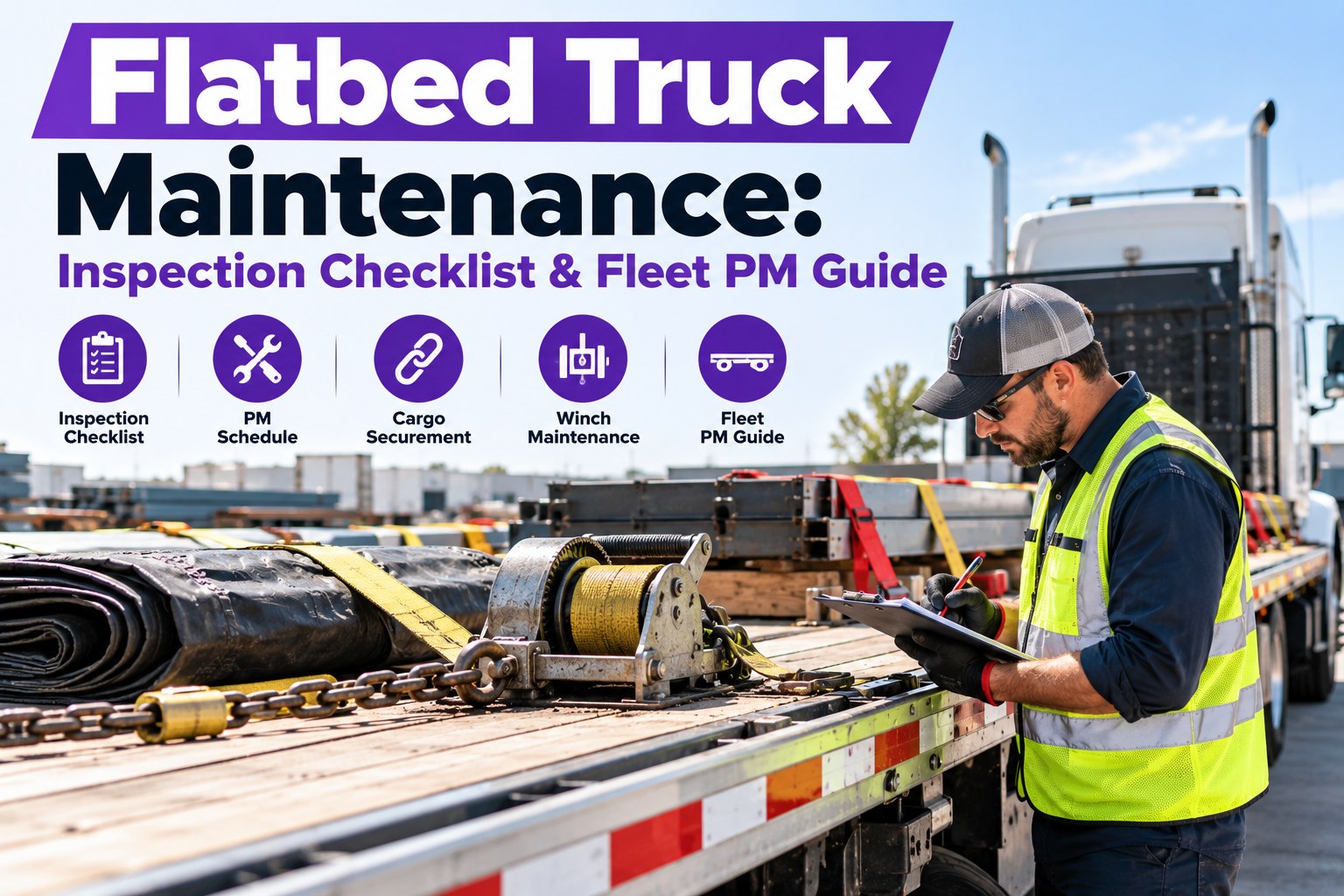
Rain is the most dangerous weather a truck faces — it's behind far more crashes than ice and snow combined, and on wet pavement a loaded truck's stopping distance can double or triple. The trouble is that a truck's three defenses against rain — its grip on the road, its ability to stop, and the driver's ability to see — all weaken at once in the wet. Every one of them is something you inspect before the season starts, not during a skid. This checklist walks the whole wet-weather readiness pass, grouped by those three jobs plus the water intrusion that quietly fails electrical and brakes. Start free and put the rainy-season check on every truck.
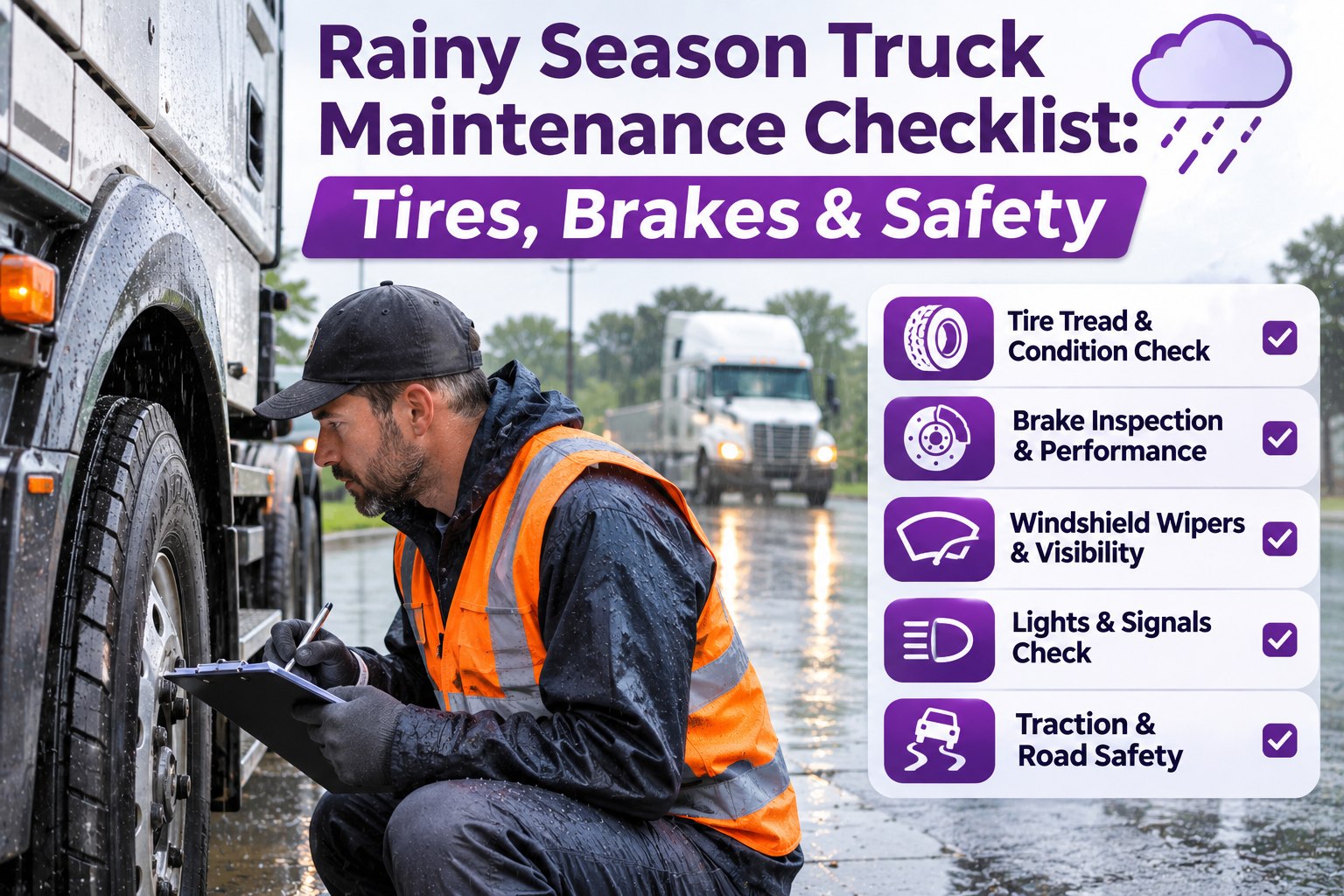
Rainy Season Truck Maintenance Checklist: Tires, Brakes & Safety
The Numbers Behind Wet-Weather Risk
This isn't caution for its own sake — rain's danger is measurable, and it's why the pre-season check pays for itself.
The Rainy-Season Readiness Checklist
Work the three jobs in order — grip, stop, see — then seal out the water that wrecks what's left. Tap each item as you clear it; anything that fails becomes a defect, not a memory.
Driving Safe in the Wet
A ready truck still needs a driver who respects the physics. Share these with every driver as the rainy season opens — they're where the inspection pays off.
Inspect Before the Season, Not During the Skid
A worn wiper or a bald steer tire is a cheap fix in the yard and a catastrophe on a flooded interstate. Run the wet-weather check as a dated DVIR, flag each defect with a photo, and the whole fleet starts the season ready instead of finding out one truck at a time.
Why Fleets Run the Seasonal Check in Software
Frequently Asked Questions
FMCSA requires at least 4/32 inch on steer tires and 2/32 inch on all others, but for wet weather you want real margin above those minimums — tread above 4/32 inch is what lets water escape before the tire lifts off the road. Below it, hydroplaning risk climbs sharply. Book a demo to track tread depth per tire.
Roughly two to three times the dry distance — a 65 mph stop that takes about 525 feet on dry pavement can stretch past 1,300 feet on a wet road. That's why wet-weather driving calls for cutting speed and opening the following distance to seven seconds or more. Book a demo to keep brakes on the seasonal check.
Three jobs plus one: grip (tire tread, inflation and condition), stop (brakes, air dryer, drained tanks, ABS), see (wipers, washer, glass, defog), and keeping water out (seals, connectors, grounds). Each is an item that fails quietly until the first storm exposes it. Book a demo to run the full seasonal check.
Ease off the throttle, keep the wheel pointed straight, and wait for the tires to reconnect with the road — don't brake hard or steer sharply, which can start a skid. Prevention is better: slow down, keep tread and pressure right, and switch off cruise control the moment roads turn wet. Book a demo to build wet-weather readiness in.
Get Every Truck Rain-Ready Before the First Storm
Truck Inspection & Maintenance Management Software puts the rainy-season check on every pre-trip, flags a worn tire, soft brake or streaking wiper with a photo, and turns it into a scheduled repair — so the fleet meets the wet season ready, not reacting.