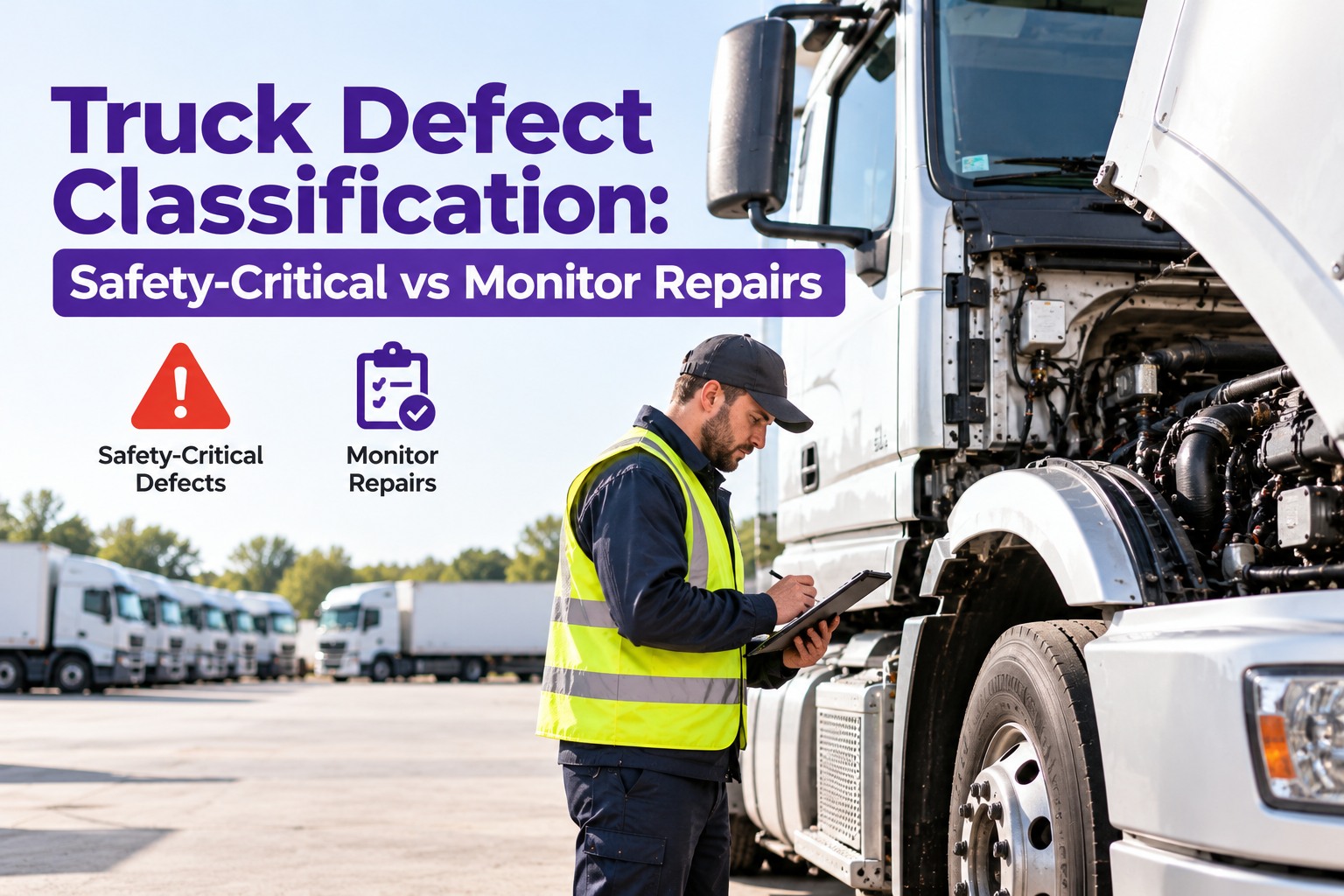
A cracked mirror and a brake out of adjustment are both "defects" on paper but one can wait for next week's shop slot and the other grounds the truck where it sits. The difference isn't severity by gut feel; it's a classification decision with real rules behind it. Get it right and your trucks stay legal and moving. Get it wrong and you either dispatch a vehicle that fails roadside — or park a truck that didn't need to stop. Start free and classify every defect the moment it's reported.
Truck Defect Classification: Safety-Critical vs Monitor Repairs
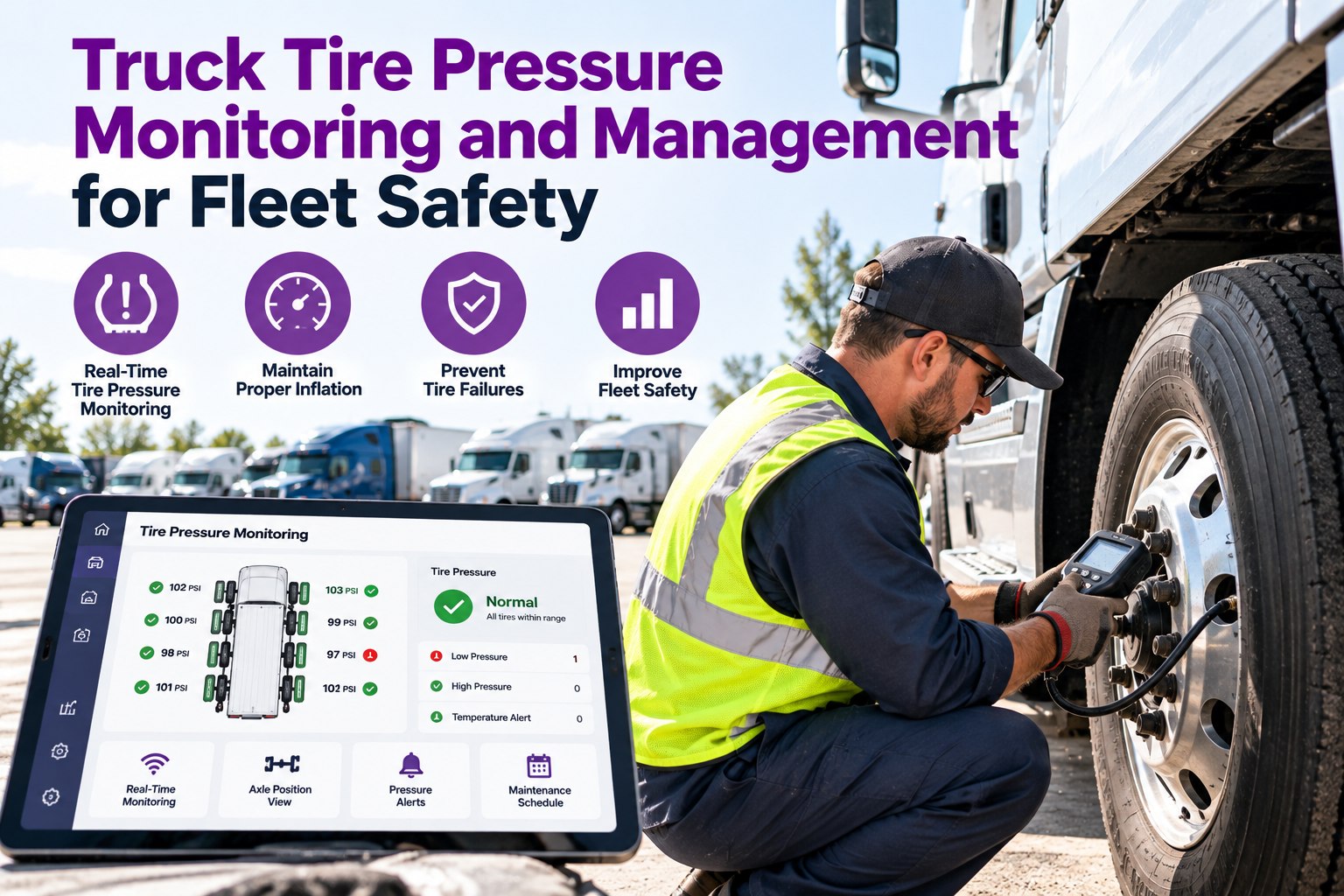
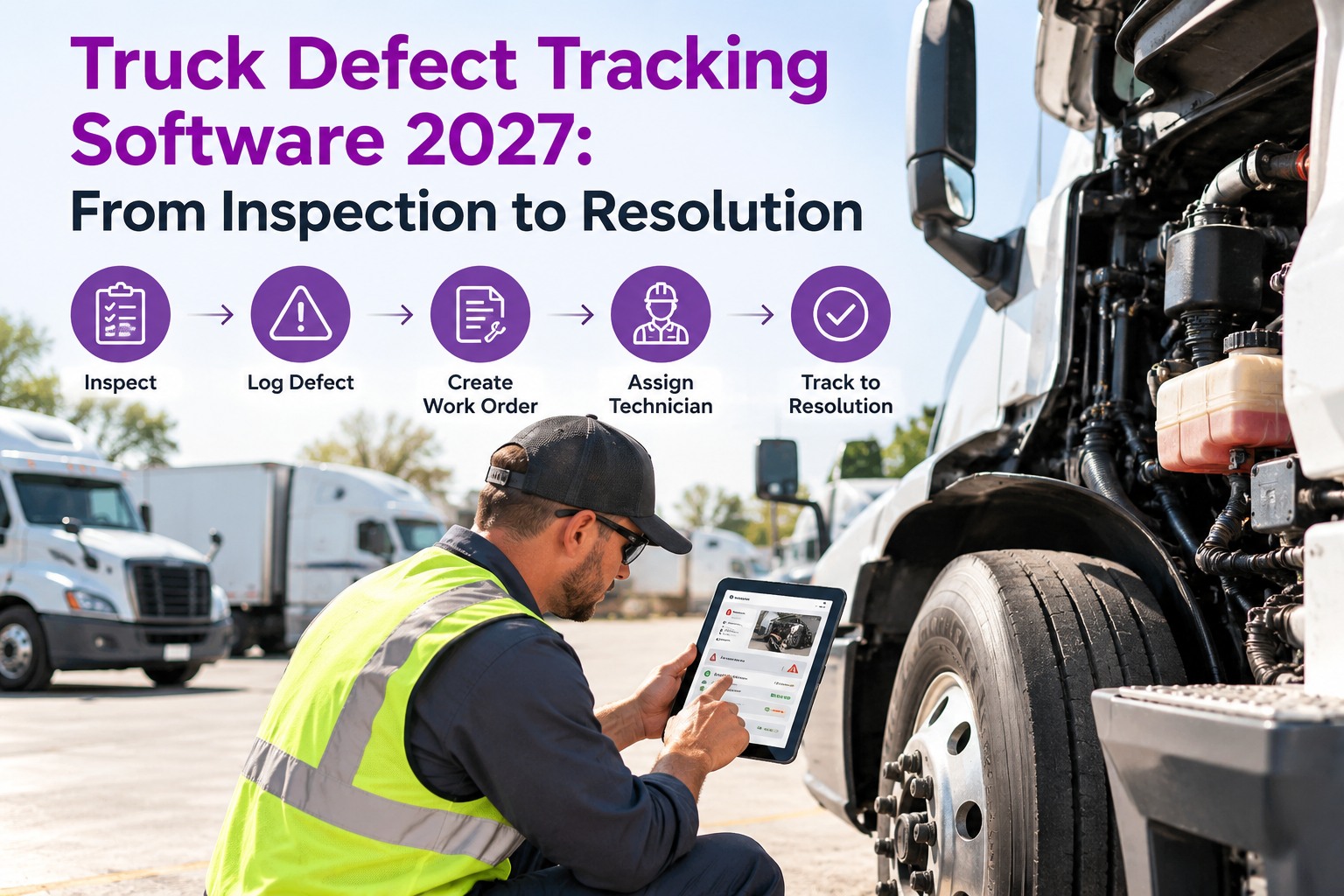
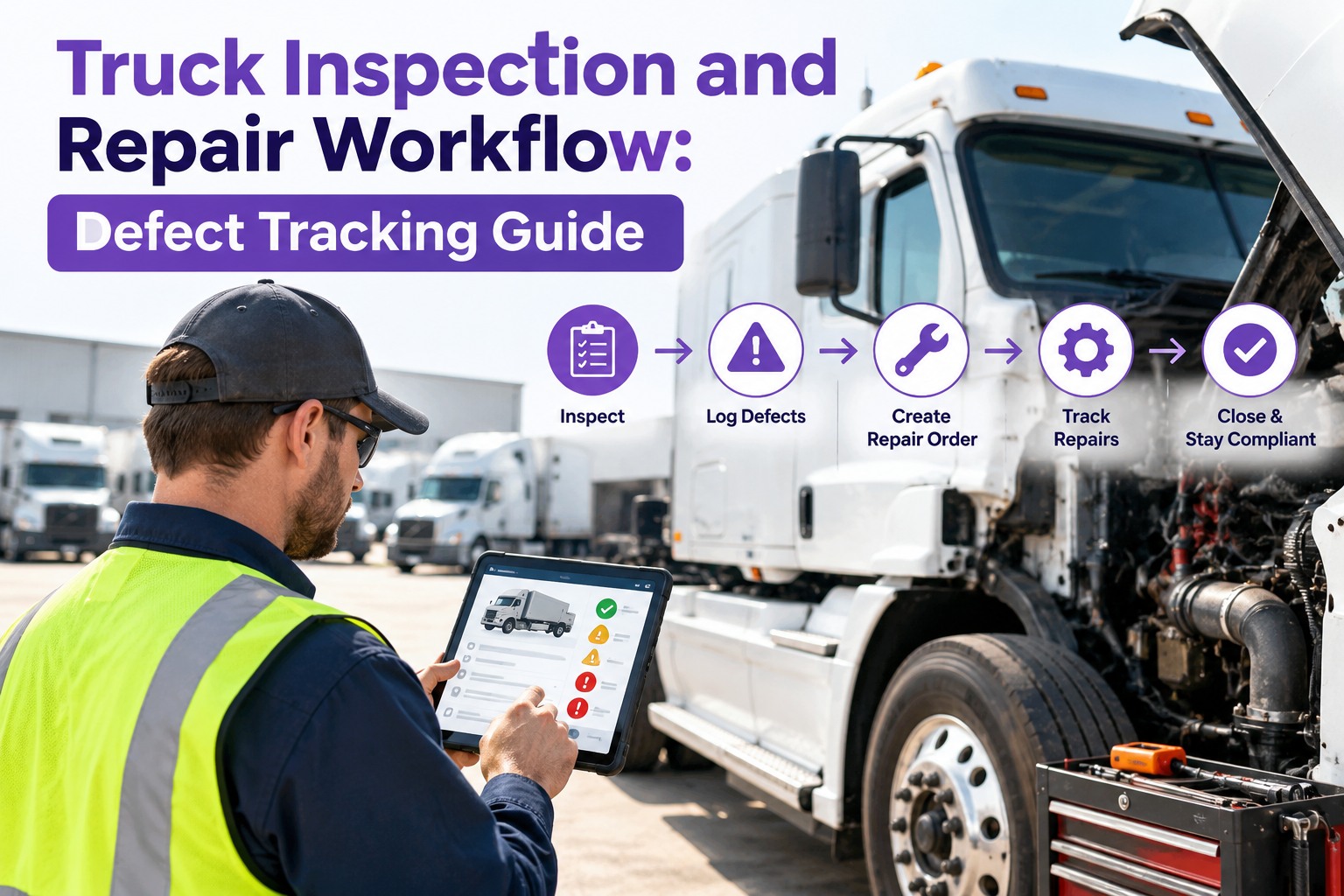
Every defect a driver reports lands in one of three buckets — stop now, fix soon, or watch and schedule. That's exactly what Truck Inspection & Maintenance Management Software is built to handle: it applies the tier to each finding the instant it's logged, holds back dispatch on the serious ones, and turns the rest into dated work orders — so the call is made by the rule, not by whoever's loudest in the yard.
The One Line in the Rulebook That Does the Sorting
Federal law doesn't ask you to guess. Under 49 CFR §396.11, a reported defect has to be judged against a single test: would it affect the safe operation of the vehicle or result in its mechanical breakdown? If yes, the carrier must repair it before that truck is dispatched again. If no, it's a condition you track and schedule. That one sentence is the hinge your entire classification system swings on.
or cause a breakdown? YES → Repair before dispatch.
The truck does not roll.
early-wear only? NO → Log it, schedule it,
monitor it to repair.
The gray zone — "it's probably fine" — is where fleets get burned. A truck that passes the driver's walkaround Tuesday can be grounded Thursday on the same part. Classification removes the guess by tying every defect to a written threshold, not an opinion.
The Three Tiers Every Defect Falls Into
Two legal buckets (fix-before-dispatch vs. not) become three practical tiers once you add how soon. This is the ladder dispatchers and shop leads actually work from.
- 20%+ of service brakes defective, or any steering-axle brake defect
- Tire below 4/32" tread (steer) / 2/32" (others), flat, or sidewall through to cord
- Steering play, cracked frame, or leaking brake air at a pushrod past limit
- Inoperative required lamps at the time of inspection
- Tread at 6/32" and falling — measured, not yet failing
- Minor fluid seep, unusual noise under load, early brake lining wear
- Air leak within spec but worsening week over week
- Charging or battery reading low but still starting
- Cosmetic body damage, scuffed trim, faded paint
- Comfort items — seat wear, cab fit-and-finish, non-required accessory
- Wiper blade streaking (where visibility is still adequate)
- Minor corrosion with no structural role
Why Misclassifying Costs More Than the Repair
Classification errors run in two directions, and both are expensive. Call a safety-critical defect "monitor" and you've dispatched a truck that can fail roadside — an out-of-service order that now carries double severity weight in FMCSA's 2026 scoring, plus the towing, the reload, and the hit to your Vehicle Maintenance BASIC. Call a monitor-item "critical" and you've parked a truck and burned a bay for nothing. The goal isn't caution for its own sake; it's the right call, every time, tied to a number.
The Numbers Behind the "Safety-Critical" Line
The tiers aren't theoretical — the roadside data shows exactly which systems push trucks out of service, and it's the same short list every year. Classify those systems tightest.
Writing a Defect So the Classification Holds Up
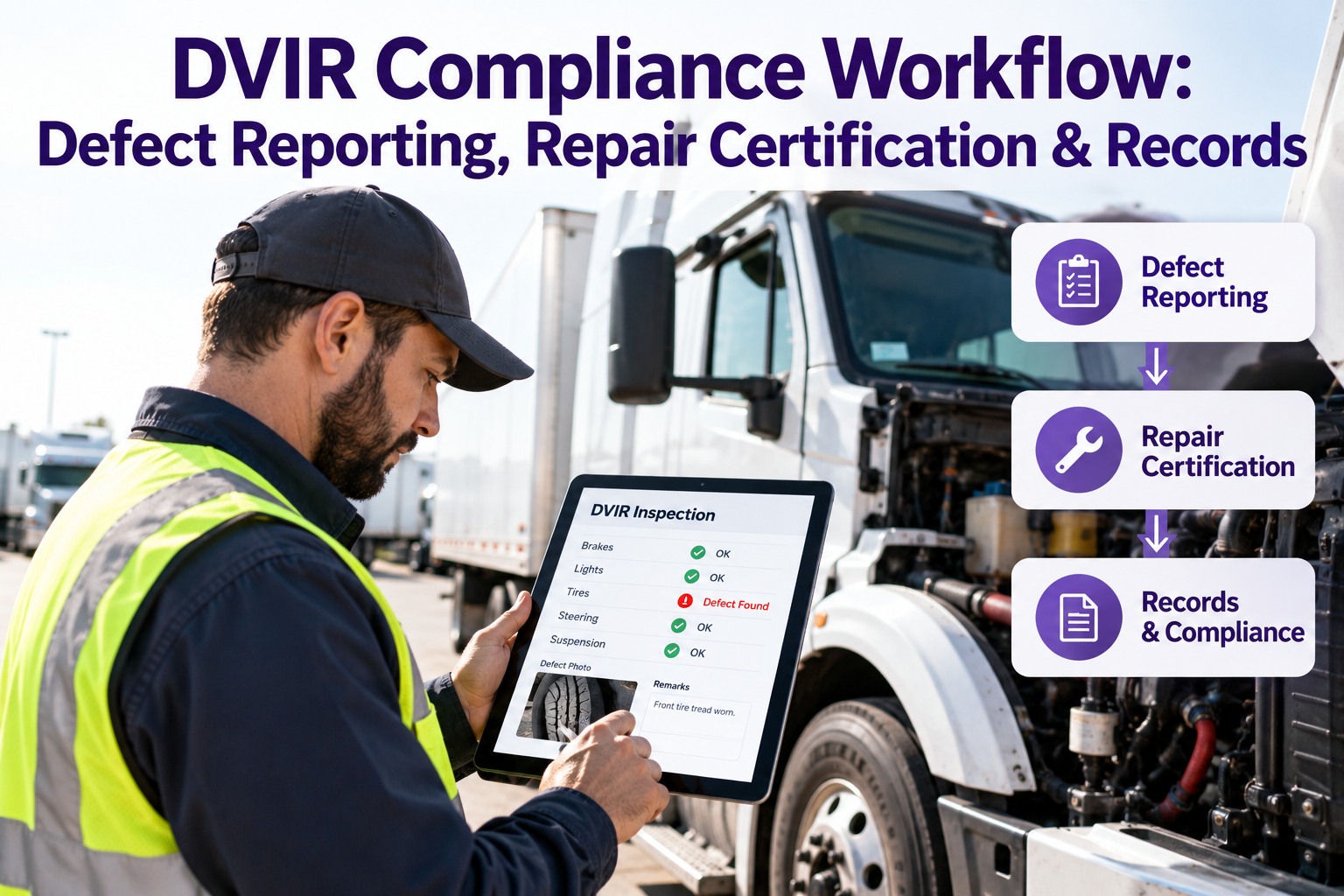
A tier is only as good as the report it's based on. "Brake issue" can't be classified — it could be anything. A classification that survives an audit names the position, states a measured condition, and ties it to a driving situation, with a photo attached. That's what turns a vague note into a defensible call.
"Front tire looks low. Brakes feel soft."
No position, no measurement, no condition — impossible to classify or defend."LF steer tire 3/32" tread, below 4/32" limit. Service brake pushrod travel long at RR, grabs on hard stop downgrade."
Position + measurement + condition = an automatic Safety-Critical, no argument.Software That Makes the Call for You
This is the part Truck Inspection & Maintenance Management Software is designed to take off your plate. The moment a driver logs a defect, it checks the finding against its tier for you: safety-critical ones flag red and hold the truck from dispatch until the repair is verified, priority items open a dated work order with the measured trigger attached, and monitor items roll into the next PM. The classification stops being a judgment call in the yard and becomes a rule the software applies the same way every single time.
From Classified Defect to Closed Loop
Classification isn't the finish line — it's the switch that routes each defect to the right next step. Here's where each tier goes once the call is made.
Frequently Asked Questions
Make Every Defect Call by the Rule, Not the Guess
Truck Inspection & Maintenance Management Software was built for exactly this job — it sorts each reported defect into its tier the moment it lands, holds back dispatch on the safety-critical ones, and turns the rest into dated, trackable work orders. Fleets lean on it to stop losing trucks to roadside surprises, and to stop parking trucks that never needed to come off the road.