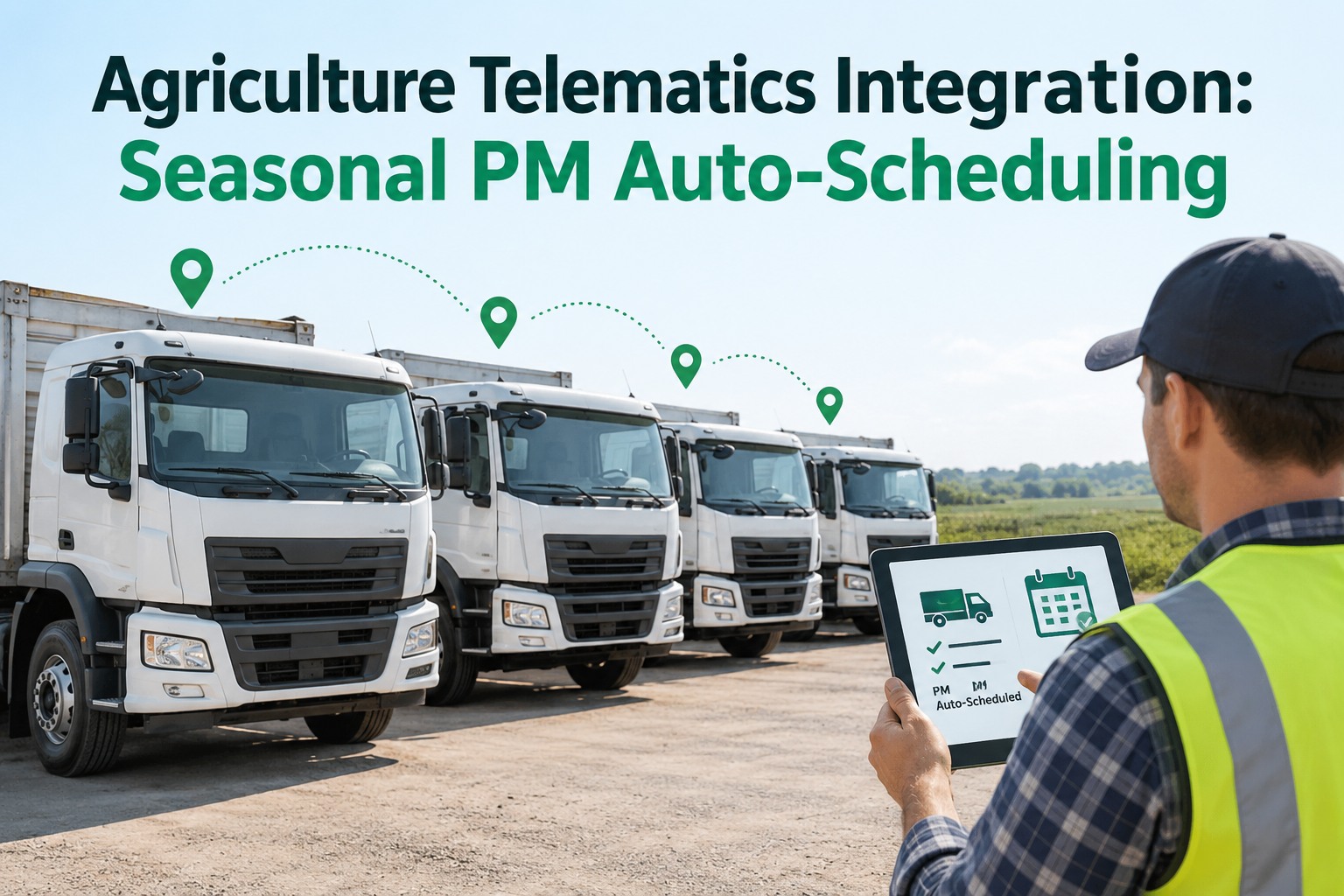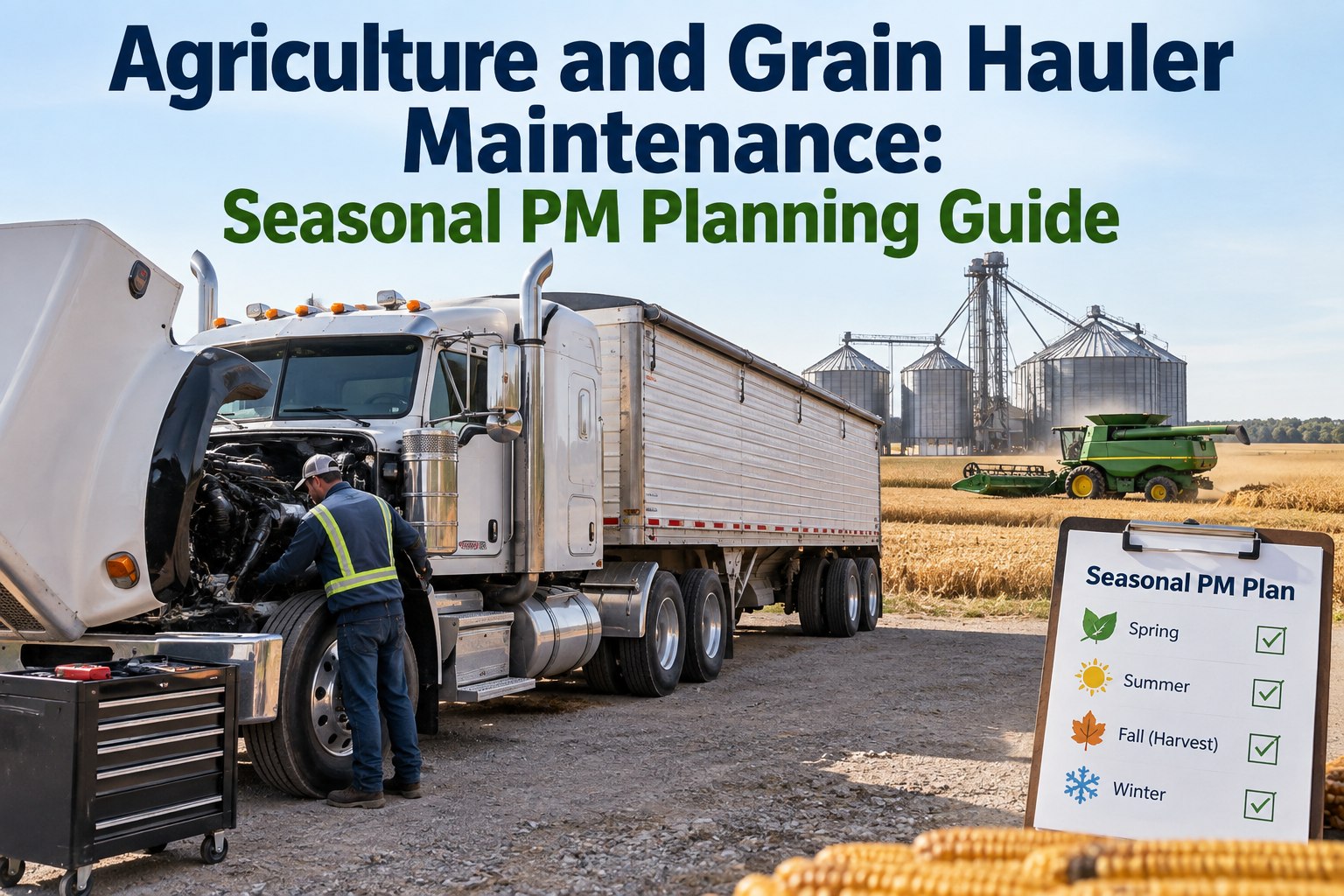
An over-the-road tractor works 300 days a year at a steady pace, so its PM schedule is a calendar you follow. A grain hauler is the opposite animal: it runs flat out for roughly 90 days of harvest, then sits lightly used for 275. That asymmetry breaks normal maintenance planning entirely. You can't service a truck mid-harvest — every hour it's in the shop is grain left standing, cart drivers idle, and an elevator appointment missed. And the trucks most likely to fail are the ones that just sat all off-season with dried seals and stale fluids. The only way to win is to plan backward from your harvest start date and front-load every bit of maintenance into the quiet months. This guide is that seasonal model: the 90/275 reality, the pre-harvest countdown, the cost of one in-season breakdown, and the three-phase plan that keeps grain moving. Start a free trial and build your pre-harvest PM off the harvest date
Seasonal PM Planning for Grain Haulers
Ag haulers run 90 days flat out and 275 days light — so you can't schedule maintenance like a linehaul fleet. You plan backward from harvest and front-load the off-season. Here's the model that keeps every truck rolling when the window opens.
The 90/275 Problem in One Picture
A grain hauler's year isn't a flat line — it's a spike. All the demand, all the stress, all the risk compress into a narrow window, while the maintenance slack all sits in the quiet months on either side. Plan for the average and you'll fail at the peak.
Dawn-to-dark hauling, heavy loads, dust and heat, back-to-back elevator runs. Zero shop slack: a truck down here costs acres per hour and stalls the whole chain. This is when nothing can fail.
Occasional hauls, long idle stretches, trucks parked for weeks. This is where all your shop time, parts lead time, and labor availability live — and where every harvest failure should have been caught.
The Pre-Harvest Countdown: Work Backward, Not Forward
The single most important shift is timing. Don't inspect the week before harvest — do it 30 to 45 days out. That lead time is the difference between a $40 in-stock part and a backordered breakdown when half the county's trucks are already down.
Brakes, tires, hydraulics, air system, cooling, drivetrain. Order parts now — no expedited shipping, and shop time is still open before the seasonal rush hits every dealer in the region.
Oil and filter changes, coolant and hydraulic flushes, battery testing. Address everything the inspection flagged while there's still time to get parts and book the bay.
Run trucks and hopper trailers through full load-and-unload cycles. Load testing surfaces failures static inspection misses — find them in a trial run, not on day one of harvest.
Get compliance records audit-ready before the season — an OOS violation mid-harvest backs up the whole grain chain. Orient seasonal drivers on each truck's pre-use check and limits.
Trigger the Pre-Harvest PM Off Your Harvest Date
Set your target harvest start and the system generates the pre-harvest work orders automatically — 45-day inspections, 30-day service, load-test checks — assigned with parts lists and routed to the shop. Daily pre-use inspections run on mobile in-season with instant defect-to-work-order routing, and every truck's record carries season to season.
Why One Breakdown Costs More Than a Repair
In-season, a single truck failure doesn't stop one truck — it silences the whole harvest orchestra. This is the cost that makes front-loaded maintenance pay for itself many times over.
The Three-Phase Seasonal Plan
Run the grain-hauler year in three deliberate phases, each with a different maintenance job. Get the phasing right and harvest becomes execution, not firefighting.
Do the heavy work while there's slack: full inspections, deferred repairs, fluid service, parts staging, coming-out-of-storage checks. Enter harvest with a fleet that needs nothing.
No scheduled shop pulls. A fast daily pre-use inspection on every truck catches problems early, and any defect routes straight to a work order with a clear breakdown-response plan behind it.
Clean grain residue (it attracts vermin), prep trucks for idle storage, and review the season's defect data — which trucks failed, what to catch earlier next pre-harvest.
Frequently Asked Questions
Be Ready on Harvest Morning, Not Halfway Through
Trigger pre-harvest PM off your harvest date, run daily pre-use inspections on mobile with instant defect routing, and carry every truck's record season to season — one platform that keeps grain haulers rolling when the window's open and audit-ready all season.