In agriculture, timing isn't a preference — it's the whole game. A combine that goes down during a 72-hour harvest weather window doesn't just cost a repair bill; it costs the yield for that portion of the crop. The fix is to stop scheduling maintenance on the calendar and start scheduling it on engine hours and the season itself — flagging every service before a critical window, never during it. This article shows how telematics integration auto-schedules PM around planting and harvest so peak uptime is protected. Truck Inspection & Maintenance pulls engine hours and fault codes straight from your machines and fires PM into the off-season automatically — start a free trial or contact our team.
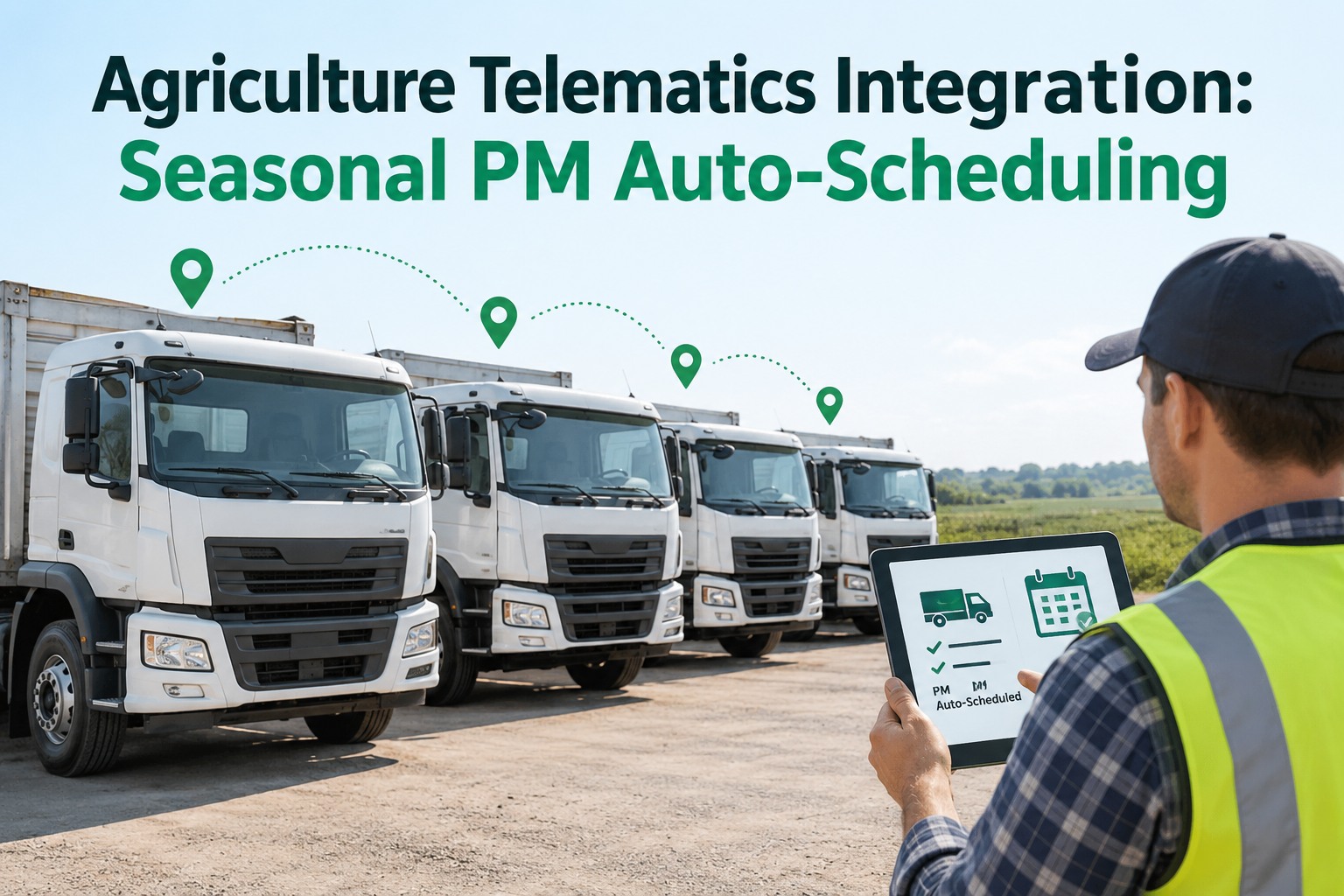
Agriculture Telematics Integration: Seasonal PM Auto-Scheduling
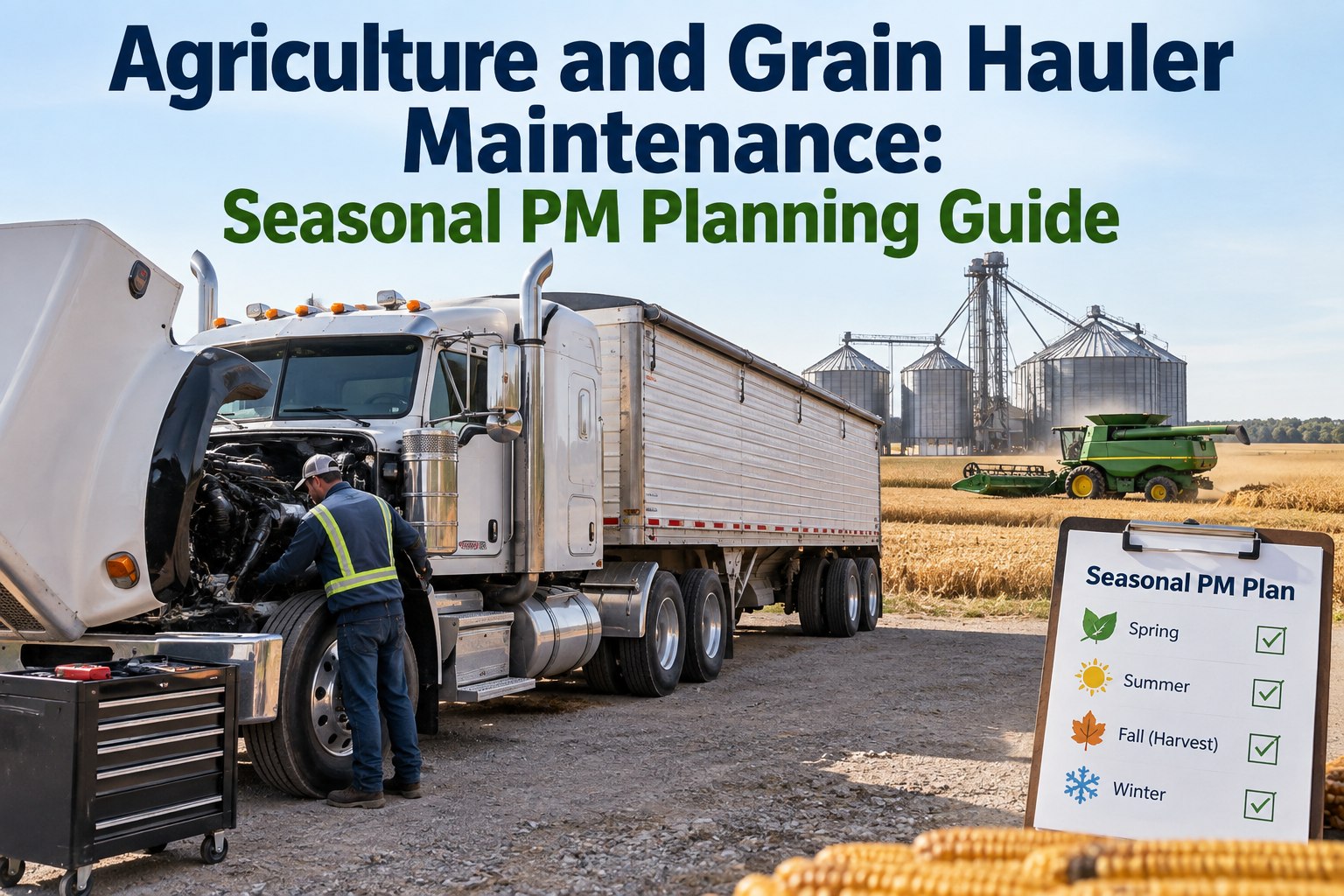
A farmer can't reschedule a harvest. The strategy that protects the yield: push every PM into the off-season on engine hours — and lock the peaks down tight.
Why Ag Fleets Break Every Normal PM Rule
Farm equipment doesn't run like a highway fleet — it sits idle for months, then runs flat-out for days. Three numbers explain why the stakes are so high:
Planting and harvest windows compress into high-stress, multi-day sprints — sometimes as tight as 72 hours. A single breakdown inside that window can compromise the season's yield, not just a day's work.
The average 200–249 HP tractor jumped from $191K in 2019 to $327K in 2026 — a 71% rise. With $3–5M in equipment on a single operation, protecting each asset's uptime is protecting the whole investment.
A combine idle during a 3-day harvest window doesn't cost repair time — it costs yield. That's why ag PM has to be measured against crop value, and why every service has to happen before the window, not during it.
Push every service into the off-season automatically. Start a free trial and protect the windows that make your year.
The Integration — From Machine to Maintenance
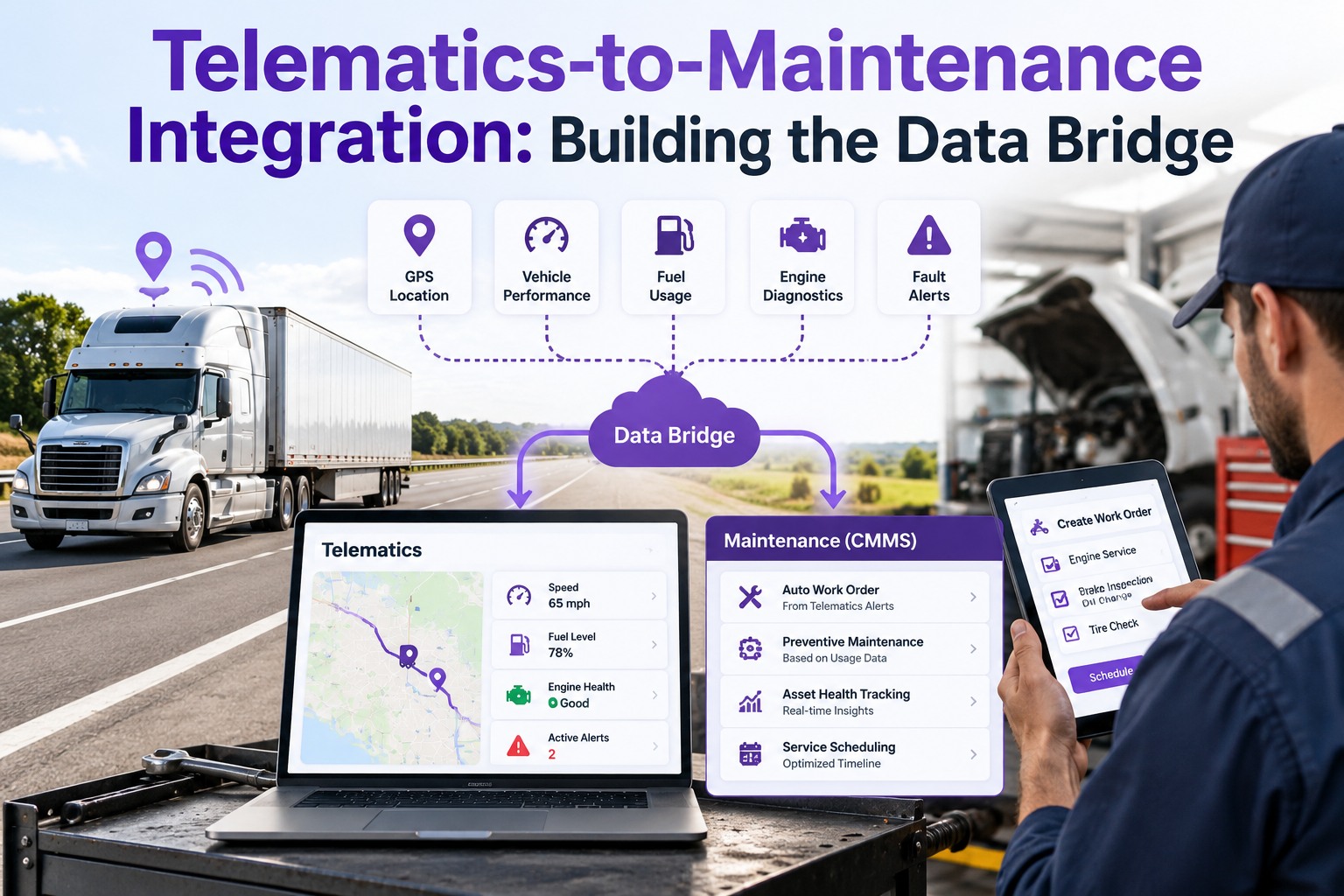
Seasonal auto-scheduling only works if the telematics feed actually reaches the PM system. Here's the chain that makes it automatic:
Pull Engine Hours & Diagnostics
Connect to the OEM and telematics systems the farm already runs — John Deere, Case IH, New Holland, Kubota, Geotab — and pull engine hours, fault codes, and usage straight off the CAN bus. Existing hardware stays in place.
Schedule PM on Hours, Not Dates
PM fires on real engine hours per machine, not a calendar. A combine that ran 200 hours in a harvest week comes due on schedule; a utility tractor that barely moved doesn't waste a service.
Layer the Season Over the Schedule
The system knows your planting and harvest windows, so it pulls due services forward into the lull or off-season — flagging them before a peak, never letting one come due mid-window. This is the core of seasonal auto-scheduling.
Route Fault Codes to Work Orders
A diagnostic code — low oil life, coolant temp, a wear signal — becomes a work order before it becomes a field breakdown, with a defect alert to the manager the moment it fires. Predictive, not reactive.
The One Rule That Protects Every Harvest — Flag the Service Before the Window, Never During It
The entire value of seasonal auto-scheduling comes down to timing the service to land in a trough. A calendar schedule is blind to your season — it'll happily flag a 250-hour service the day harvest starts, forcing you to choose between skipping the PM and pulling a combine off the field mid-window. Telematics-driven seasonal scheduling removes that choice: it sees the hours accumulating, projects when the machine will hit its interval, and pulls the service forward into the lull so the asset rolls into peak season fully ready. The best operators treat this as a rhythm — review readiness before each peak, service in the off-season, and never make a major system change during planting or harvest. Start a free trial and let the season drive the schedule.
The Pre-Season Readiness Rhythm
Seasonal PM isn't a one-time setup — it's a repeating rhythm around each peak. Here's the cadence top operators run:
Every engine hour tracked, every PM fired into the off-season, every fault code routed before it costs you a window.
Automate DVIRs, engine-hour PM scheduling, work orders, and compliance records in one mobile-first platform — pulling service into the troughs so peak season stays locked down. Start a free trial or talk to our team.
KPI Dashboard — 5 Ag Fleet Metrics
Five numbers tell you whether the seasonal program is protecting your windows:
Share of machines fully serviced and defect-clear before the window opens. Below 100% means something's coming due mid-peak.
Unplanned failures during a planting or harvest peak. Each one risks yield, not just machine time — the metric that matters most.
Services fired by real engine hours, not manual entry. Anything less means the schedule is still drifting on the calendar.
From a diagnostic code to an assigned repair. Fast routing in the off-season keeps small issues from surfacing at harvest.
Excess idling cut with usage visibility — a fuel-and-wear win the telematics feed surfaces alongside the PM data.
Track all five automatically across every machine — start a free trial in minutes.
Frequently Asked Questions
Why should ag PM run on engine hours instead of the calendar?
Because farm equipment sits idle for months then runs continuously during peaks. A calendar service comes due regardless of use — over-servicing idle machines and under-servicing hard-worked ones. Engine-hour scheduling matches service to real wear, and pairs with seasonal timing to keep PM out of the peak windows.
What does "seasonal auto-scheduling" actually do?
It layers your planting and harvest windows over the engine-hour schedule, projects when each machine will hit its interval, and pulls due services forward into the lull or off-season — so a PM never comes due mid-harvest and forces you to choose between skipping it and pulling a machine off the field.
Does telematics integration work with mixed-brand equipment?
Yes. Good platforms connect to the major OEM and telematics systems — John Deere, Case IH, New Holland, Kubota, Geotab — pulling engine hours and fault codes off the CAN bus, with aftermarket sensors or adapters for older machines. Your existing hardware stays in place.
When should I set up or change the system?
In the off-season. Avoid major system changes during planting or harvest — deploy, train, and configure while there's no crop clock running, so the platform is proven and stable before the first peak window opens.
How much of the readiness work happens before the season?
Most of it. The rhythm is: pull the readiness report 6–8 weeks out, clear deep service in the off-season, lock the peak to exception-only work, then review and reset after. The goal is that nothing scheduled comes due during a window because it was already handled.
How does Truck Inspection & Maintenance fit an ag fleet?
It pulls engine hours and fault codes from your machines, schedules PM on real hours layered over your seasonal windows, routes defects to work orders, and keeps DVIRs and compliance records in one mobile-first platform — so service lands in the troughs and peaks stay protected. Start a free trial or contact us.
You can't reschedule a harvest — so schedule the maintenance around it. Service in the troughs, lock down the peaks, let telematics run the clock.
Engine hours and fault codes pulled straight from your machines, PM fired into the off-season automatically, defects routed before they reach a field — one mobile-first platform that keeps every window protected and every record audit-ready.