When a Cummins engine fails under warranty, one question decides whether you get a covered repair or a five-figure invoice: can you prove the maintenance was done? Cummins covers failures from factory materials and workmanship — not failures traced to abuse or neglect — and the burden of proof sits with the owner. "Lack of maintenance records" is the single most common reason engine claims get denied, and it's rarely because the work wasn't done. It's because the paperwork couldn't prove it: a gap in the oil-change log, dates without mileage, or a receipt no one can verify. This checklist is what closes that gap for every ISX and X15 in your fleet. Start free and build a claim-ready service history with TIM.
A Denied Warranty Claim Is Almost Never About the Work — It's About the Proof
You did the PM. But if you can't produce dated, mileage-stamped, verifiable records the day Cummins asks, the claim stalls. Truck Inspection & Maintenance Management Software logs every ISX and X15 service with photo evidence, meter-based triggers, and a clean history you can hand over in minutes — so a covered failure stays covered.
What Cummins Actually Requires — and Where Fleets Fall Short
Cummins reimburses failures caused by factory materials and workmanship. It does not cover damage from abuse, neglect, wrong or contaminated oil, or unauthorized service. The catch is procedural: to make a claim, the owner is responsible for providing proof, to Cummins' satisfaction, that all recommended maintenance was performed. That single sentence is where most denials live — not in the engine, in the file.
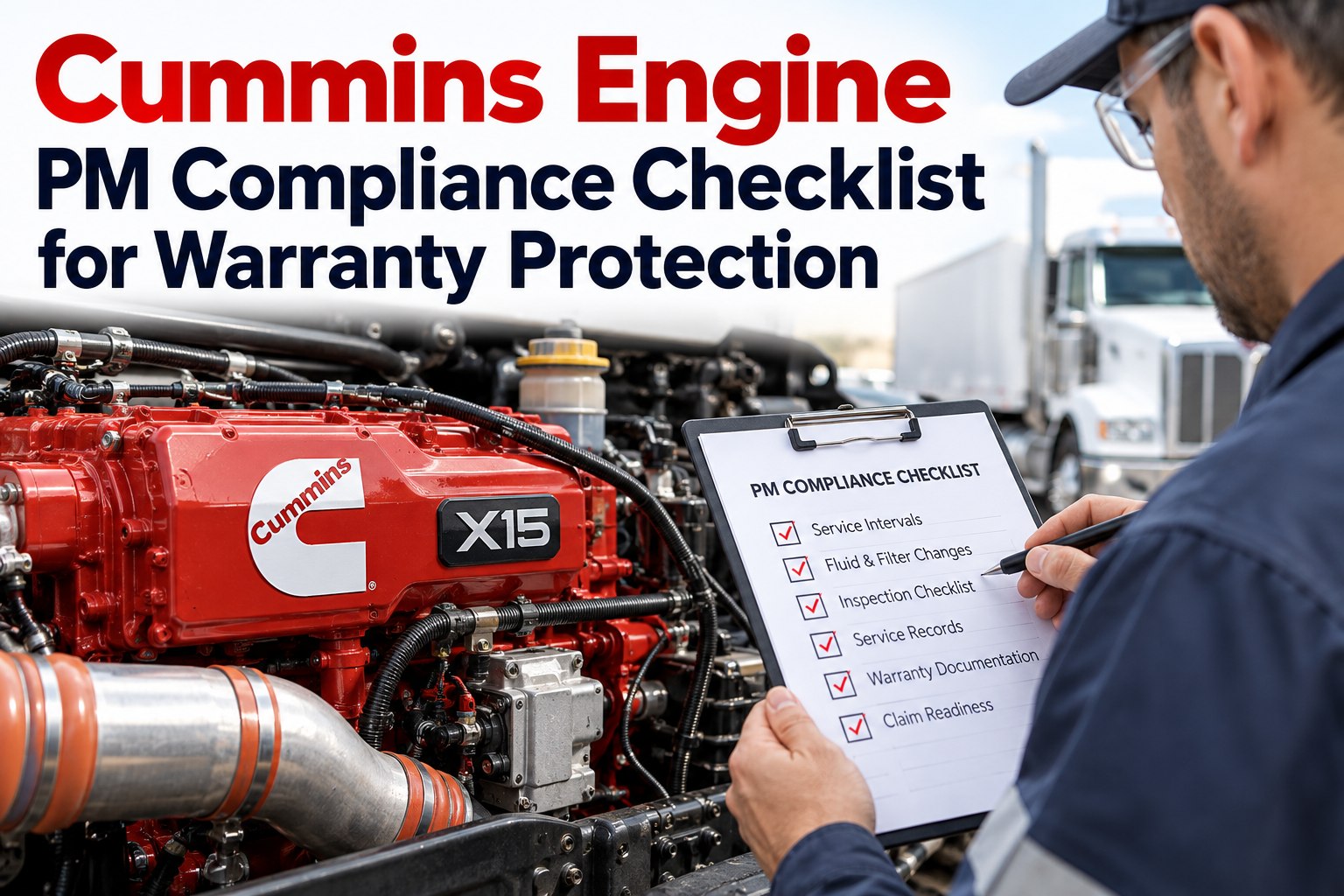
The Cummins PM Compliance Checklist
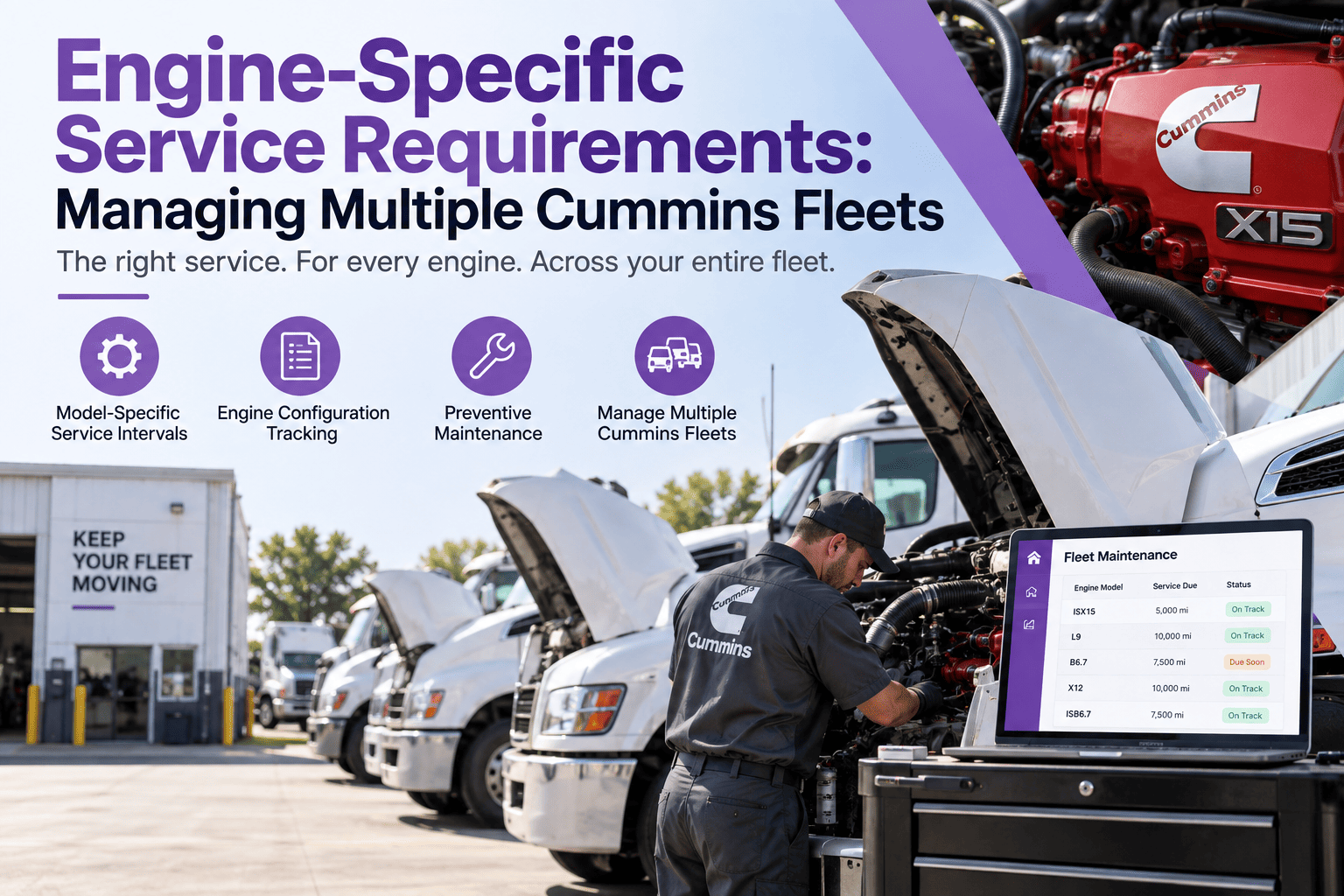
Every item below is something Cummins expects done — and documented. Miss the service and you risk the engine; miss the record and you risk the claim. TIM turns this list into meter-triggered tasks so nothing lapses and every completion is logged with proof.
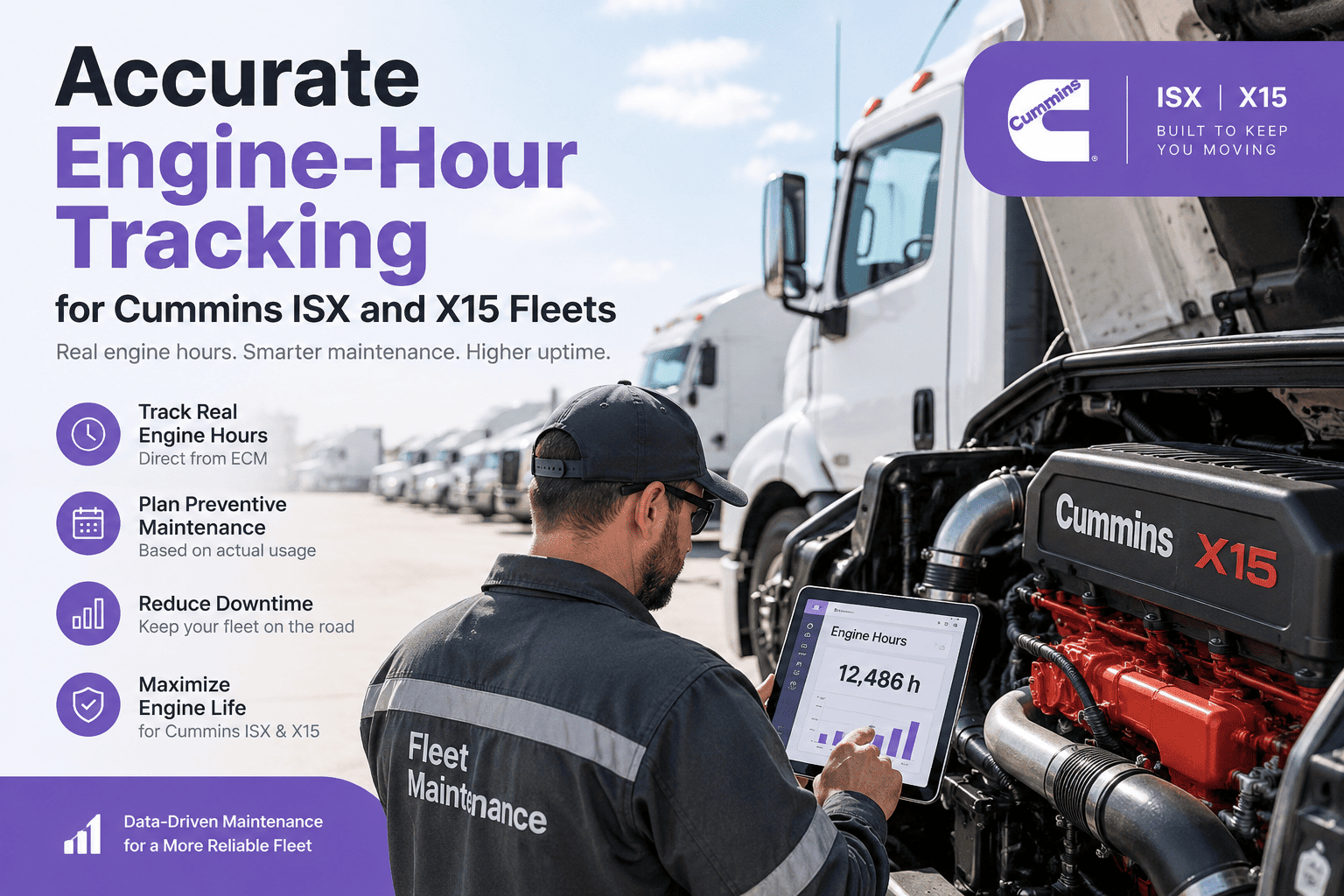
ISX15/X15 intervals are set by duty cycle (measured in MPG), not miles alone — severe duty drains far sooner than line-haul. Treat the OEM interval as a maximum, not a target, especially during warranty.
Oil must meet Cummins Engineering Standard CES 20081. An API CK-4 "meets or exceeds" claim alone isn't proof — the wrong oil is a listed exclusion, and mixing conventional into synthetic undermines the drain interval.
Cummins specifies the required lube and fuel filters for the platform. Generic substitutes can lack the anti-drainback integrity the engine's oil system depends on — and give a claims reviewer an easy out.
Stamped-steel pans have a primary and secondary sump, each with its own drain plug. Both must be drained to meet the service interval — a partial drain shortcuts the very interval you're documenting.
Fuel filters on their own interval, coolant meeting the required CES standard, and DEF/AdBlue in-line or in-tank filters inspected and replaced on schedule. Each has a separate cadence that's easy to let slip.
DPFs requiring ash cleaning must go to a Cummins authorized repair location in exchange for a New/Recon unit. Unauthorized cleaning methods void compliance — keep the authorized-location paperwork.
Valve adjustment and other mileage-based services in the O&M manual are part of the maintenance record Cummins expects. The onboard diagnostics track timing — your file should match what the ECM shows.
Cummins' OilGuard program uses free oil analysis to support extended drains while keeping coverage. Even outside the program, lab analysis is the scientific proof that separates a mechanical failure from a neglect finding.
Every line above is a task and a record in one — service done, proof captured. Contact our team to load this checklist as ISX/X15 templates in TIM.
What a Claim-Ready Record Actually Contains
A note that says "oil changed" is not proof. When Cummins reviews a claim, the record has to stand on its own — verifiable, complete, and tied to the specific engine. Here's the difference between a record that protects you and one that doesn't.
| Element | Weak record (denial risk) | Claim-ready record |
|---|---|---|
| Date | "Spring" / month only | Exact service date |
| Mileage / hours | Missing or estimated | Odometer + engine hours logged |
| Oil | "Full synthetic" | Brand + CES 20081 certification |
| Parts | "Filter changed" | Fleetguard part numbers |
| Engine identity | Truck number only | Engine serial number (ESN) matched |
| Verifiability | Handwritten, unverifiable | Dated entry + photo evidence |
Reference guidance drawn from Cummins warranty terms and O&M manuals plus common claim-review practice. Coverage decisions rest with Cummins; this is a documentation guide, not a warranty determination.
TIM captures every one of these fields at the moment of service, so the record is claim-ready before you ever need it. Start free and make every service entry claim-ready with TIM.
How TIM Protects the Claim — Service to Signed-Off Record
The point isn't more paperwork — it's paperwork that holds up. TIM runs the Cummins PM loop so compliance and proof happen in the same step, every time.
Every ISX and X15 Service, Logged the Way a Claim Reviewer Needs to See It
Truck Inspection & Maintenance Management Software ships with meter-based Cummins PM scheduling and photo-verified service records. Duty-cycle triggers keep intervals from lapsing, the engine serial number ties every entry to the right unit, and the full history exports on demand — so a covered failure never turns into an out-of-pocket repair over missing paperwork.
Frequently Asked Questions
Do the PM. Then Be Able to Prove It.
The maintenance is the easy part — most fleets do the work. What separates a covered repair from a five-figure surprise is a record that stands up the day Cummins asks. TIM makes proof automatic for every ISX and X15, so warranty protection stops depending on whether someone remembered to write it down.