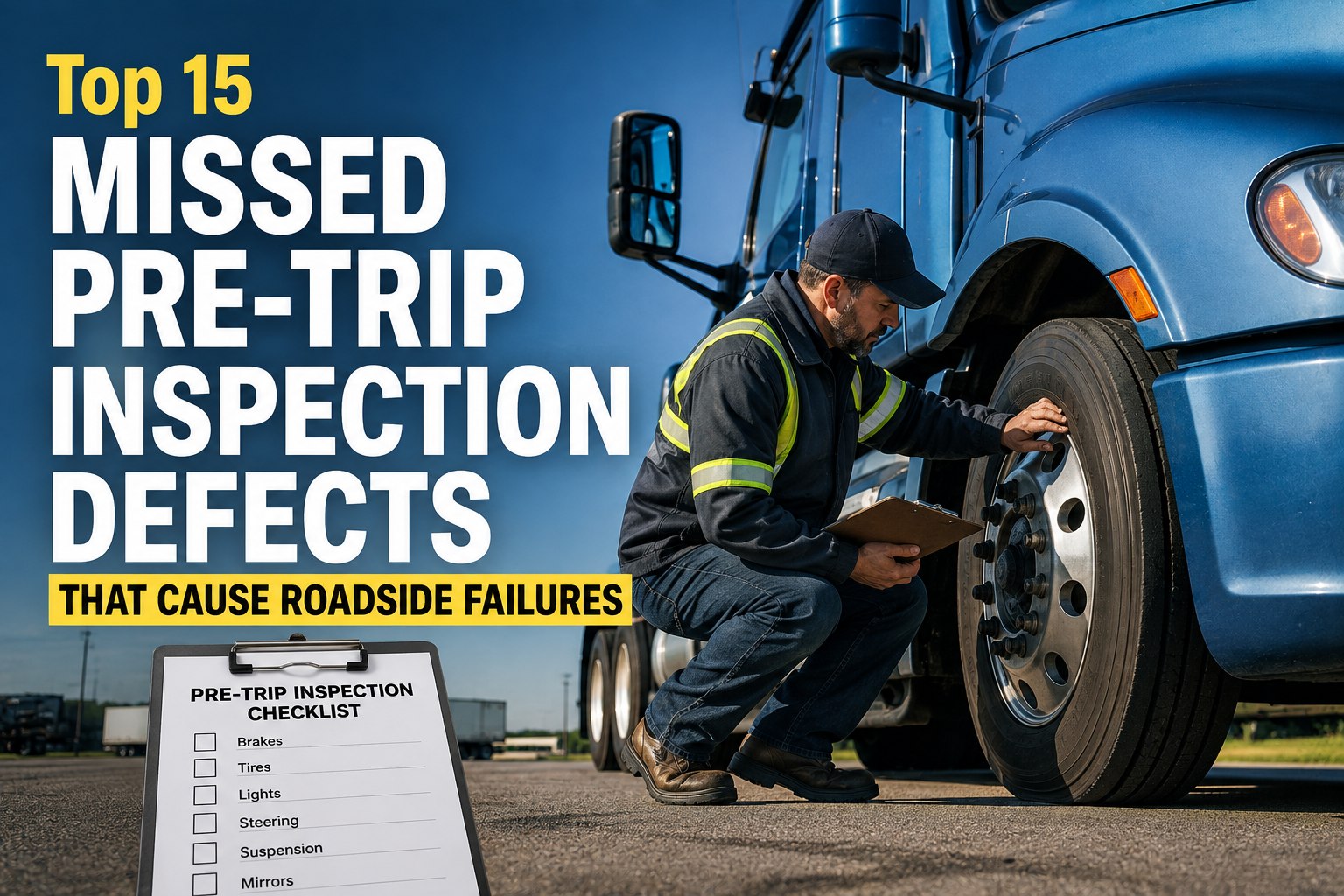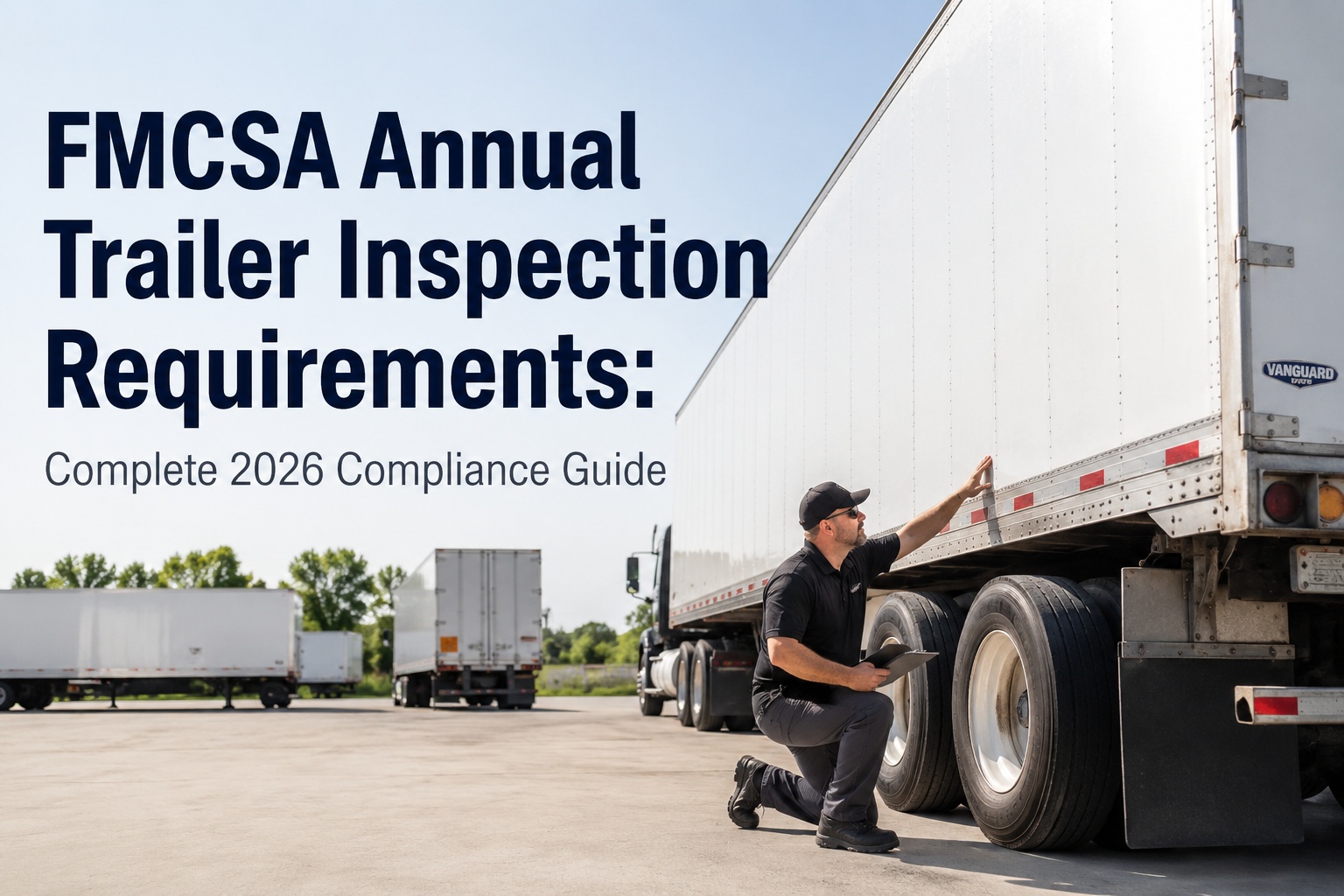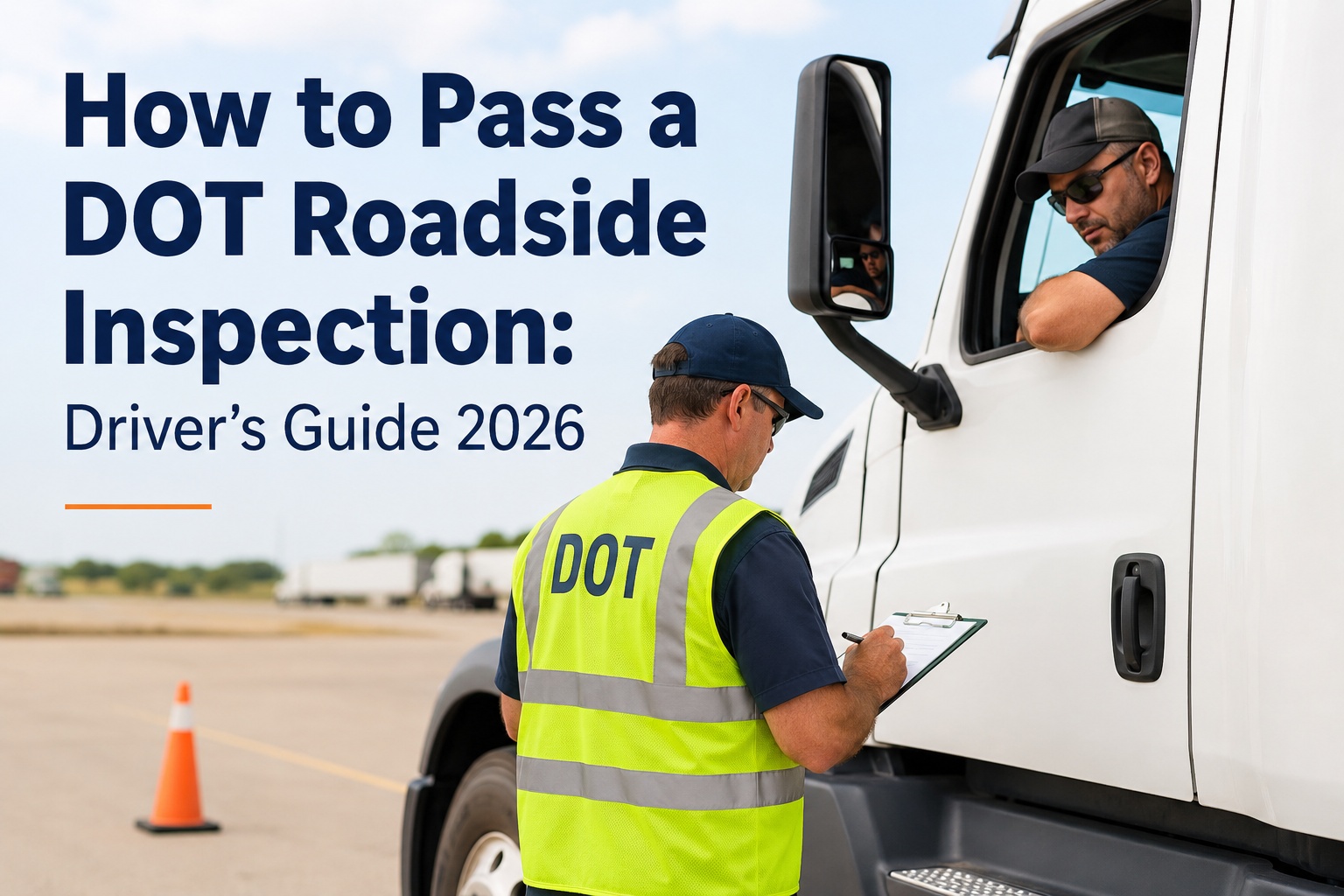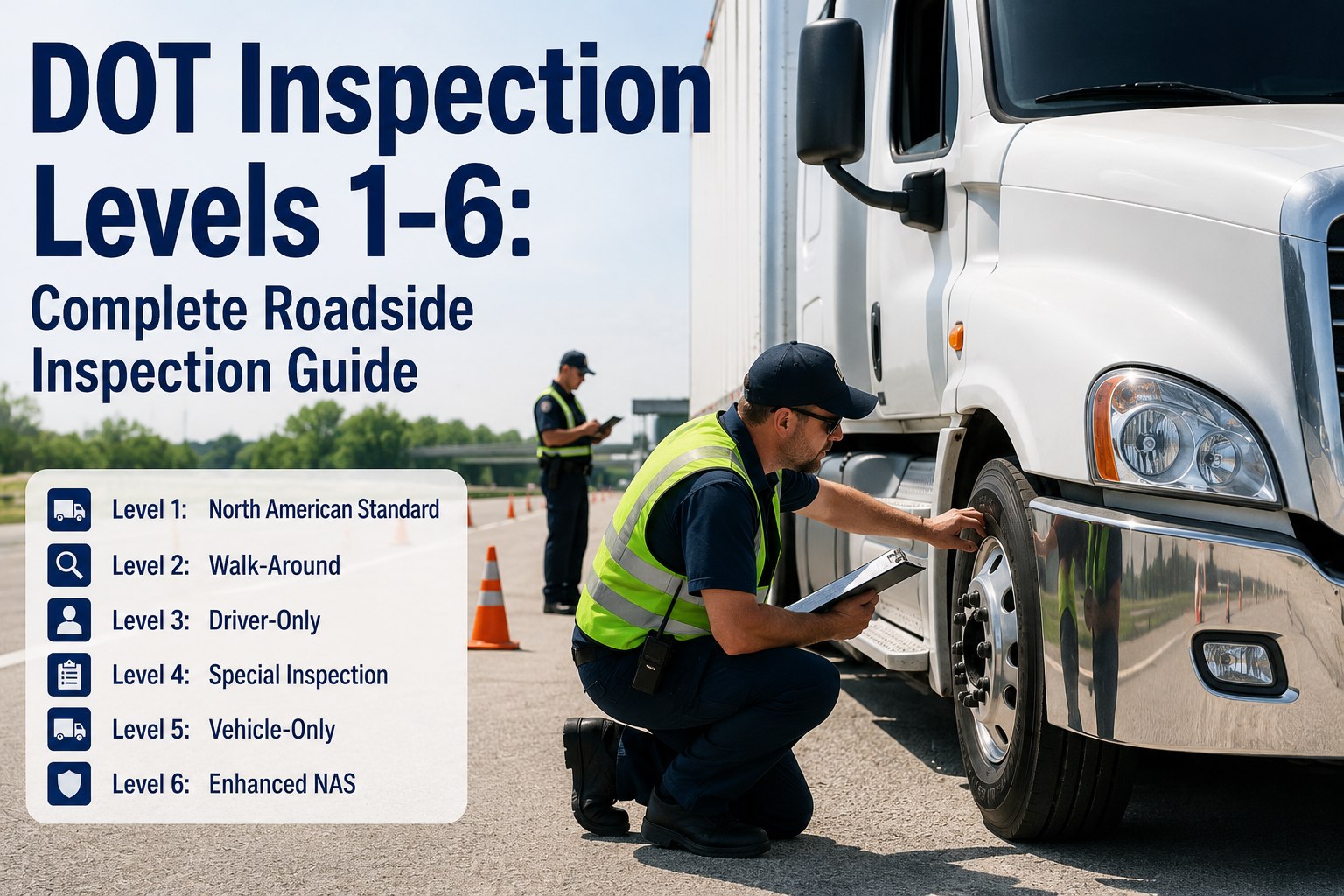
Every year approximately 4 million commercial motor vehicle inspections happen across North America — at weigh stations, in rest areas, on the shoulder, and at carrier terminals. The Commercial Vehicle Safety Alliance (CVSA) standardizes exactly what each of those inspections covers through a system of six main levels, ranging from the comprehensive 37-step Level I North American Standard Inspection that examines both driver and vehicle, down through walkaround inspections, driver-only reviews, special-purpose examinations, terminal inspections, and specialized radioactive materials inspections. Which level you get determines everything about what happens next: how long you're stopped, what an officer looks at, whether a CVSA decal is issued, and most importantly, whether you roll away with a clean inspection or a violation that feeds into your CSA scores for the next 12 months. The 2025 CVSA International Roadcheck alone conducted 56,178 inspections and placed 22.6% of vehicles and 5.9% of drivers out of service — roughly 1 in 5 trucks failed on the spot. Brake defects accounted for 41.1% of vehicle OOS violations. Tires added another 21.4%. Every one of those violations maps to a specific checkpoint in a specific inspection level, and knowing what officers look for at each level is the difference between rolling through and getting parked. This guide walks all six DOT inspection levels — what each covers, how long it takes, when a CVSA decal is issued, top violations found — plus how the 2026 CSA overhaul changes what happens after the inspection ends, and how Truck Inspection & Maintenance software builds the daily driver walk-around habit that catches most Level I fail points before an officer ever gets involved. Ready to pass every inspection level? Start a free trial of Truck Inspection & Maintenance, or contact our support team for a walkthrough.
DOT Inspection Levels 1-6: Complete Roadside Inspection Guide
Every roadside stop, weigh station, and terminal inspection follows one of six CVSA-standardized levels. Knowing what each covers is the difference between a clean inspection and 12 months of CSA score damage.
Quick-Reference Level Comparison
Here's the whole system at a glance — six levels, six scopes, three that can earn a CVSA decal. Full details on each level below.
Level I — North American Standard Inspection
The most comprehensive roadside inspection. The 37-step full examination of both driver and vehicle that every fleet manager plans around. If your truck earns a CVSA decal, it came from a Level I or Level V.
Level II — Walk-Around Driver/Vehicle Inspection
The most common level in day-to-day enforcement. Covers most Level I items but skips anything requiring the inspector to physically get under the vehicle. Faster, but no decal.
Level III — Driver-Only Inspection
Focused entirely on the driver — credentials, medical, HOS, seat belt, drug/alcohol indicators. No vehicle inspection unless something obvious is flagged.
Level IV — Special Inspection
A one-time examination of a specific item or system. Typically part of an FMCSA study or targeted investigation into a particular safety concern.
Level V — Vehicle-Only Inspection
A full Level I vehicle examination — but conducted without the driver present. Typically at the carrier's terminal or maintenance facility, often as part of a compliance review.
Level VI — Enhanced Radioactive Materials Inspection
The specialized inspection level for vehicles transporting highway route controlled quantities of radioactive materials. Combines Level I with additional radiation-specific checks.
Turn every driver walk-around into a Level I readiness check
Digital DVIRs that mirror the CVSA Level I checklist. Photo-verified defect capture. Instant maintenance routing. Truck Inspection & Maintenance software makes every pre-trip a mini roadside inspection — before an officer ever gets involved.
Top Out-of-Service Violations by Category
The same categories dominate OOS statistics year after year — making them the most predictable and preventable failures. Build your program around these five and you'll prevent the violations that park 1 in 5 trucks at roadside.
What Changed Under the 2026 CSA Overhaul
Every inspection — clean or with violations — feeds FMCSA's Safety Measurement System. As of February 2026, the scoring rules changed significantly. Here's what matters for your fleet.
The 5 Mistakes That Guarantee Failure
Almost every OOS violation traces back to one of these five preventable mistakes. Fix these and your fleet lands in the 78% that passes.
Frequently Asked Questions
CVSA defines six main inspection levels. Level I is the North American Standard Inspection — the 37-step full driver + vehicle exam (30–60 minutes, CVSA decal eligible). Level II is the Walk-Around — most Level I items minus under-vehicle work (15–30 minutes, no decal). Level III is Driver-Only — credentials, HOS, medical, seat belt (15–30 minutes, no decal). Level IV is Special Purpose — one-time examination of a specific item as part of a study (variable, no decal). Level V is Vehicle-Only — full Level I vehicle exam without the driver, typically at a terminal (30–60 minutes, decal eligible). Level VI is Enhanced Radioactive Materials — Level I plus radiation-specific checks for HRCQ shipments (60+ minutes, special L6 decal). Truck Inspection & Maintenance software builds Level I-readiness into every daily DVIR.
A Level I North American Standard Inspection is the most comprehensive roadside inspection — a 37-step examination covering both driver and vehicle. It typically takes 30 to 60 minutes. The inspector examines driver credentials, hours-of-service records, medical certificate, and motor carrier documentation, then performs a thorough mechanical inspection that includes crawling under the vehicle to check brake adjustment, suspension, and frame components. If the vehicle passes with no defects in critical inspection items, it receives a CVSA decal — the only level (with Level V and Level VI) that qualifies. Level I inspections are the source of most CSA data points, both good and bad.
Both examine the driver and the vehicle. The difference is depth. A Level I inspector will physically get under the vehicle to check brake adjustment, chamber integrity, frame components, and other items not visible from a walk-around. A Level II inspector performs the same driver review and checks all externally visible vehicle items — lights, tires, cargo securement, coupling — but does not go under the vehicle. Duration differs: Level I is 30–60 minutes, Level II is 15–30 minutes. Only Level I earns a CVSA decal. Level II is more common at busy weigh stations where inspection volume matters.
Five categories dominate out-of-service violations every year. Brake systems account for 41.1% of vehicle OOS violations (adjustment out of spec, air leaks, chamber failures). Tires add another 21.4% (tread depth below 4/32" on steer or 2/32" elsewhere, sidewall damage, exposed cord). Lighting failures account for around 10%. Cargo securement issues run 8%. Wheels and rims contribute about 6%. On the driver side, HOS violations lead at 32.4% of driver OOS. Build your inspection prep around these five categories and you eliminate the vast majority of failure risk. Contact our team to see how the software captures these at every DVIR.
A standard CVSA decal (from Level I or Level V) is valid for the month it was issued plus the following two months — approximately 60 days. During that period, some jurisdictions allow decal-carrying vehicles to bypass certain weigh station inspections. The Level VI CVSA decal is trip-specific for the radioactive materials shipment it was issued for. Decals must be properly placed near the top of the passenger-side windshield, out of the wiper sweep, and cannot be counterfeited or transferred between vehicles. If a truck receives a citation during a Level I or V inspection, no decal is issued.
Consequences depend on the violation severity. Non-OOS violations become citations that feed into your CSA scores for 12 months under the 2026 overhaul, and count with severity weight 1. OOS violations require the vehicle or driver to be repaired or replaced before continuing operation — and carry severity weight 2 (double impact) in CSA scoring. The vehicle cannot legally operate until the OOS condition is corrected and re-inspected. Beyond the immediate stop, the violation appears in FMCSA's Safety Measurement System and can trigger targeted enforcement, insurance impact, and lost broker/shipper contracts. Try free: sign up here.
Truck Inspection & Maintenance software makes every driver walk-around a Level I readiness check
Digital DVIRs that mirror the CVSA Level I checklist. Photo-verified defect capture. Instant maintenance work order routing. Brake stroke measurement tracking. Tire tread depth logging. Light and reflector verification. HOS support documentation. Everything a fleet needs to walk into any of the six inspection levels ready to pass — one platform, one workflow, one source of truth.