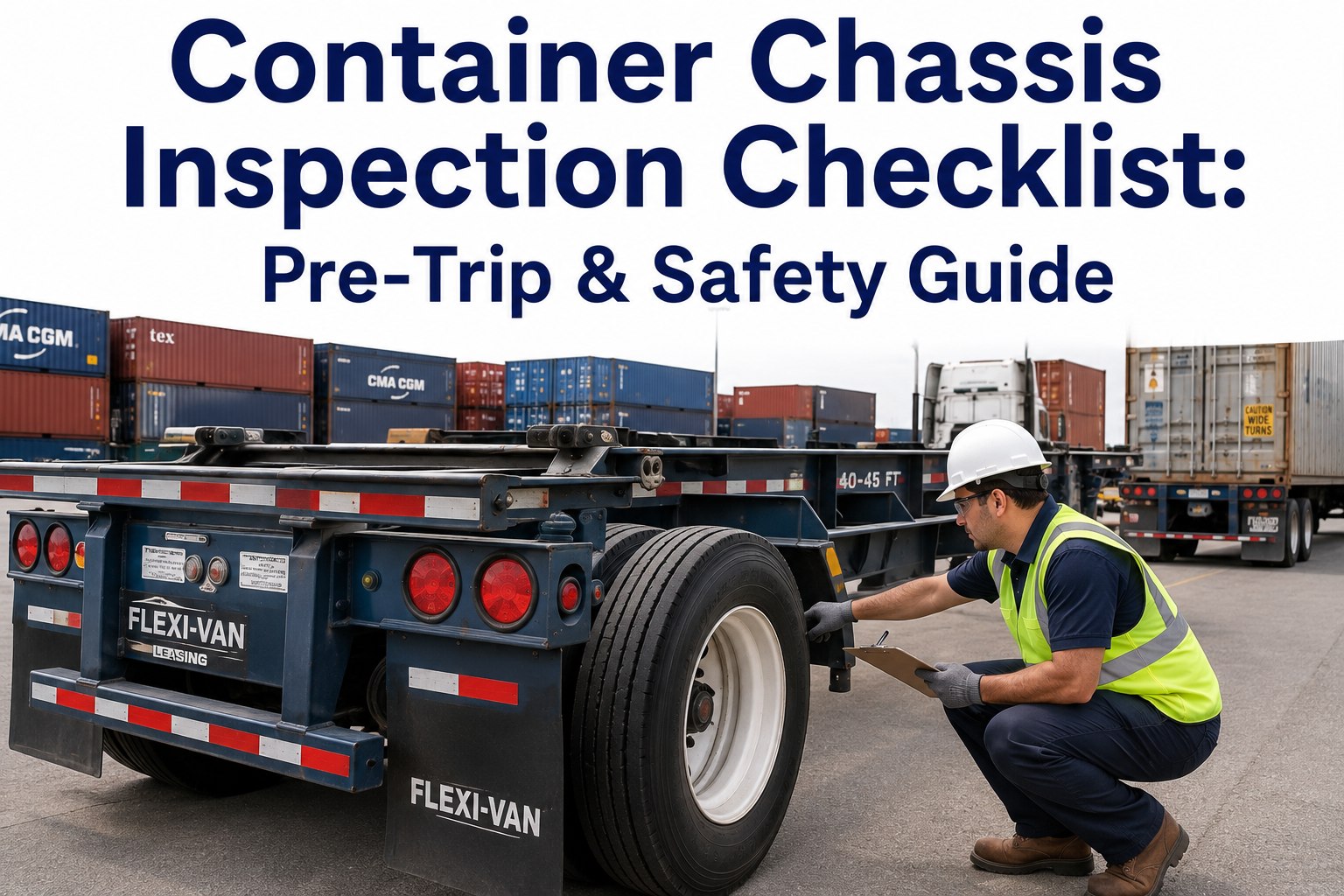
An intermodal chassis lives a hard life — pulled from a pool, hooked by a driver who's never seen it before, run over the road, and dropped at a yard hundreds of miles away. The question that follows it everywhere is simple: is it roadable? The intermodal industry answers that question with one shared rulebook — the IICL Guide for Container Chassis Inspection and Maintenance — backed by the FMCSA roadability regulations that, since 2008, hold Intermodal Equipment Providers to the same safety standard as motor carriers. Get the inspection criteria, the repair protocols, and the recordkeeping right, and a chassis clears interchange and audit alike. Get them wrong, and you're looking at out-of-service units, failed roadability reviews, and disputed interchange damage. This guide breaks down the IICL chassis inspection standards for 2026 — the damage criteria, the IEP-versus-carrier responsibility split, the repair workflow, and the audit-ready records every chassis fleet manager needs.
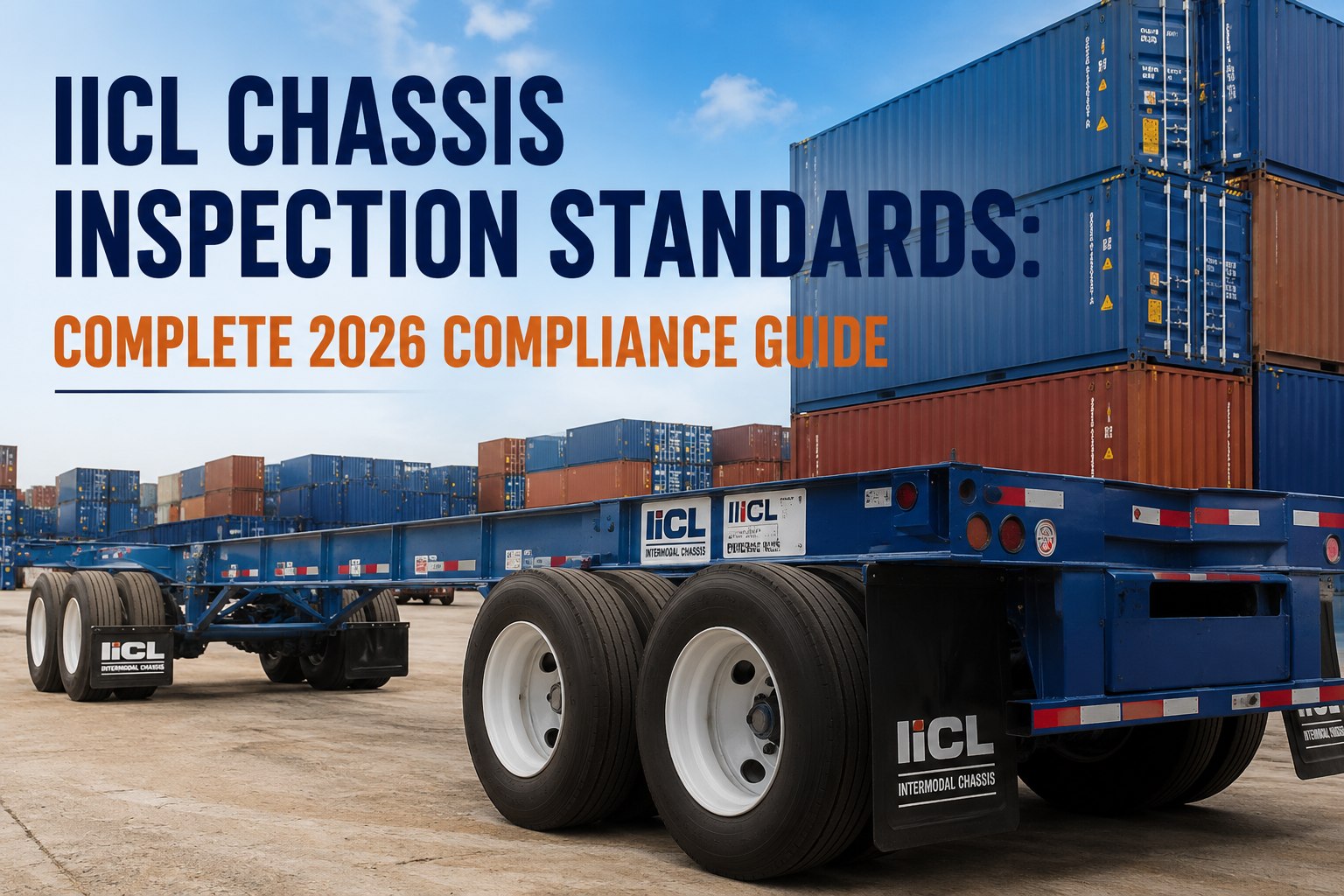
IICL Chassis Inspection Standards: The Complete 2026 Compliance Guide
A plain-English guide to IICL chassis inspection standards and FMCSA roadability — component damage criteria, IEP and motor-carrier responsibilities, repair protocols, inspector certification, and the audit-ready records that keep an intermodal fleet compliant.
What "IICL Standard" Actually Means
IICL is the Institute of International Container Lessors — the trade body whose members own or manage a large share of the U.S. chassis fleet. Its inspection guide is the industry's common language for what counts as damage and what a compliant repair looks like. Layered on top is the federal roadability rule.
The Guide for Container Chassis Inspection and Maintenance (4th Edition) defines component-by-component damage criteria and repair methods — the standard interchange depots inspect against.
Since the 2008 final rule, IEPs must register, run a systematic inspection program, and keep records — held to the same FMCSR safety standard as motor carriers.
The UIIA and its Exhibit A define which damage is interchange-acceptable — driving who pays for what when a chassis changes hands.
Who Inspects What: The Responsibility Split
The single biggest source of confusion in intermodal compliance is who owns which check. Federal roadability law creates a shared-responsibility model — and knowing the line protects you in both an audit and a damage dispute.
- Frame, crossmembers, and structural members
- Brake system, air lines, and chambers
- Suspension and landing gear
- Systematic periodic inspection & maintenance program
- Repairing reported defects before the chassis goes out
- Keeping inspection, repair & maintenance records
- Pre-trip visual & auditory inspection at interchange
- Tires, wheels, and rims roadworthiness
- Lighting, reflectors, and electrical pigtail
- Coupling and locking devices
- Reporting any defect found to the IEP
- Not operating a chassis posing an imminent hazard
Component Damage Criteria at a Glance
IICL inspection turns on specific, repeatable thresholds — not opinion. These are the high-frequency components and the conditions that flag a chassis for repair before it can interchange or hit the road.
Inspect to the Standard, Document for the Audit
Truck Inspection & Maintenance builds IICL-aligned chassis checklists, captures every defect with photos at interchange, auto-generates the repair order, and stores the full inspection-repair history — so each unit is roadable on the road and defensible in a roadability review.
The Inspection-to-Repair Workflow
A compliant chassis program isn't a single inspection — it's a documented loop that closes every defect before the unit moves. Each step has an owner and a record, and a gap anywhere is where audits and disputes start.
Records That Survive a Roadability Review
FMCSA acquires IEP safety data through roadability reviews, inspections, and crash investigations. When a reviewer comes, the documentation is the program. Four record types do the heavy lifting.
Proof each chassis received its systematic inspection on schedule, with findings and inspector identity captured.
Every defect tied to the repair that closed it, the method used, and the date — the closed-loop trail reviewers expect.
The DVIRs submitted to the IEP at interchange, documenting what drivers found and how the IEP responded.
The written systematic inspection, repair, and maintenance program itself — the framework FMCSA reviews against.
IICL Inspector Certification
The standard is only as good as the people applying it. IICL runs a formal certification so inspectors read damage the same way across depots and providers.
Frequently Asked Questions
It's the inspection and repair standard set out in the IICL Guide for Container Chassis Inspection and Maintenance (4th Edition), published by the Institute of International Container Lessors. It defines, component by component, what counts as damage and what a compliant repair looks like — giving depots, IEPs, and inspectors a common standard to apply at interchange and during periodic maintenance. It works alongside the FMCSA roadability regulations rather than replacing them. Start a free trial to digitize IICL checklists.
They complement each other. The FMCSA roadability rule (effective from the 2008 final rule) is the federal law that, for the first time, made Intermodal Equipment Providers subject to the Federal Motor Carrier Safety Regulations — requiring them to register, run a systematic inspection program, repair reported defects, and keep records. The IICL Guide is the technical standard the industry uses to actually judge component condition and perform repairs. Compliance means meeting both. Talk to us about building a compliant program.
It's a shared model. The IEP is generally responsible for major systems — frame, suspension, and brakes — and for running the inspection, repair, and maintenance program. The motor carrier and driver are responsible for a pre-trip inspection at interchange covering roadability items like tires, wheels, lights, and coupling devices, and for reporting any defect to the IEP. The IEP must then repair or replace the defect before the driver departs. Clear records of each party's actions protect everyone.
Four categories: periodic inspection records showing each chassis was inspected on schedule; repair and maintenance history tying every defect to the repair that closed it; the driver vehicle inspection reports submitted to the IEP at interchange; and documentation of the written systematic inspection, repair, and maintenance program itself. FMCSA gathers IEP safety data through roadability reviews, inspections, and crash investigations, so retrievable, complete records are the foundation of the program. Start free and centralize your records.
By passing the IICL Chassis Inspector Certification Examination — a two-hour, computer-based test of 100 multiple-choice questions based on the IICL Guide for Container Chassis Inspection and Maintenance, 4th Edition. It's offered at proctored test centers worldwide, requires self-study of the guide and related technical bulletins, and the resulting certification is valid for five years before re-examination is needed. Certified inspectors are listed in the IICL Inspection Directory.
Keep Every Chassis Roadable and Every Record Ready
Truck Inspection & Maintenance gives intermodal fleets and IEPs one platform for IICL-aligned chassis inspections, photo-documented defects at interchange, automatic repair orders, and a complete inspection-repair history — so units pass interchange, clear roadability reviews, and settle damage disputes with the records to back you up.