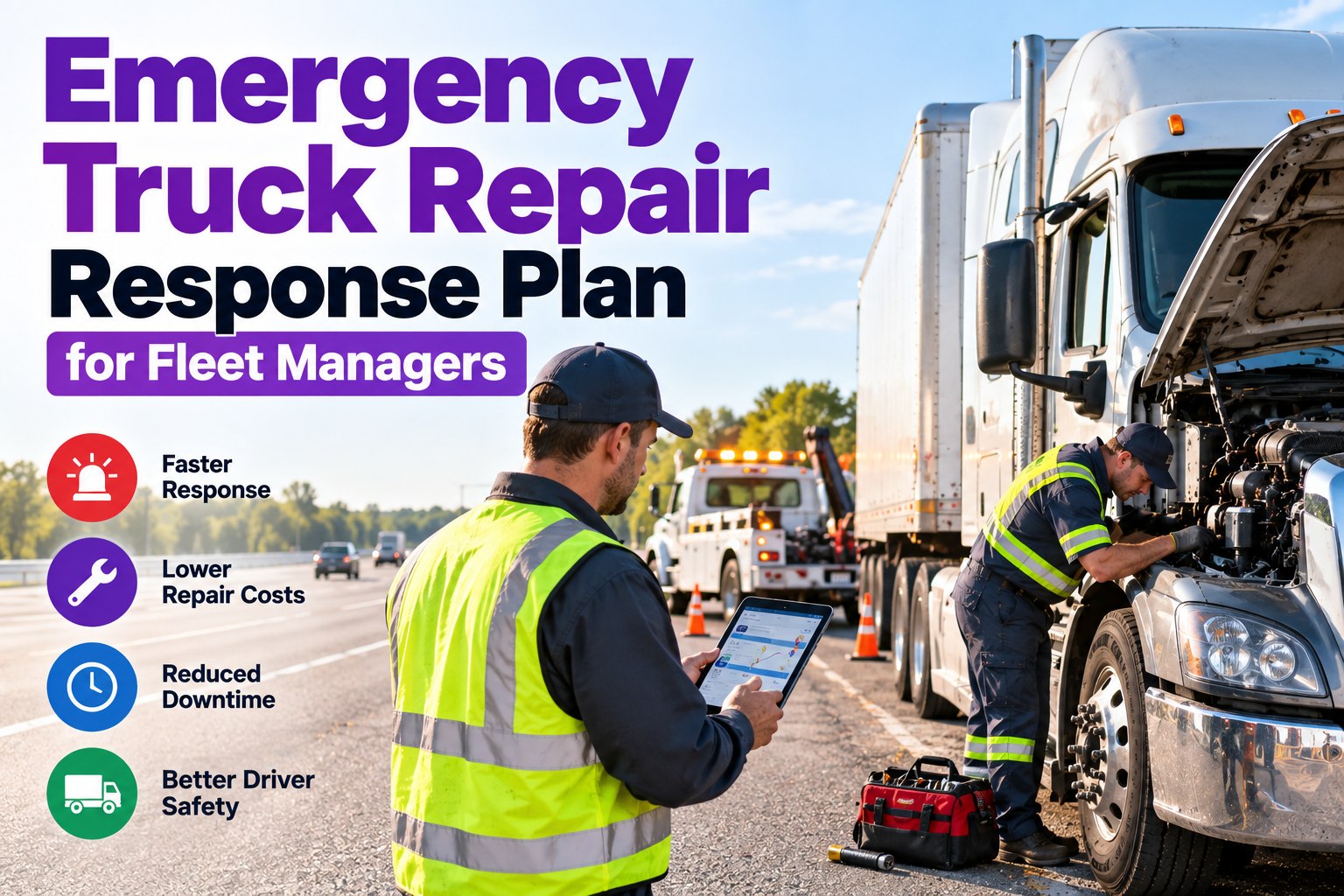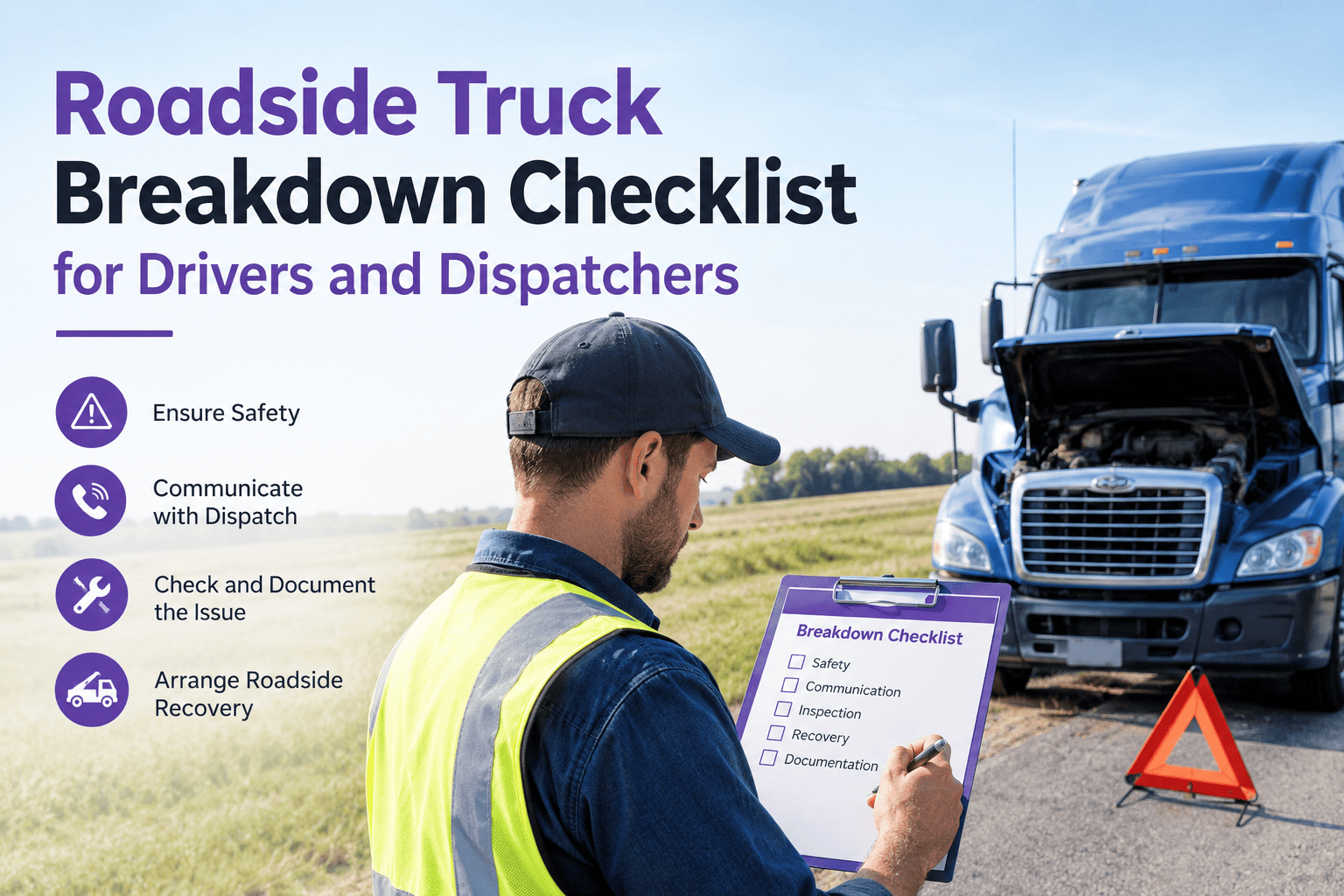
When a truck goes down on the shoulder, the meter starts running twice — once on the clock, at $448 to $760 per day in lost revenue for that unit, and once on the tow bill, which can swing from a $300 service call to a $5,000 recovery depending on where the truck stopped and who you call. Every fleet eventually faces the same structural question: do you build your own road-service capability — a service truck, a driver on call, your own dispatch — or do you buy into a national third-party network and pay per event or per plan? There's no universal answer, because the math flips depending on the breakdown. A blown tire ten minutes from your yard and a hydraulic failure 400 miles out on a rural interstate are not the same decision. This article runs both models across six real breakdown scenarios — urban to remote — so you can see exactly where in-house wins, where the third-party network wins, and where the smartest fleets run a hybrid. Fewer breakdowns beats winning either way, and Truck Inspection & Maintenance flags the wear patterns behind preventable failures before a driver ever calls in from the shoulder — start a free trial or contact our team.
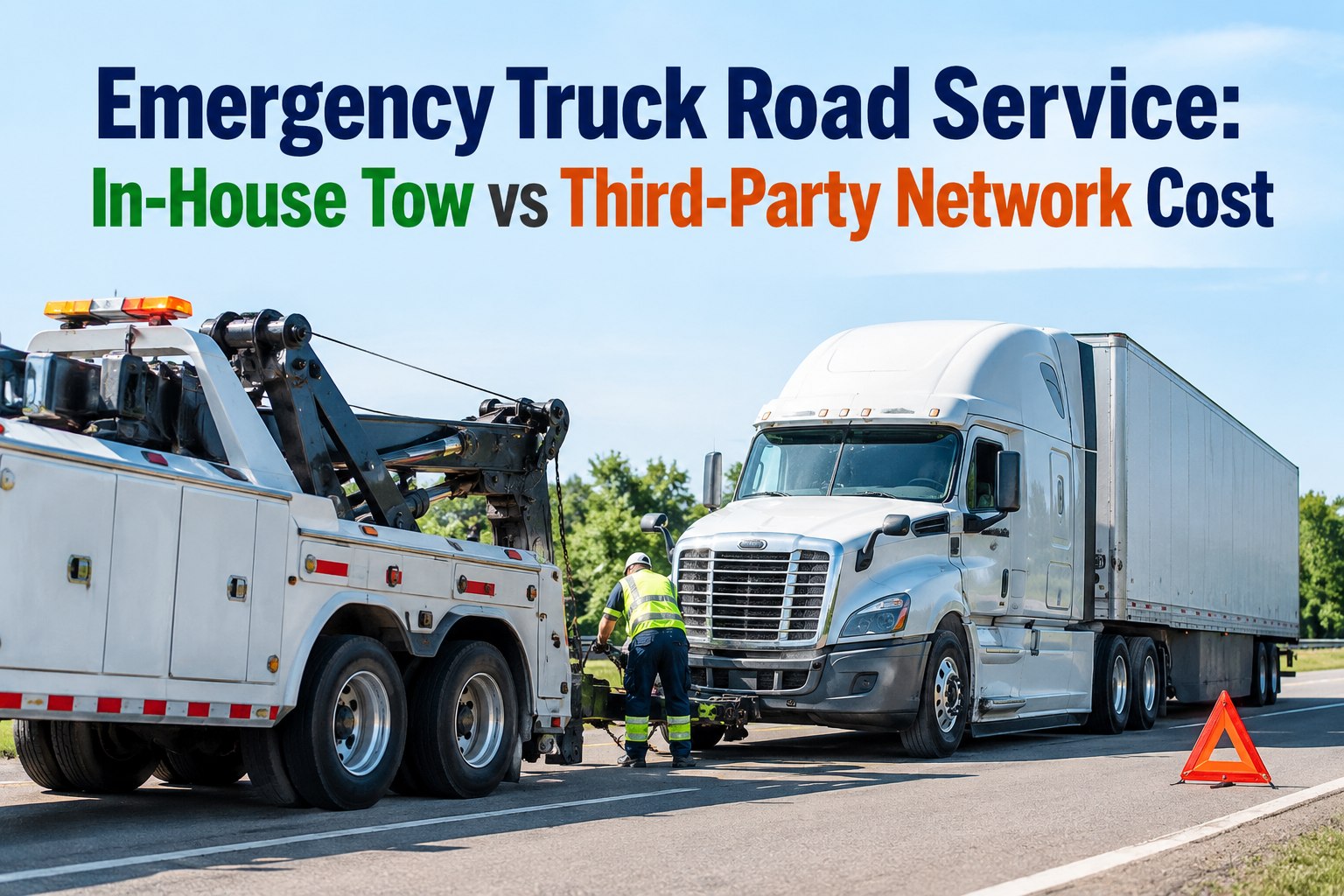
Emergency Truck Road Service: In-House Tow vs Third-Party Network Cost
The right answer isn't a vendor — it's a decision rule. Where the truck breaks down flips the math. Here's both models across six real scenarios.
What a Breakdown Actually Costs in 2026
Before comparing models, you need the real per-event numbers. The tow is only the visible part of the bill:
A heavy-duty roadside service call — tire, jumpstart, fuel, minor mobile repair — typically runs $300 to $1,000+ in 2026, before parts. After-hours and rural lanes push the top end.
A heavy-duty tow or recovery commonly lands at $2,500–$5,000+. Winch-outs, rollovers, and rotator work bill as separate, higher-rate services — the "+" is where budgets get wrecked.
The downtime cost per vehicle per day, on top of the repair bill — missed appointments, idle driver, load at risk. This is the number that makes response speed worth paying for.
The cheapest breakdown is the one that never happens. Start a free trial and catch the wear pattern before it strands a truck.
The Two Models, Side by Side
Each model solves a different problem. Neither is universally cheaper — they trade fixed cost against per-event cost and control against reach:
Six Real Scenarios — Where Each Model Wins
This is the heart of the decision. Same fleet, six different breakdowns — and the cheaper model changes every time:
Daytime, close to base. Your own service truck rolls in 20 minutes at internal cost — a fraction of a $300–$500 third-party tire call. Frequent local events like this are exactly what an in-house unit is built for.
Far outside your service radius. Dispatching your own truck 400 miles is a two-day round trip. A national network with a local vendor is the only model that makes sense — even with a $2,500+ recovery bill.
At or near the yard before dispatch. A jumpstart from your own crew costs minutes, not a service-call minimum. Dense, predictable, low-severity events tilt hard toward in-house.
Rollover and rotator work need specialized heavy-recovery equipment most fleets don't own. This is a $5,000+ event where a network's vetted heavy-recovery vendor is safer and cheaper than improvising.
The gray zone. If it's a routine lane you run daily and your unit is free, in-house may still win. If your crew is tied up, the network fills the gap. This is where a hybrid rule earns its keep.
Low vendor density means long ETAs either way — but sending your own truck overnight into a distant lane burns a driver and a unit. A network with rural coverage, despite the wait, is the lower total cost.
Want the six-scenario decision rule mapped to your own lanes and yard locations? Get in touch for a free 15-minute walkthrough.
The Break-Even Rule That Settles Most of the Debate — Count Your Local Events Per Year
The single cleanest way to decide: for wide-lane, occasional, or heavy-recovery events, the third-party network almost always wins on total cost. For frequent, local, low-severity events, in-house wins once you clear the break-even — roughly the point where your annual local event volume covers the fixed cost of the truck, staff, and insurance. Most fleets discover the honest answer is both: an in-house unit for the dense home footprint, a national network for everything beyond the radius. And the biggest lever on either bill is event volume — 78% of breakdowns are preventable, so every failure your PM program catches early is a tow you never pay for. Start a free trial and shrink the event count that drives both models' cost.
You can't out-negotiate a tow bill you never should have gotten. Cut the event count and both models get cheaper.
Dispatch, drivers, and the shop work from one system for inspections, preventive maintenance, and repair tracking — so the wear pattern behind a preventable breakdown becomes a work order weeks before it becomes a roadside call. Start a free trial or talk to our team.
KPI Dashboard — 5 Road-Service Metrics
Whichever model you run, these five numbers tell you whether your road-service spend is under control:
Tow + service + parts + downtime, per breakdown. The single number that tells you if your model fits your lanes — track it by scenario type.
Minutes from driver's call to help on scene. Every hour of ETA is $448–$760 of downtime accruing — the metric that justifies in-house on dense lanes.
Roughly 78% of breakdowns are preventable. This is your biggest cost lever — the events a strong PM program removes before they happen.
How many events fall inside your in-house radius vs outside it. This split is the number that decides in-house, third-party, or hybrid.
Invoices exceeding the quoted cap or authorization. On third-party events, uncontrolled overages are where budgets quietly blow out.
Track cost-per-event and preventable share automatically — start a free trial in minutes.
The 5 Road-Service Cost Mistakes Fleets Make Most
Five patterns quietly inflate road-service spend on both models:
Buying a Plan You Rarely Use
Pattern: Paying $35–$60/month per truck across the fleet when actual event volume is 0–1 per truck per year. Below ~3 events a year, on-demand pay-per-call usually beats the subscription.
Running In-House Beyond Its Radius
Pattern: Pride (or sunk cost) sends the fleet's own truck 300 miles out. Two days and a burned driver later, it cost far more than a local network vendor would have.
Not Reading the Tow-Mile Cap
Pattern: "We have coverage" — until a heavy tow blows past the mileage or dollar cap and the fleet eats a $3,000+ overage. The cap, not the brand, is the real cost.
No Breakdown Card in the Cab
Pattern: Driver doesn't know the plan number, the spend authorization, or what to tell dispatch. The result is a slow, disputed, marked-up invoice on every event.
Treating Tows as Random Instead of Preventable
Pattern: Road service is managed as an unavoidable cost of doing business. But 78% of breakdowns are preventable — the fleets that track wear patterns pay for a fraction of the tows.
Frequently Asked Questions
Is in-house tow or a third-party network cheaper for a truck fleet?
Neither universally. In-house wins on frequent, local, low-severity events once volume clears the fixed cost of a truck and crew. Third-party wins on wide-lane, occasional, or heavy-recovery events. Most fleets run a hybrid — in-house near the yard, network beyond the radius.
How much does a heavy-duty truck tow cost in 2026?
A standard heavy-duty service call runs about $300–$1,000+, while a heavy tow or recovery commonly lands at $2,500–$5,000+. Heavy towing averages $3.50–$7.50+ per mile, and winch-outs or rollovers bill as separate, higher-rate recovery services.
When does a roadside assistance plan pay off vs pay-per-call?
As a rule of thumb, 0–1 events per truck per year favors on-demand pricing, while 3+ events per year usually favors a plan — provided the tow-mile caps and tire limits don't erase the savings. Run the break-even against your real event volume, not the marketing.
What hidden costs make third-party bills bigger than expected?
Tow-mile and dollar caps, overage billing beyond the cap, mileage charged from a home base instead of the nearest tech, after-hours fees, and "recovery" priced separately from "tow." Confirm all of these in writing before you need them.
What's the biggest lever on total road-service cost?
Event volume. Roughly 78% of breakdowns are preventable, so the fleets with disciplined preventive maintenance simply have fewer events to pay for — on either model. Cutting the number of tows beats optimizing the price of each one.
How does Truck Inspection & Maintenance help cut road-service cost?
It gives dispatch, drivers, and the shop one system for inspections, preventive maintenance, and repair tracking — so the wear behind a preventable breakdown becomes a work order weeks early, and the event count driving both models' cost keeps falling. Start a free trial or contact us.
In-house near the yard, network beyond the radius, and a PM program that shrinks the event count driving both bills.
Compare the models honestly, run the hybrid rule on your own lanes, and cut the preventable breakdowns that make every road-service decision more expensive than it needs to be — all from one maintenance system dispatch, drivers, and the shop share.