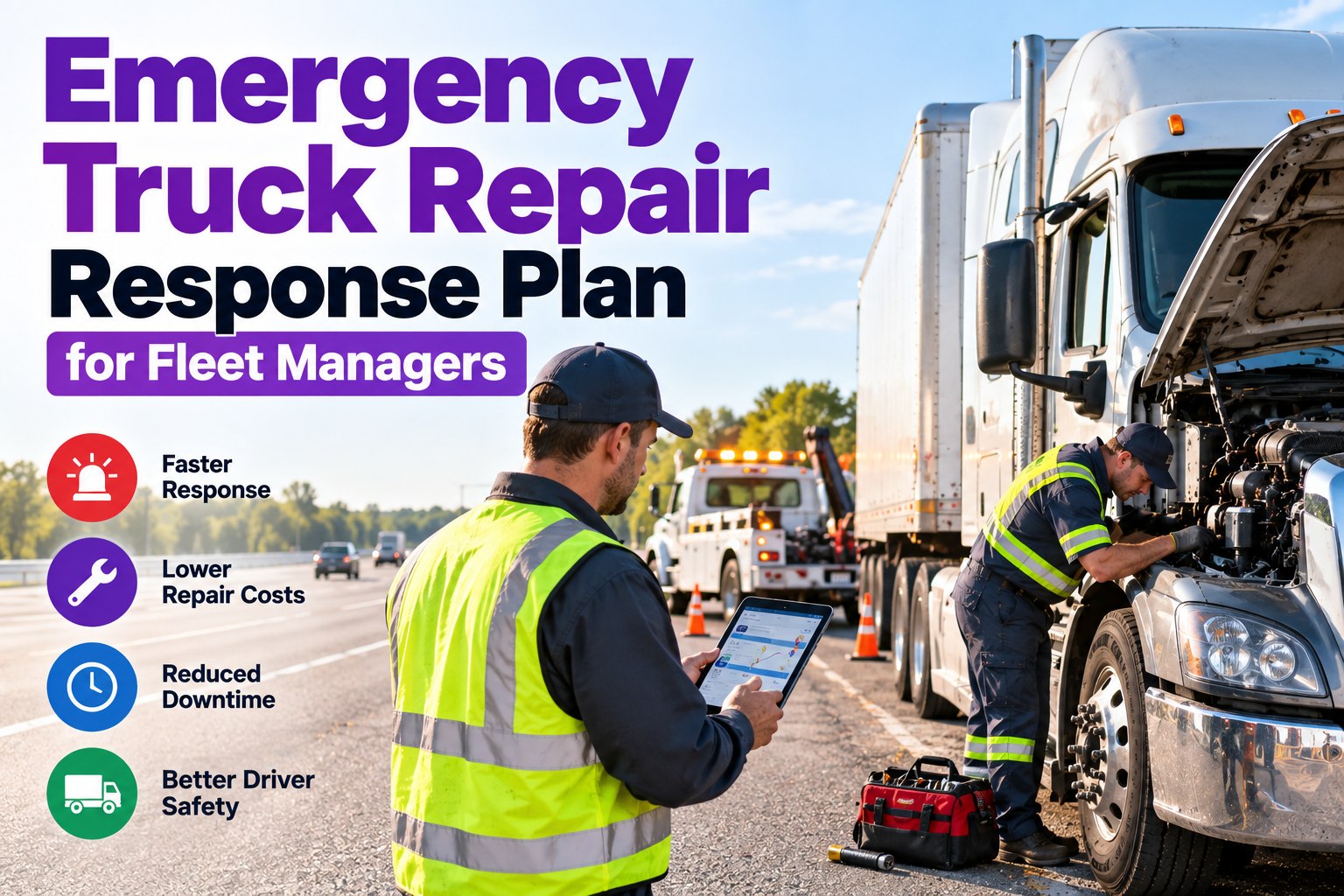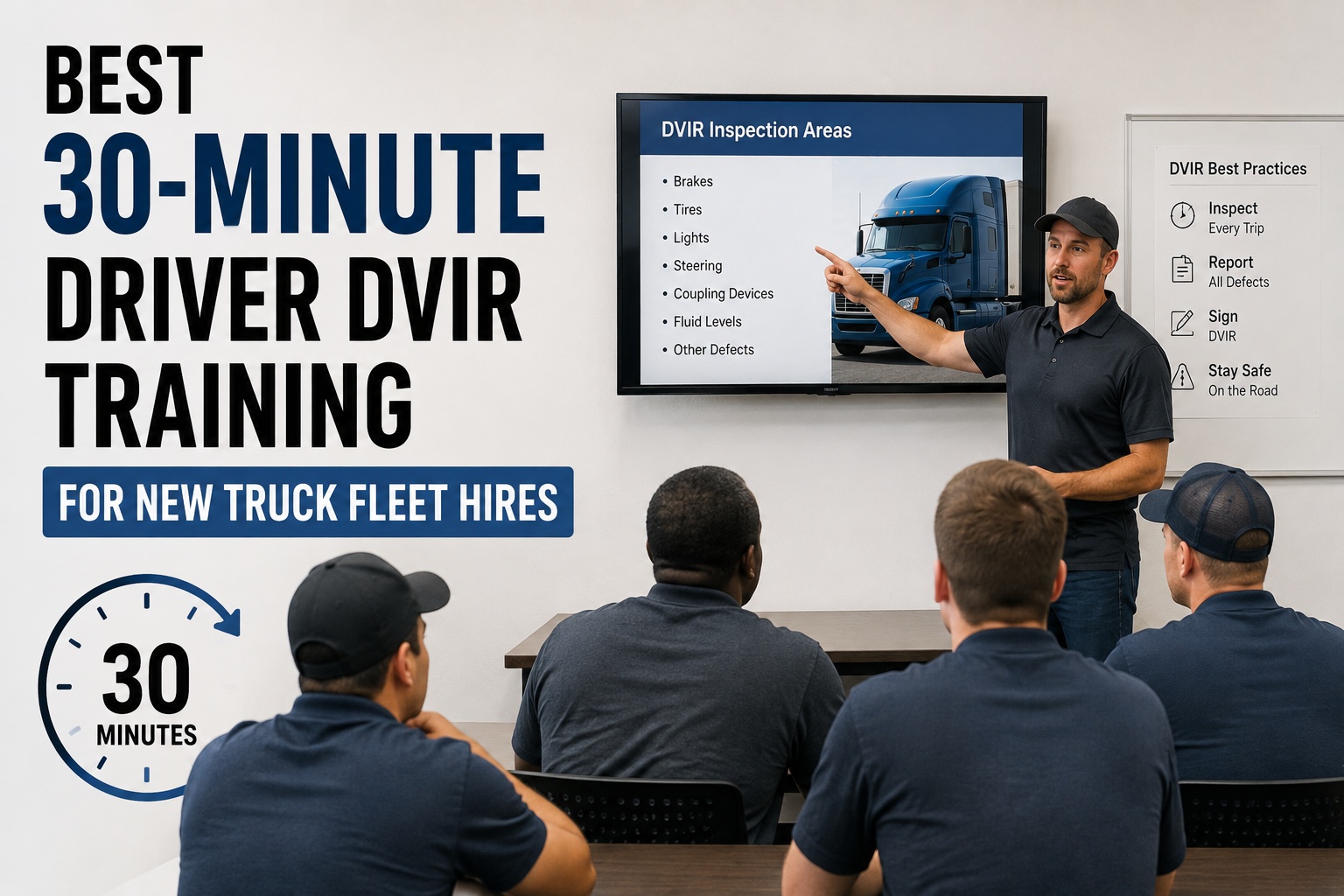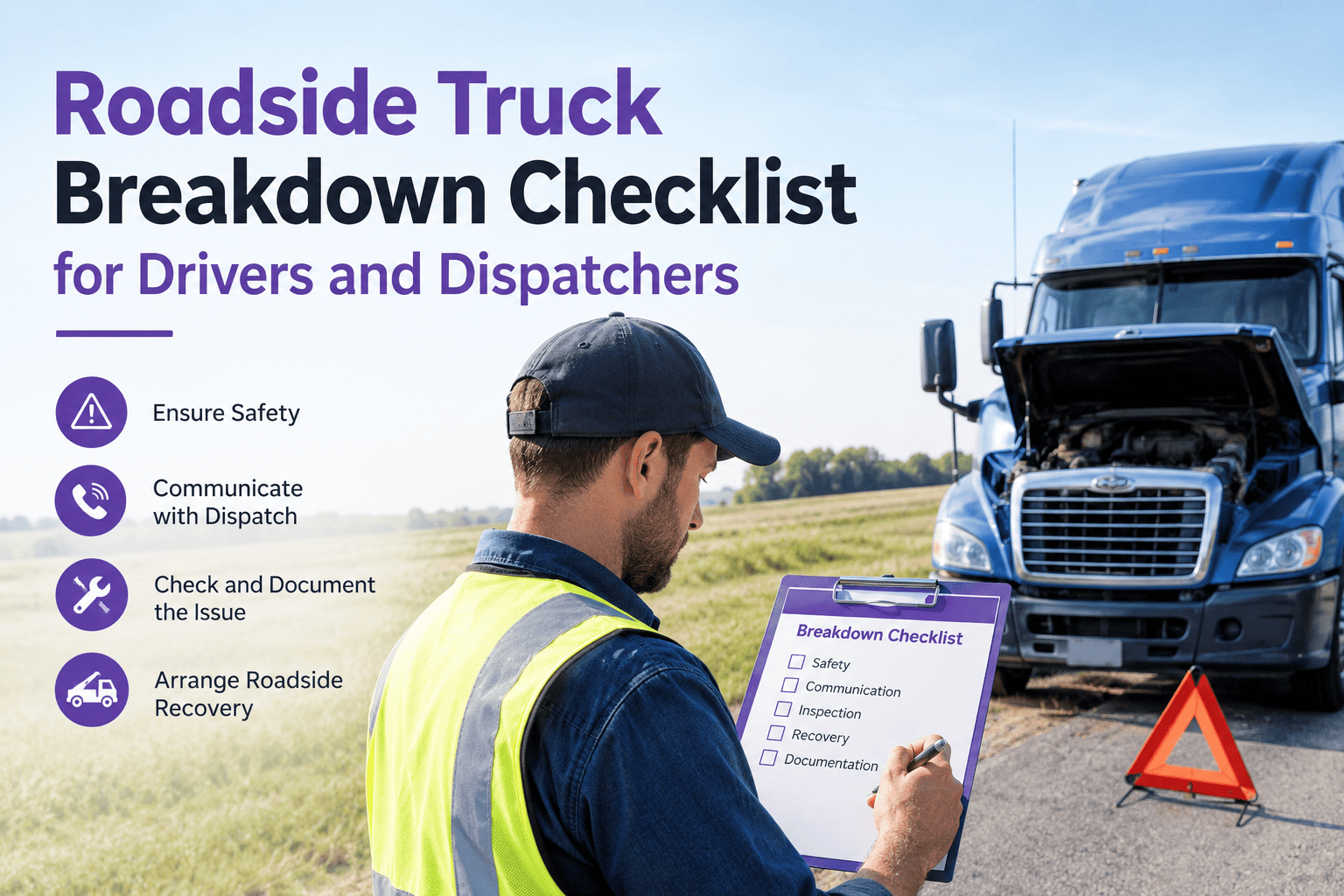
A breakdown on the shoulder of an interstate is not the moment to figure out the protocol — it's the moment the protocol either exists or doesn't. FMCSA §392.22 requires warning devices deployed within 10 minutes of a CMV stopping on the roadway, drivers have to stay safe, dispatch has to route a tow, and a work order has to open against the unit before the truck ever moves again. Truck Inspection & Maintenance Management Software runs the whole sequence — driver mobile checklist for the first 10 minutes, live breakdown alert to dispatch, tow-vendor dispatch, and auto-generated WO — so no step is missed and every incident lives on the unit record. Start free and run coordinated breakdown response on TIM.
A Breakdown Is Three Parallel Tracks Running at Once — TIM Coordinates All Three
Driver stays safe and legal on the shoulder. Dispatch confirms location, routes a tow, notifies the customer. CMMS logs the incident against the unit record with fault codes and work order. Skip any track and the breakdown becomes a liability event. Truck Inspection & Maintenance Management Software runs the driver, dispatch, and documentation tracks on one platform — everyone sees the same live incident.
The First 10 Minutes — Driver Protocol on the Shoulder
The federal 10-minute window under §392.22 exists because that's roughly the time between a stop and the moment an approaching driver at highway speed can no longer safely react to a vehicle sitting on the shoulder. Below is the driver's sequenced first-10-minute protocol — the TIM mobile checklist opens with these six steps ordered.
The Triangle Placement Rule — Where §392.22 Says They Go
The triangle spacing rule is the single most-cited part of §392.22 in post-incident litigation — an improperly placed triangle can leave the fleet exposed even when the driver did deploy on time. Below is the standard undivided-highway placement TIM has diagrammed in the mobile checklist.
The Dispatch Coordination Playbook — Minutes 10 to 30
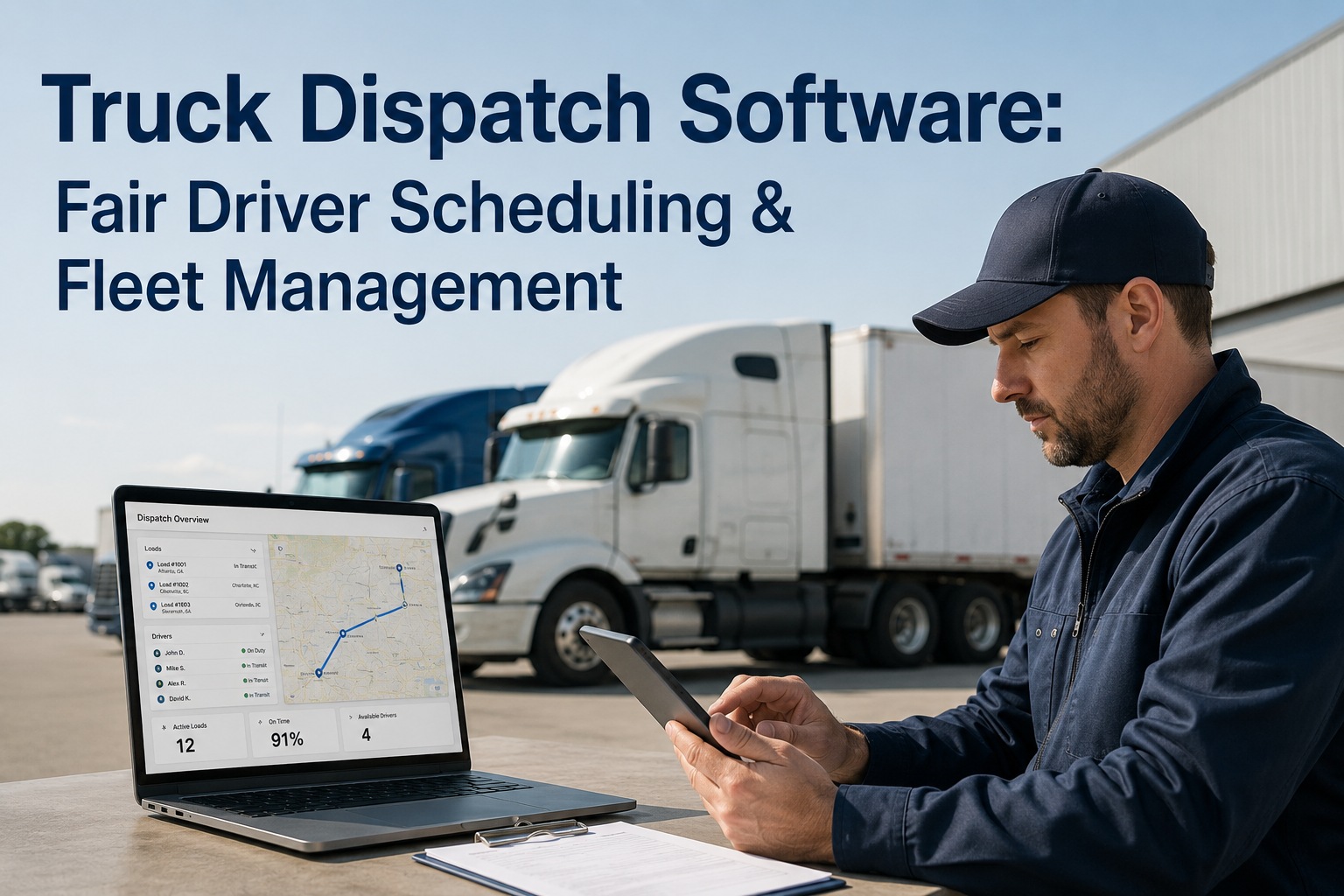
While the driver is securing the scene, dispatch is running a parallel workflow. The moment the driver hits Start Breakdown in TIM, dispatch sees the alert with GPS location, unit ID, driver name, and last-known fault codes. Below is the coordination sequence TIM guides dispatch through.
Driver on the Shoulder + Dispatch in the Office — One Live Incident in TIM
Truck Inspection & Maintenance Management Software puts driver actions and dispatch actions on the same live incident record. Dispatch confirms the driver's safety, cross-checks GPS against the nearest approved tow vendor, activates the vendor, notifies the customer/broker if load is affected, escalates to a supervisor if the driver goes unreachable — and every step timestamps into the same record the driver's checklist writes to.
The Severity Triage — Repair on Scene or Tow Back to Shop
Not every breakdown is a tow event. Some are a roadside re-tension, some are a fuse swap, some are a full engine failure that needs a heavy-duty wrecker. Below is the triage matrix TIM uses to route the response — driver reports the symptom, and the platform surfaces the recommended response tier.
| Severity | Symptom examples | Response | Response time |
|---|---|---|---|
| CRITICAL | Fire, brake failure, steering loss, hazmat leak | Immediate 911 · driver evacuate · fleet notified | 0 min |
| HIGH | Engine failure, transmission locked, coolant loss | Secure scene · heavy-duty tow dispatched | < 30 min |
| MEDIUM | Overheating, air leak, DEF fault, DPF regen locked | Assess for roadside fix · mobile mechanic option | < 2 hr |
| LOW | Blown fuse, headlight out, minor coolant top-up | Roadside driver fix · continue if safe | < 4 hr |
| MONITOR | Warning light with no performance drop | Continue with caution · document for next PM | Next PM |
Frequently Asked Questions
Every Breakdown Handled Right — Driver Safe, Dispatch Aligned, Shop Ready
TIM runs the 10-minute driver protocol, coordinates dispatch and tow, auto-opens the work order, and archives the whole incident against the unit. Breakdowns stop being liability events.