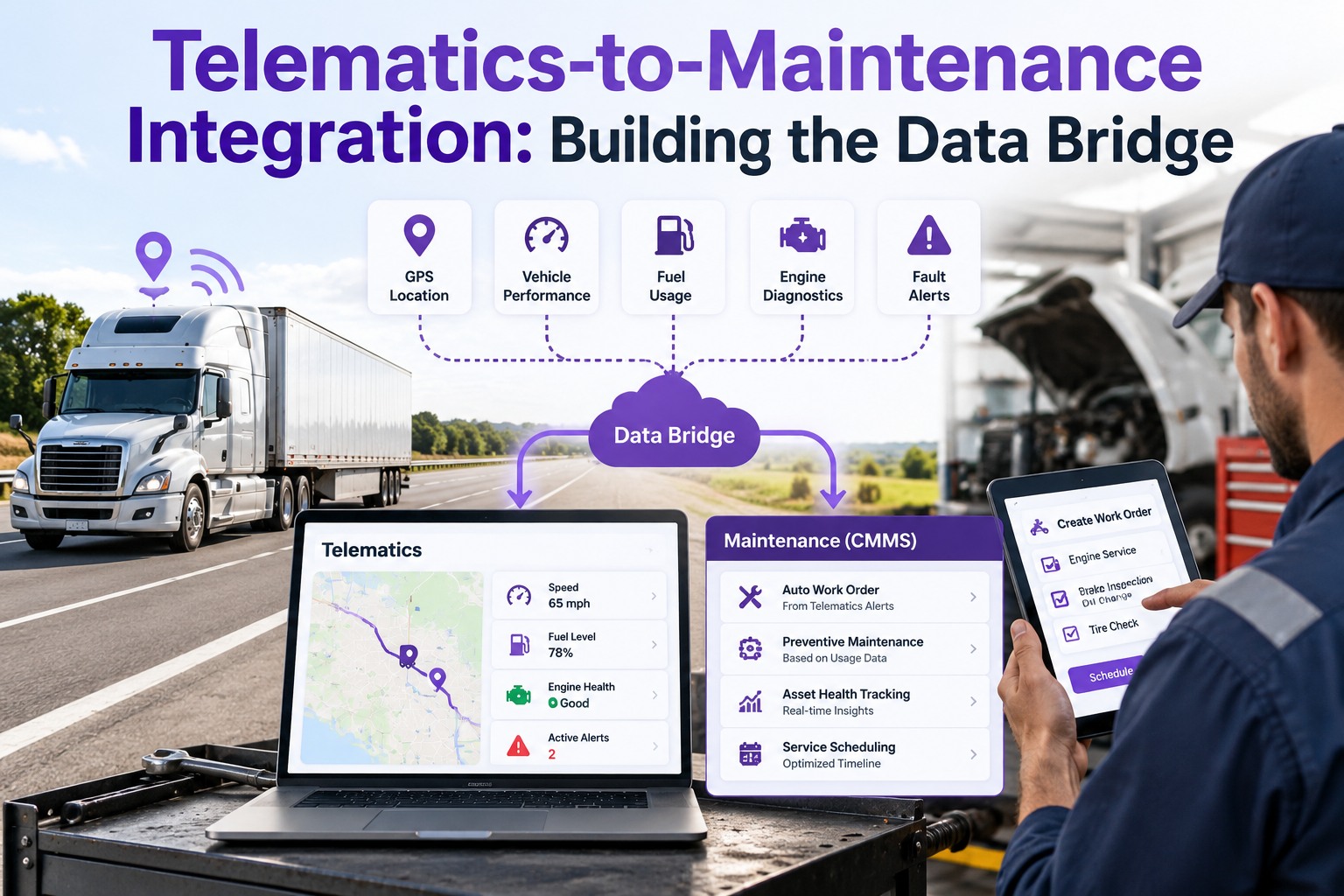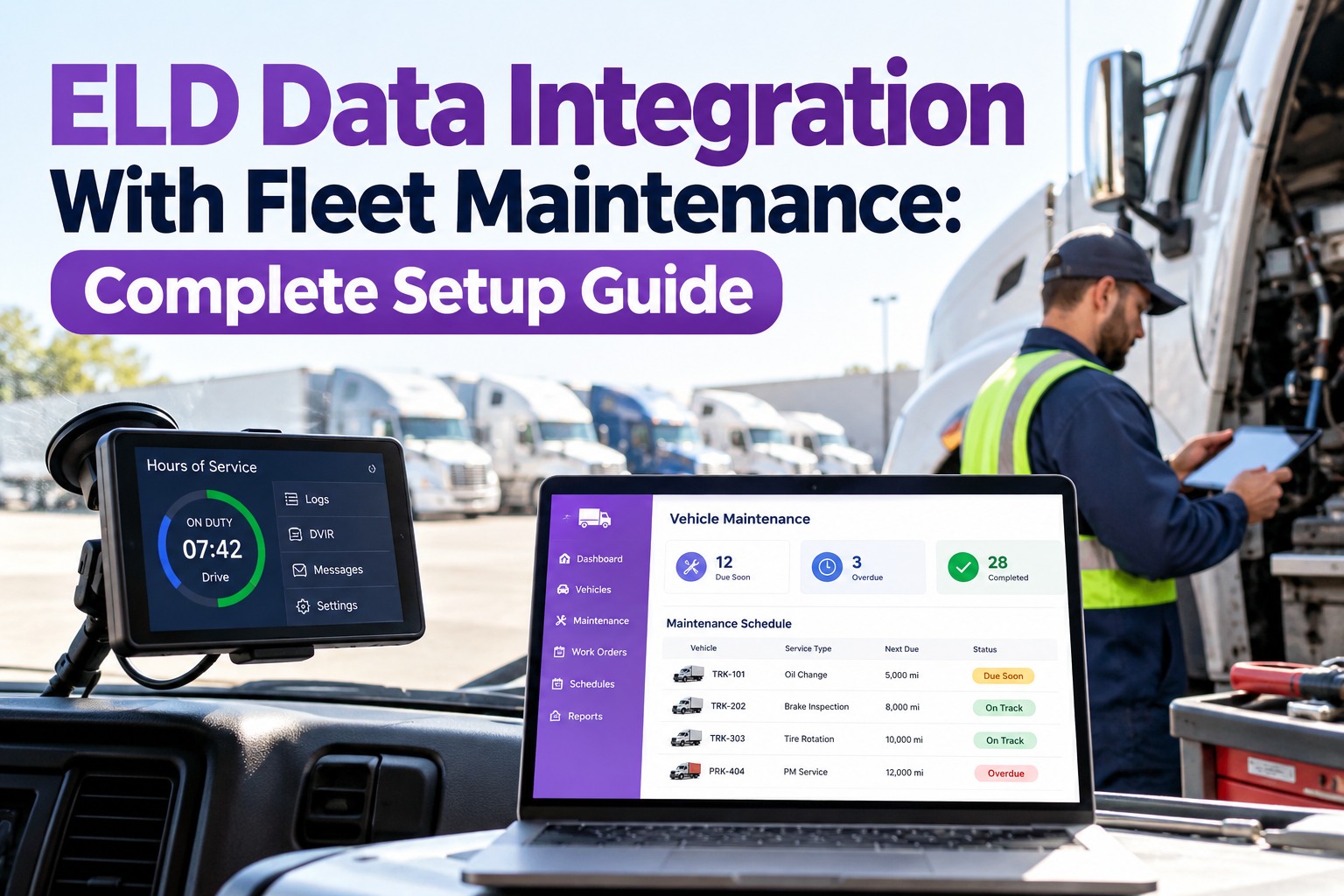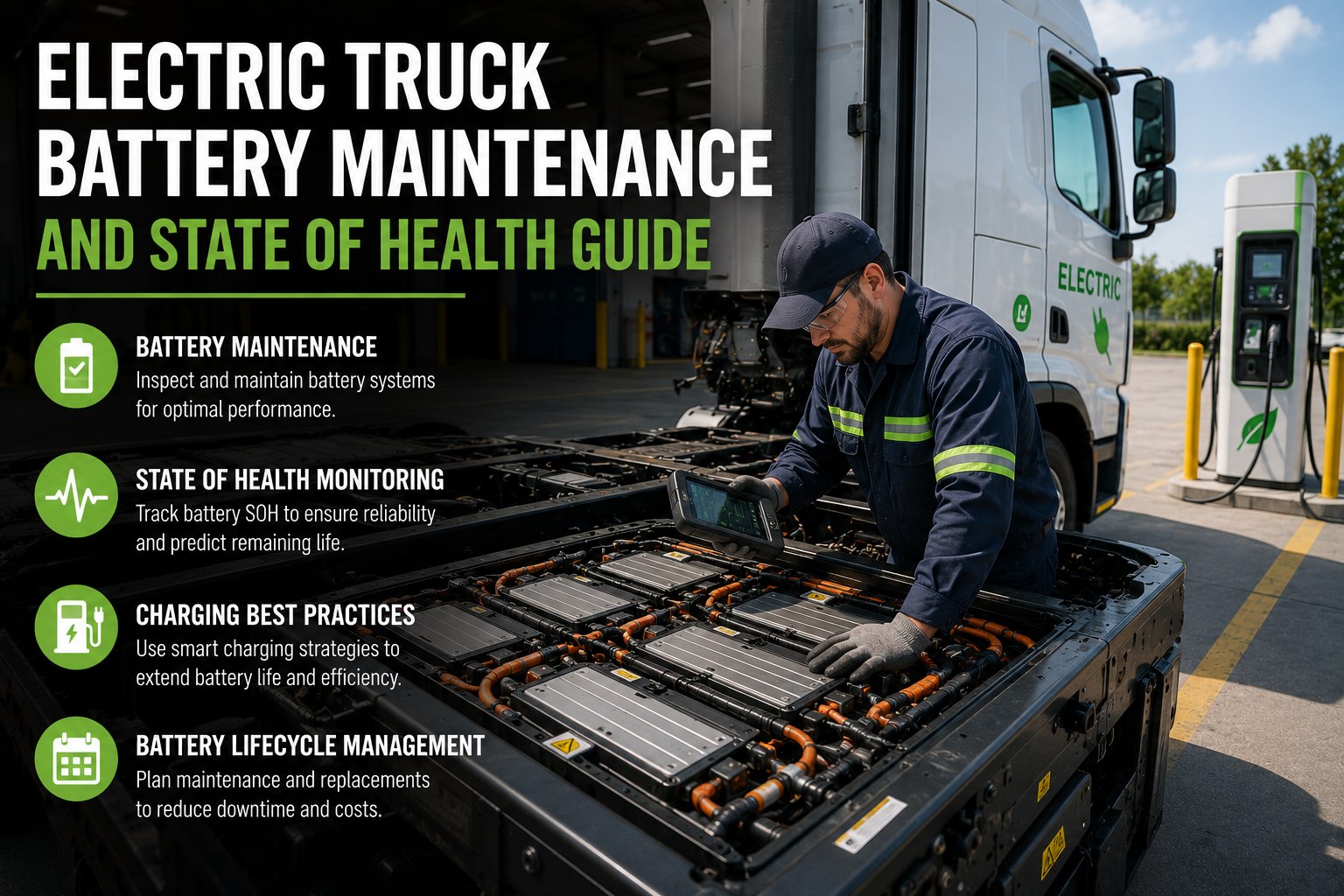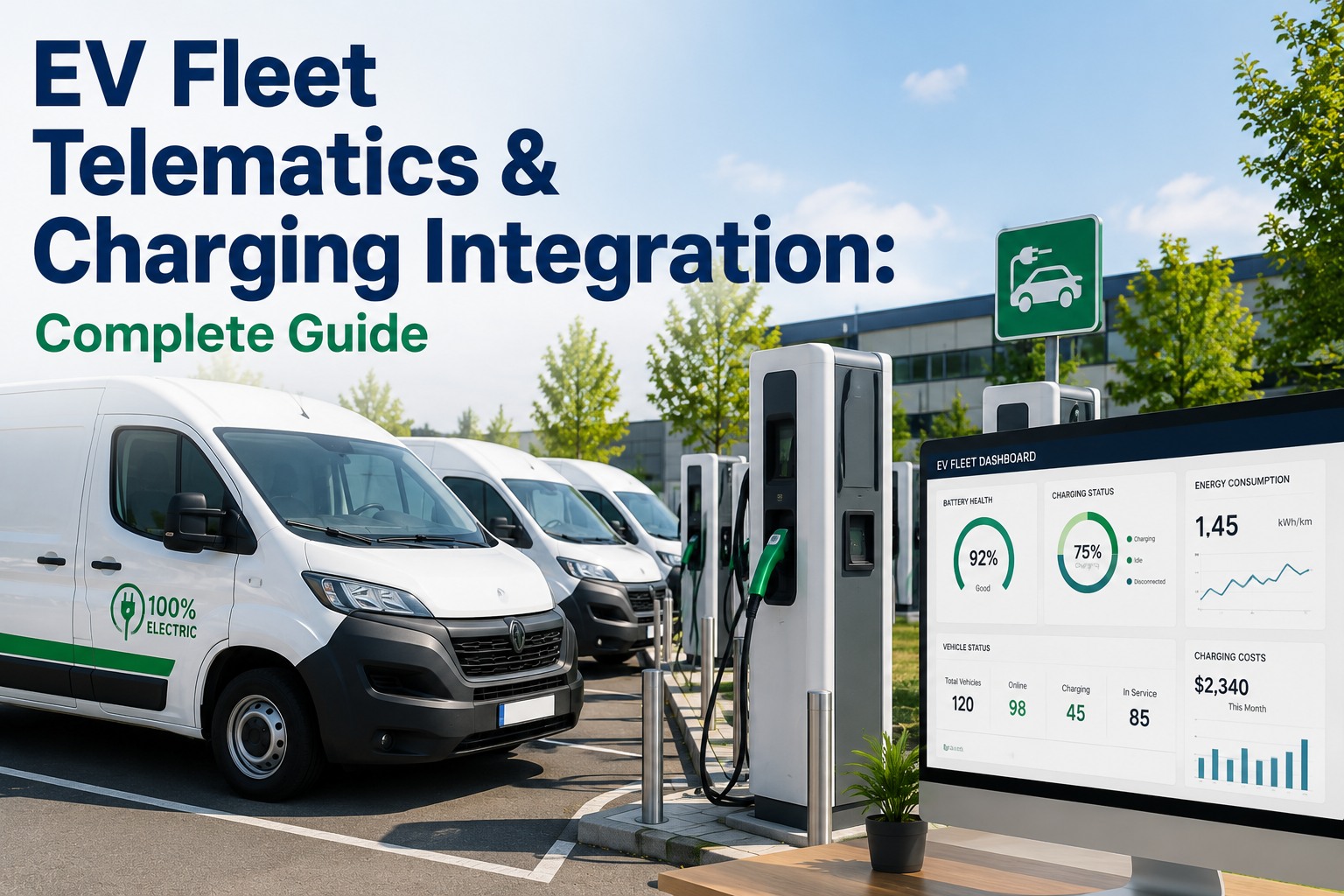
Here's the operational reality most fleet electrification pilots discover the hard way: EVs, chargers, and telematics platforms all generate rich data — but they generate it in isolation. The vehicle knows its state of charge. The charger knows kilowatt-hours dispensed. The telematics platform knows GPS and duty cycle. The utility knows demand and time-of-use rates. And unless something ties all four data streams together, fleet managers end up manually reconciling spreadsheets to answer basic operational questions like "why did our electricity bill spike last month?" or "which vehicle is losing range fastest?" Telematics and charging integration solves this by treating the fleet as one connected data system rather than four separate ones, and the operational impact is real: fleets that integrate charging with telematics can reduce electricity costs by up to 60% through smart scheduling and off-peak charging, prevent demand-charge spikes through load balancing, extend battery life through thermal event monitoring, and achieve driver-level cost allocation for home charging reimbursement. The technology enabling this is mature — Open Charge Point Protocol (OCPP) 2.0.1 is the universal language spoken by every serious charger brand (ChargePoint, Blink, Wallbox, ABB, Siemens, and 50+ others), and every major telematics platform (Geotab, Samsara, Motive, Verizon Connect) now offers native EV data support. This guide walks through why integration matters, the data-flow architecture that connects vehicles to grid, the six key data streams captured, OCPP explained, smart charging capabilities, battery health monitoring, and how Truck Inspection & Maintenance ties EV inspection data into your integrated stack — free forever for up to 3 vehicles.
EV Fleet Telematics & Charging Integration: The Complete 2026 Guide
Vehicles talk. Chargers talk. Telematics talks. Get them speaking the same language — and cut electricity costs 60%.
The Fragmented Data Problem
Without integration, EV fleet operations run on four disconnected data silos — each one holding a piece of the truth, none of them talking to each other. The result is manual reconciliation, missed optimizations, and preventable costs:
Vehicle Data
SOC, location, mileage, driving behavior, energy consumption — locked in the OEM telematics or fleet system.
Charger Data
Session duration, kWh dispensed, power delivered, faults — held in the charger management platform (CMS).
Route & Duty Cycle
Planned routes, dispatch times, driver schedules — living in the transportation management or dispatch system.
Utility & Grid Data
Time-of-use rates, demand charges, capacity limits — visible only in the utility billing system, often 30–45 days late.
The Integrated Data-Flow Architecture
Integrated systems close the loops by connecting these silos in real time. Here's how the data flows in a properly configured EV fleet stack — every arrow is a live API integration, not a batch export:
The 6 Key Data Streams You'll Track
Once integration is live, six specific data streams become continuously available. Understanding what each one tells you is the foundation of every optimization decision that follows:
State of Charge
Percentage of battery capacity currently available. Real-time. Enables route assignment (does this vehicle have enough range?), charging priority (which vehicles need attention?), and dispatch decisions.
State of Health
Battery capacity as a percentage of original. Degrades 2–3% per year normally. Falling faster = thermal abuse, deep-discharge patterns, or manufacturing defect. Foundational for warranty claims and replacement forecasting.
Energy Consumed
Kilowatt-hours dispensed per session and per mile. Direct cost driver. Enables per-vehicle economics, per-driver benchmarking, and route efficiency analysis. Comparable to "MPG" for EVs.
Thermal Events
Battery temperature excursions during charging or discharging. Recurring events accelerate degradation. Alerts enable intervention before thermal runaway — the failure mode that ends EV batteries prematurely.
Session Data
Start/stop time, duration, target vs actual final SOC, faults during session, charging speed. Reveals patterns like slow chargers, incomplete sessions, and chargers that consistently underperform.
Duty Cycle & Routes
Actual driving data — speed, acceleration, regen usage, cargo weight, HVAC load. Correlates driving behavior with energy consumption. Identifies drivers who consistently outperform (or underperform) the fleet.
OCPP — The Universal Language
Open Charge Point Protocol is the reason charging integration is possible at all. It's the industry standard that lets any OCPP-compliant charger talk to any OCPP-compliant management platform — no matter who made the hardware. Understanding OCPP is understanding why vendor lock-in is optional:
Open Standard
OCPP is a free, open communication protocol maintained by the Open Charge Alliance. It defines exactly how a charger reports to a management platform (session data, faults, energy dispensed) and how the platform sends commands back (start, stop, adjust power).
No Vendor Lock-In
If your chargers speak OCPP and your platform speaks OCPP, they're interoperable — regardless of manufacturer. Switch software without changing hardware. Add ChargePoint stations alongside existing Wallbox units on the same dashboard. Freedom to negotiate.
OCPP 2.0.1 Current
OCPP 1.6 is legacy but widely deployed. OCPP 2.0.1 adds Plug & Charge, ISO 15118 support, enhanced security, and smart charging features. New deployments should require 2.0.1. Legacy 1.6 chargers can often be firmware-updated.
50+ Brands
ChargePoint, Blink, Wallbox, ABB, Siemens, Delta, Kempower, Tritium, ABL, Alpitronic — all major charger manufacturers support OCPP. Verify version compatibility (1.6 vs 2.0.1) before purchase. Non-OCPP chargers should be a hard no.
Smart Charging Capabilities
The moment vehicles, chargers, and duty cycles are connected, five specific optimizations become possible. These are the operational capabilities that convert integration investment into direct savings:
Time-of-Use (TOU) Scheduling
Charge during off-peak utility hours when rates drop 40–60%. Platform automatically schedules sessions to hit target SOC by departure time, using cheapest available energy windows.
Demand Charge Management
Utility demand charges are billed on peak 15-minute usage — not total energy. Load balancing across chargers prevents demand spikes that add thousands to monthly bills.
Duty-Cycle-Aware Sessions
Vehicle needs 60% SOC for tomorrow's short route — no reason to charge to 100% overnight. Charging to actual need extends battery life and reduces energy waste.
Priority-Based Charging
Early-departure vehicles get charging priority. Later dispatches wait. Prevents scenarios where a truck needs to leave at 6 AM but is still at 40% SOC because it queued behind others.
Driver Cost Allocation
Take-home EV drivers charge at home. Platform tracks kWh dispensed per driver, calculates reimbursement at prevailing rate, generates payroll-ready reports. Eliminates manual expense claims.
Telematics tracks energy. Truck Inspection & Maintenance tracks the physical asset.
Telematics platforms are excellent for energy data — but they don't handle driver-completed inspections, DVIRs for diesel trucks, or defect routing to your shop. Truck Inspection & Maintenance fills that gap with EV-specific inspection templates (battery physical condition, charging cable inspection, thermal system checks) plus DOT-compliant DVIRs for your remaining diesels. Sign up free for up to 3 vehicles.
Battery Health Monitoring — The Long Game
The single most valuable data stream from EV telematics is battery State of Health tracking. Battery replacement is the largest deferred cost in EV ownership — a $25,000–$60,000 line item that arrives at year 8–12 for most fleet vehicles. Tracking SOH from day one is how you plan for it:
Normal Annual Degradation
Healthy lithium-ion battery in fleet duty. Degradation stays predictable if thermal management works and charging patterns stay within manufacturer specs. Establishes baseline for anomaly detection.
End-of-Warranty Threshold
Most EV batteries carry 8-year/100K-mile warranties defining "failure" as SOH dropping below 70–80%. Track SOH monthly — falling below threshold within warranty = manufacturer claim.
Deep Discharge Warning
Repeatedly discharging below 20% SOC accelerates degradation dramatically. Telematics flags patterns and alerts fleet managers before habits set in. Simple behavior change extends battery life 20–30%.
Thermal Threshold
Cell temperatures above 45°C during charging or discharging accelerate degradation and increase fire risk. Thermal events logged and correlated with charging rate, ambient temp, and duty cycle.
Typical Replacement Window
Fleet EV batteries typically hit replacement threshold at year 8–12 depending on duty cycle severity. Tracked SOH curve enables accurate replacement forecasting — no surprises in year 9.
Battery Replacement Cost
Class 4–6 truck battery pack replacement: $25,000–$60,000. Class 8 Class heavy-duty: $60,000–$150,000+. Second-life resale (grid storage) can offset 15–30%. Plan replacement capital 3+ years ahead.
The 6 Integration Pitfalls to Avoid
Every failed EV telematics integration project stumbles on one or more of these mistakes. Address them during vendor selection, not after go-live:
Buying Non-OCPP Chargers
Proprietary protocol chargers create permanent vendor lock-in. If it's not OCPP-compliant (ideally 2.0.1), don't buy it — no matter how attractive the hardware price.
Ignoring Telematics API Costs
Some OEMs charge for API access to vehicle data. Verify data pricing before purchase — a "free" telematics unit with $20/month API fees per vehicle destroys fleet economics fast.
No Baseline SOH Measurement
Not recording battery SOH at delivery = no baseline for warranty claims. Measure and document within first week. Every subsequent measurement compares against day-one reading.
Skipping TOU Optimization
Charging whenever plugged in wastes 40–60% of potential savings. Configure TOU scheduling during commissioning, not "someday when we have time."
No Demand Charge Awareness
Utility demand charges can exceed energy charges on unmanaged fleet charging. Configure load balancing from day one — retrofitting after a spike is painful and expensive.
Fleet-Only Platform Choice
Selecting an EV-only platform when 80% of your fleet is still diesel forces two systems. Choose platforms that handle mixed fleets natively — you'll run mixed for 3–7 years.
Frequently Asked Questions
What's the difference between SOC and SOH?
SOC (State of Charge) is how full the battery is right now — like a fuel gauge. SOH (State of Health) is how much total capacity the battery still holds compared to when new — like an odometer for battery life. A brand-new battery has 100% SOH. After 5 years of fleet duty, that same battery might have 85% SOH — meaning even when charged to "100% SOC," it now stores 85% of what it originally could. SOH degrades slowly (2–3% per year normally) but never recovers. Both metrics are essential for fleet management.
What is OCPP and why does it matter?
OCPP (Open Charge Point Protocol) is the free, open industry standard that lets charging hardware communicate with charging management software regardless of manufacturer. If your chargers and platform both speak OCPP, they're interoperable. This prevents vendor lock-in — you can switch software without replacing hardware, or add different charger brands to the same dashboard. Current version is OCPP 2.0.1 (adds Plug & Charge and enhanced smart charging). Legacy OCPP 1.6 is still widely deployed. Non-OCPP proprietary chargers should be avoided entirely.
How much can smart charging actually save?
Fleets that integrate telematics with OCPP-compliant charging management can reduce electricity costs by up to 60% through a combination of Time-of-Use scheduling (charging during off-peak hours when rates drop 40–60%), demand-charge management (load balancing to prevent peak-hour utility surcharges), and duty-cycle-aware charging (only charging to actual daily need, not maximum). Savings vary by utility rate structure and duty cycle, but even conservative fleets consistently see 25–40% cost reduction from proper integration.
What data does telematics capture from an EV?
Six core data streams: State of Charge (SOC, real-time battery level), State of Health (SOH, battery degradation over time), energy consumed (kWh per session and per mile), thermal events (temperature excursions during charging or driving), session data (start/stop time, duration, faults), and duty-cycle/route data (speed, acceleration, regen usage, HVAC load). Combined, this creates a complete operational picture — enabling per-vehicle economics, driver behavior analysis, battery warranty tracking, and predictive maintenance.
How do I handle drivers charging at home?
Take-home EV drivers create a reimbursement challenge — they use their own electricity to charge the company vehicle. Modern EV fleet platforms handle this natively: they track kWh dispensed at the driver's home charger (via OCPP-connected home unit or telematics data), calculate reimbursement at the prevailing residential rate, and generate payroll-ready reports. Some platforms integrate directly with expense systems. Manual reimbursement based on driver self-reporting is the failure mode — automate it or expect friction. Talk to our team about mixed-fleet inspection workflows.
How does Truck Inspection & Maintenance fit into an EV telematics stack?
Telematics platforms handle energy data, GPS, and vehicle diagnostics — but they don't handle driver-completed physical inspections, DVIRs, or defect routing to shop. Truck Inspection & Maintenance fills that gap with EV-specific inspection templates covering physical battery condition, charging cable and connector integrity, cooling system status, and high-voltage safety checks — plus fully DOT-compliant DVIRs for your remaining diesel trucks. All defects auto-route to shop as priority work orders. Free forever for up to 3 vehicles. Sign up in 10 minutes.
Telematics + OCPP charging + physical inspections = the complete EV fleet data system.
Your telematics platform tracks energy and GPS. Your OCPP chargers handle sessions and load balancing. Truck Inspection & Maintenance completes the picture with driver-completed physical inspection data — battery condition, charging equipment integrity, high-voltage safety checks — plus DOT-compliant DVIRs for your remaining diesels. All defects route to shop as priority work orders. Free forever for up to 3 vehicles with no hardware and no contracts. Set it up in 10 minutes.