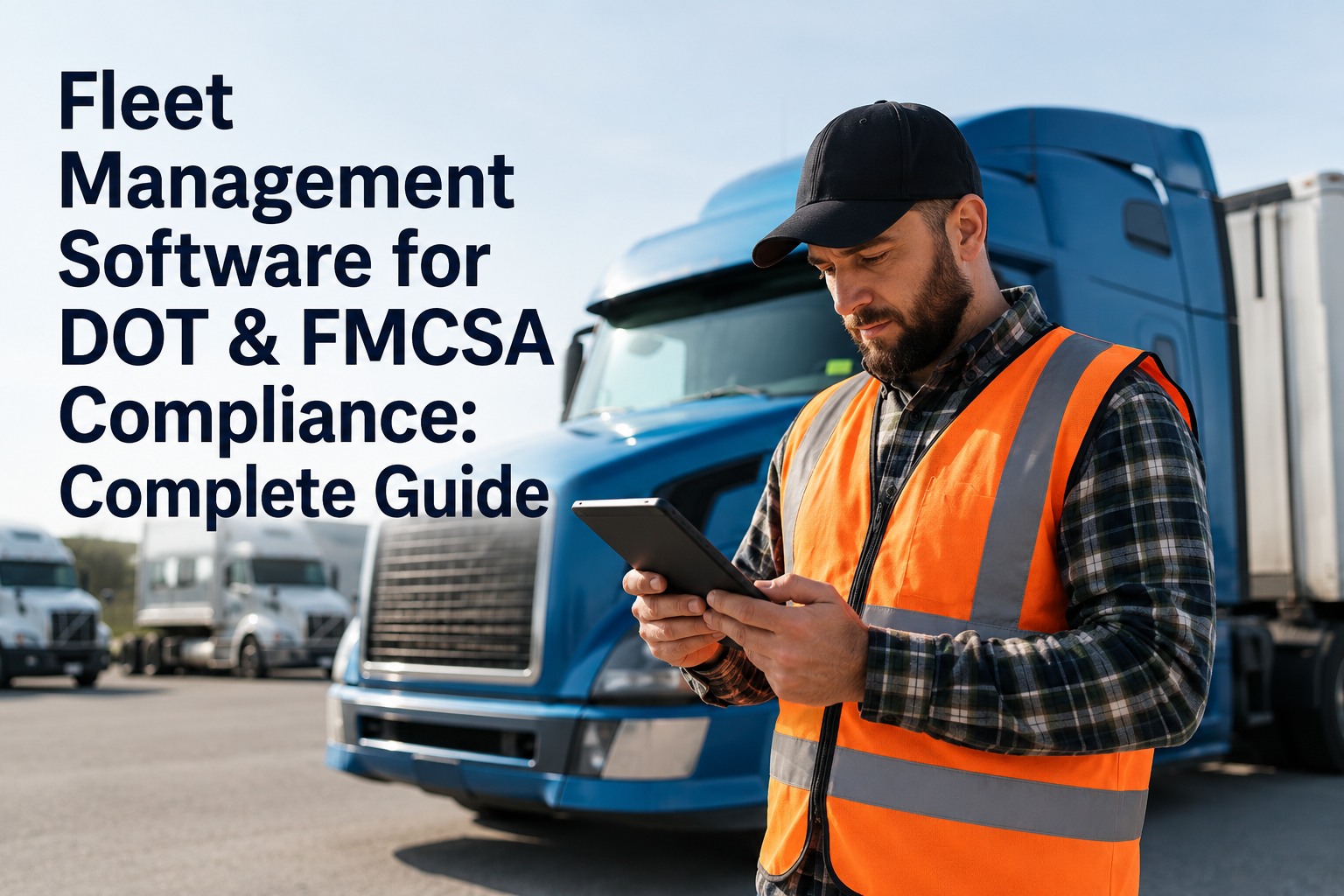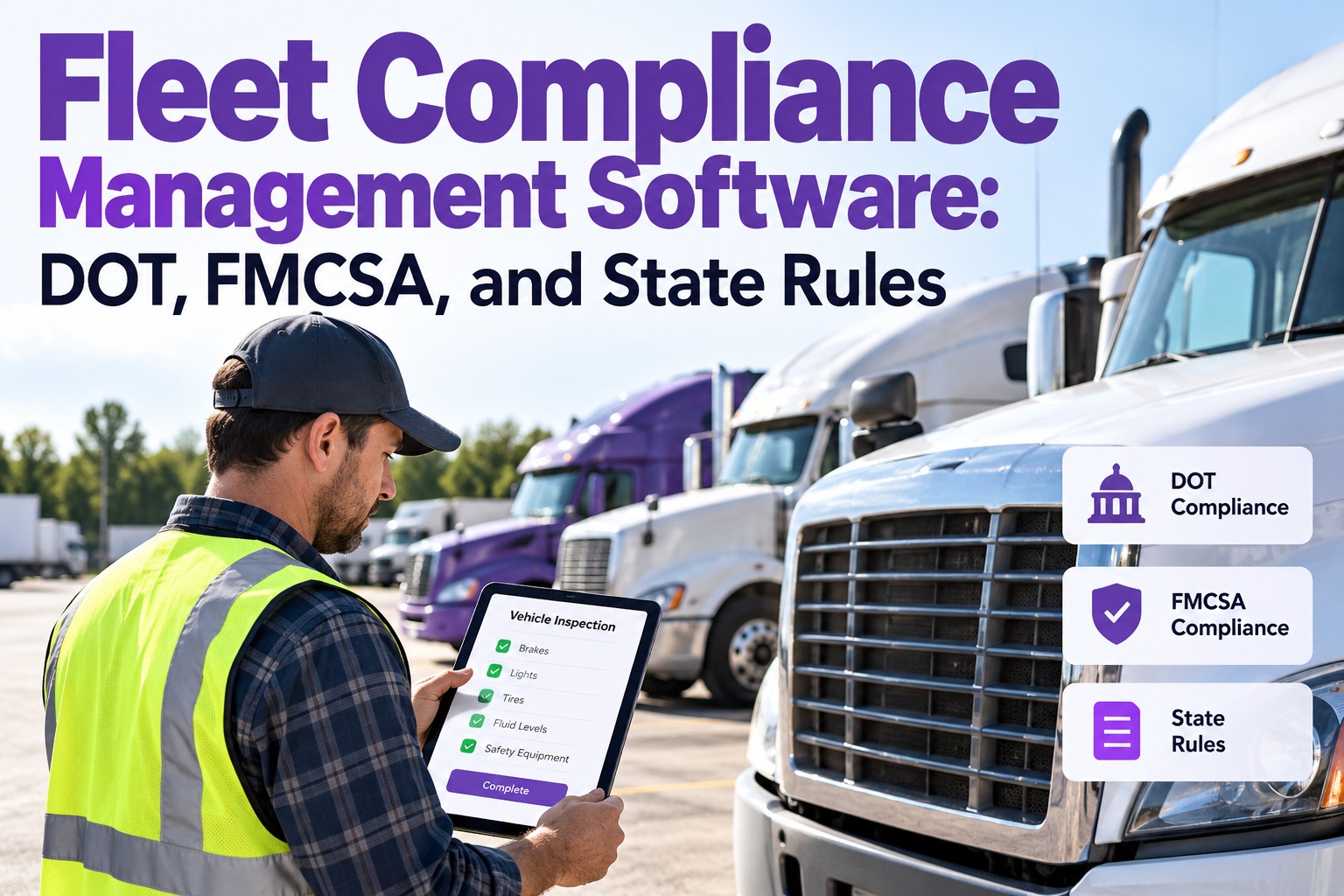
Fleet compliance isn't one requirement — it's a dozen deadlines on a dozen different clocks, run by three different levels of government. FMCSA wants driver-qualification files and hours-of-service logs; the DOT wants annual inspections and DVIRs; the IRS-adjacent IFTA wants quarterly fuel-tax filings; the states want apportioned registration and UCR fees; and the Clearinghouse wants pre-employment and annual queries on every CDL driver. Miss one and the penalty is real — up to $19,277 for running an out-of-service vehicle, and only 7% of carriers pass a DOT audit with zero violations. Scattered across spreadsheets, these gaps hide until an auditor finds them. This guide maps the pillars a modern fleet compliance platform has to cover — and how Truck Inspection & Maintenance Management Software (TIM) keeps the maintenance and inspection side audit-ready. Start free and keep your DOT records audit-ready.
Compliance Isn't One Rule. It's a Dozen Deadlines on a Dozen Clocks.
You want every DOT, FMCSA, and state obligation in one place — DQ files, HOS, inspections, DVIRs, drug-and-alcohol queries, fuel tax, registration — not scattered across spreadsheets where the gaps hide. This guide maps what a real compliance platform covers, and where TIM anchors the maintenance and inspection half. Every defect logged in TIM gets a first response within 4 hours — acknowledged, graded, and assigned — so a safety item never becomes an audit finding.
The Compliance Map — Everything a Fleet Has to Track
Start by seeing the whole board. These are the pillars a fleet answers to, spread across federal and state authorities. Each has its own documents, its own schedule, and its own retention clock — and every one is a place an audit can find a gap.
Application, CDL, MVRs (initial + annual), medical certificate, road test, Clearinghouse query, 3-year safety history.
11-hr driving / 14-hr window / 30-min break / 60–70-hr limits, logged on a registered ELD.
Annual periodic inspection, post-trip DVIRs, and the repair records behind them.
Pre-employment full query + annual limited query on every CDL driver; violations reported in 3 days.
Quarterly fuel-tax filing apportioned across the member jurisdictions you drove in.
Apportioned (IRP) plate by mileage per jurisdiction; annual UCR fee scaled to fleet size.
Scattered vs. Consolidated — the Real Difference
Every fleet "does" compliance. The question is whether it's held in one system or spread across a dozen spreadsheets, inboxes, and someone's memory. The gap between the two is exactly where audits land.
- DQ files in a filing cabinet, MVRs in an inbox
- Clearinghouse queries tracked from memory
- Inspection dates on a wall calendar
- Retention windows nobody's watching
- Gaps surface only when an auditor arrives
- Every driver & vehicle record in one platform
- Automated MVR & Clearinghouse query scheduling
- Inspection & DVIR tracked against retention rules
- Real-time CSA-score monitoring
- Audit export generated in minutes, not weeks
The Retention Clock — How Long to Keep What
Half of compliance is keeping the record long enough to prove it. Each document type has its own retention window, and an expired-too-early file is as much a finding as a missing one. These are the ones fleets trip on.
| Record | Retention | Authority |
|---|---|---|
| DVIR (post-trip) | 3 months | FMCSA §396.11 |
| Annual inspection docs | 14 months | FMCSA §396.21 |
| Driver qualification file | 3 yrs after separation | FMCSA §391 |
| MVR (annual review) | 3 years rolling | FMCSA §391.25 |
| Clearinghouse queries | Rolling 12-mo cycle | FMCSA |
| IFTA records | 4 years | IFTA agreement |
Retention periods summarize common federal requirements; some records carry longer state or program-specific holds. Always confirm against the governing regulation for your operation.
What Changed for 2026 — the CSA Overhaul
The Safety Measurement System — how FMCSA scores your fleet — is being restructured, and the changes reshape what you monitor. Compliance platforms have to score against the new model, not the old one.
The old BASICs become "Compliance Categories," with Vehicle Maintenance split into two.
Violation severity collapses to a 1-or-2 weight instead of the old 1–10 scale.
Only the past 12 months of violations count toward scores — down from 24.
States now query the Clearinghouse before issuing or renewing a CDL — prohibited status downgrades it.
TIM Owns the Maintenance & Inspection Half of Your Compliance Stack
Compliance spans drivers, vehicles, tax, and registration — and TIM anchors the vehicle side: annual inspection tracking against the 14-month rule, post-trip DVIRs with the 3-month retention handled, work orders that prove a defect was repaired before dispatch, and audit exports searchable by vehicle or date. When a DOT auditor asks for a truck's inspection and repair history, it's one search away — not the finding that fails your audit.
Frequently Asked Questions
Hold Every Clock at Once — and Pass the Audit
A dozen deadlines across federal and state authorities, each with its own retention window. TIM anchors the maintenance and inspection pillars — annual inspections, DVIRs, and repair records tracked against the rules and exportable in minutes — so the vehicle side of your compliance stack is never the finding.