Only 7% of motor carriers pass a DOT audit without a single violation. The other 93% average six violations each — and in 2026, those violations cost more than ever: up to $19,277 for a single hours-of-service infraction, $13,300 to $53,203 for maintenance failures, and $1,100 to $16,000 per incomplete driver qualification file. On a 25-driver fleet with consistently incomplete files, that exposure can reach $400,000 in one audit. The pattern auditors see is consistent: fleets fail on documentation, not mechanical failures. Paper logs, spreadsheet qualification files, and calendar reminders create invisible gaps that surface only at a roadside inspection or an FMCSA audit — when it's too late. This guide breaks down the compliance pillars FMCSA examines first, the major 2026 regulatory changes, and how fleet management software turns each requirement into an automated, audit-ready record. Get audit-ready compliance free.
Fleet Management Software for DOT & FMCSA Compliance: Complete Guide
Automate DVIRs, driver qualification files, HOS, inspections, and CSA monitoring in one platform — closing the documentation gaps that cause violations and keeping your fleet audit-ready every day.
The 2026 Enforcement Reality
Fines used to be rare. In 2026 they're routine, and the math has shifted from "paperwork hassle" to "financial risk category." Here's the environment every fleet now operates in.
The rest of the cost lands indirectly: insurance premium hikes of 18–24%, disqualification from shipper and 3PL networks that screen CSA scores, and weeks of operational disruption. A CSA score above an intervention threshold follows your operating authority for the scoring period — affecting contracts and rates the whole time. See where your compliance gaps are.
The Compliance Pillars FMCSA Audits First
DOT compliance isn't one checkbox — it's a set of interconnected systems auditors examine as a chain, where a gap in any one triggers findings across all of them. These are the pillars that decide an audit.
Daily pre- and post-trip driver vehicle inspection reports, with every defect documented and repairs certified before the vehicle returns to service.
ELD-tracked driving time within the four HOS clocks, with supporting documents and malfunction protocols — the most-cited category by volume.
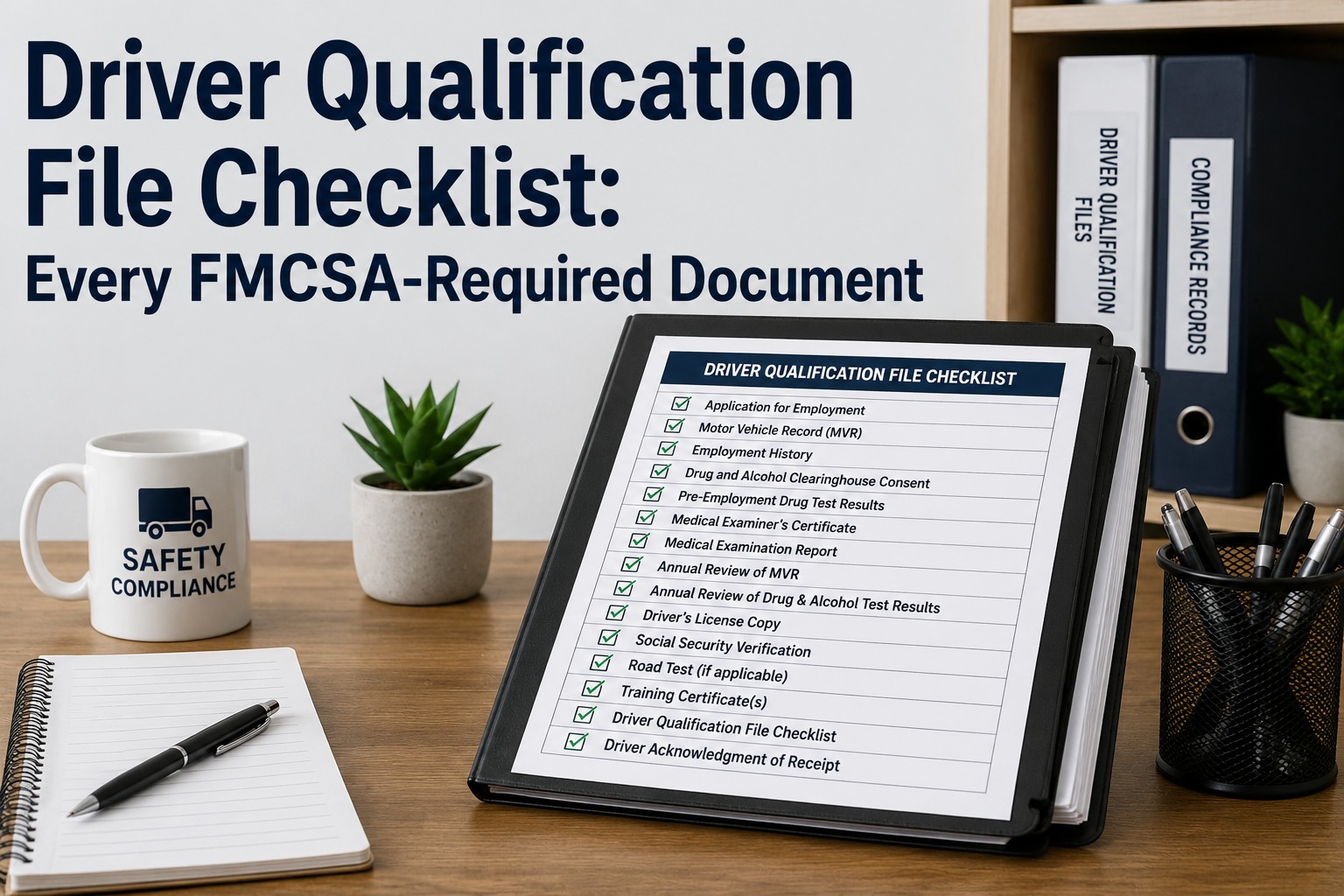
Application, MVRs, medical certificate, road test, and annual review — complete and current for every driver, a top audit-failure point.
Pre-employment full queries and annual limited queries per driver — with CDLs now being revoked for unresolved prohibited status.
Systematic inspection, repair, and annual periodic inspection per 49 CFR 396 — the #1 audit finding and largest violation category.
All DOT-recordable accidents logged and retained for three years, with the supporting reports where required.
What Changed in 2026
2026 brought the biggest wave of FMCSA change since the ELD mandate. Compliance software built for the old rules is already out of date — these are the shifts that matter.
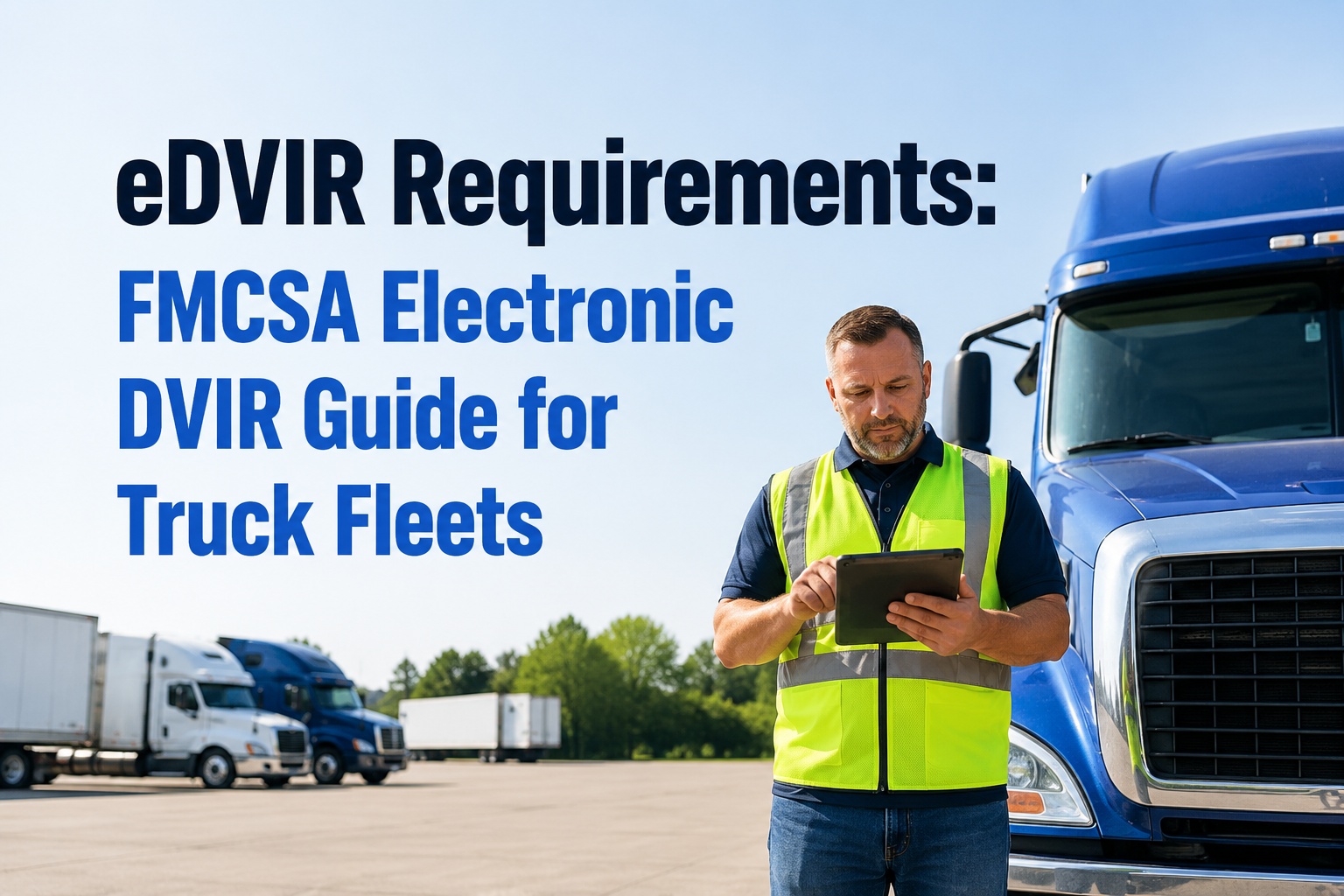
Effective March 23, 2026, the FMCSA final rule explicitly authorizes electronic DVIRs under 49 CFR 396.11 and 396.13. Digital signatures with timestamps, GPS, and photos fully replace wet ink — and are more defensible in audits.
Vehicle Maintenance is split into "Driver Observed" and "Inspector Detected" categories, making DVIR quality directly visible. Only the last 12 months now count, scores update monthly, and recent violations weigh heavier.
Paper Medical Examiner's Certificate copies are no longer sufficient on their own — medical certification now verifies through the MVR, so driver qualification file processes had to change.
The Drug & Alcohol Clearinghouse is actively revoking CDLs for unresolved "prohibited" status, and positive results require fast reporting — making scheduled queries non-negotiable.
One System for Every Compliance Pillar
Truck Inspection & Maintenance runs electronic DVIRs, tracks driver-file and inspection deadlines, monitors CSA trends, and keeps every action timestamped — so a roadside inspection or FMCSA audit is a quick export, not a scramble.
How Software Closes Each Gap
The fix for documentation failure is to make documentation automatic. Good compliance software turns each pillar from a manual task someone might forget into a tracked workflow that can't quietly lapse.
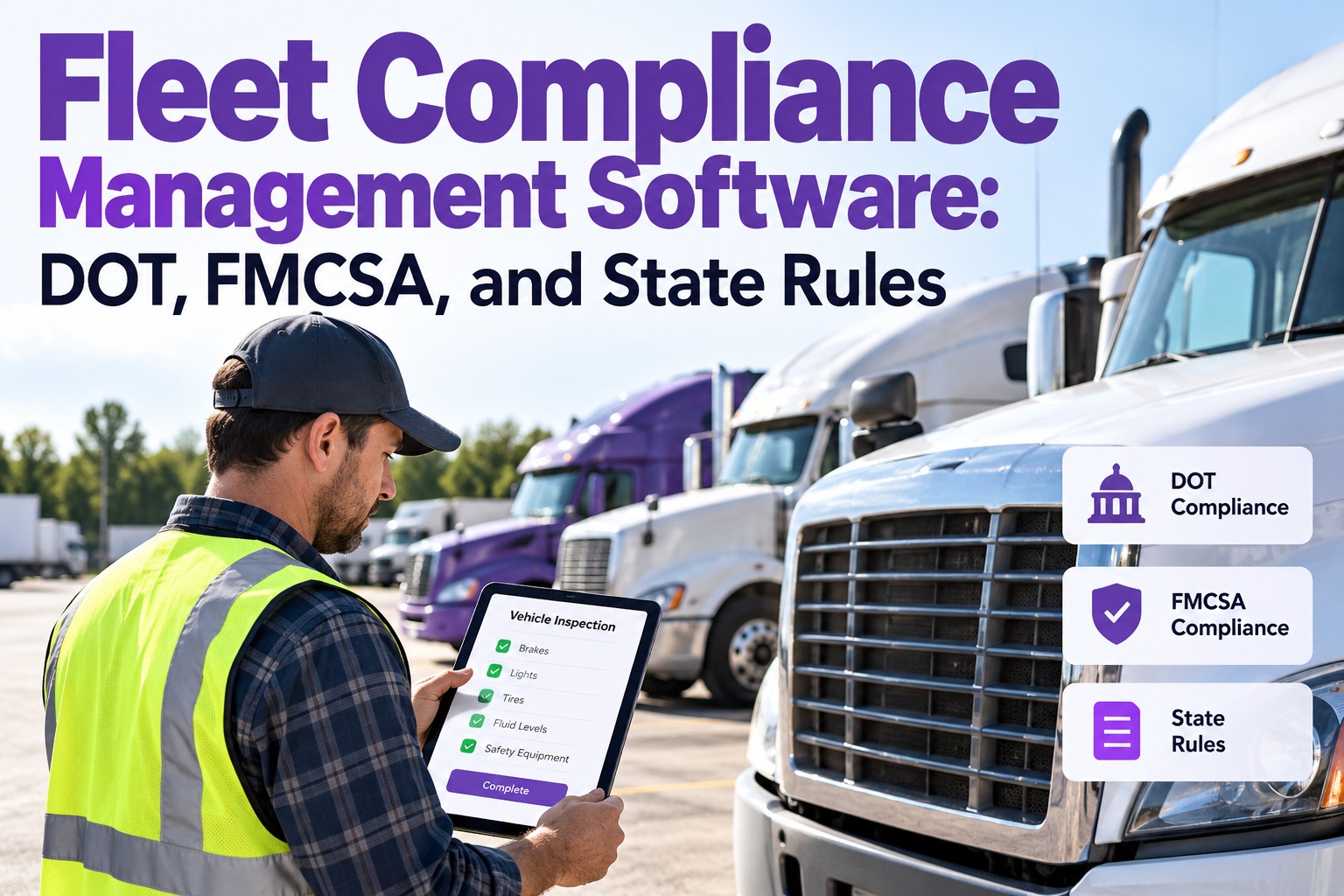
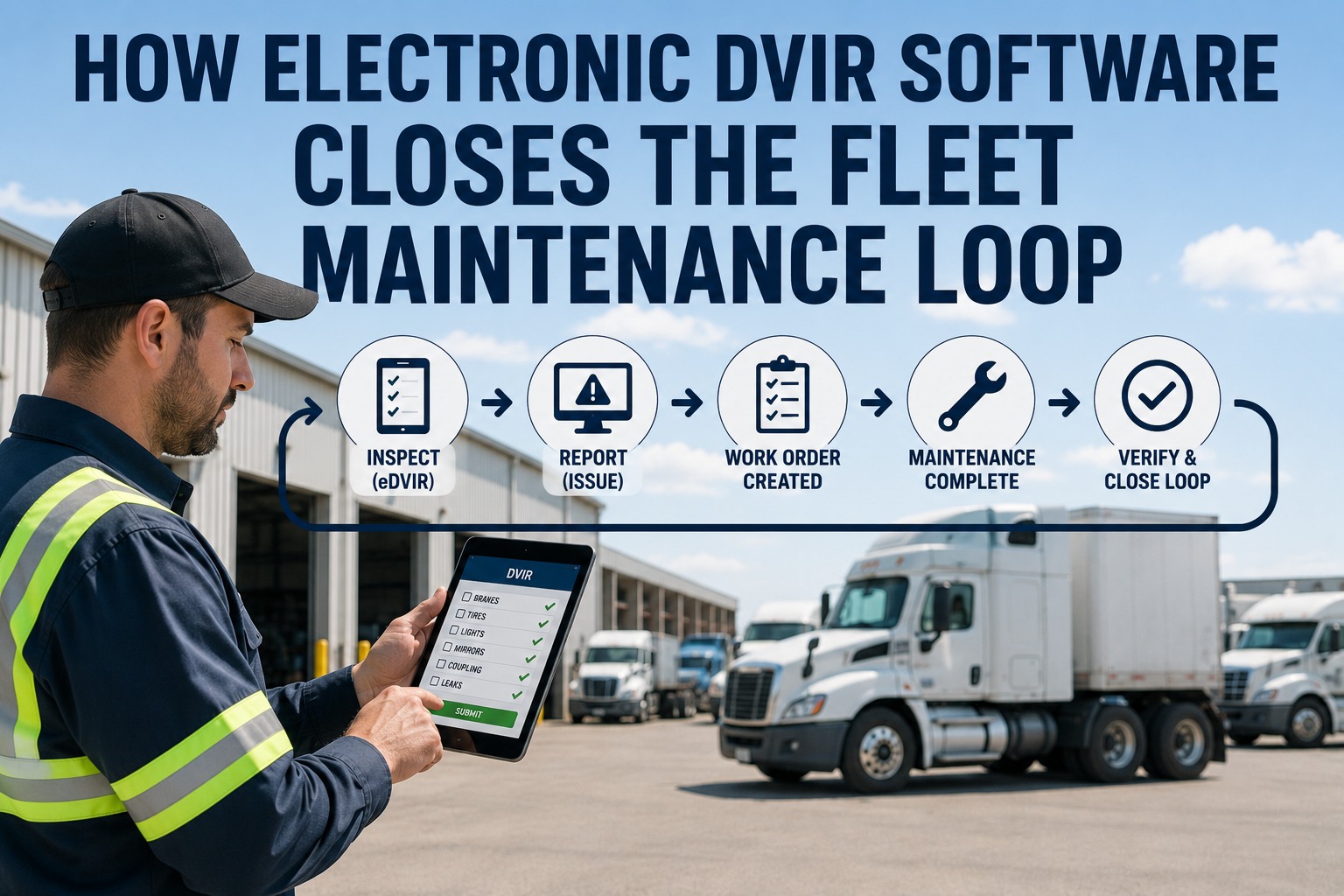
Mobile pre/post-trip inspections with photo and GPS, enforcing the driver-to-mechanic-to-next-driver signature chain and locking dispatch until a defect is repaired.
Automated alerts at 90, 60, 30, and 7 days before every medical certificate, MVR, CDL, and annual inspection expires — so nothing lapses at roadside.
Every DVIR defect generates a linked work order that can't be closed without a mechanic's certification — a complete chain from discovery to resolution.
Per-driver pre-employment and annual query deadlines tracked, so a missed query never becomes a violation across the fleet.
BASIC scores tracked with proximity alerts before any category approaches its intervention threshold — issues caught before FMCSA acts.
Every action timestamped and attributed, so a complete audit package — DVIRs, files, maintenance, inspections — exports in minutes, not days.
The Retention Windows That Trip Fleets Up
Even compliant fleets fail audits by discarding records too early or being unable to produce them in time. These are the windows to build into your system.
Frequently Asked Questions
Fleet management software focuses on operational efficiency — routing, fuel, GPS tracking, dispatch. Fleet compliance software specifically addresses regulatory requirements — DVIRs, driver qualification files, maintenance documentation, drug and alcohol records, and audit preparation. The strongest platforms combine both, but prioritize the compliance features rather than bolting them on. Truck Inspection & Maintenance ties the inspection and maintenance records that drive your CSA Vehicle Maintenance score directly to compliance workflows. Start a free trial to see both.
Effective March 23, 2026, the FMCSA final rule explicitly authorizes electronic DVIRs under 49 CFR 396.11 and 396.13, removing the last legal ambiguity. Digital DVIRs with timestamps, GPS stamps, and photo evidence now have regulatory standing equal to paper — and are more defensible in audits and litigation because they're dispute-proof. Most fleets transitioning to digital report a 60–80% reduction in DVIR-related audit findings, largely because the system enforces completion and the signature chain rather than relying on memory.
CSA scores reach well past regulatory risk. Shippers, brokers, and 3PLs routinely screen FMCSA SMS scores and exclude carriers with any category above its intervention threshold from approved-carrier lists, so a high score directly costs you freight. Insurers raise premiums — often 18–24% — for elevated scores. And direct fines are only 30–40% of a compliance failure's total cost; the rest is insurance, lost contracts, and remediation. Monitoring scores and acting before thresholds are crossed protects revenue, not just your record. Contact our team about CSA monitoring.
For a remote audit, FMCSA generally expects requested records within 48 hours — a deadline written assuming digital systems. That's why paper-based fleets struggle: retention windows are long (DVIRs 3 months, maintenance records 12 months plus 6 after disposal, annual inspections 14 months, accident registers 3 years) and the volume is high. Compliance software stores everything with automatic retention management and exports a complete audit package in minutes, turning a multi-day scramble into a single query.
Often more so, because a small fleet feels a single fine harder. With DQF gaps alone running $1,100–$16,000 each and a 25-driver fleet's exposure reaching $400,000 in one audit, preventing even one violation can pay for the system many times over. Beyond fines, fleets using compliance software report around a 75% reduction in audit-preparation time and better audit outcomes. The free tier lets a small fleet start tracking DVIRs, files, and inspections at no cost. Start a free trial for your fleet.
Turn DOT Compliance Into a System That Can't Lapse
Truck Inspection & Maintenance runs electronic DVIRs with enforced signature chains, tracks every driver-file and inspection deadline with advance alerts, links defects to certified repairs, monitors CSA trends before thresholds hit, and exports a complete audit package in minutes — so your fleet stays off FMCSA's radar and keeps its contracts and insurance rates intact.