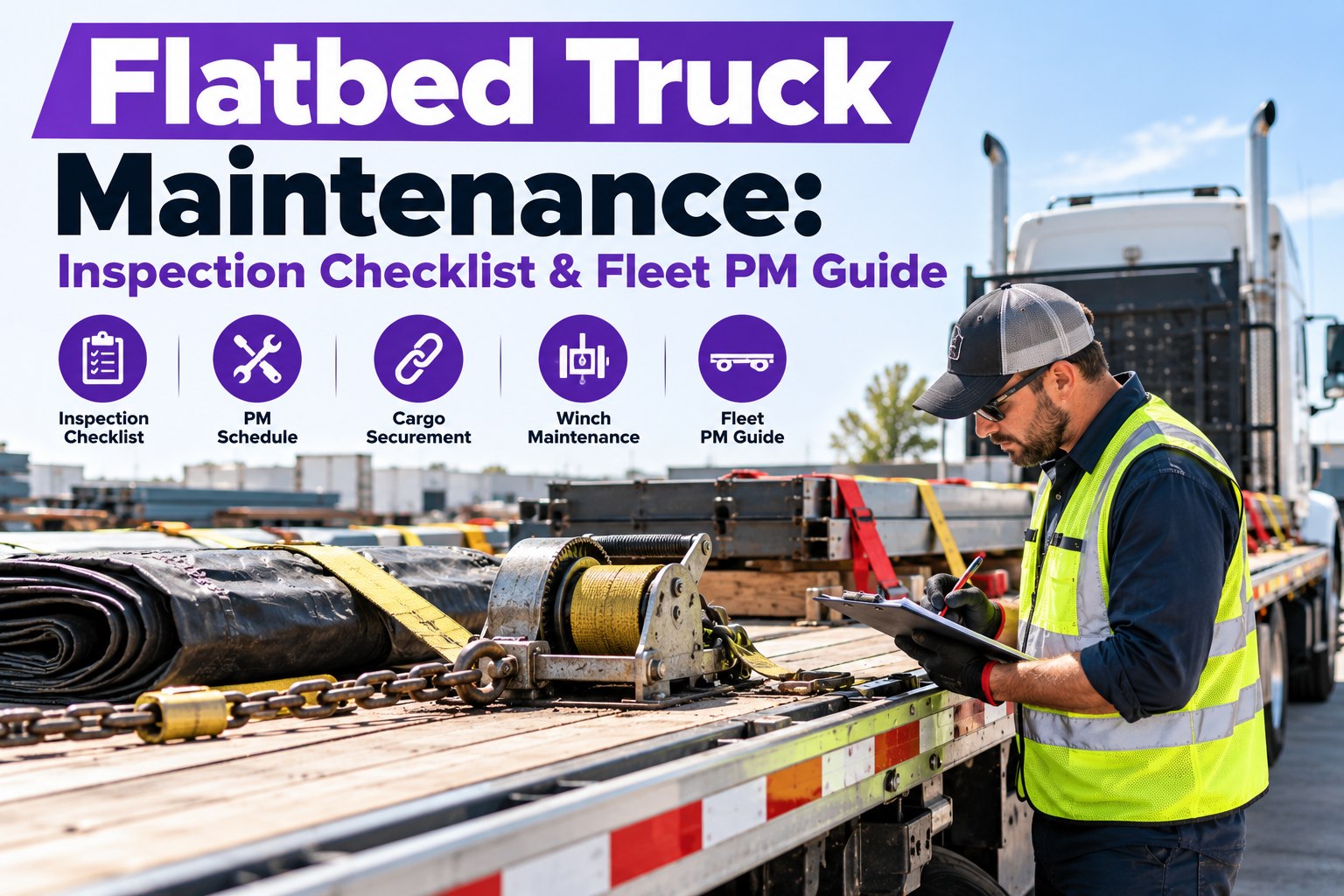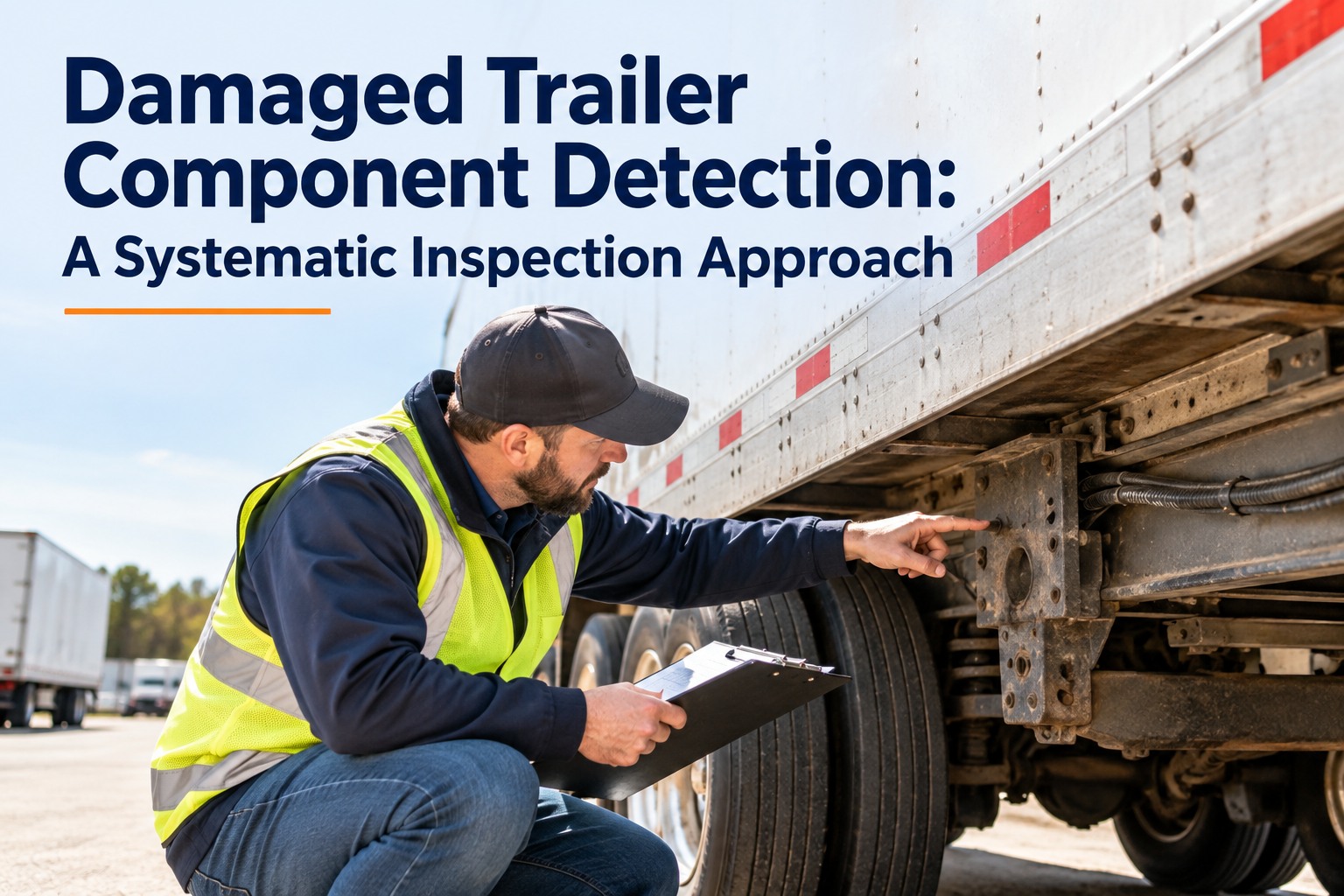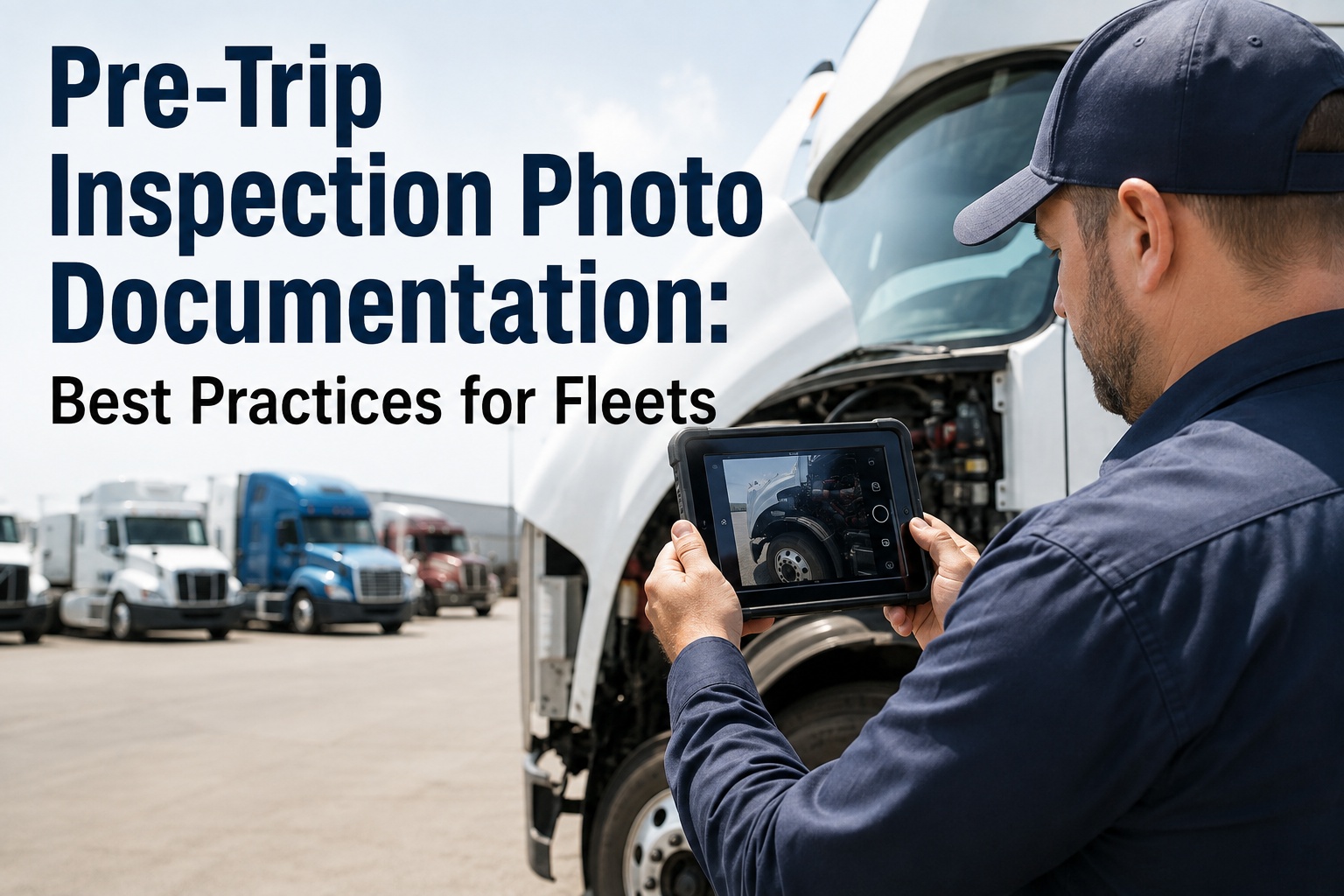
A driver checks "brakes: OK" on a paper form, snaps nothing, and rolls out. Three days later a plaintiff's attorney asks the question that sinks fleets in court: how do we actually know anyone looked? The clipboard can't answer. A photo analyzed by AI can — and it does far more than prove the check happened. Modern computer vision, trained on tens of millions of vehicle images, reads a smartphone photo and flags a tire near its DOT limit, a hairline windshield crack, a slow leak darkening the underbody, a marker light that's out — the exact defects a tired human eye skims past under bad lighting and time pressure. Try AI-powered inspections free. This is the complete fleet vehicle photo inspection checklist: 20 checks an AI can analyze from driver photos, how each one works, and why image recognition catches what walkarounds miss — turning every inspection into objective, timestamped, audit-proof evidence.
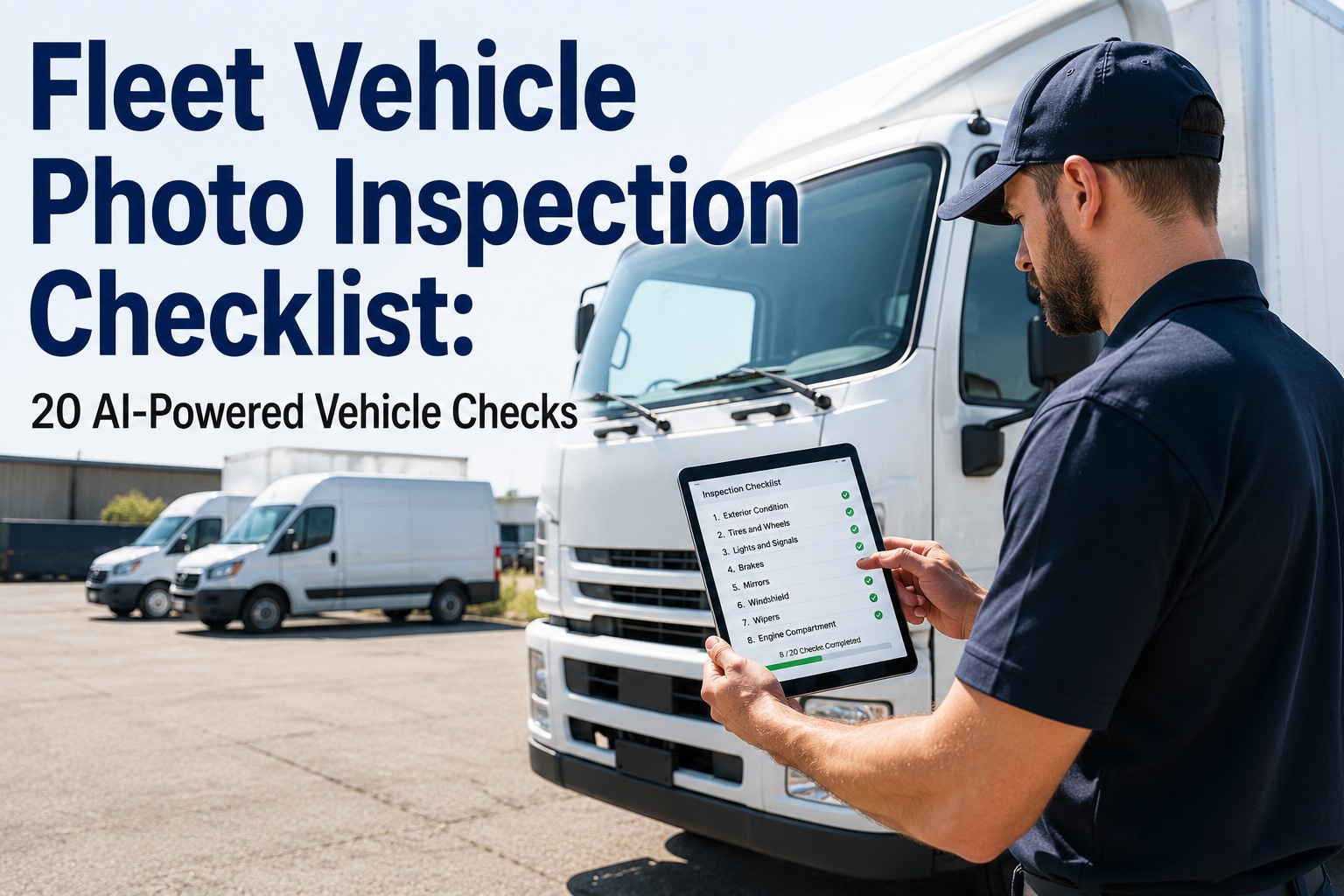
Fleet Vehicle Photo Inspection Checklist: 20 AI-Powered Vehicle Checks
A smartphone photo and computer vision replace the clipboard. This checklist covers 20 vehicle checks AI can analyze automatically — tires, lights, mirrors, glass, body panels, leaks, brakes, and more — with severity flagged and work orders created the moment a defect is found.
Why the Camera Beats the Clipboard
Human inspection has one unfixable flaw: inconsistency. The same inspector rates the same tire differently when tired, rushed, or working in a dim yard. AI applies identical standards to the 1st inspection and the 1,000th — and it's trained on more damage than any person will see in a lifetime.
The 20 AI-Powered Checks
Each of these is analyzed from a driver's photo — the app prompts the angle, the AI does the rest. No judgment calls, no severity guesswork. Here's the full checklist, grouped by walkaround zone.
How It Works: Capture to Work Order
The driver's only job is to take the photos the app asks for. Everything after that is automatic — the analysis, the severity call, and the handoff to maintenance all happen without a manual step.
Turn Driver Photos Into Fleet Intelligence
Truck Inspection & Maintenance guides drivers through a photo walkaround, runs AI analysis on every image, flags defects with severity, and fires a work order to maintenance automatically — while building a timestamped, GPS-tagged record that's audit-ready from day one. No hardware, works on the phones your drivers already carry.
Beyond Damage: Fraud & Prediction
Detecting today's dents is only half the value. The same vision that reads a photo also polices honesty and looks weeks into the future.
The AI rejects blurry, dark, or badly framed shots and flags duplicate or digitally altered images — including "photo of a photo" attempts to conceal existing damage or fake a completed inspection.
As inspection data accumulates, the AI spots patterns across your fleet and predicts component failures two to four weeks out — telling you which vehicles need attention before they break down.
Every scan trains the model on your vehicle types, routes, and wear patterns, so accuracy on your specific fleet improves the more you use it.
AI vs. Manual Inspection
A photo checklist isn't just a digital version of paper — it changes what an inspection can catch, prove, and predict. The gap is widest exactly where human inspection struggles most.
- 70–80% defect detection, varies by fatigue
- Inconsistent severity calls between inspectors
- Micro-cracks and slow leaks routinely missed
- "OK" checkbox with no proof of inspection
- Defects surface days later as costly repairs
- 95–99% detection, identical every time
- Objective severity by size, depth, location
- Catches micro-damage the eye can't see
- Timestamped, GPS-tagged photo evidence
- Instant work orders and failure prediction
Frequently Asked Questions
Current systems document 95–99% defect detection accuracy, compared to roughly 70–80% for manual inspection. The gain comes from consistency — the AI applies identical standards every time and never fatigues — plus training on 30-plus million real-world images spanning every lighting condition and vehicle configuration. In one 50-vehicle test, AI found 127 defects experienced human inspectors missed entirely, with the biggest gap in low light and under time pressure. Start a free trial to see it on your fleet.
No special hardware — the smartphone your drivers already carry is the whole system. Training takes about 25–30 minutes because the app guides drivers through exactly what to photograph and from which angles with on-screen prompts. Drivers don't interpret results, estimate severity, or make judgment calls; they capture the images and the AI handles all analysis. Most fleets reach 95%+ driver adoption within 30 days. See how onboarding works.
Modern systems recognize 163-plus vehicle components and classify 21-plus damage types — dents, scratches, cracks, rust, tire wear, broken lights, fluid leaks, and more. They estimate tire tread depth from the image, flag brake-component condition, read warning lights and mileage off a dashboard photo, and detect micro-cracks as small as fractions of a millimeter. Each finding is located on the vehicle and rated for severity, with safety-critical items flagged automatically.
Every inspection captures photo evidence tagged with timestamp, GPS, and component ID, stored in the cloud and retrievable in seconds. That's a decisive advantage in two places: DOT compliance reviews, where only about 7% of carriers pass with zero violations and retrievable records are everything; and litigation, where paper DVIRs with "OK" checked invite the question of whether the driver actually inspected. A timestamped photo answers it. The 2026 electronic DVIR rule explicitly authorizes this workflow. Start free and build the audit trail.
Yes, and it's one of the most valuable features. The AI validates photo quality and rejects blurry, dark, or incorrectly framed images, then detects duplicate or digitally altered photos — including "photo of a photo" attempts where a driver photographs an old image to fake a completed check or hide existing damage. It flags these suspicious patterns instantly, which keeps inspections honest and the resulting records defensible.
Let AI Inspect Every Vehicle, Every Time
Truck Inspection & Maintenance puts AI-powered photo inspection in your drivers' pockets — 20 checks analyzed from smartphone photos, defects flagged by severity, work orders created automatically, and every image stored as timestamped, audit-ready proof. Catch more, prove more, and predict failures before they strand a truck.