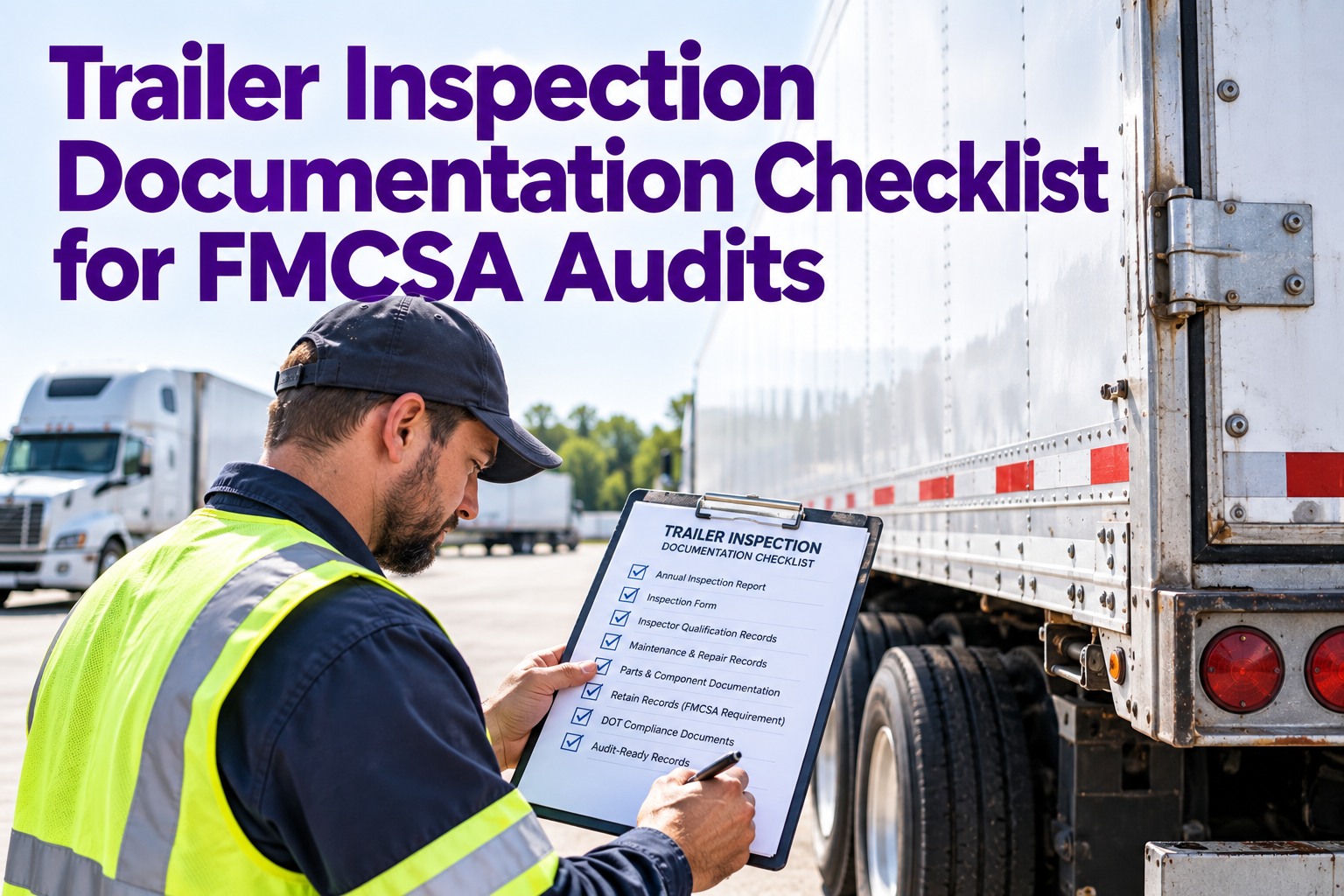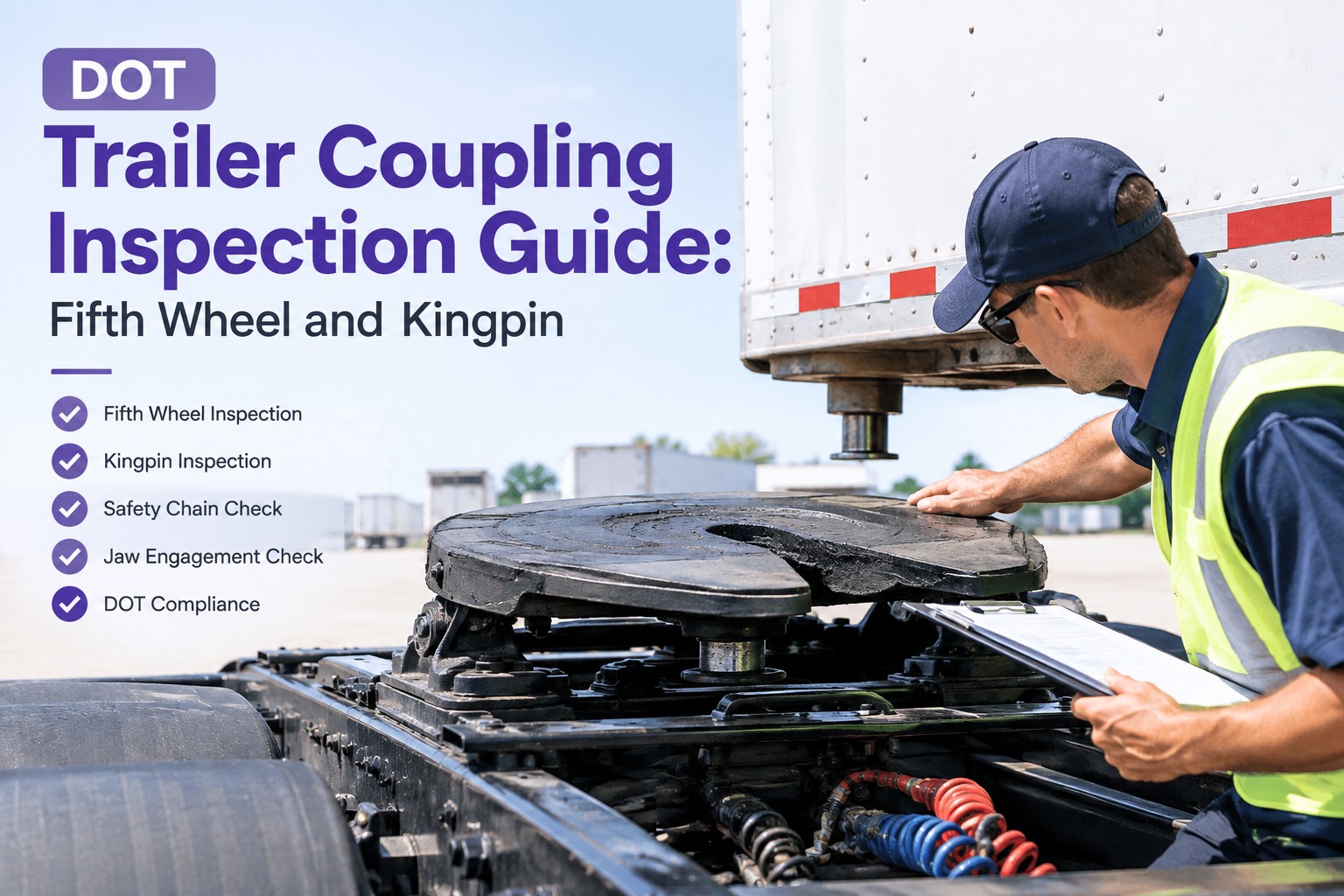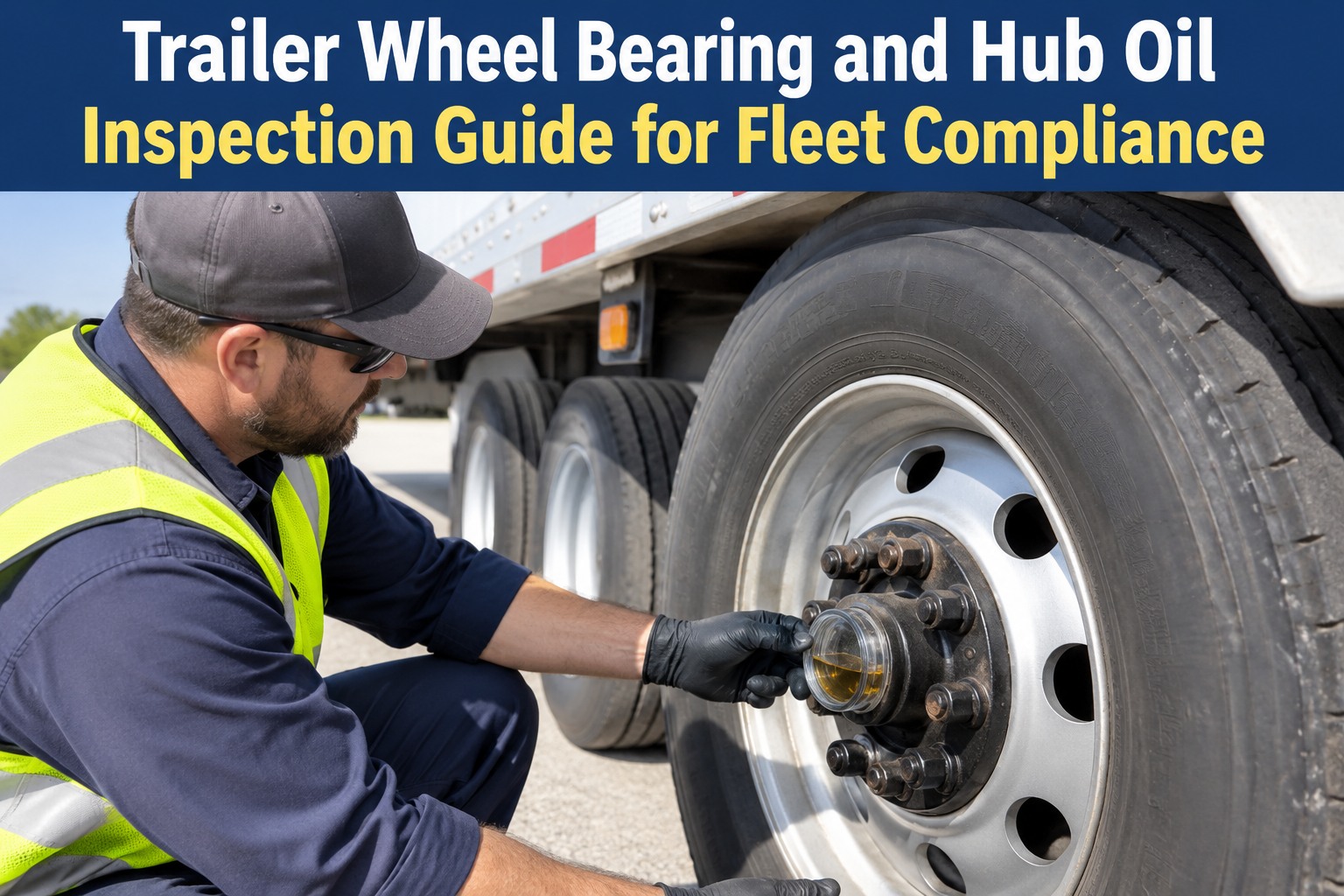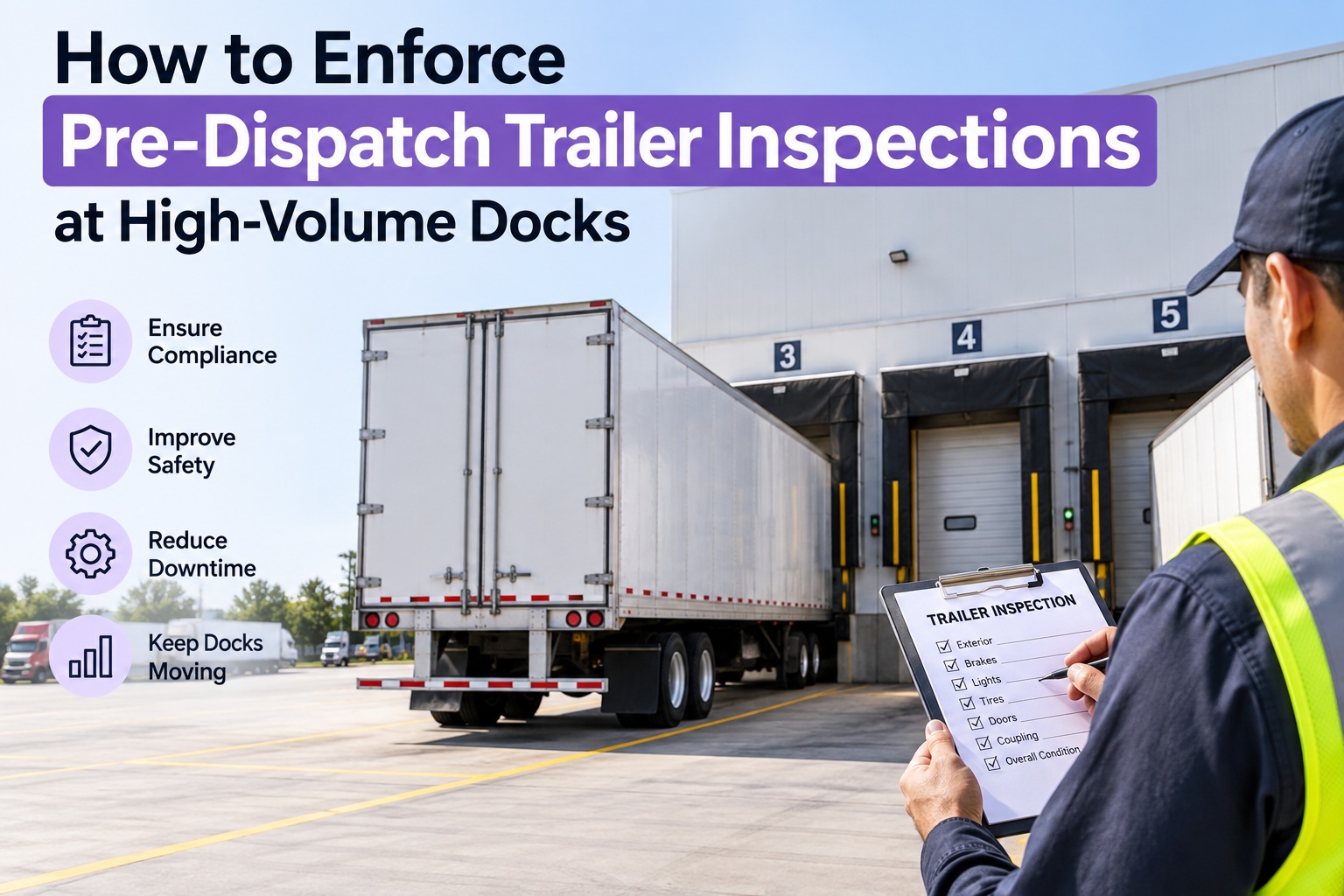
The trailer inspection your fleet designed is thorough. The one that actually happens when the dock is slammed and dispatch is behind is a driver walking the length of the trailer in fifteen seconds and signing the sheet. That gap — between the inspection on paper and the inspection under pressure — is where roadside violations, dropped defects, and $15,420 fines are born. Enforcing pre-dispatch inspections isn't a training problem or a "remind drivers to care" problem. It's a systems problem: under schedule pressure, people skip whatever is optional, and a paper checklist makes skipping both easy and invisible. This guide covers why inspections get skipped at high-volume docks, why the honor system fails, and the enforcement model that keeps completion at 100% without slowing the dock down — by making the inspection a gate the truck literally can't roll past.Start a free trial and make the inspection a dispatch gate, not an honor-system form.
Enforcing Pre-Dispatch Trailer Inspections at Speed
When the schedule tightens, optional steps get skipped — and a paper form can't tell a real inspection from a rushed checkmark. Truck Inspection & Maintenance Management Software turns every pre-dispatch check into a hard gate: safety-critical defects automatically block dispatch, each item demands real interaction, and completion holds at 100% without adding a minute of delay. Set it up free in minutes — hit the button below and lock the gate on your next load.
Why Inspections Get Skipped When It Matters Most
Nobody skips an inspection on a slow day. They skip it exactly when a skipped one is most dangerous — when the dock is at peak volume and every minute of delay ripples down the schedule. Three forces line up against the inspection at precisely the wrong time.
A truck waiting on an inspection is a dock door not turning over. When the board is backed up, the fastest path is the one that skips the thorough walk-around — and everyone knows it.
On paper, a rushed fifteen-second glance and a full inspection produce the identical artifact: a checkmark and a signature. Nothing distinguishes real from skipped, so there's no friction against skipping.
If the truck can physically leave whether or not the inspection was real, the inspection is optional. Optional steps lose to schedule pressure every single time. The only fix is to make it not optional.
Why the Honor System Fails at Volume
Every skipped-inspection problem traces back to the same root: the system relies on people choosing the slower path when the faster path has no consequence. Compare what the two approaches actually enforce.Start free and replace the honor system with a live completion dashboard.
Make the Inspection the Gate the Truck Can't Roll Past
The full inspection-to-repair loop, automated: a guided mobile DVIR that requires interaction with each item, a hard dispatch block on any safety-critical defect until it's certified repaired, instant defect routing to the shop as a work order, and a live completion dashboard so managers see gaps the moment they open — not at audit. Fleet managers stop chasing paperwork and start driving uptime.
The Four-Part Enforcement Model
Enforcement isn't one rule — it's four mechanisms working together. Each one closes a different escape route the honor system leaves open. Put all four in place and completion holds at 100% because skipping is no longer possible, not just discouraged.Talk to our team about deploying all four mechanisms at your dock.
The inspection can't be completed by a single swipe. Each checklist item requires a tap — and safety-critical items a photo — so a real inspection is structurally different from a rushed one. You can't pencil-whip a screen that demands proof.
The enforcement engine. A safety-critical defect — brakes, tires below tread, lighting, coupling — automatically blocks the trailer from being assigned a load until the defect is certified repaired. The truck physically cannot be dispatched. This is what turns "should" into "must."
Enforcement fails if the inspection is slow, because slow is what created the pressure to skip. A guided digital check runs in under 10 minutes versus 30–45 on paper — fast enough that doing it right is faster than working around it.
You can't enforce what you can't see. A real-time dashboard shows completion rate, overdue checks, and defect trends across the whole dock — so a slipping location surfaces as a number today, not as a violation at a roadside scale next month.
The Metric That Proves It's Working
Enforcement is only real if you can measure it. These are the numbers that tell you the gate is holding — track them per dock and per shift, and a weakening enforcement point shows up before it costs you.Start free and track completion and blocked-dispatch counts per dock.
The headline. Percent of dispatches preceded by a completed, interacted-with inspection. The target is 100% — and with a dispatch lock, anything less means a gap in the gate itself.
How often the lock actually stopped a defective trailer from rolling. A healthy number here is the enforcement model doing its job — each one is a roadside event that didn't happen.
Watch for suspiciously fast completions — a cluster of 30-second inspections signals the interaction requirement is being gamed and needs tightening.
Hours from a flagged defect to a certified repair. Short times mean the routing is working; a growing backlog means trailers are stacking up behind the lock.
Frequently Asked Questions
Make Every Dispatch Prove Its Inspection Happened
Automate the full inspection-to-repair loop — a guided mobile DVIR that demands real interaction, an automatic dispatch block on safety-critical defects, instant defect routing to the shop, and a live completion dashboard across every dock. Hold pre-dispatch inspections at 100% without slowing the dock, and keep every trailer audit-ready and DOT-compliant.