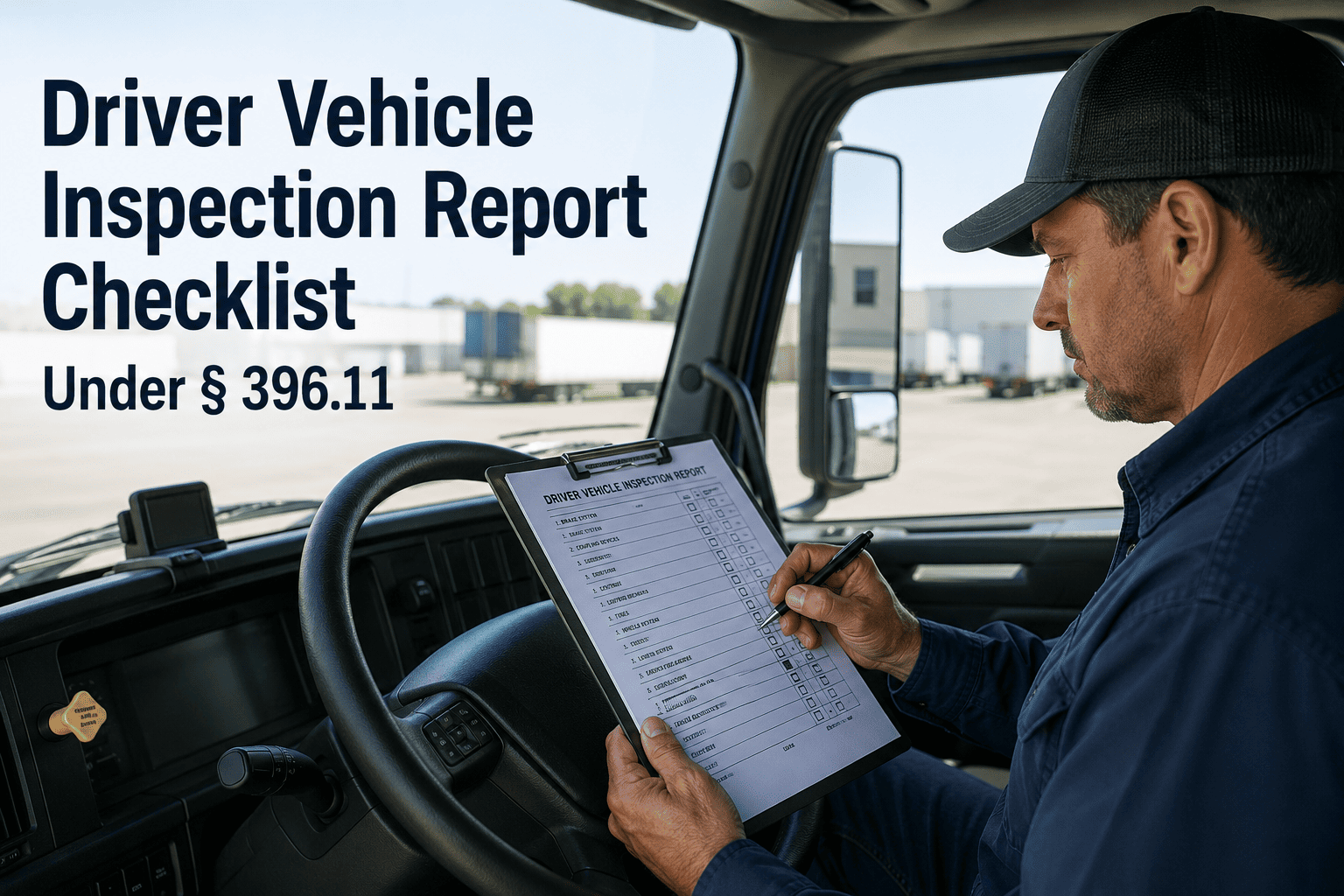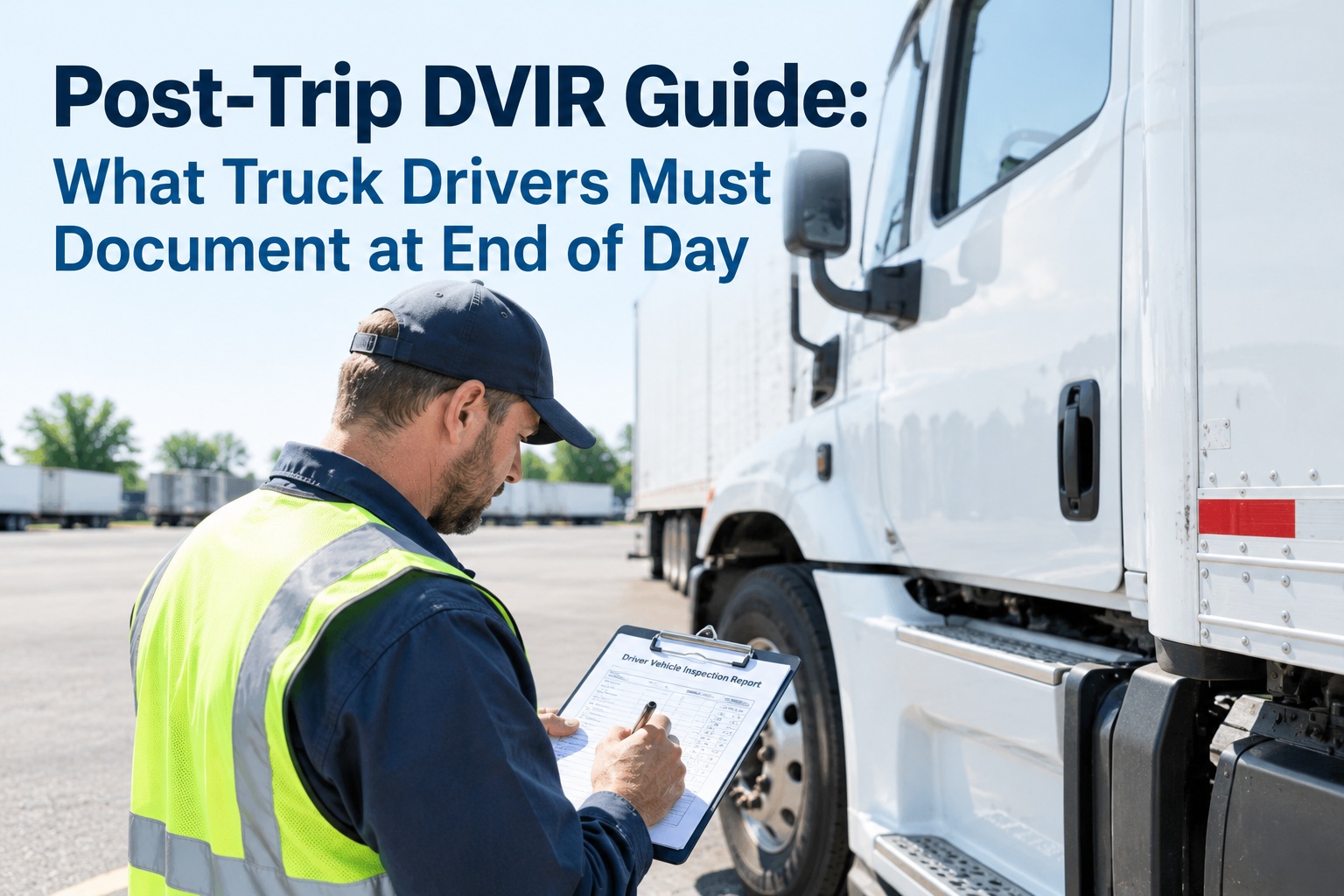
Here's the thing most driver training gets subtly wrong: FMCSA doesn't actually mandate a "post-trip inspection" the way it mandates the pre-trip. What 49 CFR 396.11 requires is the DVIR — a written report of the defects a driver found during the day's work. The end-of-day walkaround is just how you find them. That distinction matters, because the violations fleets rack up aren't usually for skipping the inspection — they're for a DVIR that's vague, unsigned, or missing a link in its signature chain. This guide covers exactly what a driver must document at end of day: the 11 components § 396.11 requires, how to write a defect so it holds up, the three-signature chain most fleets break, and where the no-defect exception applies. Start a free trial and turn the end-of-day DVIR into a two-minute mobile step.
What Truck Drivers Must Document at End of Day
The post-trip DVIR is the written record that links defect discovery, carrier repair, and the next driver's sign-off. Get the 11 components, the defect language, and the signature chain right — that's the whole game.
First, the Nuance: It's the DVIR, Not the "Inspection"
This is the regulatory distinction most training skips — and it's exactly what auditors probe. Two rules, same 11 components, different jobs.
A physical safety check before driving. The driver must be satisfied the vehicle is safe. No written report required.
A written report at the completion of each day's work listing any defect discovered by — or reported to — the driver. The walkaround finds them; the DVIR documents them.
The 11 Components Every DVIR Must Cover
Section 396.11 lists the minimum parts and accessories the report must address — the same 11 harmonized with the pre-trip under § 392.7. At end of day, focus on what changed since your morning check: what deteriorated, developed, or was reported to you during the run.
How to Write a Defect That Holds Up
A DVIR is only as good as its defect descriptions. The standard is any defect "affecting safe operation or likely to cause a breakdown" — and the difference between a vague note and a specific one is the difference between a fixable record and an audit problem.
Make the End-of-Day DVIR a Two-Minute Step
Truck Inspection & Maintenance turns the post-trip into a guided mobile DVIR: the driver walks the 11 components, logs any defect with a photo and a specific description, and signs — digitally, fully compliant under the 2026 eDVIR rule. A reported defect routes instantly to the shop as a work order, the mechanic certifies the repair in the same record, and the next driver acknowledges before rolling. The whole chain of custody stays intact and audit-ready, and no-defect days file in seconds to build a clean record.
The Three-Signature Chain of Custody
Here's what fleets get dinged on far more than the inspection itself. A DVIR with a defect isn't closed by the driver who wrote it — it moves through three signatures, and a broken link is a violation waiting to be found.
At end of day, the driver who found the defects signs and dates the DVIR. If no defects, this is the only signature required.
A mechanic or company official signs to certify the defect was repaired — or that no repair was needed. This is the link fleets most often leave blank.
Under § 396.13, before operating, the next driver reviews the last DVIR and — if defects were listed — signs to acknowledge repairs were made or were unnecessary. That closes the loop.
The No-Defect Exception — and Why to File Anyway
Not every day legally requires a DVIR. But the smart-money move usually runs the opposite way from what the rule allows.
Since 2014, a property-carrying CMV needs no DVIR on a zero-defect day. FMCSA has confirmed it won't require no-defect reports even with eDVIRs making them fast.
A passenger-carrying CMV requires a DVIR every day, regardless of whether any defect was found.
A motor carrier operating only one CMV is exempt from § 396.11 entirely under § 396.11(a)(5) — a narrow but real carve-out.
Most safety-conscious carriers require a daily "no-defect" DVIR as company policy. It costs 2–3 minutes and builds a positive record that proves inspections happened — invaluable in an audit or accident litigation.
Frequently Asked Questions
Close the Loop on Every End-of-Day DVIR
Truck Inspection & Maintenance automates the full DVIR lifecycle on one mobile-first platform — a guided post-trip covering all 11 components, specific defect capture with photos, instant defect-to-shop work orders, mechanic repair certification, and next-driver acknowledgment, all enforced digitally so no link in the chain of custody can be missed. Every record is eDVIR-compliant and audit-ready for the full retention period.