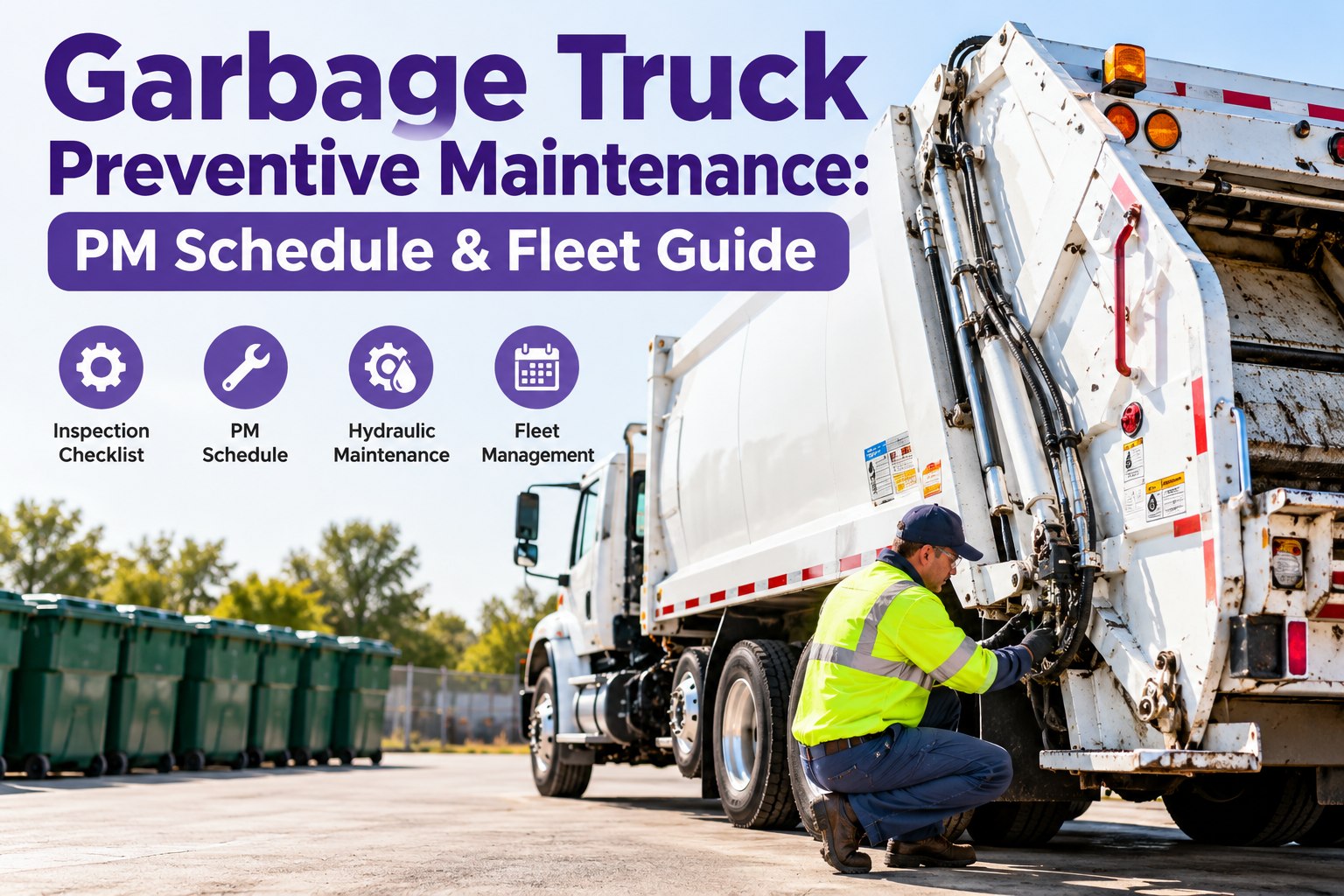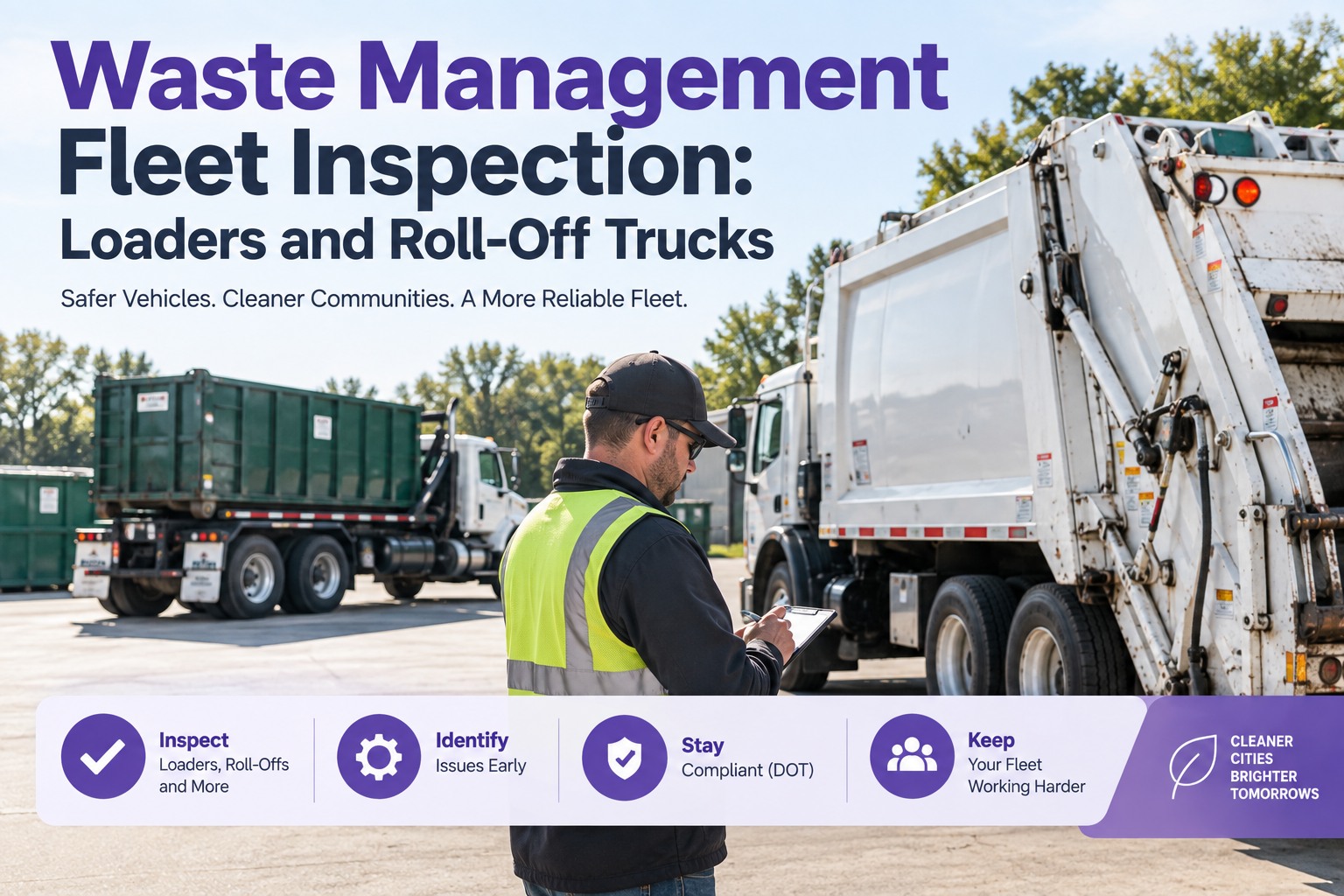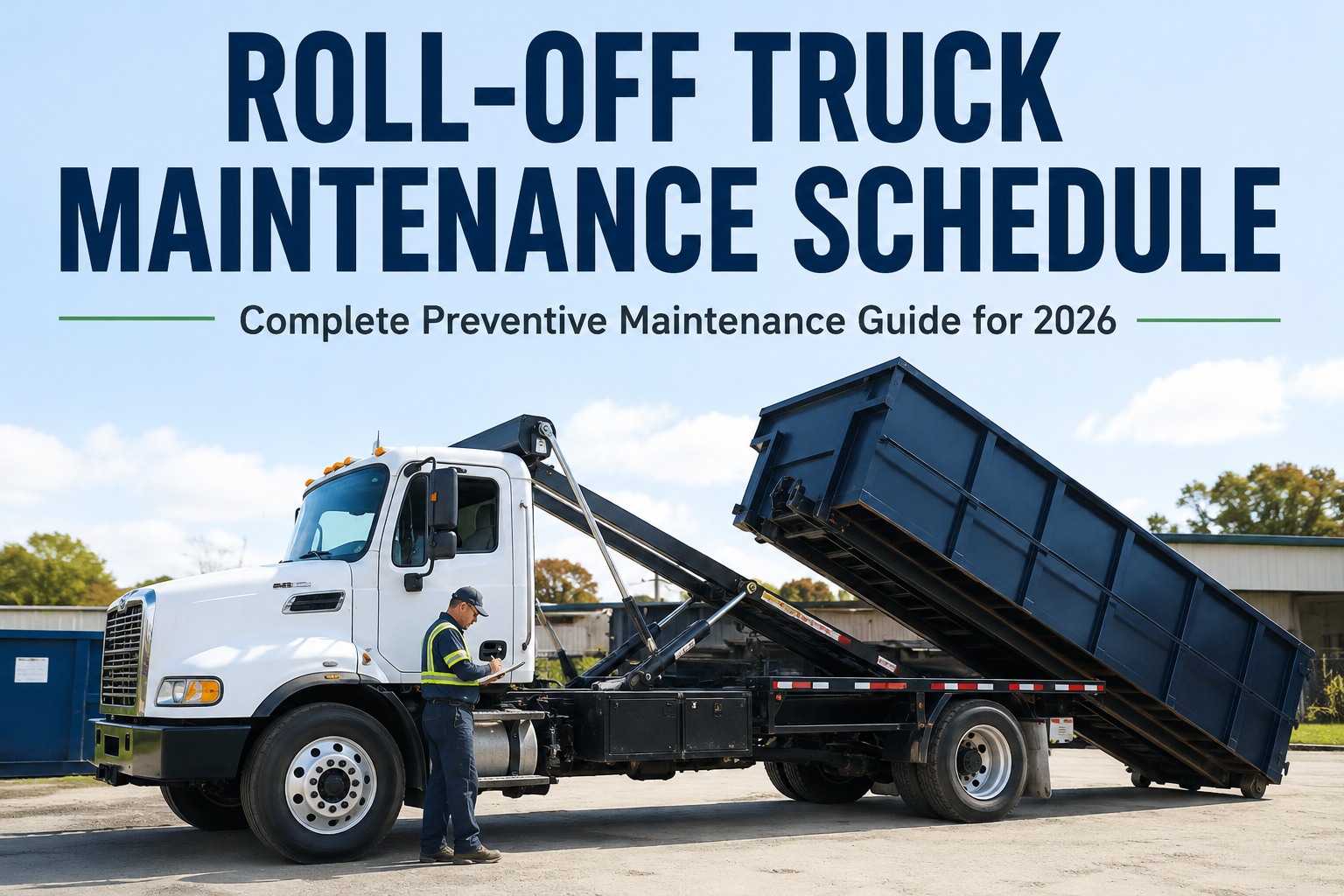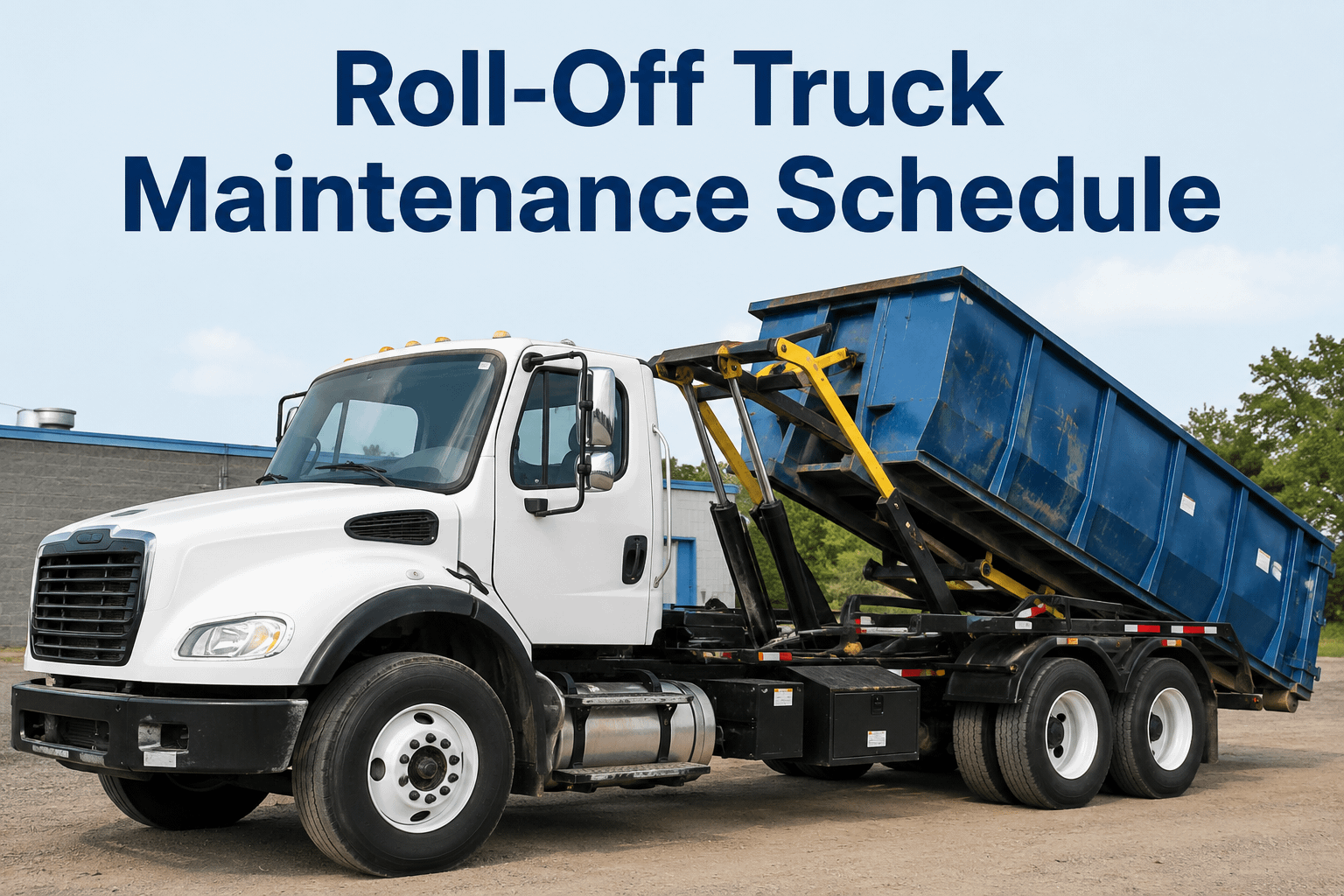
Roll-off truck preventive maintenance operates on a different framework than any other commercial vehicle. The combination of heavy chassis (Class 7-8 typically), PTO-driven hydraulic systems, specialized hoist mechanisms (cable hoist or hook lift), sub-frame mounting, container hold-downs, and tarp systems produces wear patterns no generic truck PM template captures. Operations cycling containers 10-25 times per day accumulate hoist component wear, hydraulic seal stress, and PTO drivetrain hours far faster than typical truck operations would suggest. The maintenance economics: structured PM extends roll-off truck service life from 7-10 years to 12-15 years, reduces cable failures (single failure: $1,500-$5,000+ in lost productivity), prevents hydraulic system catastrophic failures, and protects the $150,000-$250,000+ capital investment in each unit. Start your free trial of our truck inspection and maintenance software to deploy roll-off truck-specific workflow — live in 10 minutes, free for up to 3 trucks.
Roll-Off Truck Maintenance Schedule: Complete Guide for 2026
Why Roll-Off Truck PM Is Different
Roll-off trucks face wear patterns no generic truck PM template captures. Six factors make roll-off truck maintenance operationally distinct from standard heavy truck operations.
High-Cycle Operation
PTO-Driven Hydraulic System
Cable vs Hook Lift Differences
Sub-Frame Loading Stress
Urban Stop-Start Operation
Specialized Accessories
The 7-System Roll-Off Truck PM Template
Every roll-off truck PM cycle covers these 7 systems. The depth varies by interval, but the categories don't. Contact our sales team for help deploying roll-off truck-specific templates.
01 Hoist System (Cable or Hook Lift)
02 Hydraulic System
03 PTO System
04 Sub-Frame & Body Mounting
05 Container Hold-Downs & Rollers
06 Tarp System
07 Chassis & DOT Compliance
Service Intervals — Daily to Annual
Roll-off truck PM cadence runs on multi-trigger logic: container cycles (primary wear driver), hoist operating hours (for cable and hydraulic components), calendar (for time-degraded items), and chassis mileage (for DOT compliance items).
| Interval | Inspection Scope |
|---|---|
| Daily (pre-trip) | Hoist operation test, cable visual inspection, fluid levels, fault codes, tarp function, lights |
| Daily (DVIR) | §396.11 defects documented (interstate operations) |
| Weekly | Detailed cable inspection, hydraulic level check, mounting bolt visual, container hold-downs |
| Monthly | PTO inspection, pump operation evaluation, hose condition, sub-frame visual check |
| Quarterly | Hydraulic fluid analysis, comprehensive 7-system inspection, hook lift cylinder service |
| Semi-annual | Cable replacement evaluation (per hours), hook wear measurement, tarp system service |
| Annual | Major service: hydraulic filter change, sub-frame structural inspection, full mechanical |
| Annual (§396.17) | DOT periodic inspection for interstate operations |
Container cycle counts are the most important wear driver for roll-off trucks but the easiest to miss. A truck completing 20 container handles per day × 250 working days = 5,000 cycles per year. Each cycle stresses the hoist, hydraulics, PTO, and sub-frame regardless of miles driven. Software platforms supporting roll-off operations should track container handle counts alongside hours and miles, triggering PM based on whichever metric reaches threshold first. Operations relying solely on mileage-based scheduling consistently under-service the hoist and hydraulic systems while over-servicing the chassis — producing both maintenance failures and wasted PM expenditure.
Cable Hoist vs Hook Lift — Maintenance Comparison
The two major roll-off truck hoist systems have different maintenance profiles. Most fleets operate one type predominantly, but mixed fleets need separate PM templates for each.
| Attribute | Cable Hoist (Traditional) | Hook Lift (Modern) |
|---|---|---|
| Primary manufacturers | Galbreath, Petersen | Palfinger, Multilift, Stellar, Hiab |
| Container compatibility | Cable-mount containers (older standard) | Hook-mount containers (newer standard) |
| Key wear component | Cable — replacement every 500-1,500 hours | Hook — wear measurement quarterly |
| Hydraulic complexity | Simpler — winch-driven | More complex — multiple cylinders |
| Cycle time | 2-4 minutes typical | 1-2 minutes typical (faster) |
| Annual cable/hook cost | $300-$1,500 cable replacement | $0 (hooks last years with light wear) |
| Hydraulic cylinder service | Single main cylinder typically | Multiple cylinders with seals |
| Operator skill | More operator-dependent | More automated, less operator-dependent |
Hook lift systems have become the dominant choice for new roll-off truck builds, but cable hoists remain in widespread use due to their simpler hydraulics, longer service life on the basic hoist mechanism, and compatibility with older container fleets. Fleet maintenance considerations: cable hoists have higher consumable cost (cable replacement) but simpler hydraulics; hook lifts have lower consumable cost but more complex hydraulic systems with multiple cylinders. Maintenance software must support both system types with template variants tailored to each. The 2026 trend continues toward hook lift adoption for new equipment, but cable hoist maintenance remains a substantial portion of the active fleet population — particularly in established waste haulers running mixed fleets.
Common Roll-Off Truck Failures
Six failure categories produce most roll-off truck unscheduled downtime. Structured PM addressing these patterns prevents the majority of expensive repairs.
PTO Seal Leaks
Cable Failures (Cable Hoist Systems)
Hydraulic Cylinder Seal Failures
Sub-Frame Mounting Fatigue
Tarp System Mechanical Failures
Container Hold-Down Failures
Frequently Asked Questions
How often should a roll-off truck have PM service?
Roll-off truck PM follows multi-trigger logic combining container cycles, hoist hours, calendar, and chassis mileage. Daily pre-trip: hoist operation test, cable visual inspection (cable systems), fluid levels, fault codes, tarp function, lights — typically 8-12 minutes. Weekly: detailed cable inspection, hydraulic level check, mounting bolt visual, container hold-down inspection. Monthly: PTO inspection (most common failure point), pump operation evaluation, hose condition assessment, sub-frame visual check. Quarterly: hydraulic fluid analysis (catches developing problems before failure), comprehensive 7-system inspection, hook lift cylinder service. Semi-annual: cable replacement evaluation based on hoist hours, hook wear measurement on hook lift systems, tarp system service. Annual: major service including hydraulic filter change, sub-frame structural inspection, and §396.17 DOT periodic inspection for interstate operations. Critical principle: container handle cycles drive most wear, not mileage. A truck running 200 miles per day with 20 daily container handles accumulates 5,000+ cycles annually — substantial wear on hoist, hydraulics, PTO regardless of mileage. Software platforms should track cycles alongside hours and miles. Start your free trial for roll-off PM workflow.
How long should a roll-off truck cable last?
Roll-off truck cable life depends on hoist hours, cycle count, and operational conditions. Typical service life ranges from 500-1,500 hoist operating hours, which translates to 6-24 months depending on operation intensity. Light operations (5-10 cycles/day, careful operators): 12-24 months typical cable life. Standard operations (10-20 cycles/day, mixed operators): 8-15 months typical. Heavy operations (20-30+ cycles/day, demanding conditions): 6-12 months. Replacement triggers: visual indication of broken strands (any broken strands = immediate replacement), cable hours reaching manufacturer recommendation, evidence of fatigue (kinks, bends, corrosion), preventive replacement at 75% of expected life regardless of visual condition. Replacement cost: typically $300-$1,500 depending on cable specification, length, and end fittings. Comparison economic context: scheduled replacement at $500 prevents container drop incidents that produce $1,500-$5,000+ in lost productivity plus container damage plus potential safety incidents. The math overwhelmingly favors preventive replacement on hours-based schedule rather than waiting for visible failure. Operations cycling 20+ containers daily should track hoist hours through telematics or operator logs and schedule replacement proactively. Contact our sales team for cable hour tracking workflow.
Cable hoist vs hook lift — which is better?
Both systems remain in widespread use with different operational profiles. Hook lift advantages: faster cycle time (1-2 minutes vs 2-4 minutes for cable), more automated operation reducing operator skill dependence, no cable wear consumable cost, generally lower maintenance over equipment life. Hook lift disadvantages: higher initial purchase cost, more complex hydraulic system with multiple cylinders, container compatibility limited to hook-mount containers (newer standard). Cable hoist advantages: lower initial purchase cost, compatibility with older cable-mount container fleets (substantial installed base), simpler hydraulics with one main cylinder typically, longer service life on basic hoist mechanism. Cable hoist disadvantages: cable replacement consumable cost every 500-1,500 hours, slower cycle time, more operator-dependent (skill affects efficiency and cable wear rates), container compatibility requires cable-mount containers. The 2026 trend: hook lift adoption continues to grow for new equipment purchases, but cable hoist remains substantial portion of active fleet population — particularly in established waste haulers with mixed container fleets. Selection considerations: container fleet compatibility (must match container mount type), operator skill availability (cable systems benefit from experienced operators), cycle volume (hook lift faster for high-volume operations), and capital budget. Fleet maintenance software should support both system types with template variants tailored to each.
What are the most common roll-off truck repair costs?
Repair costs vary substantially by component and timing. Most common categories with typical cost ranges: PTO seal replacement (caught early): $200-$500; PTO with hydraulic pump damage from delayed repair: $3,000-$8,000. Hydraulic cylinder seal: $400-$1,200 per cylinder when caught early; $2,000-$5,000+ for catastrophic failure with secondary damage. Cable replacement (scheduled): $300-$1,500 depending on cable spec. Cable failure with container drop: $1,500-$5,000+ in lost productivity plus container damage. Hook lift hook replacement: $800-$2,500 typical. Sub-frame mounting bolt torque correction: $200-$500. Sub-frame structural repair: $1,500-$5,000. Sub-frame replacement (catastrophic): $5,000-$15,000+. Tarp motor replacement: $300-$800. Complete tarp system rebuild: $1,500-$3,500. Hydraulic pump replacement: $2,000-$5,000. Hydraulic reservoir/system contamination cleanup: $1,500-$4,000. Container hold-down repair: $150-$800. The pattern across all failure modes: early detection through structured PM saves 70-85% of repair cost versus catastrophic failure. Single avoided major failure (sub-frame, pump, cylinder catastrophic) pays for years of PM software across multiple trucks. The economics overwhelmingly justify structured maintenance discipline. Sign up free for predictive maintenance workflow.
Do roll-off trucks need DOT compliance?
Yes — most roll-off trucks fall under FMCSA regulations. Federal coverage: roll-off trucks operating in interstate commerce above 10,001 lbs GVWR (essentially all roll-off trucks — they're Class 7-8 typically at 26,001+ lbs GVWR) are subject to DOT regulations including §396.11 DVIR requirements, §396.17 annual periodic inspection with §396.21 14-month retention, §396.3 systematic maintenance program documentation, and 49 CFR Part 391 driver qualification requirements. Intrastate-only operations face state DOT regulations that typically mirror federal requirements. CDL requirements: roll-off trucks at 26,001+ lbs GVWR require CDL Class A or B depending on configuration; many operations use CDL Class B for straight roll-off trucks without trailers. The 2026 regulatory environment: eDVIR Final Rule (effective March 23, 2026) authorizes electronic DVIRs under §396.11 — making digital workflow the practical baseline for roll-off operations. Paper medical certificates eliminated January 10, 2026 affecting CDL drivers. CSA scoring overhaul weights out-of-service violations at 2× severity. Roll-off operations need both equipment-specific PM (the 7-system template above) and DOT compliance workflow. Software platforms should handle both integrated rather than separately — single platform tracking PM scheduling, DVIR completion, DQF management, and audit packet generation. Talk to our sales team for integrated DOT + PM workflow.
How do I extend roll-off truck service life?
Three practices most effectively extend roll-off truck service life from typical 7-10 years to 12-15 years. (1) Strict adherence to cycle-based PM scheduling: container cycles drive most wear on hoist, hydraulic, PTO, and sub-frame components. Operations relying on mileage-based scheduling consistently under-service these components. Switch to multi-trigger scheduling combining cycles, hoist hours, and calendar — whichever reaches threshold first. (2) Disciplined PTO and hydraulic system care: PTO seal leaks are the most common hydraulic failure precursor, and hydraulic fluid contamination produces cascading pump and cylinder damage. Monthly PTO inspection, quarterly fluid analysis, and annual filter changes prevent the majority of catastrophic hydraulic failures. Single avoided pump failure ($3,000-$8,000) typically pays for years of preventive service across multiple trucks. (3) Proactive structural monitoring: sub-frame mounting fatigue develops gradually over years of cyclical loading. Annual structural inspection catches developing issues before catastrophic failure. Mounting bolt torque verification at quarterly PM prevents the bolt loosening that initiates sub-frame fatigue. Average roll-off truck service life with structured PM extends substantially — meaningful capital expense deferral on $150,000-$250,000+ replacement units. The economics overwhelmingly justify the additional PM investment. The 2026 environment emphasizes telematics integration: cycle counting, hour tracking, and fault code monitoring through telematics platforms produces better PM scheduling than manual logs can achieve.