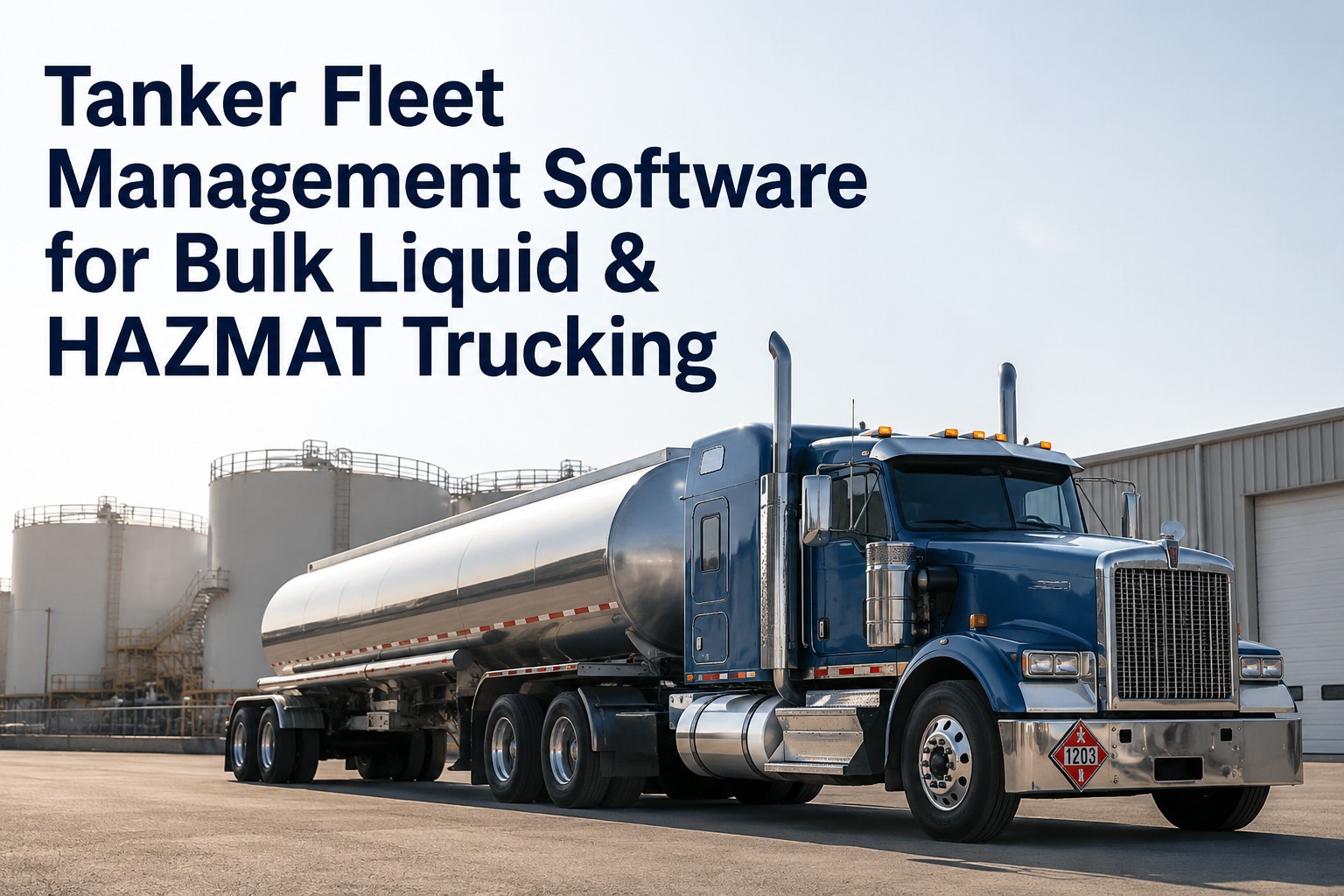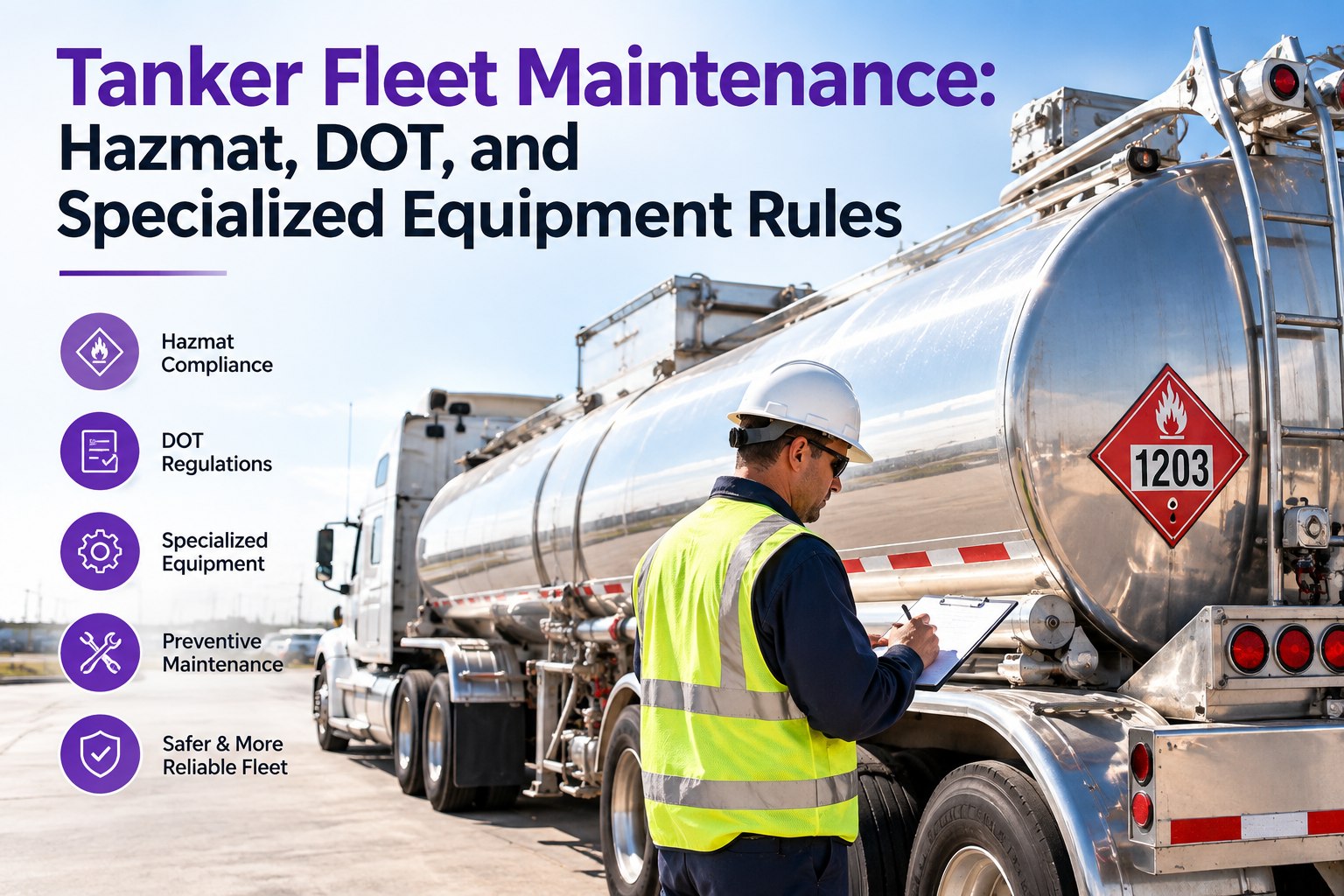
A dry van has one maintenance calendar. A tanker has two — the normal fleet PM every truck needs, and a second, federally mandated schedule of cargo-tank tests that decides whether the tank is even legal to load. Miss a brake PM and you risk a breakdown; miss an external visual or a leakage test and the tank is out of service by rule, hauling nothing until it's requalified. Add the specialized hardware — internal valves, venting, linings, grounding — and tanker maintenance is a different discipline, not a heavier version of the same one. This guide covers both calendars and the equipment that sits on top. Start free and track both the PM and the cargo-tank test schedule.
A Tanker Carries a Second Compliance Calendar.
The federal cargo-tank test schedule — external visual, internal, pressure, leakage, thickness — runs on its own intervals and doesn't care about your PM plan. Miss one and the tank is out of service by rule. Truck Inspection & Maintenance Management Software runs both calendars on one record: routine PM and the 49 CFR 180.407 test dates per unit, with the specialized hardware checks built into the inspection and any failure routed to a graded work order before the tank loads.
Two Calendars on One Truck
Everything a dry van needs in maintenance, a tanker needs too — plus a parallel schedule that governs the tank itself. The routine side is familiar: brakes, tires, engine, PM by mileage or hours. The regulated side is the cargo tank, tested and marked under 49 CFR 180.407 on fixed intervals that have nothing to do with how many miles the truck ran. A fleet that tracks only the first lets a test lapse; one that tracks only the second still has trucks breaking down. Tanker maintenance is managing both at once, per unit.
The standard program — brakes, tires, engine, DVIR, mileage- and hour-based PM. Keeps the truck running and roadworthy. Same discipline as any heavy vehicle.
The 49 CFR 180.407 tests — external visual, internal, pressure, leakage, thickness, lining — each on its own interval, each marked on the tank. Lapse one and the tank can't legally load. This is the tanker-only layer.
The Cargo-Tank Test Schedule (49 CFR 180.407)
Six tests, six intervals. Each one is marked on the tank with the month and year it last passed, and each lapses on its own clock — so a tank can be current on its pressure test and overdue on its leakage test at the same time. Intervals vary by tank spec; the common ones are below. Tracking them as a single "annual inspection" is how fleets miss the test that was actually due.
| Test | Mark | Typical interval | What it checks |
|---|---|---|---|
| External visual | V | 1 year (6 mo. insulated) | Shell, heads, piping, attachments, markings |
| Internal visual | I | 1–5 years by spec | Shell, welds, baffles, lining via manhole |
| Pressure test | P | 1–5 years by spec | Hydrostatic or pneumatic structural check |
| Leakage test | K | 1 year | Air-pressure tightness of the whole system |
| Thickness test | T | 2 years | Ultrasonic shell-wall measurement |
| Lining inspection | L | 1 year (lined tanks) | Rubber or specialty lining on corrosive service |
Intervals vary by cargo-tank specification and service — always confirm against your tank's spec plate and the current regulation. The tank markings (V, I, P, K, T, L) must be at least 1.25 inches high and show the month and year of the most recent passing test of each type.
Know Your Spec — It Sets the Rules
The tank's specification, stamped on its front-head plate, determines what it can haul, how it's built, and which test intervals apply. A fuel tanker and a corrosives tanker are different animals with different schedules. Here's what the common specs carry.
| Spec | Service | Build | Typical lading |
|---|---|---|---|
| DOT 406 (MC 306) | Flammable liquids | Non-pressure, aluminum, compartmented | Gasoline, diesel, fuel oil |
| DOT 407 (MC 307) | Chemicals / food | Low-pressure, steel or stainless, often insulated | Chemicals, mild acids, food-grade |
| DOT 412 (MC 312) | Corrosives | Stainless or lined, external reinforcing rings | Sulfuric acid, caustics |
| MC 331 | High-pressure gas | ASME vessel, 100–500+ psi design | Propane, LPG, anhydrous ammonia |
| MC 338 | Cryogenic | Vacuum-insulated double wall | Liquid nitrogen, LNG, liquid oxygen |
Never Let a Test Date Surprise You
A lapsed cargo-tank test isn't a maintenance slip — it's a tank that can't legally load, found out at the worst moment. Truck Inspection & Maintenance Management Software tracks every V, I, P, K, T, and L date per tank, warns before each comes due, and keeps the test certificates and dedicated-service documentation attached to the unit. Routine PM runs on the same record, so one screen shows whether a tanker is both roadworthy and legal to load — instead of two systems that each know half the answer.
The Specialized Equipment Daily Checks
Between the big periodic tests, a tanker's hazmat hardware needs eyes on it every trip. These are the components a dry van simply doesn't have — and the ones a leak or a failure turns into a hazmat incident, not just a repair. They belong in the daily inspection, not only the five-year test.
Who Can Do the Tests — and When It's Out of Cycle
Not everyone can sign off a cargo-tank test, and some events force a test ahead of schedule. Getting the inspector qualification and the out-of-cycle triggers right is as much a part of the program as the calendar itself.
External visual (V), internal visual (I), and thickness (T) must be done by a Registered Inspector meeting 49 CFR 180.409 — formal registration, training, and certification by tank spec.
Pressure (P) and leakage (K) tests can be done by a qualified person following the required procedures under 49 CFR 180.407. Both still have to be recorded and marked.
Damage affecting lading retention, a structural repair, or a tank out of hazmat service a year or more all force testing ahead of schedule — full requalification before return to service.
Test records are kept through the next similar test plus one year under 49 CFR 180.417 — proof the tank is current, and the basis for any dedicated-service interval extension.
Frequently Asked Questions
What tests does a cargo tank need, and how often?
How do I know which spec my tank is and why it matters?
Who is allowed to perform cargo-tank tests?
When does a tank need testing before its interval is up?
How does the software help a tanker fleet specifically?
Run Both Calendars on One Record
Truck Inspection & Maintenance Management Software manages the whole tanker program in one place: routine PM off real usage, the 49 CFR 180.407 cargo-tank test dates per unit with warnings before they lapse, the specialized hardware checks built into the daily inspection, and the test certificates and dedicated-service records attached to each tank. Any failure opens a graded work order before loading, and one screen tells you whether a tanker is both roadworthy and legal to haul. That's how hazmat fleets stop discovering a lapsed test at the loading rack.