A DOT audit is not a surprise — it is a records test you already know the questions to. Auditors check the same six factors, flag the same 11 automatic-failure conditions, and send a pass-or-fail notice within 45 days. The carriers that fail rarely fail on safety; they fail because a driver qualification file was incomplete, a DVIR had no repair follow-up, or the accident register simply did not exist. Driver qualification gaps alone account for nearly 12% of all FMCSA citations. This guide walks through exactly what auditors review, what fails you instantly, and the checklist that gets you ready — so an audit notice is a formality, not a fire drill. Get audit-ready records free.
How to Pass a DOT Audit: Complete Trucking Checklist for 2026
The six factors auditors check, the 11 conditions that fail you instantly, and how to prepare DVIR, HOS, and DQ records so you pass on the first try.
How a DOT Audit Actually Works
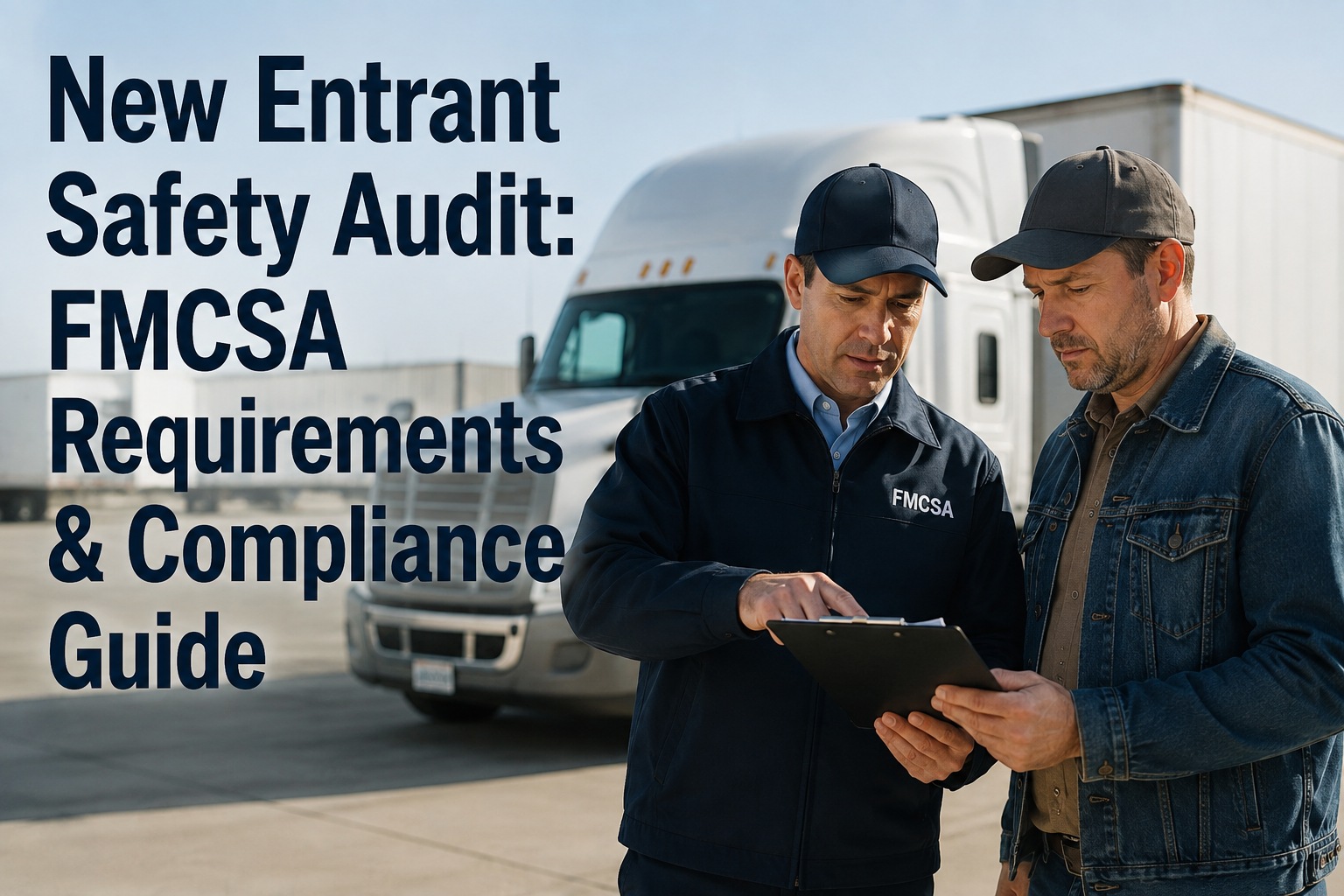
Most audits today are the New Entrant Safety Audit — a one-time review within your first 12 months under a new USDOT number. Increasingly they run remotely through FMCSA's portal: you get login credentials, a deadline, and a list of documents to upload. On-site reviews still happen when roadside or crash data raises flags. Either way, the criteria are identical, and the timeline is predictable.
The Six Factors Auditors Check
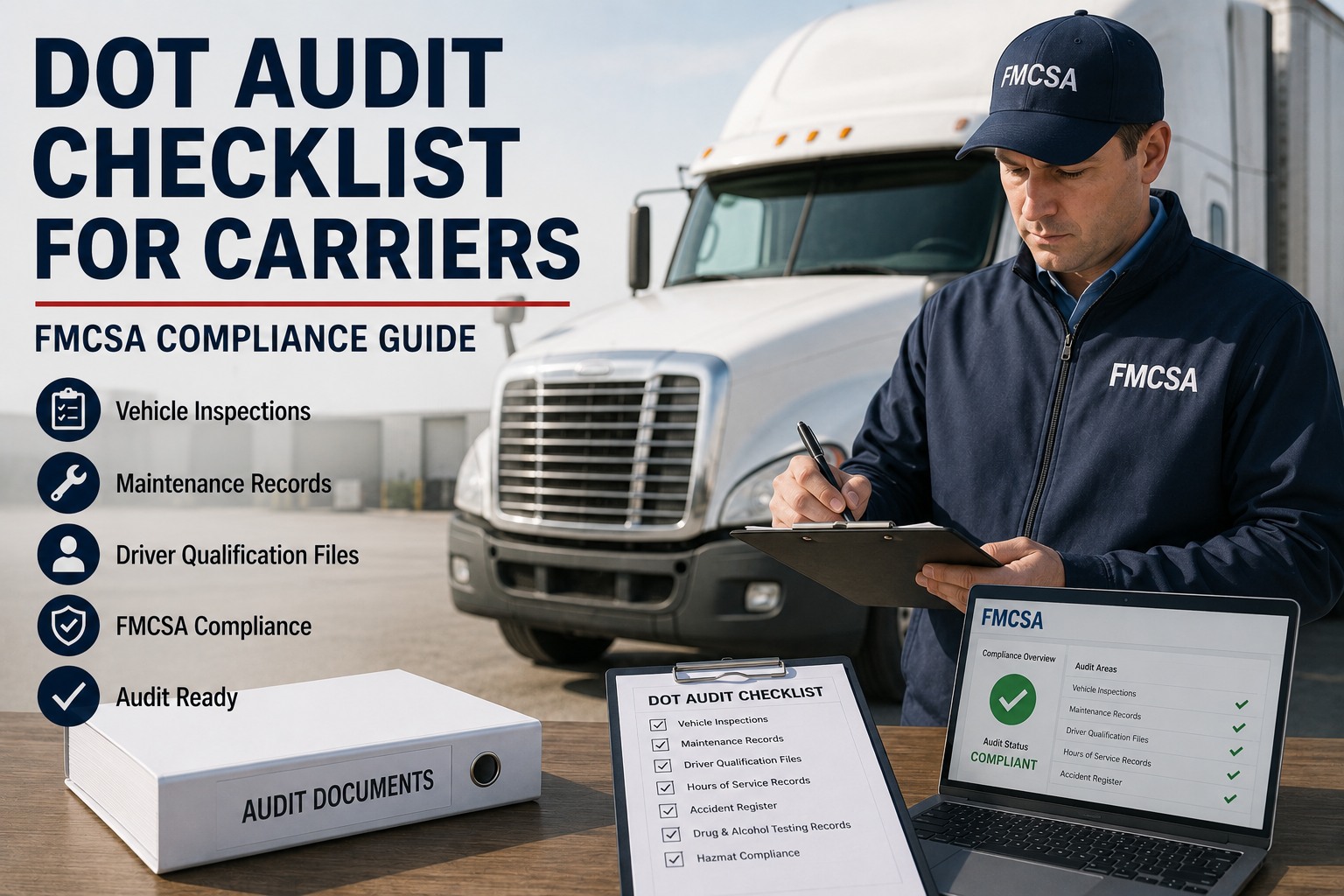
Every audit covers the same six areas, requested in roughly this order. Have a clean, complete folder ready for each one — missing or incomplete documentation in any single area can sink the review.
Active registration, BOC-3 process agent, UCR, insurance certificates, and compliant vehicle markings.
A complete DQ file per CDL driver — application, MVRs, CDL, valid medical certificate, Clearinghouse query. Nearly 12% of all citations land here.
An active testing program, pre-employment and random testing history, and Clearinghouse registration. Applies even to one-truck operations.
ELD logs that are accurate and complete. Auditors request a full month for one driver and check for false logs and limit violations.
Proof of regular inspections, DVIRs, and — critically — repair follow-up. A reported defect with no fix on record stands out immediately.
A written register of DOT-reportable accidents. Even with zero crashes, the register must exist — its existence is what auditors verify.
Keep Every Factor Audit-Ready, Year-Round
Truck Inspection & Maintenance organizes DVIRs, maintenance history, and driver records so any document is retrievable in seconds — not the 48-hour scramble auditors allow.
The Instant-Fail Traps
FMCSA defines 11 conditions egregious enough to fail an audit on their own — regardless of how clean everything else is. Verify these before any other prep. These are the most common ones that catch carriers off guard.
The Records That Trip Carriers Most
Three record types account for the bulk of audit findings — and all three are documentation problems, not safety problems. Here's what auditors expect and how to get each right.
Every CDL driver — including owner-operators under your authority — needs a complete file retrievable within 48 hours.
Auditors want proof inspections happen and defects get fixed. A DVIR noting a defect with no repair record is a red flag.
One full month for one driver, from the last six months, transferred through the auditor's code. Logs must be accurate and free of falsification.
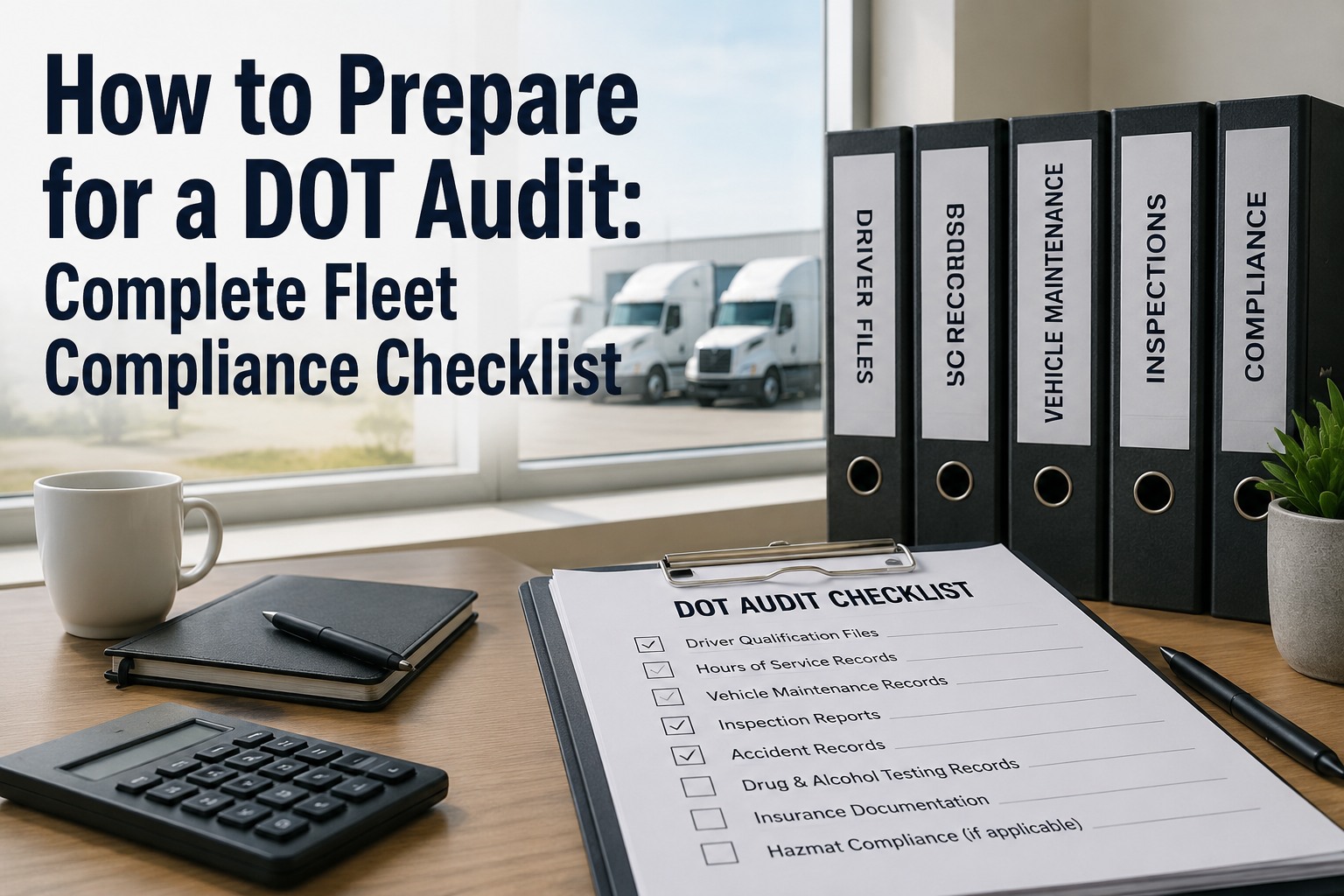
Your Pre-Audit Checklist
Run this before any notice arrives. The right answer to each is "yes" — and finding a gap now, while you can fix it, is exactly the working compliance program auditors want to see.
Frequently Asked Questions
New entrant audits happen within your first 12 months, and you'll usually get a phone call or letter first. Once selected, you receive a deadline to submit documents. The smart approach is to treat compliance as audit-ready year-round, because a poor early roadside record can move your audit notice up sooner than expected.
Driver qualification files. They account for nearly 12% of all FMCSA citations, making them the single most documentable — and most commonly missed — category. Every CDL driver needs a complete file with current CDL, valid medical certificate, MVR, application, and Clearinghouse query, accessible within 48 hours of the request.
FMCSA sends a written notice within 45 days listing each violation. You then submit a Corrective Action Plan showing how you've fixed every deficiency by a hard deadline. Auditors expect a working compliance program, not perfection — admitting a gap with a documented fix is far better than hiding it or backdating records.
Yes. If you operate under your own DOT authority, even a single-truck company must have the same files and programs in place during the new entrant period — including a drug and alcohol testing program, DQ file, and accident register. The requirements don't scale down with fleet size.
The biggest fail points are documentation gaps — a missing DVIR follow-up, an expired medical certificate, a disorganized file. Truck Inspection & Maintenance keeps inspection and maintenance records timestamped, links every defect to its repair, flags expiring driver credentials, and lets you produce any record in seconds, turning an audit into a routine export.
Walk Into Any DOT Audit Already Ready
Truck Inspection & Maintenance keeps DVIRs, maintenance history, and driver records organized by FMCSA factor, links every defect to its repair, and flags expiring credentials before they become findings — so a 45-day decision is never in doubt.