The moment a truck crashes, a clock starts — and most of the evidence that proves what happened is already counting down to deletion. Dashcam loops overwrite in one to three days. Telematics data is purged in about thirty. ELD records are federally required for only six months. Meanwhile the opposing side's rapid-response team is often at the scene the same day, preserving the record on their terms while your driver is still giving a statement. A fleet that can't assemble its own telematics, video, and inspection evidence fast loses the narrative — and the claim. This guide lays out a defensible crash investigation workflow: how to preserve the evidence before it cycles out, reconstruct the sequence, find the true root cause, and turn one incident into prevention. Build your incident evidence file free.
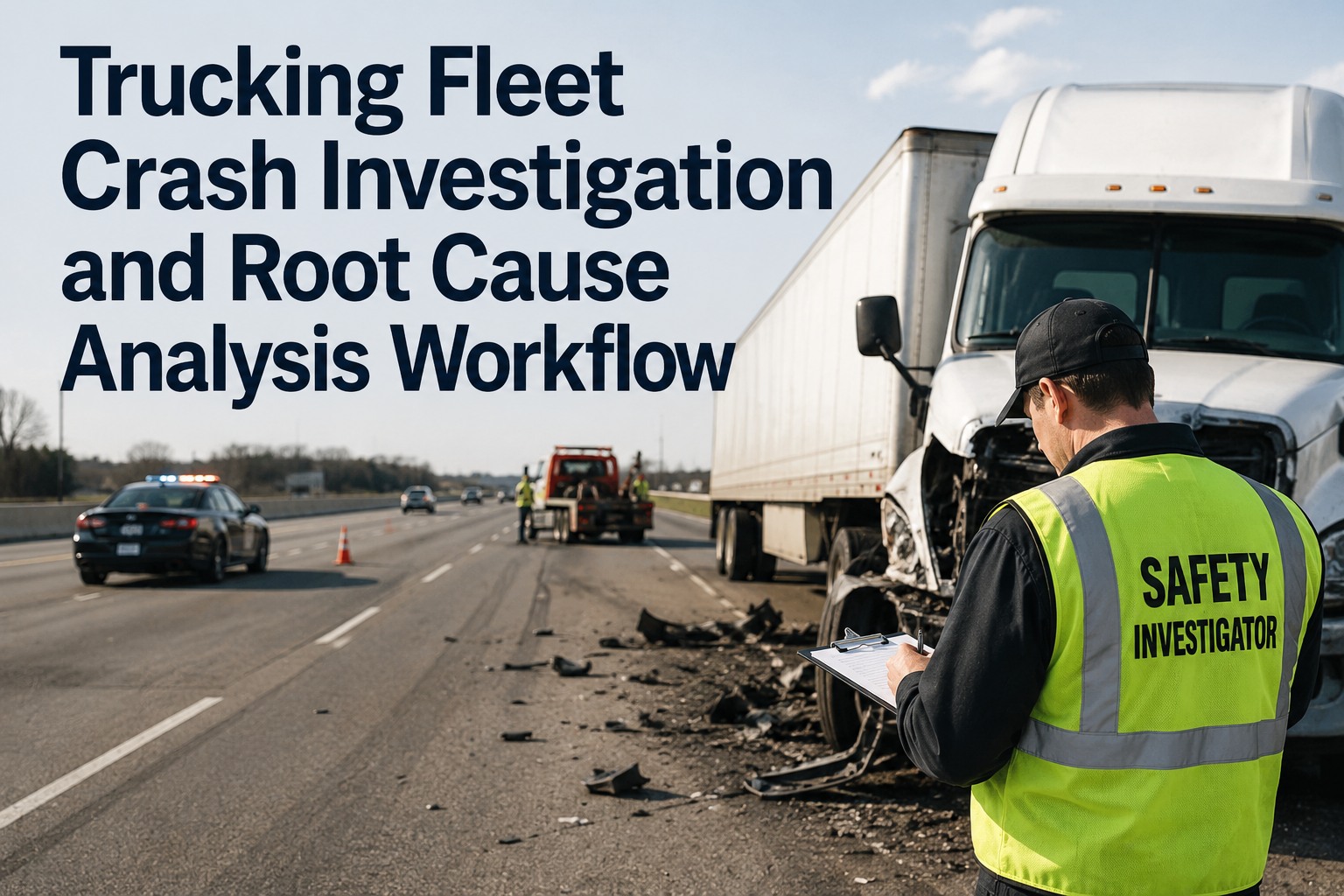
Trucking Fleet Crash Investigation and Root Cause Analysis Workflow
Run a defensible crash investigation with telematics, video, and inspection evidence in one place. Reconstruct the incident, find the true root cause, and stop the next one before it happens.
Why Speed Decides the Outcome
A crash investigation isn't lost at trial — it's lost in the first 72 hours, when the evidence that tells the real story quietly disappears. Knowing exactly what expires when is the difference between a defensible record and a he-said-she-said you can't win.
The Four-Stage Investigation Workflow
A defensible investigation follows the same path every time, in order. Skip a stage or do it out of sequence and the conclusion won't hold up. Each stage builds the evidence base the next one depends on.
Stage 1: Preserve Before It's Gone
Preservation is the stage that can't be redone. Once footage loops or telematics purges, no investigation can recover it. The goal is to capture every custodian of evidence the moment an incident is reported — yours and any third party's.
Save the footage immediately — it's the first thing to disappear on a looping system, often within 24 hours.
Speed, braking, steering, throttle, and position traces — the spine of any reconstruction, gone in ~30 days.
Hours-of-service status proves or rules out fatigue. Federally retained only six months.
Engine control data can be erased on repair — preserve before the truck goes to the shop.
Pre-trip DVIRs and service history show whether a defect contributed — your own records, your defense.
Communications and route assignments provide context the raw telemetry alone can't explain.
Capture the Whole Evidence File Automatically
Truck Inspection & Maintenance keeps telematics, inspection history, and incident records together per truck — so when a crash happens, the preservable record is already in one place, timestamped.
Stage 2: Reconstruct the Sequence
Reconstruction turns scattered data points into a timeline. By fusing the data streams, you can see exactly what the truck — and the driver — were doing in the seconds before impact, replacing ambiguous testimony with a defensible record.
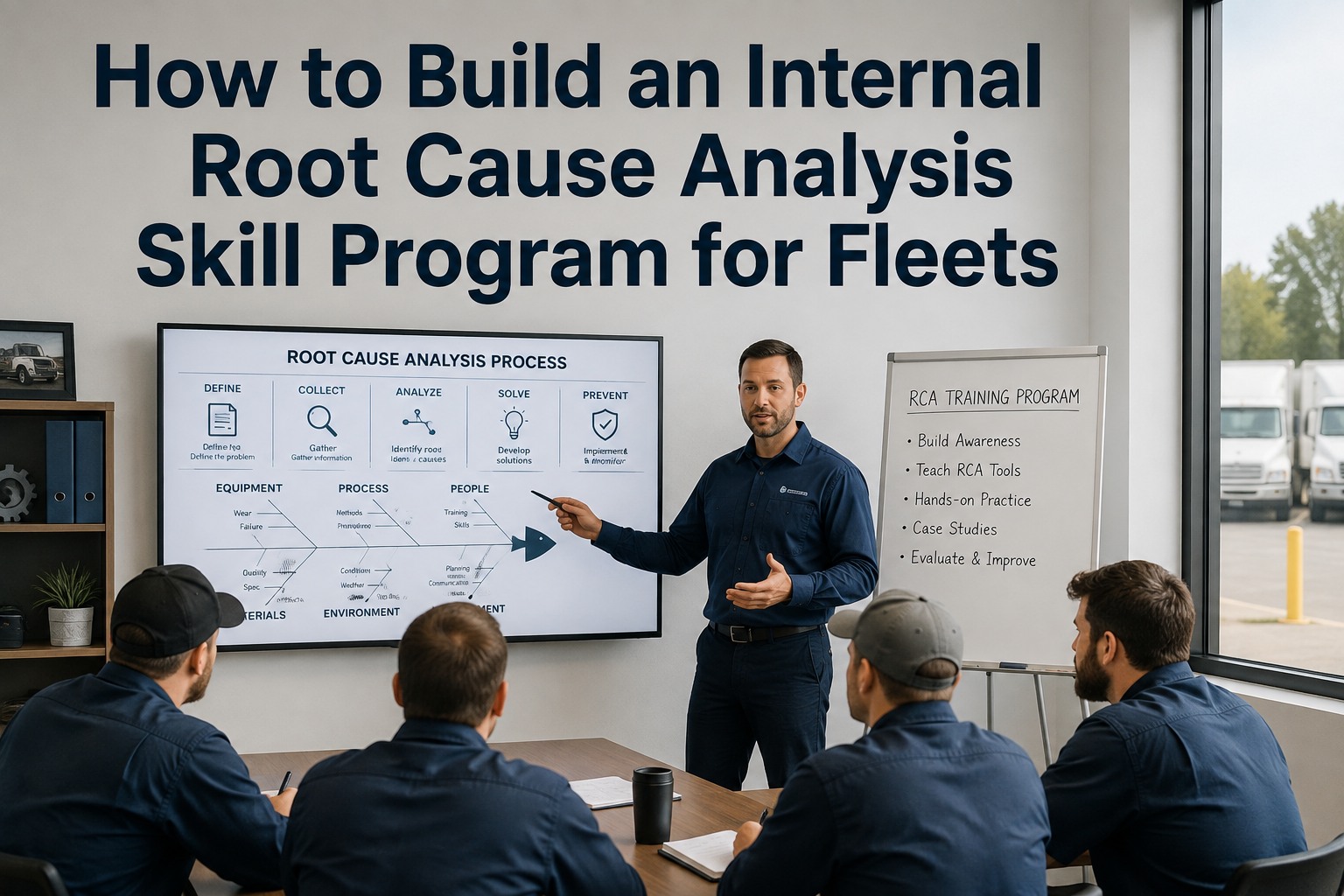
Stage 3: Find the True Root Cause
The most expensive mistake in any investigation is stopping at the immediate cause. "Driver braked late" is a symptom. The real question is why — and the answer often points to a system failure the fleet can actually fix. Keep asking until you reach something you can change.
Liability — and root cause — can extend well beyond the driver: to maintenance, cargo loading, dispatch, or even the vehicle manufacturer. A real investigation finds which, so the fix lands where the failure actually was. See root-cause analysis on your incidents.
Stage 4: Turn the Finding Into Prevention
An investigation that ends in a report is wasted. The point is to close the loop — convert root cause into a concrete change so the same failure can't produce the next crash. That's what turns safety from reactive to proactive.
If behavior was the root, targeted coaching with the actual footage beats a generic safety memo every time.
If a defect contributed, the inspection and PM program gets the gap closed across every similar unit.
If scheduling or dispatch drove it, the policy changes — addressing the system, not just the symptom.
Frequently Asked Questions
Faster than most fleets expect. Looping dashcam footage can overwrite within one to three days, telematics and GPS data is often purged in about thirty days, and ELD records are federally required to be kept only six months under 49 CFR 395.8(k). ECM black-box data can even be erased when the truck is repaired. That's why preservation is the urgent first step — the fastest-expiring evidence has to be locked down first.
The combination is what wins. Telematics (speed, braking, steering, throttle) forms the spine of reconstruction; in-cab and road video confirms it; ELD logs prove or rule out fatigue; ECM data captures engine state; and inspection and maintenance records show whether a defect contributed. No single source is conclusive — fusing them into one timeline is what produces a defensible root-cause finding.
The immediate cause is the last thing that went wrong — "driver braked late." The root cause is the underlying system failure that made it likely — for example, a dispatch schedule that pushed drive time to the legal limit, leaving the driver fatigued. Stopping at the immediate cause produces blame; reaching the root cause produces a fix. Keep asking "why" until you reach something the fleet can actually change.
Yes. Depending on the root cause, responsibility can reach the carrier, maintenance providers, cargo handlers, dispatch, or the vehicle manufacturer. A thorough investigation identifies every contributing factor rather than defaulting to driver error — which both ensures the right fix and protects the fleet when its own data shows the driver wasn't the cause.
It keeps the evidence together and timestamped before you need it. Truck Inspection & Maintenance maintains telematics, inspection history, DVIRs, and incident records per truck, so when a crash occurs the preservable record is already centralized and ready to lock down. It supports reconstruction by aligning the data streams and ties root-cause findings to coaching, maintenance, or policy changes that prevent recurrence.
Build a Defensible Investigation, Every Time
Truck Inspection & Maintenance keeps telematics, video context, inspection history, and incident records in one timestamped file per truck, helps reconstruct the sequence, drives findings to true root cause, and closes the loop with prevention — so one crash becomes the reason the next one never happens.