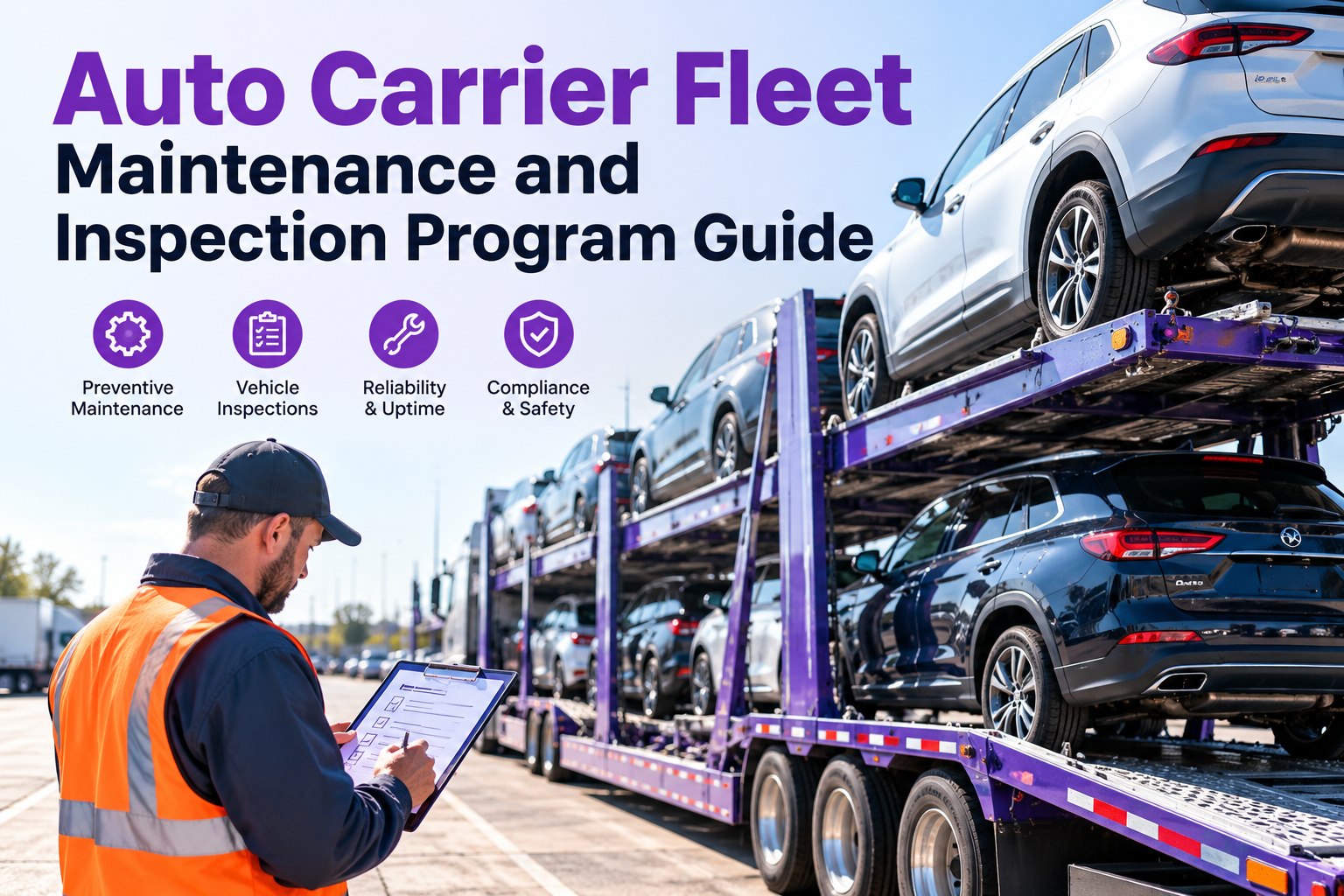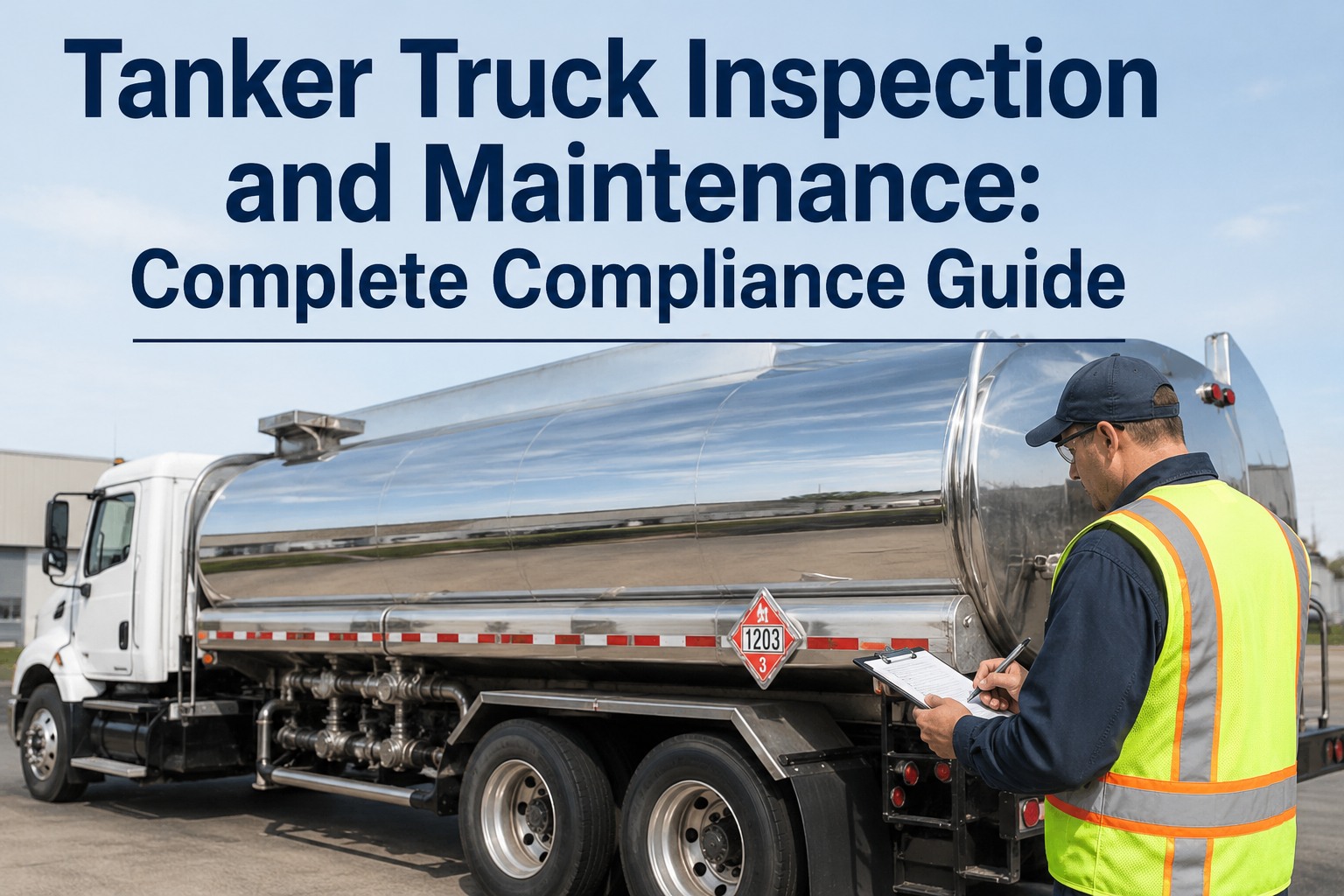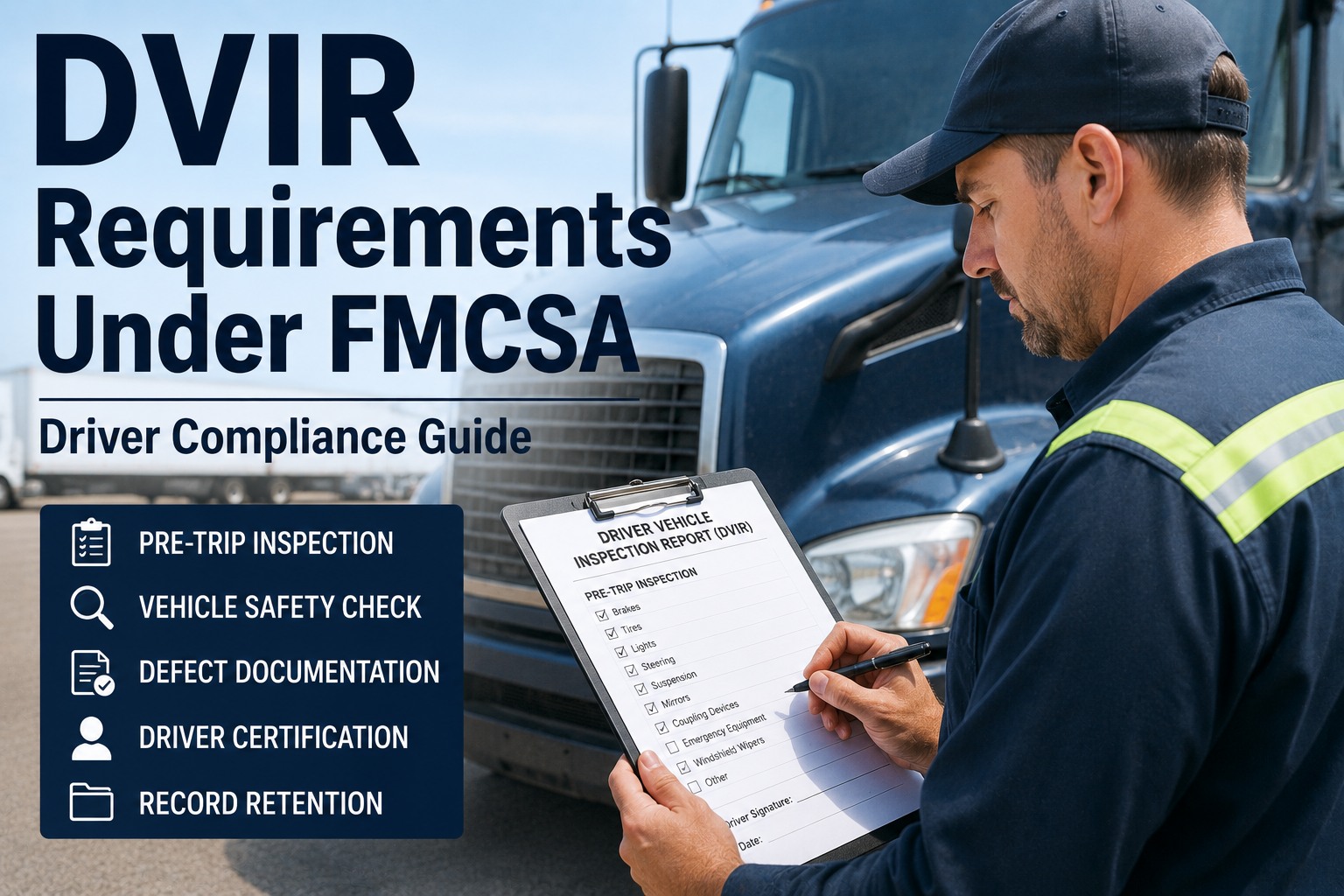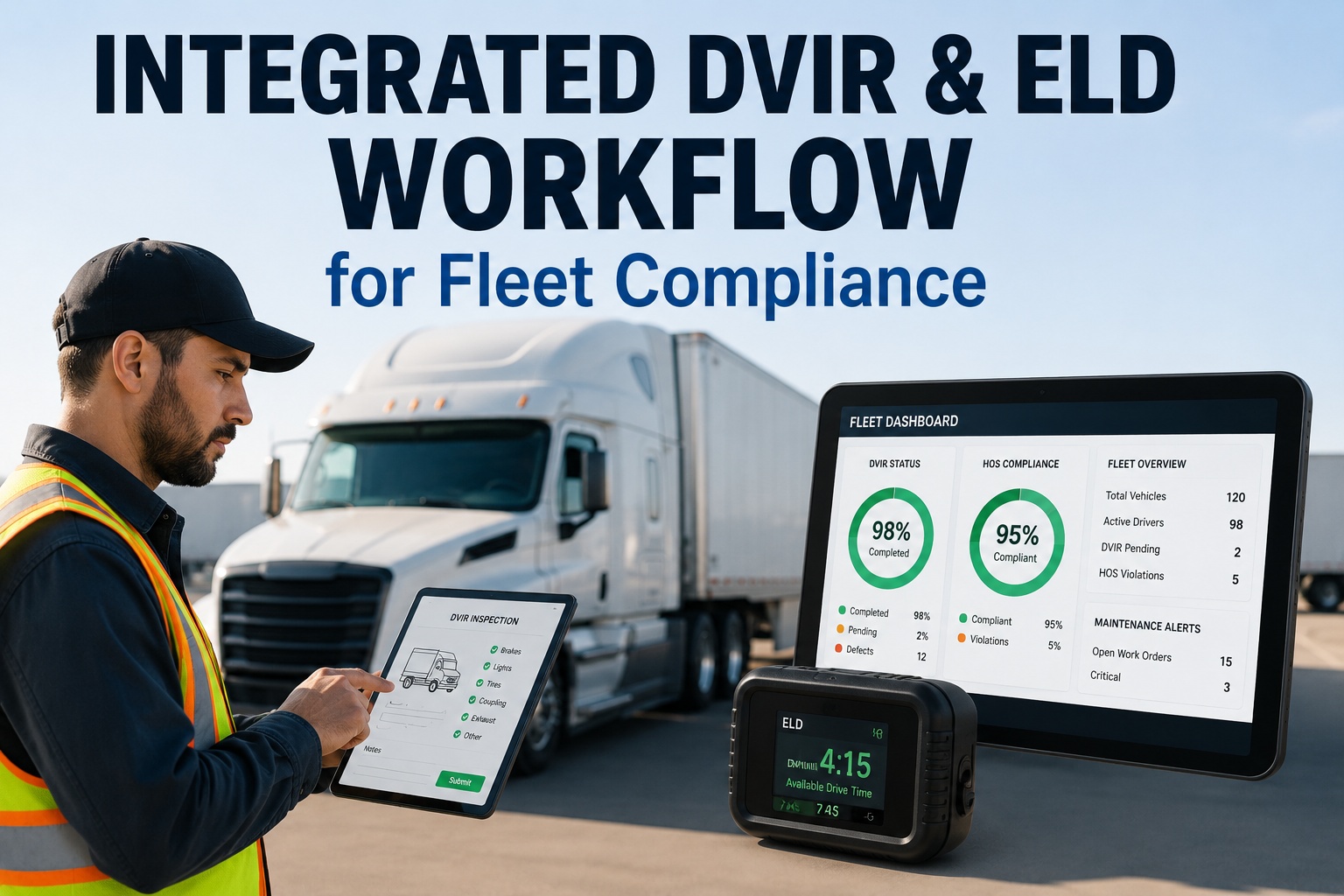
If you run an oil & gas fleet, 49 CFR Part 396 is the federal rulebook that decides whether your trucks stay on the road or get stickered out of service at a weigh station. It governs how you inspect, repair, and maintain every commercial motor vehicle under your control — vacuum trucks, winch trucks, pump trucks, water haulers, and the pickups that run your lease roads. The catch for oilfield operators is that Part 396 was written for a world of paper files and weekday garages, not remote wellpads and cellular dead zones, and FMCSA audits the maintenance records in nearly 9 of 10 compliance reviews. This guide breaks down every section of Part 396 in plain English, shows the exact recordkeeping clocks that trip up most carriers, and explains how Truck Inspection & Maintenance software turns the whole regulation into an automatic, audit-ready workflow.
Compliance Guide · Oil & Gas Fleets · 2026
49 CFR Part 396 Explained: FMCSA Inspection, Repair & Maintenance
The complete breakdown of the federal inspection, repair, maintenance, DVIR, and recordkeeping rules — built for oilfield fleet managers who can't afford an out-of-service order on a wellpad.
89%
Of FMCSA compliance reviews audit maintenance records
~22%
Of roadside-inspected CMVs placed OOS for maintenance defects
$15,846
Max recordkeeping penalty per violation ($1,584/day)
48 hrs
To produce records when FMCSA requests them
What Part 396 Actually Requires
At its core, Part 396 says one thing: every motor carrier must systematically inspect, repair, and maintain every vehicle it controls — and prove it on paper (or electronically). The word "systematically" matters. FMCSA leaves the exact intervals up to you, but it requires a documented program with records to back it. For oil & gas fleets running mixed equipment across remote sites, that "system" is exactly where compliance breaks down without the right tooling.
Inspect
Daily driver checks, annual periodic inspections, and ongoing systematic review of safety-critical parts and accessories.
Repair
Reported defects must be corrected before the vehicle returns to service, with the repair certified in writing.
Maintain & Document
Keep a maintenance file on every regulated vehicle, retained for federally mandated periods and producible on demand.
Part 396 Section by Section
The regulation is a stack of interlocking sections. Here's what each one requires, in the order they matter to a working fleet:
Inspection, Repair & Maintenance
The foundation. Requires a systematic program plus a maintenance file for every CMV under your control 30+ days — vehicle ID (company number, make, serial, year, tire size), the PM schedule, and records of all inspections and repairs.
Driver Vehicle Inspection Reports
Drivers must report any defect found during the day on each vehicle operated. Covers at least 11 safety-critical systems. Property-carrying drivers don't file "no-defect" reports — the duty triggers only when a defect exists.
Driver Inspection (Pre-Trip Review)
Before driving, the next driver must be satisfied the vehicle is safe, review the last DVIR if one exists, and sign to confirm any noted defects were certified as repaired. This closes the chain of custody.
Periodic (Annual) Inspection
Every CMV must pass a thorough inspection at least once every 12 months against Appendix A standards. Each unit in a combination — tractor, trailer, dolly — counts separately and needs its own inspection.
Inspector Qualifications
The annual inspection must be performed by a qualified inspector with the right training, experience, or certification. You must retain evidence of those qualifications.
Periodic Inspection Recordkeeping
The inspector's report must identify who inspected, the carrier, the vehicle, and the components inspected with results. Proof of inspection travels with the vehicle — original report or a sticker/decal.
Oilfield exception worth knowing: Part 396 does not apply to "pipeline welding trucks" as defined in 49 CFR 390.38(b). That's a narrow carve-out — your vacuum trucks, winch trucks, and water haulers are fully covered. When in doubt, treat the asset as regulated.
The Recordkeeping Clocks — Don't Mix Them Up
This is where most carriers lose points in an audit. Three different documents have three different retention periods, and storing them all "for a year" satisfies none of them correctly:
12 mo+ 6
General Maintenance Records
§ 396.3
Keep for the time the vehicle is under your control, plus 6 months after it leaves through sale, trade, or lease-end.
14 mo
Annual Inspection Reports
§ 396.21
Keep the periodic inspection report for 14 months from the date of the inspection.
3 mo
DVIRs & Repair Certs
§ 396.11
Keep the DVIR, the repair certification, and the driver's review certification for 3 months from the report date.
When FMCSA requests records during a review, you have 48 hours to produce them at your principal place of business. Paper files scattered across field offices make that a scramble; a single digital archive makes it a search. Truck Inspection & Maintenance software tags each record to the right retention clock automatically, so nothing expires early or goes missing.
The DVIR Chain of Custody
Sections 396.11 and 396.13 work together to create a continuous accountability loop. FMCSA can require up to three signatures per defect — and the missing signature is one of the most-cited violations in DOT audits:
Driver A reports
At the end of the day, the driver documents any defect affecting safe operation, identifies the vehicle, and signs the DVIR.
Carrier certifies the repair
The defect is corrected (or confirmed not to affect safety), and the mechanic certifies the repair in writing.
Driver B acknowledges
Before driving, the next driver reviews the DVIR and signs to confirm repairs were certified. This signature is the most commonly missed.
As of the February 19, 2026 FMCSA Final Rule (Docket FMCSA-2025-0115, effective March 23, 2026), all three signatures can be captured electronically with timestamps under §396.11 and §396.13 — removing the ambiguity that lingered since eDVIRs were first permitted in 2018. Digital records also produce a far stronger audit trail and litigation defense.
Free · Up to 3 Trucks
Make Part 396 run itself
Truck Inspection & Maintenance software enforces the 3-signature DVIR chain, schedules annual inspections, tags every record to the right retention clock, and exports an audit-ready package in minutes — even from a wellpad with no signal. Sign up free and get compliant in 10 minutes, no hardware required.
Why Oil & Gas Fleets Struggle With Part 396
The regulation is the same for everyone, but oilfield operations break the assumptions it was written under. These are the four gaps where compliance quietly slips:
Cellular dead zones
Paper DVIR systems at oilfield fleets average just 55-65% completion — not because inspections don't happen, but because forms can't be filed from beyond coverage. Offline capture with later sync closes the gap.
Records scattered across field offices
Maintenance files in three different yards turn the 48-hour production rule into a frantic hunt. A single archive makes any record retrievable in seconds.
Mixed fleets, mixed intervals
Vacuum, winch, pump, and water trucks each have different annual-inspection and PM needs. One fleet-wide schedule misses service points; per-unit schedules don't.
High-idle wear hides on the odometer
Oilfield trucks rack up engine hours while parked. Mileage-only PM tracking misses the wear that §396.3's "systematic" standard expects you to catch.
What Auditors Look For
An FMCSA maintenance audit follows a predictable checklist. Knowing it in advance is the difference between a clean review and a costly one:
A written PM schedule for every regulated unit, with intervals defined
Complete vehicle ID data on every maintenance file (§396.3)
Current annual inspection on file for each unit (§396.17 / §396.21)
DVIRs with the complete signature chain, retained 3 months
Repair certifications matched to reported defects
Inspector qualification evidence retained (§396.19)
All of the above producible within 48 hours of request
How the Software Maps to the Regulation
Every Part 396 obligation has a matching feature in Truck Inspection & Maintenance software — the regulation becomes a workflow instead of a binder:
Per-unit maintenance files with full vehicle ID and a multi-trigger PM schedule (engine hours, mileage, calendar).
Electronic DVIRs with offline capture, photo evidence, and automated 3-signature enforcement.
Annual inspection scheduling with 60/30/7-day alerts so no unit's certificate ever lapses.
Inspection reports archived against each vehicle record, with results and component detail.
Each record auto-tagged to its retention clock; nothing expires early, nothing goes missing.
One-click audit export for any vehicle and date range — minutes instead of 40-60 hours of manual assembly.
Frequently Asked Questions
What is 49 CFR Part 396 in simple terms?
It's the federal regulation requiring every motor carrier to systematically inspect, repair, and maintain its commercial vehicles — and keep records proving it. It covers daily driver inspection reports (DVIRs), annual periodic inspections, maintenance files, and how long you must retain each record. For oil & gas fleets, it applies to vacuum trucks, winch trucks, pump trucks, and water haulers alike.
How long do I have to keep maintenance records?
Three different clocks: general maintenance records (§396.3) for the time the vehicle is under your control plus 6 months; annual inspection reports (§396.21) for 14 months; and DVIRs with repair certifications (§396.11) for 3 months. Truck Inspection & Maintenance software tags each record to the correct clock automatically.
Are no-defect DVIRs required?
For property-carrying CMVs — the vast majority of oilfield trucks — no. Since 2014, drivers only file a DVIR when a defect is found or reported. Many carriers still require daily no-defect reports as company policy for stronger audit and litigation defense, but the federal rule doesn't mandate them.
Can DVIRs and inspection records be electronic in 2026?
Yes. FMCSA's Final Rule effective March 23, 2026 explicitly authorizes electronic DVIRs under §396.11 and §396.13, with electronic signatures, timestamps, and cloud storage fully compliant. Electronic records were already permissible since 2018; the 2026 rule removes any remaining ambiguity. Contact our team to move your fleet to compliant eDVIRs.
What does a Part 396 violation cost?
Recordkeeping violations carry a maximum civil penalty of $1,584 per day, up to $15,846 per violation. Beyond fines, maintenance defects feed your CSA Vehicle Maintenance score, which drives audit frequency, insurance rates, and shipper relationships — and an out-of-service order halts the vehicle on the spot.
Do oilfield trucks have any Part 396 exemptions?
Only narrow ones. Part 396 doesn't apply to "pipeline welding trucks" as defined in 49 CFR 390.38(b), and certain driveaway-towaway and single-vehicle situations have carve-outs. Your standard service fleet — vacuum, winch, pump, water — is fully regulated. When unsure, treat the asset as covered. Sign up free to keep every unit audit-ready.
Audit-Ready From Day One
Turn Part 396 from a liability into a checkbox.
Truck Inspection & Maintenance software covers every section — §396.3 maintenance files, §396.11/.13 electronic DVIRs with 3-signature enforcement, §396.17 annual inspection scheduling, and retention-aware archiving that exports an audit pack in minutes. Free for up to 3 trucks. No hardware. No contracts. Live in 10 minutes.