Farm trucks live a double life — half the time they're crawling across a field, the other half they're sharing a highway with everyone else at full weight. That's exactly why a pre-trip inspection matters on the farm even more than the rulebook requires. Many farm vehicles qualify for the Covered Farm Vehicle exemption, which can free them from annual DOT inspections, CDL requirements, and parts of the Hours-of-Service rules within a 150 air-mile radius. But here's the catch every experienced operator knows: exempt from inspection does not mean exempt from physics. A blown tire, failed brake, or shifting grain load doesn't check your paperwork before it causes a wreck. This guide walks through a complete agricultural pre-trip inspection — vehicle systems, load securement by cargo type, and the exemption rules that actually apply — so your fleet runs safe whether or not an officer ever asks. Truck Inspection & Maintenance turns it into a digital DVIR your operators finish in minutes. Talk to our team to set it up.
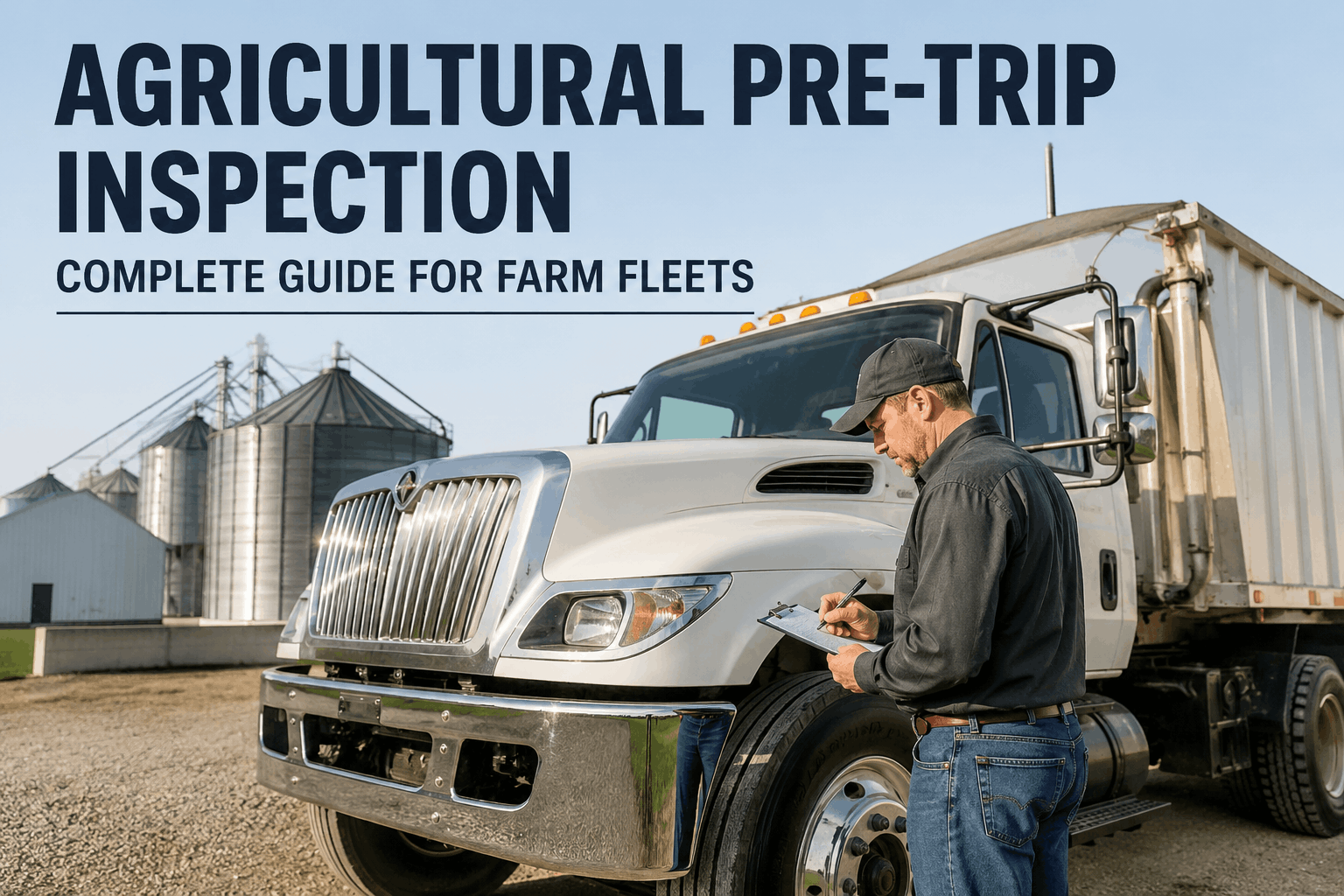
Agricultural Pre-Trip Inspection: Complete Guide for Farm Fleets
Vehicle, load & compliance — every check before the wheels turn.
First: Are You Actually Exempt?
Before the checklist, understand where you stand. The Covered Farm Vehicle (CFV) exemption removes a large chunk of federal requirements — but only if your operation ticks every box. Miss one, and the full Federal Motor Carrier Safety Regulations apply. Run your trucks through these four criteria honestly; the exemption is generous but conditional.
Registered as a farm vehicle
Carries a state-issued farm plate or designation that lets law enforcement identify it as a farm vehicle.
Operated by farm people
Driven by the owner or operator of a farm or ranch, or their employee or family member.
Hauling ag goods
Transporting agricultural commodities, livestock, machinery, or supplies to or from a farm or ranch.
Not for-hire
Not used in for-hire motor carrier operations unrelated to farm work.
Meet all four and you're generally exempt from annual DOT inspection, CDL, and parts of HOS within 150 air-miles. Cross that radius or haul non-ag cargo, and normal rules return. State rules vary — always verify locally.
Part 1 — The Vehicle Walk-Around
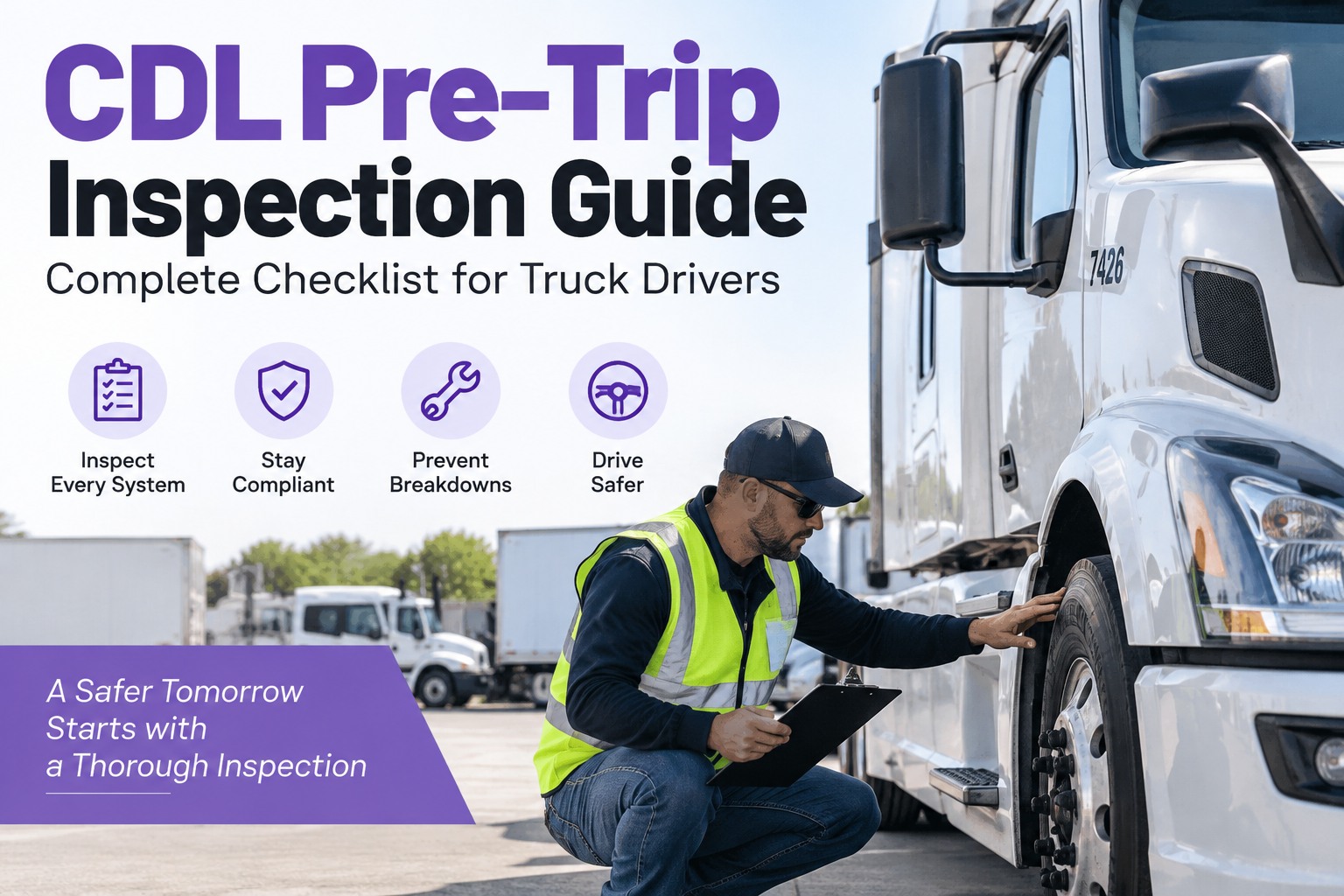
Whether you're exempt or not, these systems fail the same way. Work the vehicle in the same order every time, off then on, so nothing gets skipped. Tires, brakes, lights, and fluids cause the overwhelming majority of preventable farm-truck breakdowns. Start a free account to put this exact walk-around on every operator's phone.
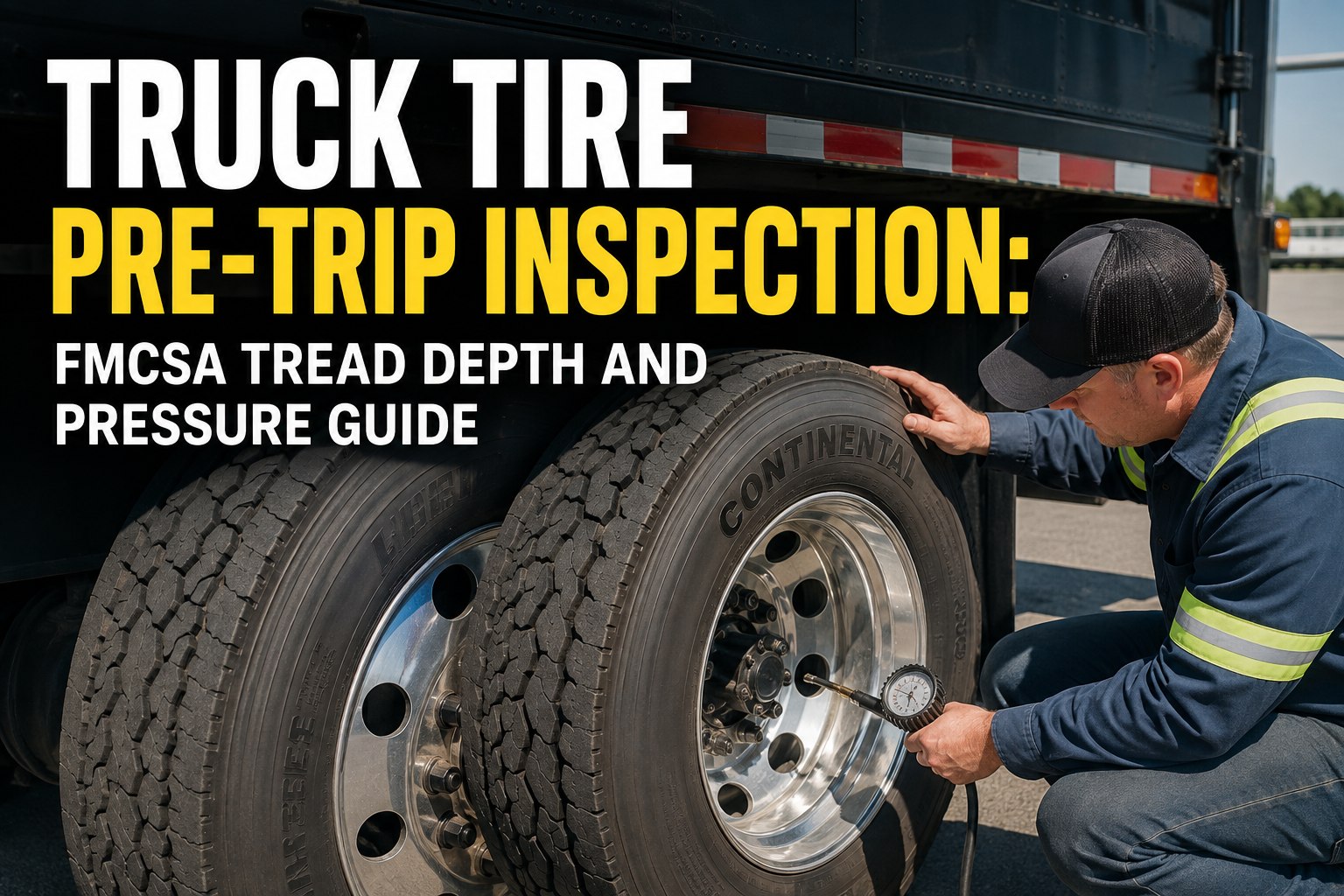
Tires & Wheels
- Adequate tread depth, no cuts or bulges
- Correct pressure — underinflation causes blowouts
- Lug nuts tight, rims undamaged
Brakes
- Firm pedal, no spongy feel or pull
- Air system holds pressure (if equipped)
- Extra attention when hauling heavy loads
Lights & Signals
- Headlights, brake lights & turn signals work
- Reflectors and markers clean and visible
- Trailer lights connected and functioning
Fluids & Engine
- Oil, coolant & brake fluid at correct levels
- No leaks pooling under the truck
- Belts and hoses free of cracks
Coupling & Hitch
- Fifth wheel or hitch locked and secure
- Safety chains and breakaway connected
- No excessive play or visible damage
Cab & Mirrors
- Mirrors clean, adjusted & intact
- Horn, wipers & gauges functional
- Seatbelt latches and retracts properly
A digital DVIR built for the farm
Truck Inspection & Maintenance turns this whole guide into a mobile pre-trip form — photo capture, auto out-of-service tagging, instant work orders, and audit-ready records for every grain hauler, livestock trailer, and flatbed. No hardware, no contracts. Sign up free and digitize your fleet today.
Part 2 — Load Securement by Cargo Type
This is where farm hauling gets specific, and where the driver carries full legal responsibility — you must inspect every load even if someone else secured it. Different cargo demands different securement, and the universal rule applies to all of them: distribute weight evenly, secure before leaving, and re-check after the first 50 miles and periodically after that. Reach our team to build cargo-specific checklists for your operation.
- Full-coverage tarps to prevent spillage
- Adequate tie-downs on the tarp system
- Hatches and gates latched and sealed
- Required number of rated tie-downs
- Check working load limits on each strap
- Stack to prevent shifting in transit
- Sound floors and adequate ventilation
- No overcrowding — protect animal welfare
- Check animals periodically en route
- Match tie-down type and rating to the load
- Chain heavy machinery at rated points
- Route around low clearances and bridges
Why Inspect If You're Exempt?
It's the question every farm operator asks — and the answer is simple. The exemption removes paperwork, not risk. Even FMCSA-exempt vehicles still injure people, total equipment, and create liability when they fail. Maintaining a farm truck to safety standards is essential regardless of inspection requirements, and a lack of knowledge won't save you from a fine if a roadside check finds a real violation. A consistent pre-trip habit pays for itself the first time it catches a bald tire or a loose hitch before the highway does.
Frequently Asked Questions
Do farm trucks need a DOT inspection?
Often no. A Covered Farm Vehicle that's registered with farm plates, operated by farm owners/employees/family, hauling ag goods to or from the farm, and not for-hire is generally exempt from annual DOT inspection, CDL requirements, and parts of Hours of Service — within a 150 air-mile radius. Cross that radius or haul non-ag cargo and normal rules apply. State details vary, so verify locally. Start a free account to track inspections regardless.
What is the 150 air-mile exemption?
Within 150 air-miles of the commodity's source — a farm, field, grain elevator, or sale barn — eligible drivers are exempt from certain HOS rules whether hauling loaded or running empty to pick up, as long as no non-agricultural cargo is involved. Beyond that radius, normal HOS rules return and ELD logging may apply. It hinges on geographic and time limits in 49 CFR §395.1(k).
Who's responsible for load securement?
The driver — every time, even if someone else loaded and secured the cargo. You must inspect every load before leaving, then re-check after the first 50 miles and periodically after that. Distribute weight evenly, match tie-downs to the cargo type and their rated working load limits, and route around low clearances. Securement failures are among the most preventable farm-truck accidents. Talk to our team about cargo checklists.
How is livestock securement different?
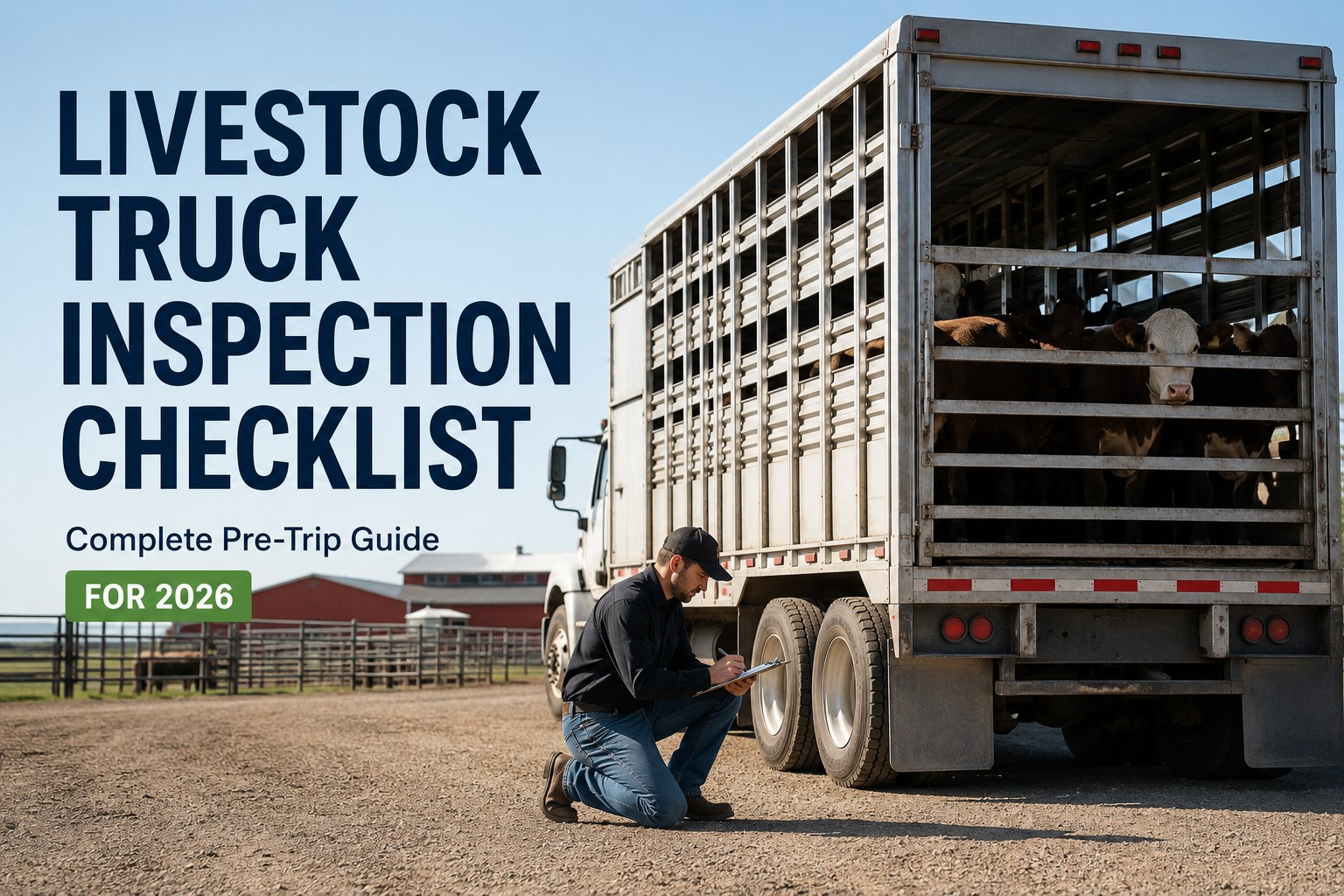
Livestock is a living load, so the priorities shift to welfare: sound trailer floors, adequate ventilation, and no overcrowding, plus checking the animals periodically during transit. Stress and injury during transport cause real losses, and modern trailers add climate control and monitoring. The pre-trip should confirm floor integrity and ventilation before any animals are loaded.
Should I still keep inspection records if I'm exempt?
Yes. Even when annual DOT inspection isn't required, maintaining records protects you in a roadside check, an insurance claim, or an accident investigation — and a lack of documentation won't prevent a fine for a real violation. Digital DVIRs make this effortless: timestamped, photo-backed, and instantly retrievable. Sign up free to keep audit-ready records automatically.
Can my operators do the pre-trip themselves?
Absolutely — that's the point. A trained operator completes the full vehicle walk-around and load check in about five minutes before each trip. Repairs and deeper maintenance go to a qualified mechanic. The key is making defect reporting one tap, so a problem spotted in the yard reaches the shop instead of getting lost. That habit is what turns a checklist into real safety.
Make every trip start with a passed inspection.
Truck Inspection & Maintenance turns this agricultural pre-trip guide into a digital DVIR — vehicle and load checks, photo capture, auto out-of-service tagging, instant work orders, and audit-ready records for every farm truck. Free for up to 3 vehicles, no hardware, no contracts.