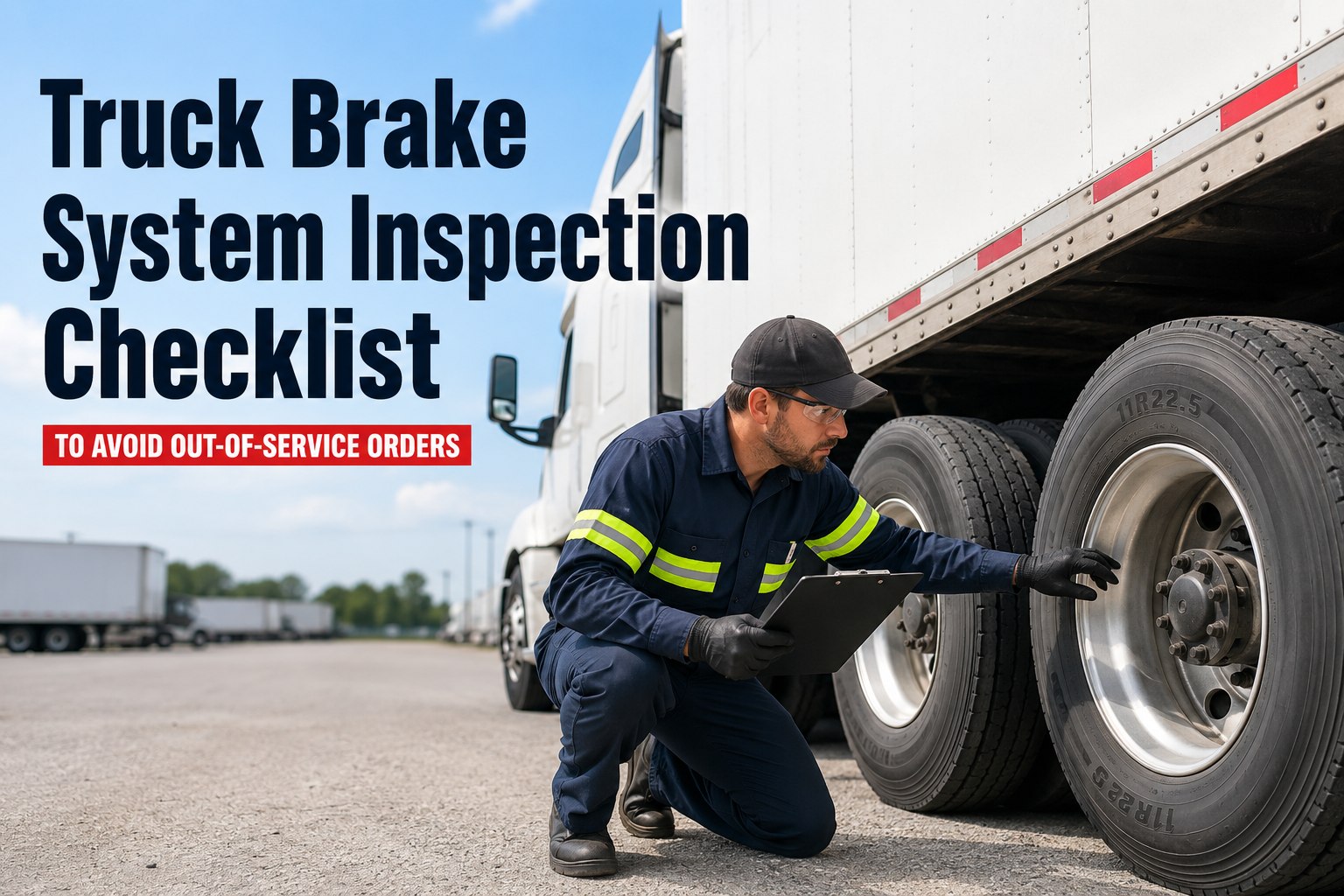
Out-of-adjustment brakes are among the most common violations that park a truck at the roadside — and the one defect you can't eyeball. You have to measure it: the pushrod stroke at full brake application, compared against the limit for that exact chamber. A quarter inch past the limit makes a brake defective, and if a fifth of the truck's brakes are defective, the whole rig is out of service. This checklist walks the measurement the way an inspector does it, the standard and long-stroke limits by chamber size, and the chamber condition checks that go with them. Start free and put brake-stroke checks on every inspection.
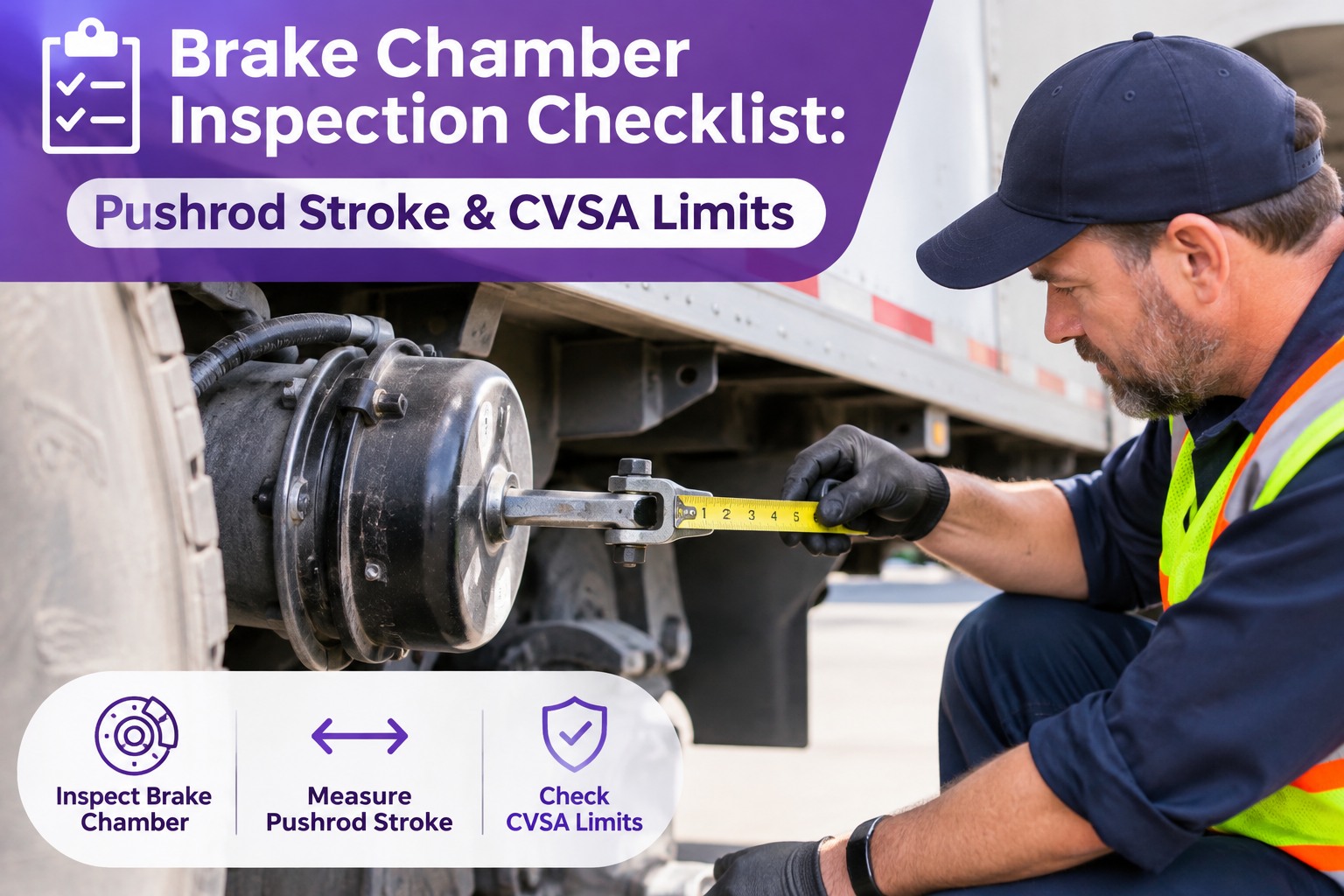
Brake Chamber Inspection Checklist: Pushrod Stroke & CVSA Limits
How to Measure Applied Pushrod Stroke
The number only means something if you get it the way an inspector would. Measure the travel between the pushrod at rest and at full application, then compare it to the chamber's limit.
Know Your Chamber: Standard vs Long-Stroke
The limit is useless if you read it from the wrong column — a long-stroke chamber's limit can be a half inch longer than a standard one of the same size, and inspectors have cited trucks wrongly by mixing them up. Identify the type before you judge the number.
The Brake Chamber Inspection Checklist
Run it one chamber at a time, wheel by wheel. Tap each item as you clear it; any brake that fails becomes a defect, not a memory.
A Creeping Stroke Caught Early Is a Slack Adjuster, Not a Tow
Pushrod stroke drifts out slowly — the brake that's fine this month is a violation next quarter. Measure it on the PM, log the number per wheel, and you catch the trend before an inspector catches the truck.
Why Fleets Track Brake Stroke in Software
Frequently Asked Questions
Chock the wheels, release the spring brakes, build both air tanks to 90–100 psi and shut the engine off. Mark the pushrod with the brakes released, have someone fully apply and hold the brakes, measure again, and subtract — the difference is the applied stroke. Compare it to the chamber's limit. Book a demo to log stroke measurements per wheel.
A standard Type 30 clamp-type chamber has a 2-inch readjustment limit; the long-stroke Type 30 allows 2½ inches. The Type 30 is the most common chamber on trucks, which is exactly why mixing up standard and long-stroke limits is a frequent and costly mistake. Book a demo to store chamber types per truck.
A brake measuring a quarter inch or more past its readjustment limit is defective, and when 20% or more of the vehicle's service brakes are defective, the truck is placed out of service. On a five-axle tractor-trailer with ten brakes, that's just two out-of-stroke brakes. Book a demo to track defective-brake counts.
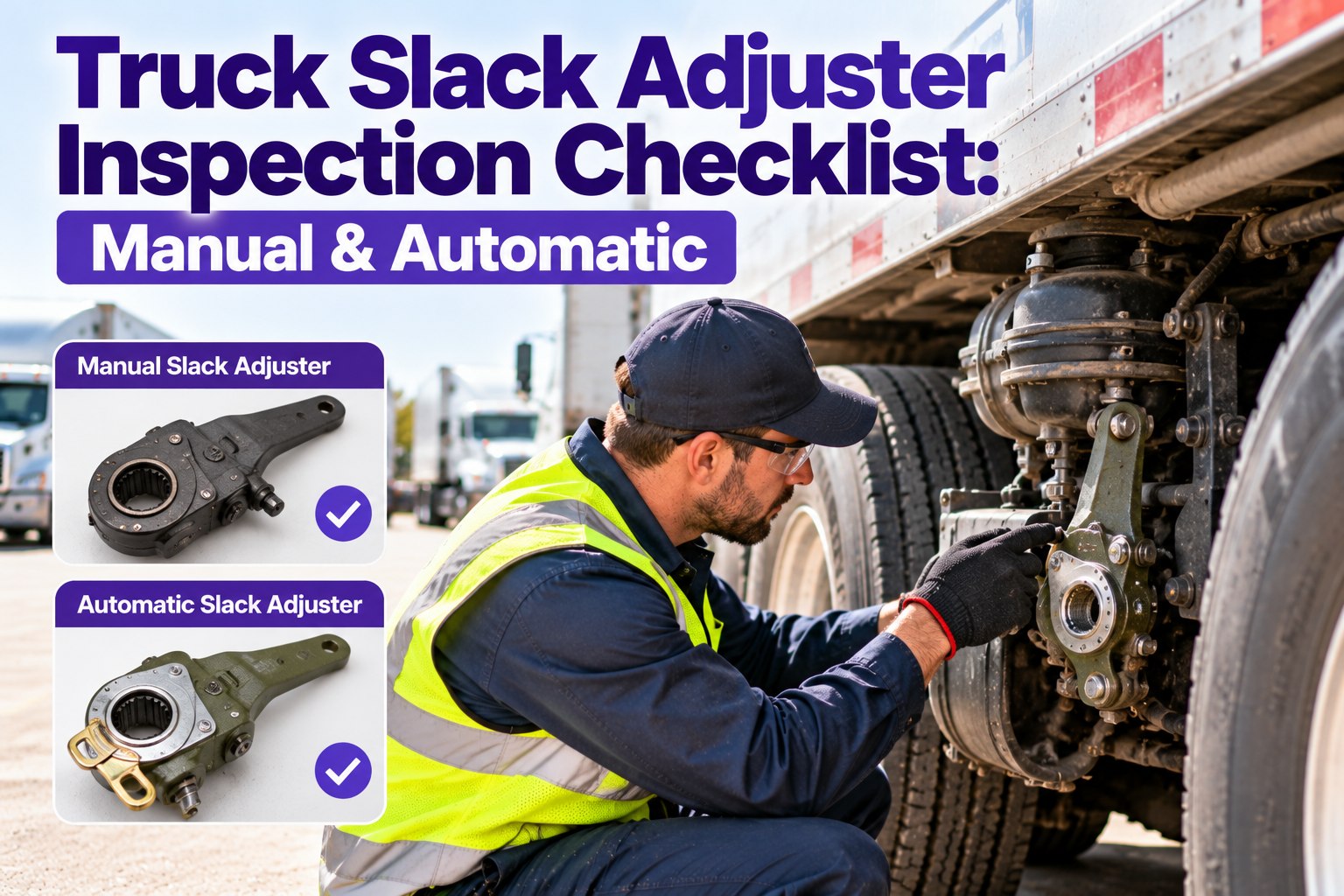
No — an automatic slack adjuster that's out of stroke is telling you something is wrong, usually a worn adjuster, foundation-brake issue or installation fault. Cranking it back in hides the cause and it drifts out again. Diagnose the root cause, then confirm the stroke with a fresh measurement. Book a demo to track slack-adjuster faults.
Catch the Stroke Before the Inspector Does
Truck Inspection & Maintenance Management Software puts the pushrod-stroke check on every brake PM, stores each chamber's type and limit, trends the number per wheel, and turns an out-of-stroke brake into a scheduled repair — so the 20% rule never parks your truck.