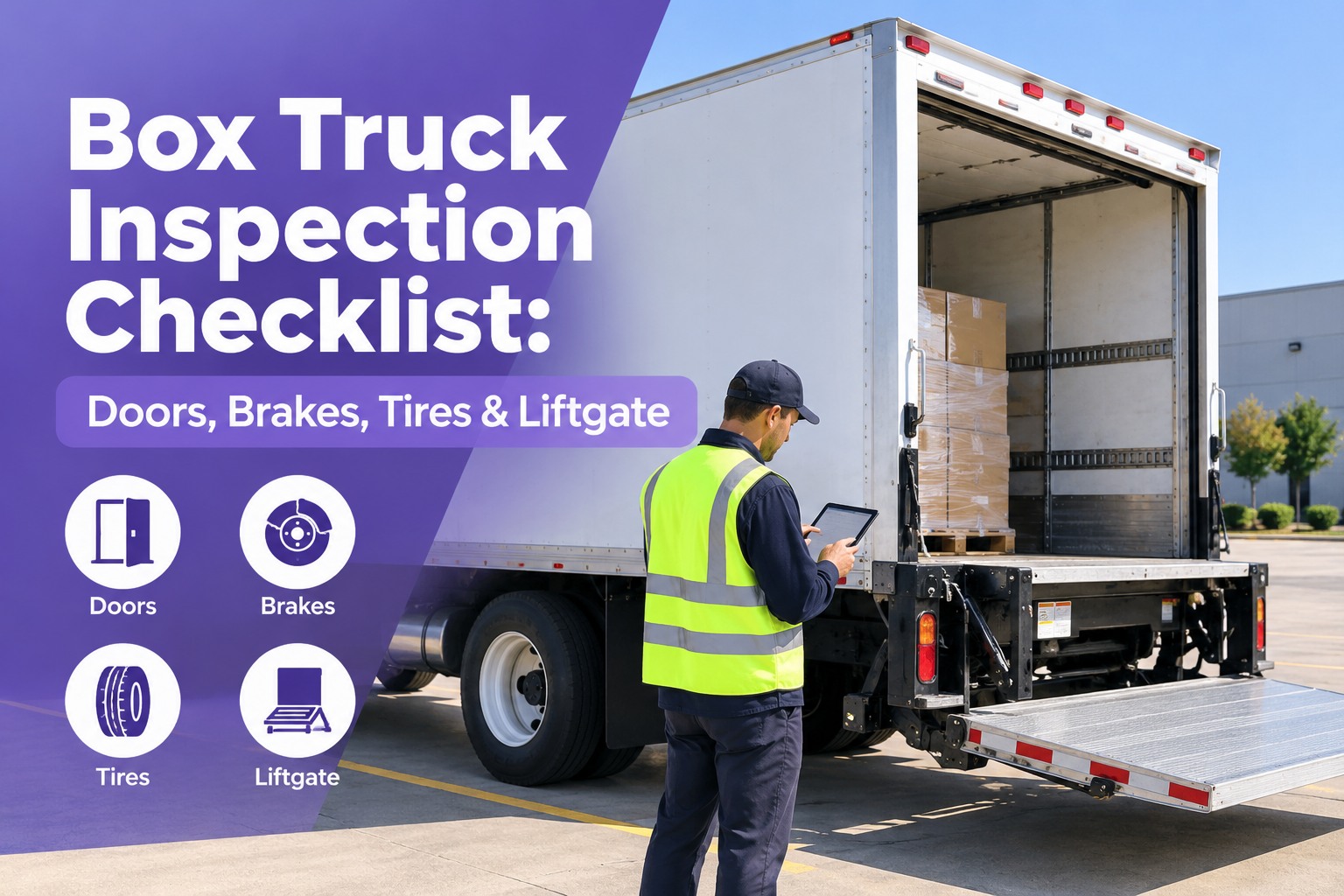
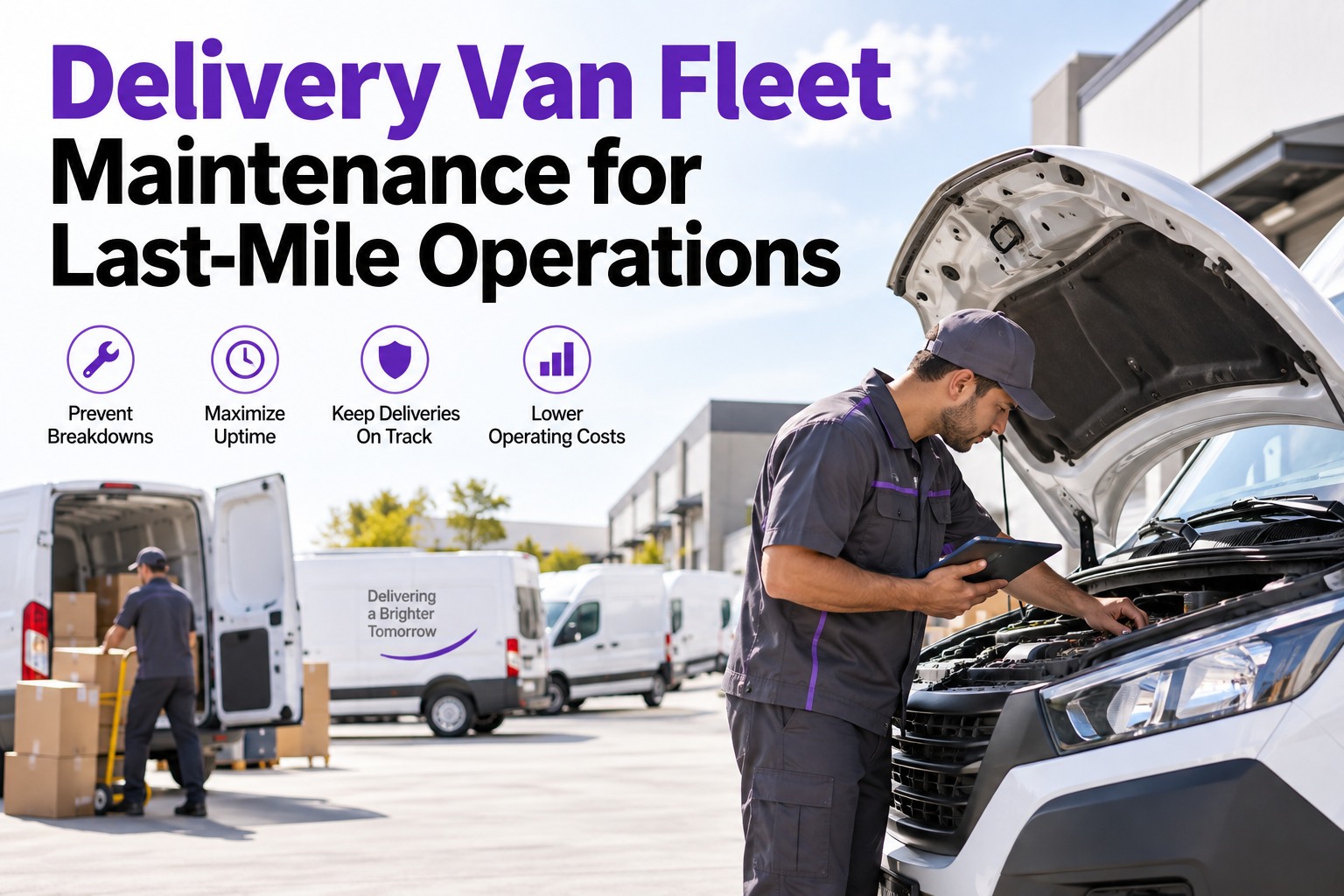
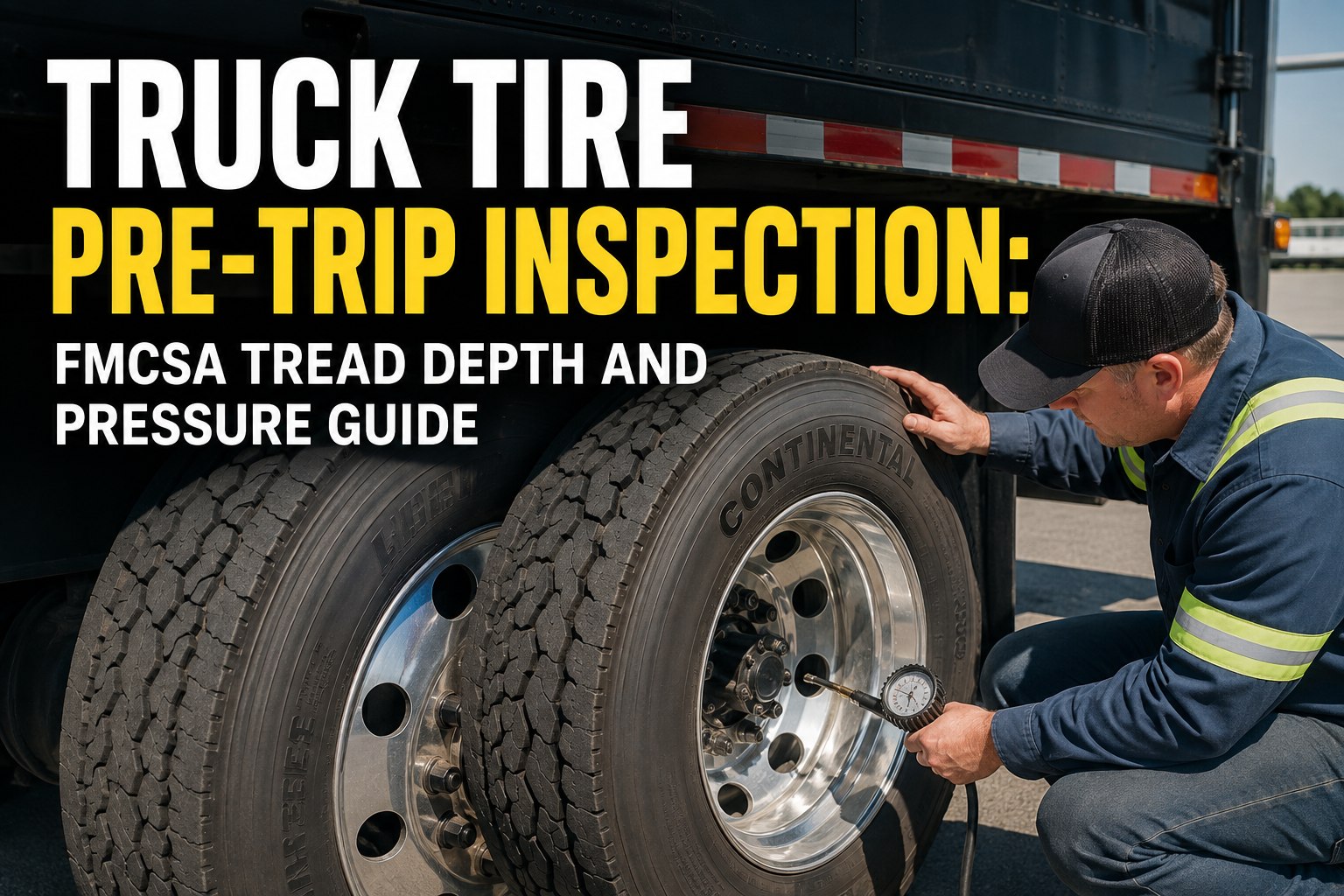
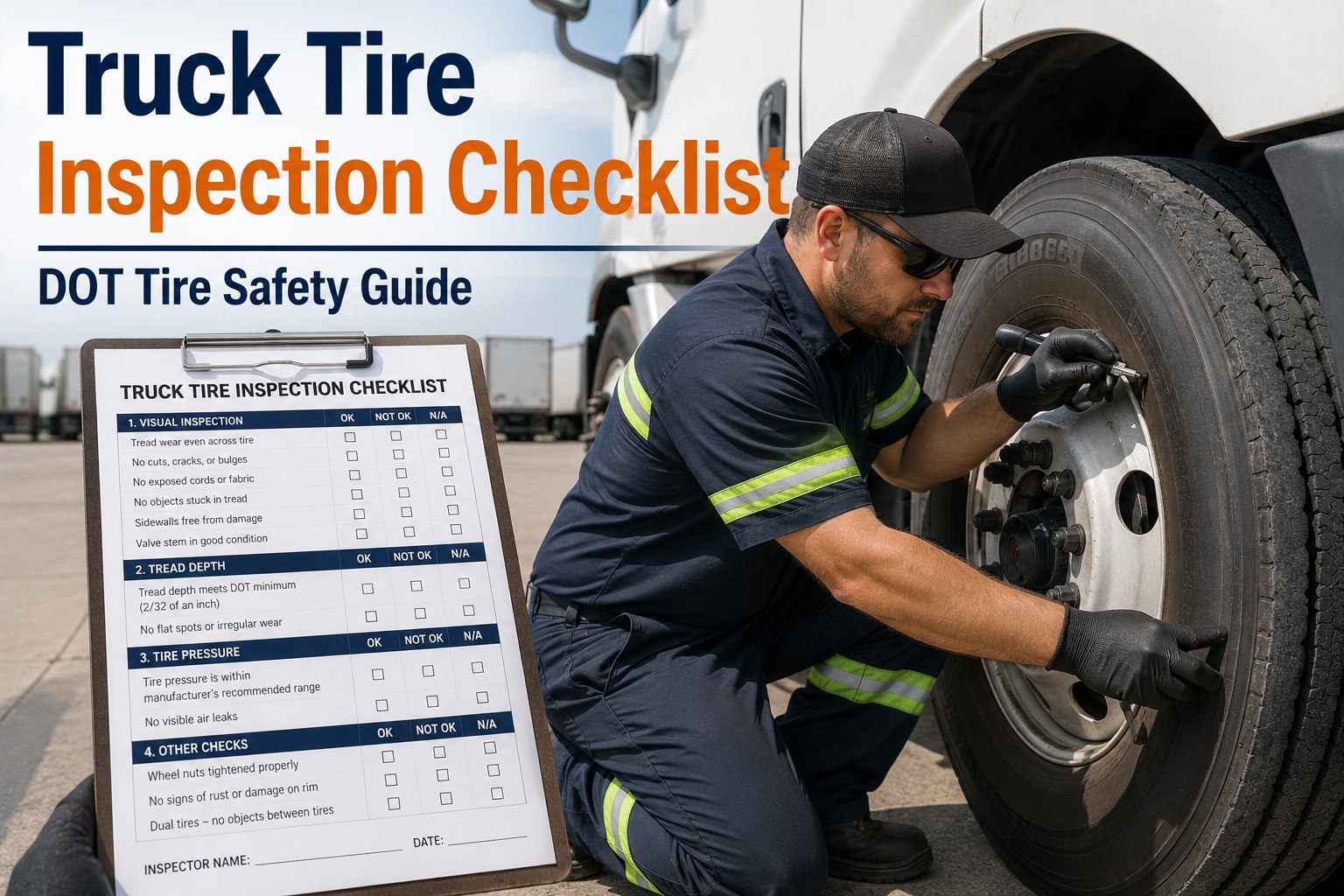
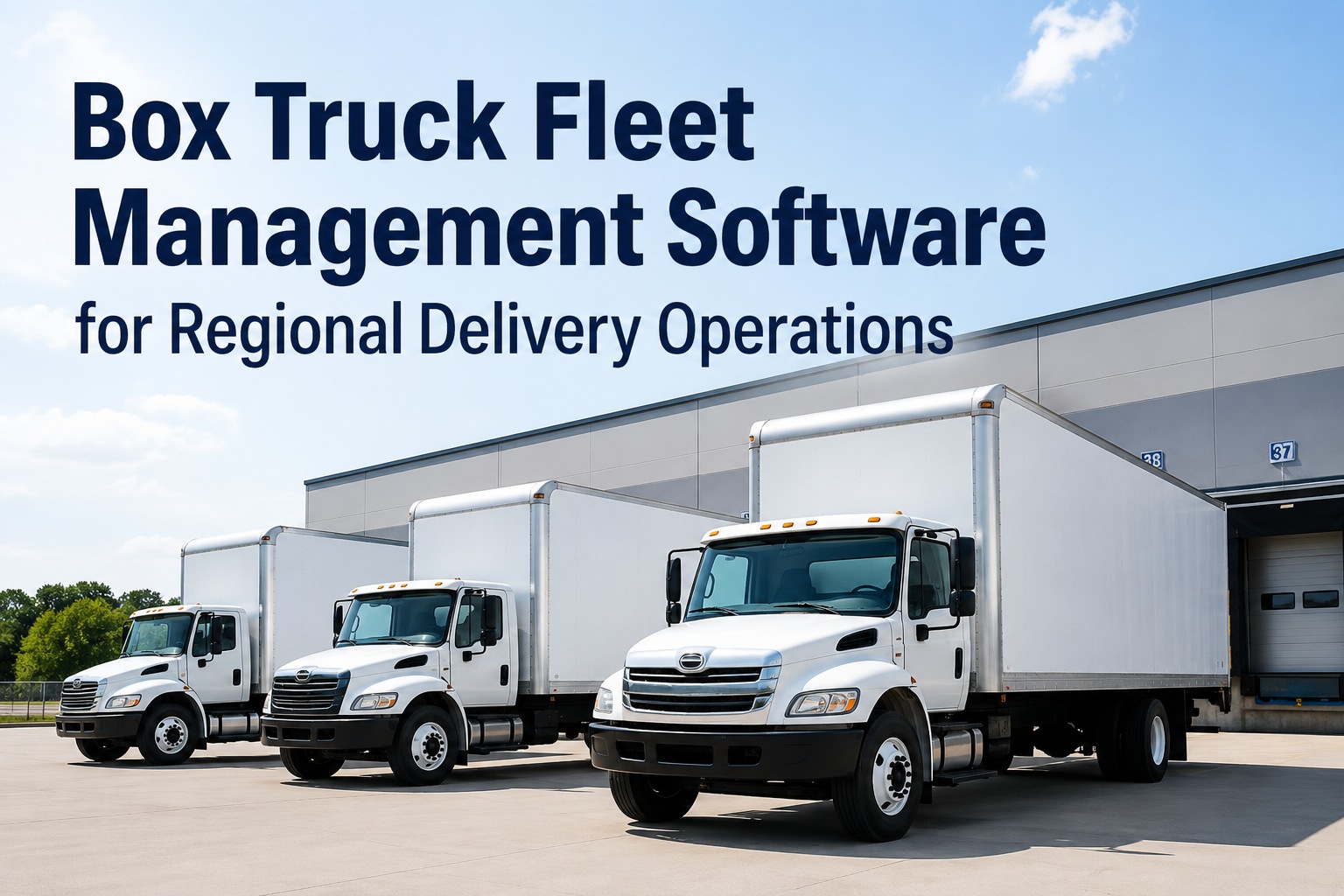
A box truck's odometer lies about how hard it works. A long-haul tractor might run 500 highway miles on a quiet day; a last-mile box truck covers a fraction of that but opens its cargo door forty times, cycles the liftgate at every stop, and stabs the brakes in stop-and-go traffic all day long. The wear that strands a delivery route isn't measured in miles — it's measured in cycles, and the parts that cycle most are the ones a mileage-based inspection misses. This checklist is built for how a box truck actually gets used. Start free and put this box-truck check on every unit.
A box truck doesn't fail on the highway — it fails at the curb, mid-route, with a dozen stops still to make. Truck Inspection & Maintenance Management Software turns the box-truck walk into a guided check built for high-cycle delivery work, flags a worn liftgate, a sticking door, or a soft brake the moment it's logged, and routes it to a work order — so the defect is caught at the depot, not discovered at the fourth stop.
The reason a box truck needs its own inspection is simple: the parts that wear fastest are cycled by stops, not distance. A route with heavy stop density punishes these far beyond what the mileage suggests.
DozensLiftgate cyclesUp and down at nearly every stop — hydraulic, electrical, and structural wear that mileage never captures.
40+Door openingsThe roll-up or swing door worked open and shut all day — rollers, springs, seals, and latches take the load.
HundredsBrake applicationsStop-and-go delivery traffic means brakes work far harder per mile than any highway run.
Work it from the cargo end — the systems unique to a box truck first, then the running gear a delivery route hammers. Tick each item you verify; anything you can't tick is a defect to fix before the truck takes a route.
No single component ends more delivery routes than the liftgate. It cycles constantly, carries the load and often a person, and when it quits the truck can't deliver — so it earns its own close look every day.
1Platform & hingesCrack, bend, and wear points that carry the load and fold every cycle
2HydraulicsCylinders, pump, hoses, and fluid — the system a leak takes down fastest
3ElectricalBattery feed, solenoid, and controls that cycle the gate hundreds of times
4Safety featuresCutoff switch, warning flags, and platform latch that protect the operator
The daily load test tells you most The single most useful liftgate check is the one that mimics the job: raise the platform with a rated load, stop, and watch for sag or creep. A gate that drifts under load has a hydraulic or valve fault building — the kind that strands a route mid-shift and can let a load fall on a foot. Truck Inspection & Maintenance Management Software makes the load-hold check a required, photo-logged liftgate step, so a gate that's starting to creep becomes a scheduled repair instead of a curbside breakdown.
Where Box Trucks Fail the Route
Delivery duty breaks specific things first. If inspection time is short, these are the ones that end a route.
Liftgate hydraulicsLeaking cylinders or a tired pump — the top reason a loaded box truck can't deliver.
Roll-up door rollers & springsWorn from constant cycling until the door binds, jumps the track, or won't hold up.
Brakes from stop-and-goDelivery traffic wears linings far faster than the mileage would ever suggest.
Tires on curbs & debrisCurbing and city debris cut and bruise tires that a highway truck never meets.
Turn the Box-Truck Walk Into a Logged, Route-Ready Check
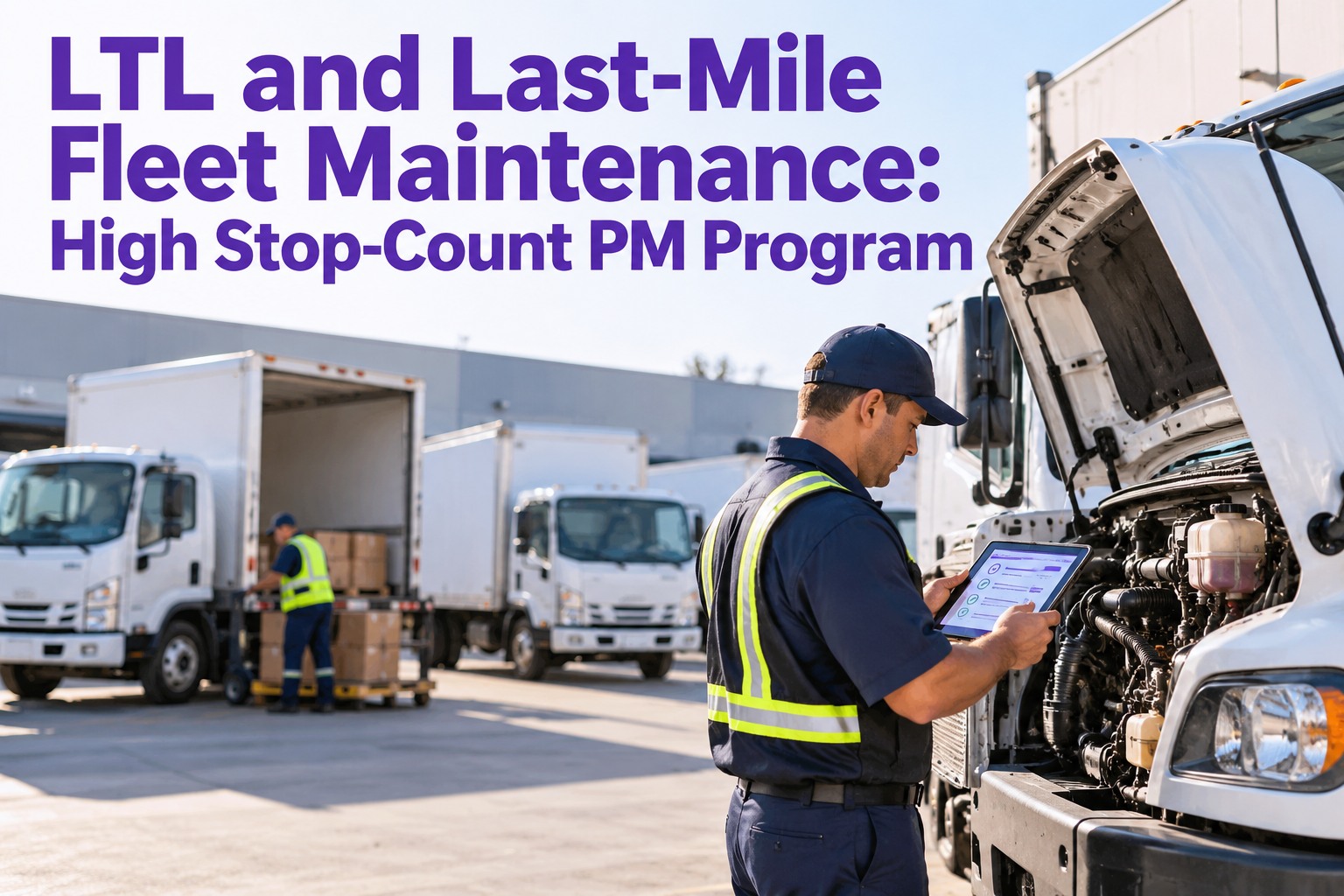
Truck Inspection & Maintenance Management Software puts every item above on the driver's phone as a guided box-truck inspection, gives the liftgate and cargo door their own detailed steps with a load-hold check, and routes any defect straight to a work order before the truck takes a route. It keeps the liftgate and high-cycle parts on a service schedule geared to stop count, not just mileage — so the things a delivery day actually wears get maintained on time.
Does a box truck need a daily inspection if the driver has no CDL?
A box truck under 26,001 lbs can be driven without a CDL, but if it's a commercial motor vehicle used in interstate commerce over 10,001 lbs, the FMCSA pre-trip and DVIR expectations still apply — the license class doesn't change the vehicle's duty to be safe. Many last-mile operations run a daily walkaround as company policy regardless, because a box truck's high-cycle parts fail often enough that skipping the check costs more routes than it saves time.
Why does the liftgate get its own inspection?
Because it's the part most likely to end a route and most likely to hurt someone. A liftgate cycles dozens of times a day carrying the load and often a person, so its hydraulics, structure, and safety controls wear fast and matter a lot. A gate that leaks, sags under load, or has a failed cutoff switch is both a breakdown risk and an injury risk — which is why it deserves a dedicated daily look, not a single line on a general checklist.
What's the most important liftgate check?
The load-hold test: raise the platform with a representative load, stop, and watch whether it holds steady or drifts down. Creep or sag means a hydraulic or valve problem is developing, and that's exactly the fault that fails mid-route or lets a load settle unexpectedly. Checking it empty tells you the gate moves; checking it under load tells you whether it can be trusted to do the job all day.
Why inspect by cycles instead of mileage?
Because a box truck's hardest-working parts are driven by stops, not distance. A low-mileage delivery truck can have a worn-out liftgate, binding door, and thin brakes while the odometer still looks young, because each of those is cycled by every stop on a dense route. Scheduling service and inspection around stop count and duty cycle catches that wear on time, where a mileage-only schedule would wait for a failure. Contact us to set box-truck checks across your delivery fleet.
Door · Gate · Brakes · Route-Ready
Keep Every Box Truck Ready for a Full Route
Truck Inspection & Maintenance Management Software runs this full box-truck checklist as a guided inspection, gives the liftgate and cargo door the detailed checks their constant cycling demands, routes any defect to a work order, and schedules service around stop count instead of mileage. Delivery and last-mile fleets use it to stop losing routes to a curbside breakdown — and to keep every box truck earning its full day.