A long pushrod stroke is the most common brake defect at the roadside — and the slack adjuster is where it shows up first. The fix depends entirely on one thing: whether the adjuster is manual or automatic. Get that wrong and you can turn a healthy brake into an out-of-service one. This checklist walks both types, with the measurements and the one rule that matters most. Start free and log every brake inspection on record.
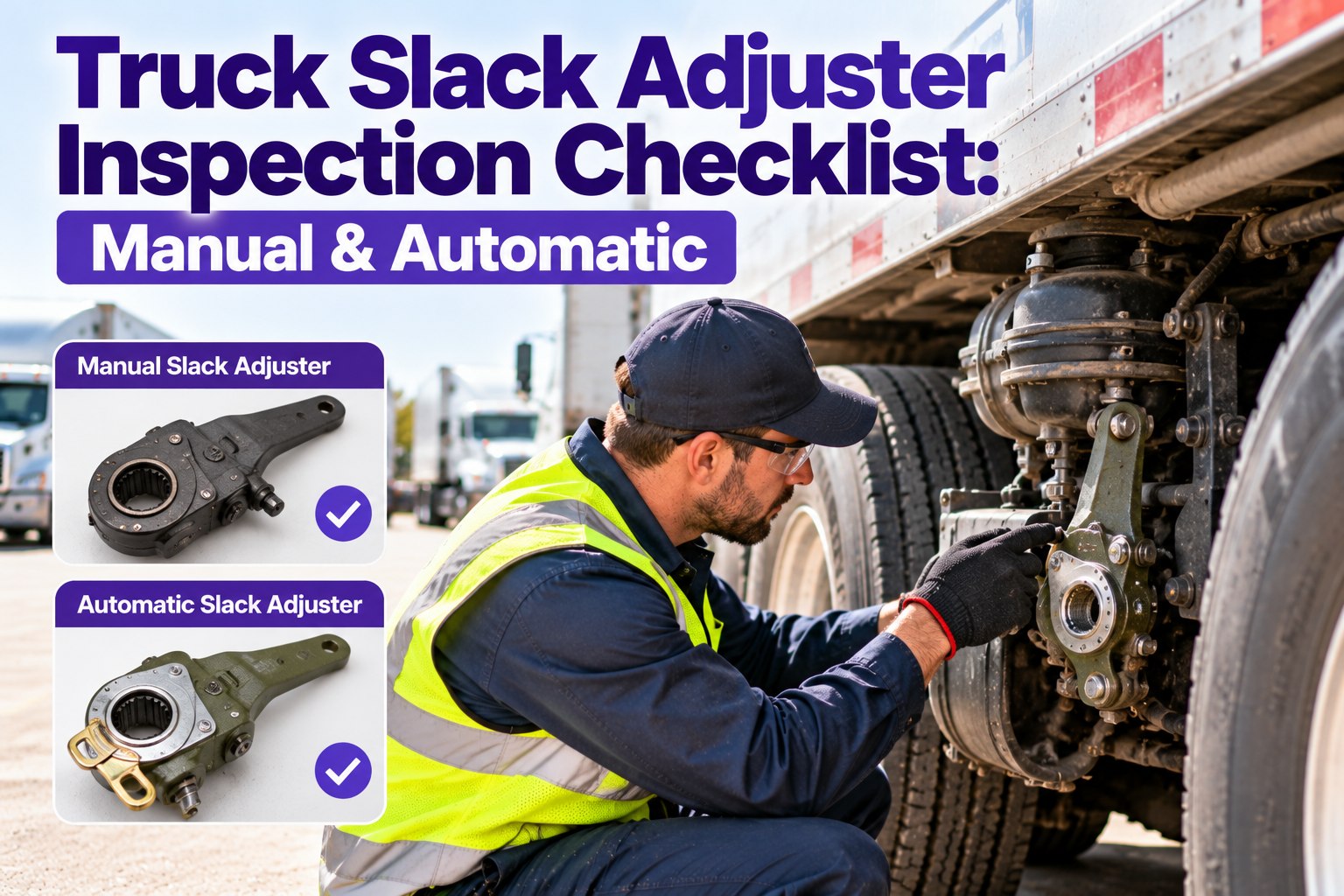
Truck Slack Adjuster Inspection Checklist: Manual & Automatic
First, Know Which Adjuster You're Looking At
The entire inspection branches on this. A manual adjuster is set by hand with a wrench; an automatic one self-adjusts as the lining wears, and you diagnose it, not adjust it. Nearly every truck built since the mid-1990s runs automatic — but older units, trailers and mixed fleets still carry manual. Identify the type before you touch anything.
- Adjusted by hand at the bolt with a wrench
- No self-adjusting mechanism inside
- Common on older trucks and some trailers
- Applied stroke limit is tighter — about 1¾ in
- Needs a scheduled manual adjustment as linings wear
- Self-adjusts for lining wear on every brake application
- Has an actuator mechanism — never routinely hand-set
- Standard on tractors since 1994, trailers since 1995
- Applied stroke limit about 2 in on a Type 30 chamber
- A long stroke means diagnose the brake, not adjust it
If an automatic slack adjuster shows a long stroke, that is a warning — not an adjustment job. Cranking it back by hand gives a false sense that the brake is fixed, hides the real fault, and shortens the adjuster's life. Excess stroke on an auto slack means something in the foundation brake needs investigating.
How to Measure Applied Pushrod Stroke
Stroke is the heart of the check — too much travel means the brake isn't applying fully. Measure it the same way every time, because pressure changes the reading by roughly 0.1 in for every 10 psi.
At the slack adjuster itself, there's a quick free-play check too: with the parking brake released, pull firmly on the adjuster by hand. More than about one inch of movement at the pushrod attachment means it needs attention. Book a demo to see stroke readings logged against each truck.
Stroke Limit & Out-of-Service Reference
Know the numbers before you crawl under the truck. These are the thresholds a roadside inspector uses — a stroke over the limit is an out-of-service brake, and enough of them park the whole vehicle.
From a Long Stroke to a Brake Work Order in Seconds
When a driver flags a slack adjuster over the limit, Truck Inspection & Maintenance Management Software opens a brake work order with the truck ID, the stroke reading and a photo attached — so the shop acts on it before the truck rolls, not after a roadside inspector does.
The Slack Adjuster Inspection Checklist
Work through each group in order. The first group applies to every adjuster; the next two split by type. Tick each item as you confirm it — Truck Inspection & Maintenance Management Software keeps the completed check and any defect on the truck's record.
A Long Stroke Is the Brake's First Warning, Not Its Last
Catch it on a walkaround and it's a scheduled bay visit. Catch it at the scale house and it's a vehicle out-of-service order against your CSA profile. Truck Inspection & Maintenance Management Software puts the stroke check in every driver's hand and keeps the result on record.
Why Track Slack Adjuster Checks in Software
A clipboard note of "brakes OK" proves nothing in an audit. A logged stroke reading, a photo of the adjuster and a dated work order prove the brake was inspected and the defect was handled. Start free and build an audit-ready brake history on every truck.
Frequently Asked Questions
Check the Slack Adjuster the Right Way, Every Truck
Give drivers and technicians a guided manual-and-automatic slack adjuster check that measures the stroke, respects the one rule, and turns a long reading into a brake work order on the record.