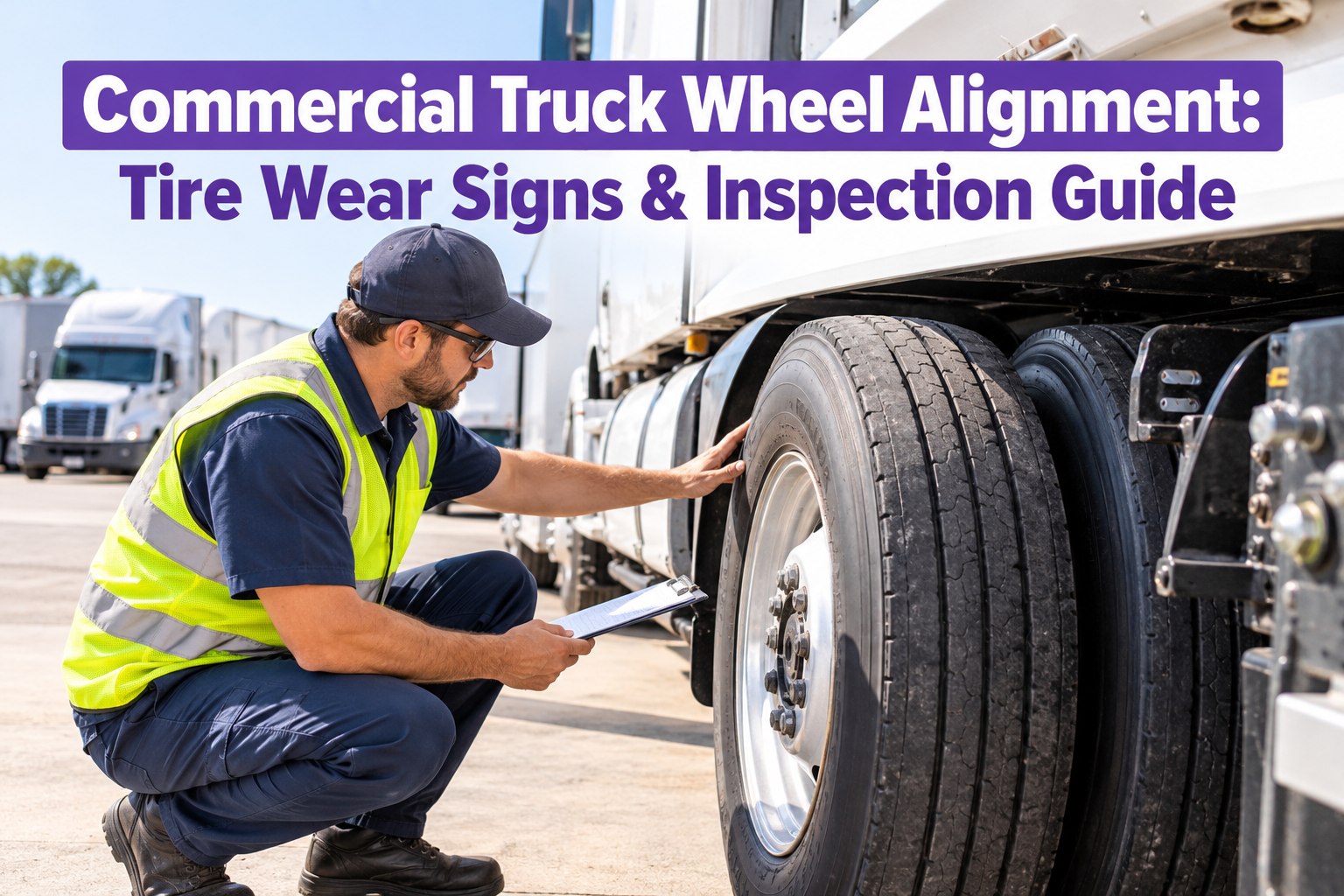
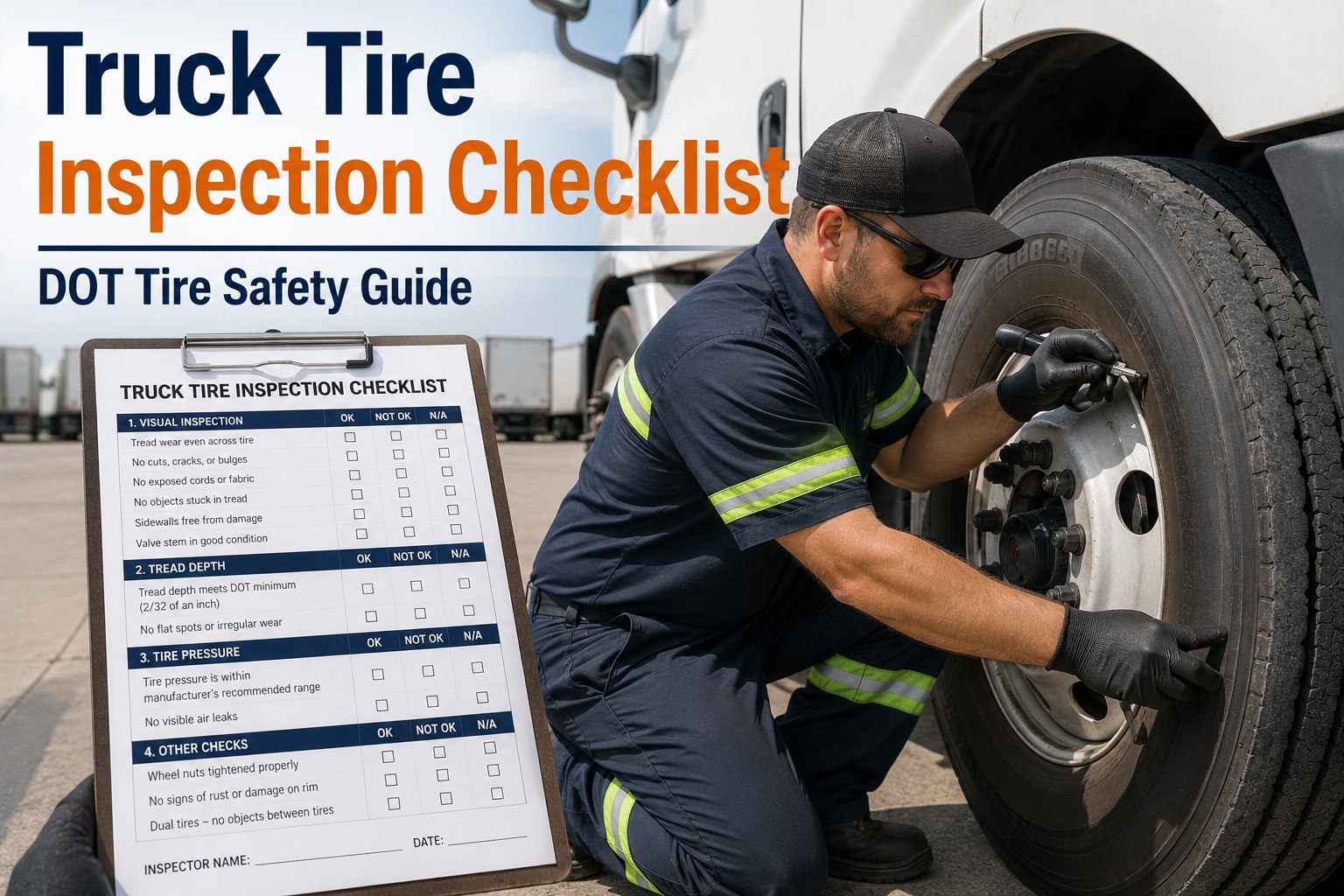
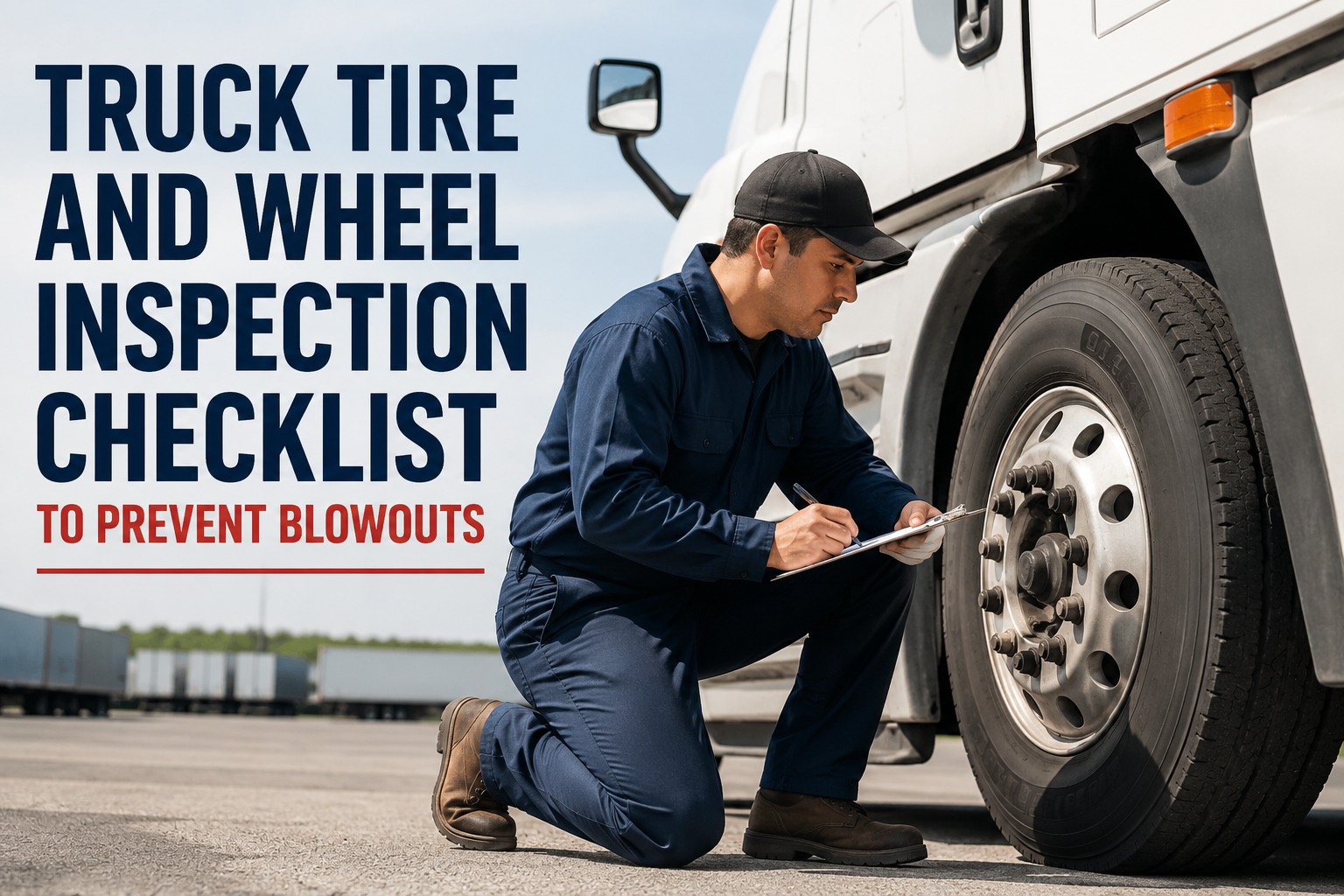
Your tires are the cheapest diagnostic tool on the truck — they write down exactly what's wrong with the alignment, you just have to read the tread. Feathered ribs mean one thing, a worn inner shoulder means another, and a scalloped surface points somewhere else entirely. Catch the pattern early and an alignment saves the tire; miss it and you're scrapping a $250–$600 steer tire with most of its life left. This guide shows you how to read each wear pattern back to its cause. Start free and log tire-wear patterns against every axle.
Read the Tread · Find the Fault
Commercial Truck Wheel Alignment: Tire Wear Signs & Inspection Guide
Misalignment doesn't show on a gauge — it shows on your tires, weeks before you'd otherwise catch it. Truck Inspection & Maintenance Management Software records each tire's wear pattern against its wheel position, so a feathering steer tire or a one-sided inner edge becomes a flagged alignment job instead of a tire you replace twice.
1/16"of toe error can feather a tire within 15,000 miles
21.4%of 2025 vehicle violations were tire-related
$150–300a 3-axis alignment vs. a scrapped steer tire
The Tire-Wear Decoder
Six patterns cover almost everything you'll see on a commercial tire. Each one points at a specific fault — alignment, inflation, or a worn part. Match what's on the tread to the row below, and you've diagnosed the truck before it's on the rack.
Wear patternWhat it looks likeWhat's causing it
Feathering
Ribs sharp on one edge, smooth on the other — you feel it running your hand across the tread
Toe misalignment. Toe-in feathers the outer rib edges; toe-out feathers the inner
Inside-edge wear
Inner shoulder worn down, sometimes to the belt, while the outer tread looks fine
Negative camber — worn ball joints, sagging springs, a bent axle, or loose wheel-end parts
Outside-edge wear
Outer shoulder rounded off, inner tread still full
Positive camber — sagging suspension, worn ball joints, a bent axle, or loose fasteners
Cupping / scalloping
Scalloped high-and-low spots around the tread face
Worn shocks most often, plus bad wheel bearings, loose ball joints, or imbalance
Center wear
Center ribs worn below the shoulders (3/32"+ difference)
Over-inflation for the actual load the axle carries
Both-shoulder wear
Both outer edges worn, center tread intact
Under-inflation or overloading the axle
The split matters: feathering and edge wear are alignment and mechanical faults; center and both-shoulder wear are inflation. Fix the cause, not just the tire — a fresh tire on an uncorrected alignment wears out the same way.
The Three Angles an Alignment Sets
A heavy-duty alignment reads three angles. You don't need to set them yourself, but knowing what each one controls tells you which tire pattern it's responsible for — and which ones an alignment won't fix.
TOEToe
How far the wheel fronts point in (toe-in) or out (toe-out) versus straight ahead. The angle most responsible for scrubbing tread off.
Tells on the tire as: feathering
CAMBERCamber
The inward (negative) or outward (positive) tilt of the wheel at the top. Decides which shoulder carries too much load.
Tells on the tire as: inside / outside edge wear
CASTERCaster
The forward or rearward tilt of the steering axis. Governs straight-line stability and steering return, more than tread wear.
Tells on the truck as: wander, poor return
The number that makes the case Just 1/16" of toe misalignment across the wheel can feather a steer tire visibly within 15,000 miles. Left alone, that turns a tire that should run toward 200,000 miles into one scrapped every 15,000–40,000 — the single most expensive thing a small, invisible angle error quietly does to a fleet.
Beyond the Tread — The Wheel-End Checks That Mimic Misalignment
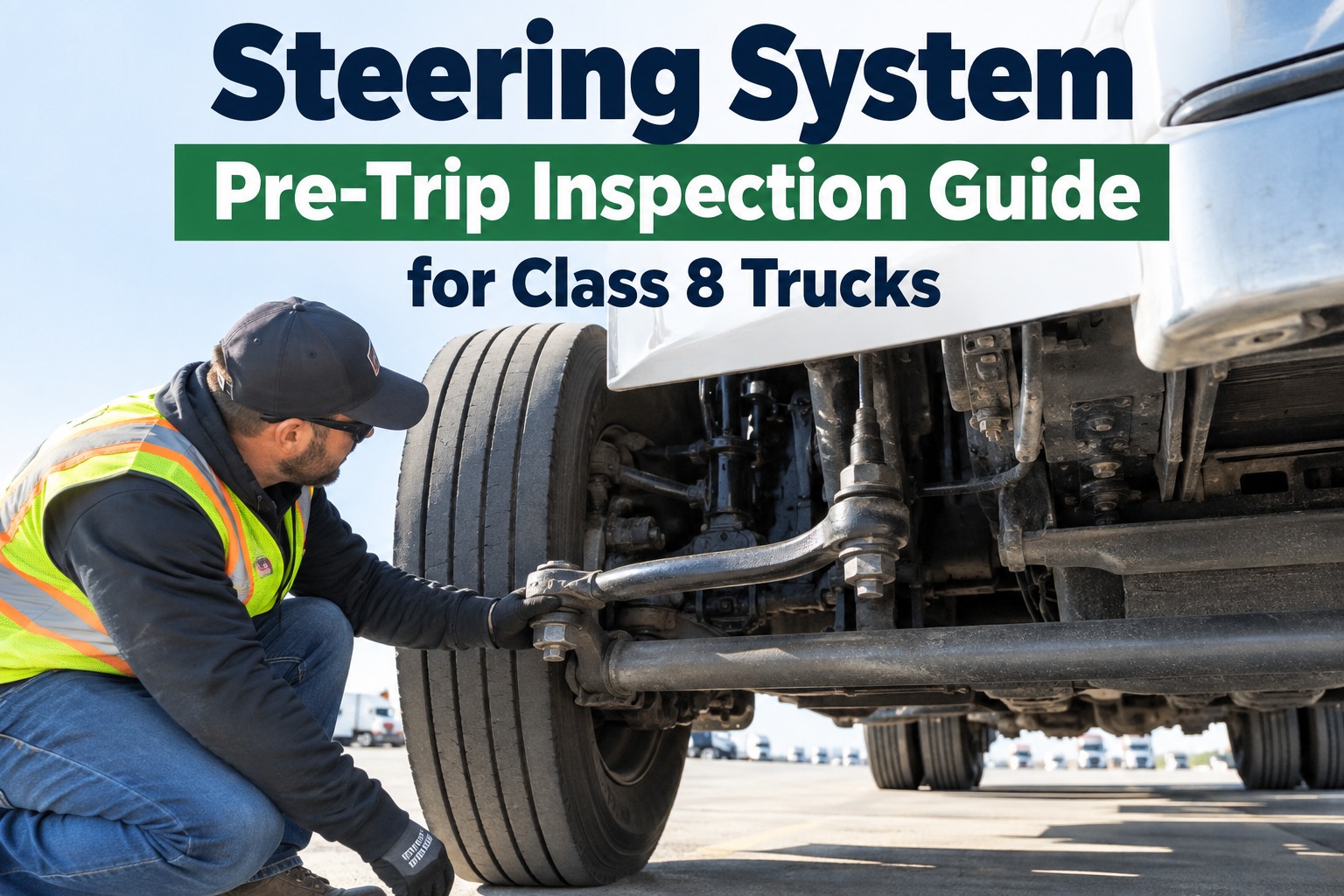
Not every alignment-looking wear pattern is the alignment. Worn wheel-end parts throw the same patterns and have to be ruled out first — aligning a truck with a loose kingpin just resets the clock on the same wear.
01Kingpin playVertical movement over 0.010" points to thrust bearing or bushing wear — mimics camber wear.
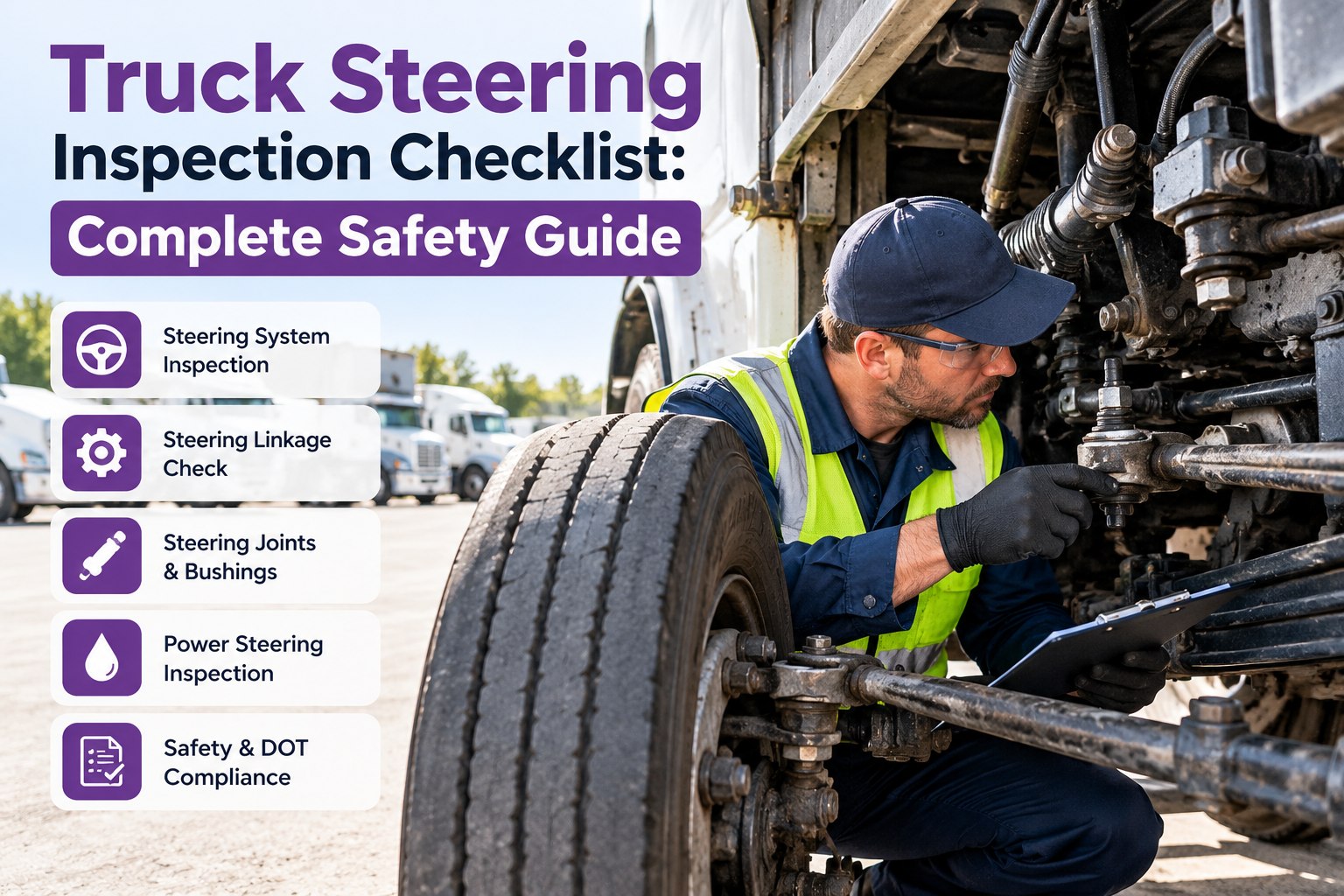
02Ball joints & tie rodsLooseness here shifts camber and toe under load, feathering and edging tires.
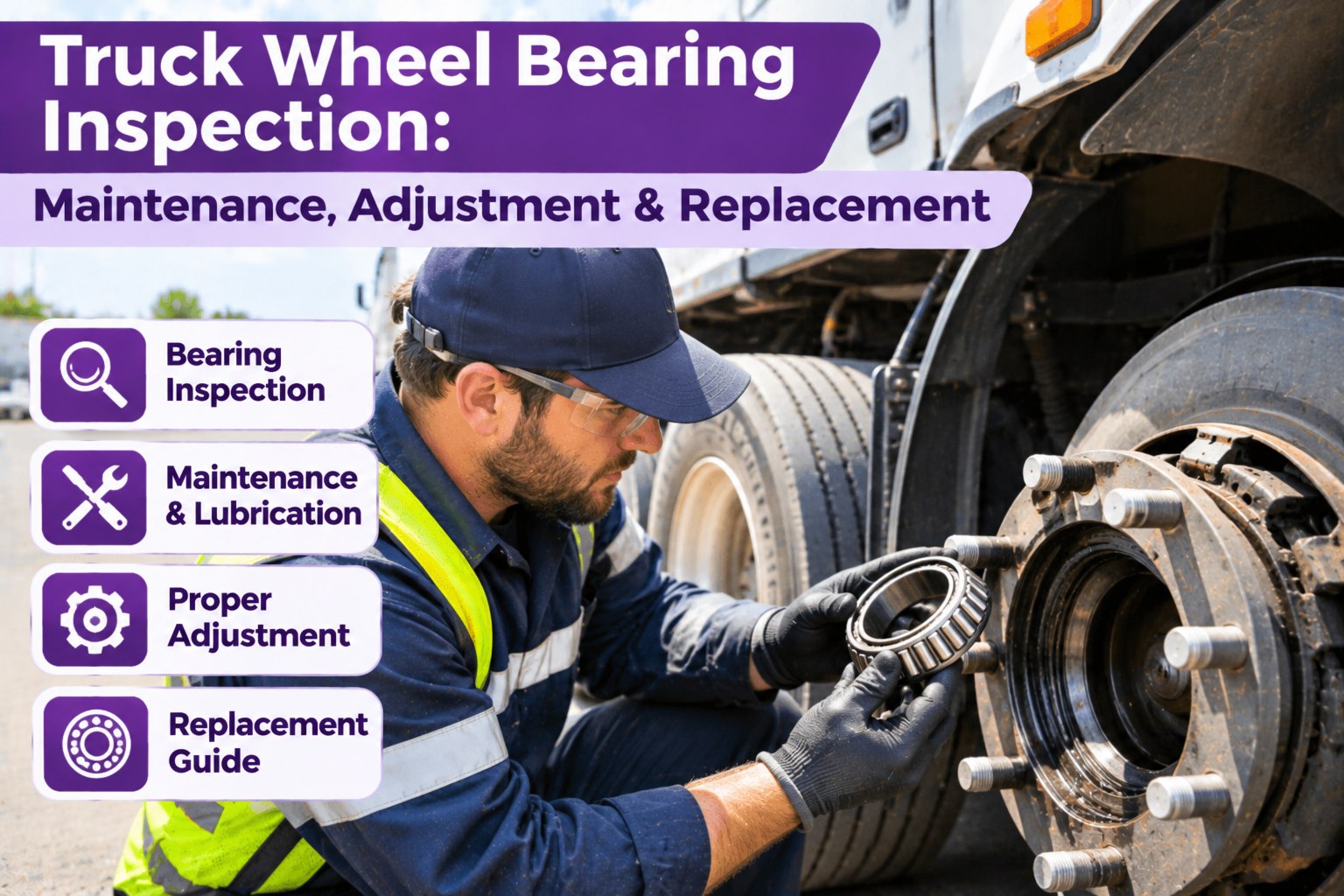
03Wheel bearingsPlay or roughness lets the tire wobble — a common cause of cupping blamed on alignment.
04Shocks & springsWorn shocks cup tires; sagging springs change ride height and camber on their own.
Software That Reads the Tread for You
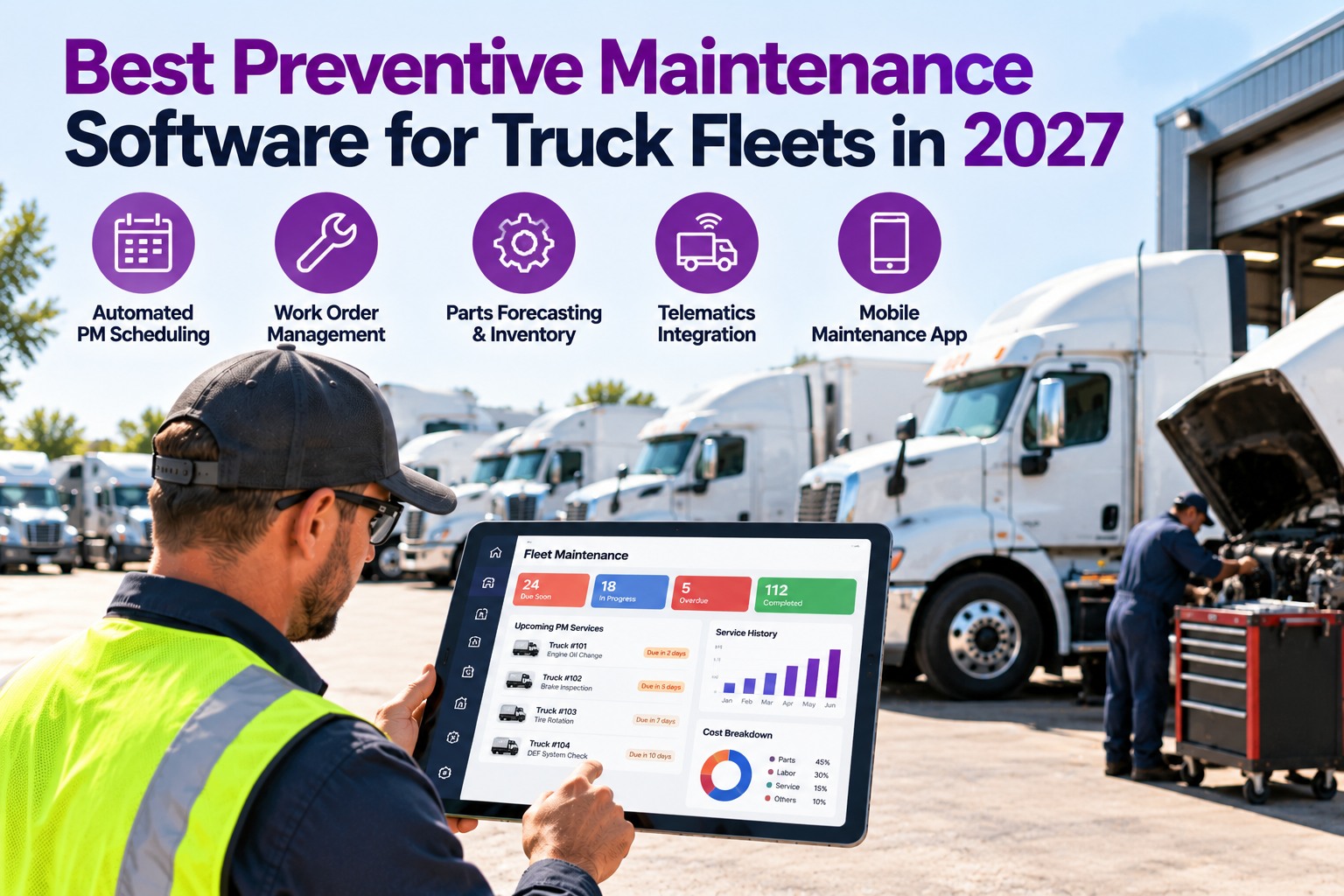
Helping with exactly this is the job. Truck Inspection & Maintenance Management Software records tread depth and wear pattern against each wheel position, so a feathering steer or a one-sided inner shoulder shows up as a trend — not a surprise at the next tire change. It flags the alignment-mileage interval, holds the wheel-end checks that rule out a loose kingpin first, and opens a dated work order the moment a pattern says the truck needs the rack. The tire does the diagnosing; the software makes sure someone acts on it.
When to Align — and When You Can't Wait
Alignment is part schedule, part trigger. Run it on an interval, but override the interval the moment the tires or the road tell you something's moved.
On schedule
- Every 40,000–60,000 miles on steer axles
- At set PM intervals for high-mileage tractors
- When rotating or replacing steer tires
Right away
- After any hard front-end impact — curb, pothole, debris
- First sign of feathering or one-sided edge wear
- Truck pulls, wanders, or the wheel sits off-center
Frequently Asked Questions
What tire wear pattern means my truck is out of alignment?
Two patterns point straight at alignment. Feathering — where the tread ribs are sharp on one edge and smooth on the other — is a toe problem: toe-in feathers the outer rib edges, toe-out the inner. One-sided shoulder wear is a camber problem: a worn inner shoulder is negative camber, a worn outer shoulder is positive. Center wear and both-shoulder wear, by contrast, are inflation issues, not alignment. Reading which pattern you have tells you whether the fix is the alignment rack or the air gauge.
How often should a commercial truck be aligned?
A good baseline is every 40,000–60,000 miles on the steer axle, plus immediately after any hard front-end impact like a curb strike or a deep pothole. A 3-axis heavy-duty alignment runs roughly $150–$300 — cheap next to a steer tire at $250–$600, or $1,200-plus for a premium. The interval is the plan, but the tires are the real trigger: the first sign of feathering or one-sided edge wear means it's time regardless of the mileage since the last alignment.
How much does misalignment actually cost in tires?
More than most fleets realize, because the angle is invisible and the damage is gradual. As little as 1/16" of toe misalignment can feather a steer tire visibly within 15,000 miles, and left uncorrected it can cut a tire's life from a potential ~200,000 miles down to a replacement every 15,000–40,000. On a fleet, that's steer tires scrapped several times more often than necessary — which is exactly why catching the wear pattern early, before the tire is gone, pays back the alignment many times over.
Could a worn part be causing the wear, not the alignment?
Often, yes — and it's worth ruling out before you blame the alignment. Worn ball joints, loose tie rods, kingpin play over about 0.010", bad wheel bearings, worn shocks, and sagging springs all throw the same patterns an alignment would: edge wear, feathering, and cupping. Aligning a truck with a loose wheel-end just resets the same wear, so the reliable sequence is to check the wheel-end components first, fix what's loose or worn, and then align.
Contact us to build the wheel-end checks into your alignment workflow.
Read · Diagnose · Align
Let Your Tires Tell You When to Align
Truck Inspection & Maintenance Management Software records each tire's wear pattern and tread depth against its wheel position, flags the alignment interval, and opens a work order the moment a pattern signals the truck needs the rack. Fleets run it to turn tire wear into an early warning — and stop paying for the same alignment problem one tire at a time.
No credit card required. Free for up to 3 trucks. Built for FMCSA-compliant fleets.