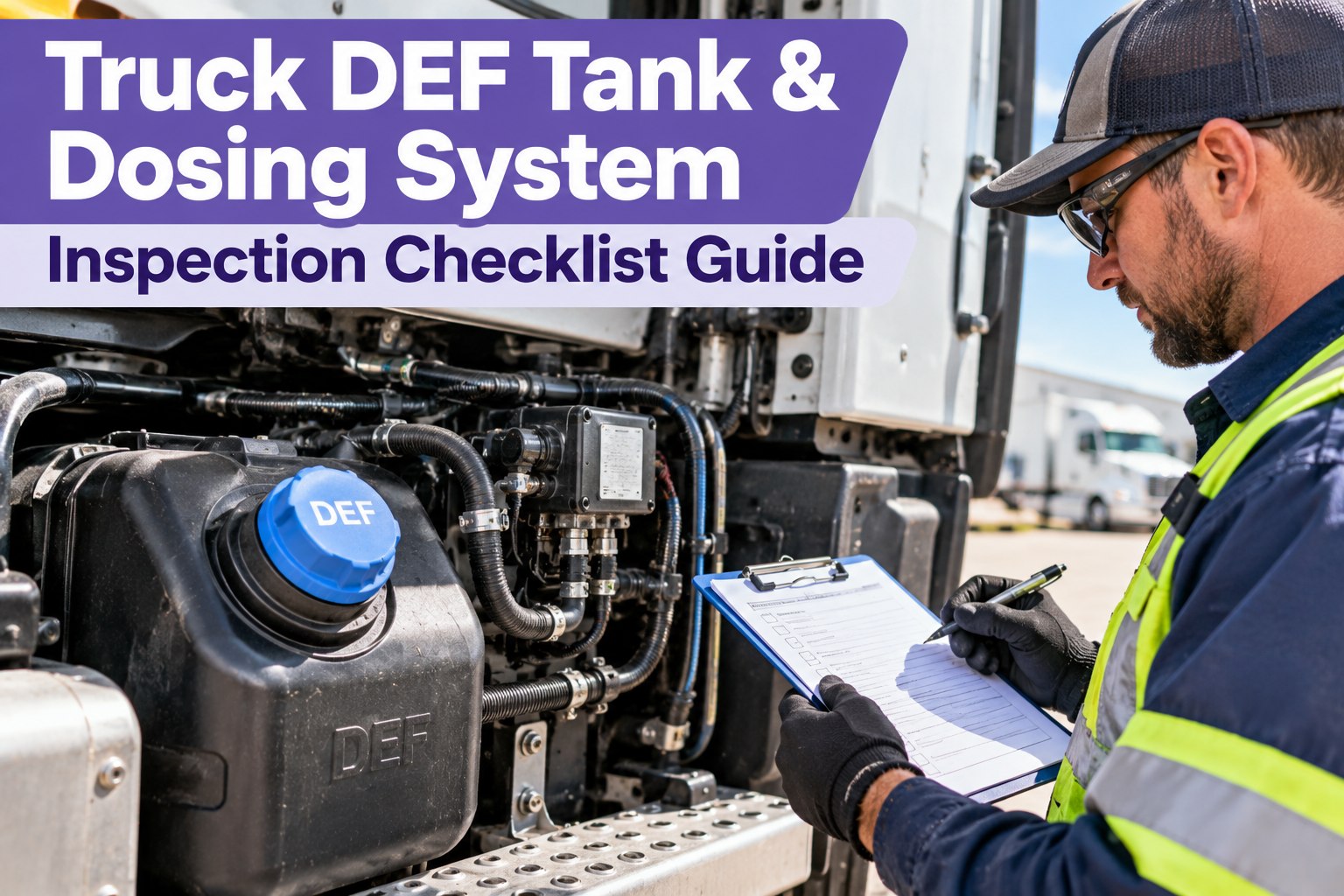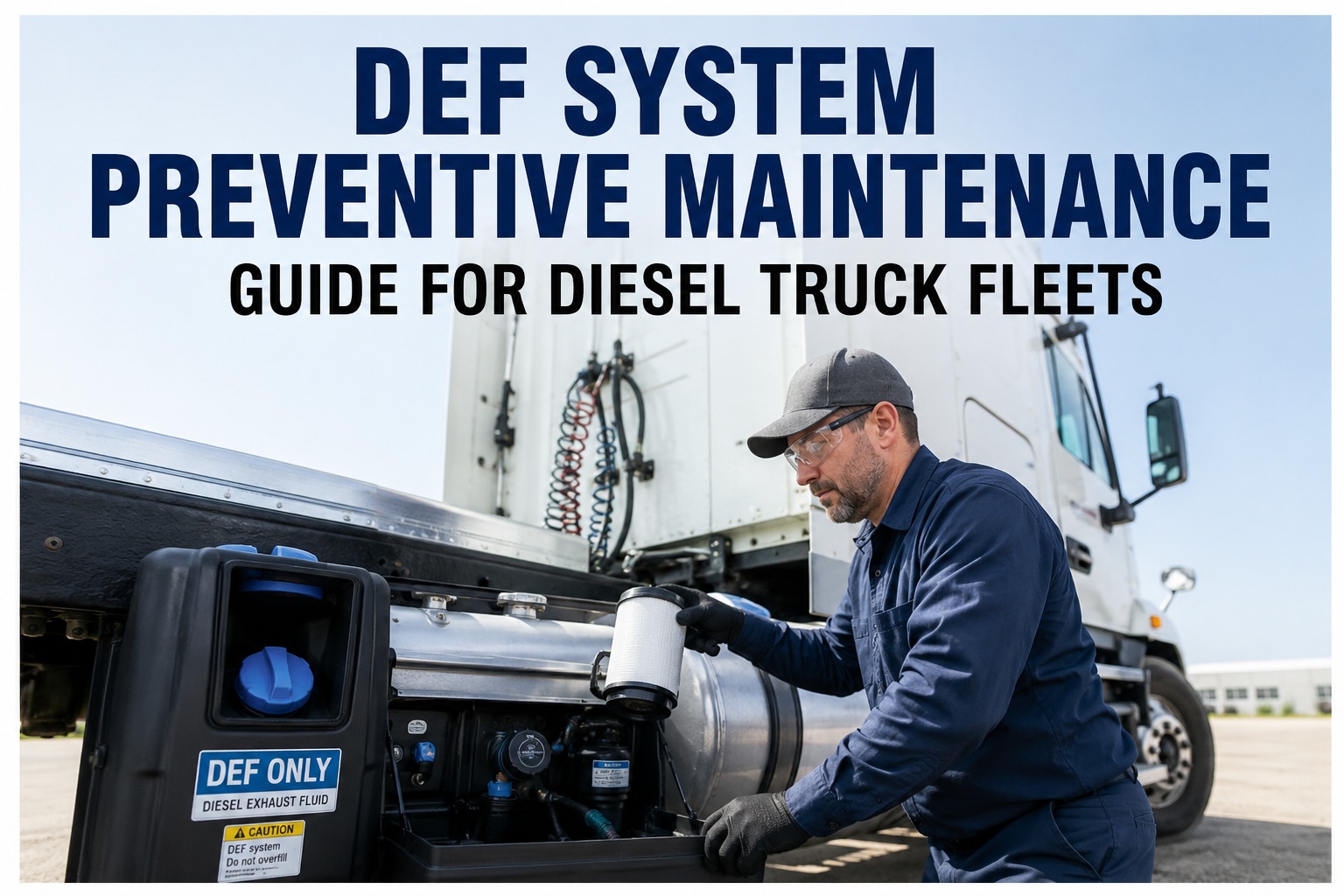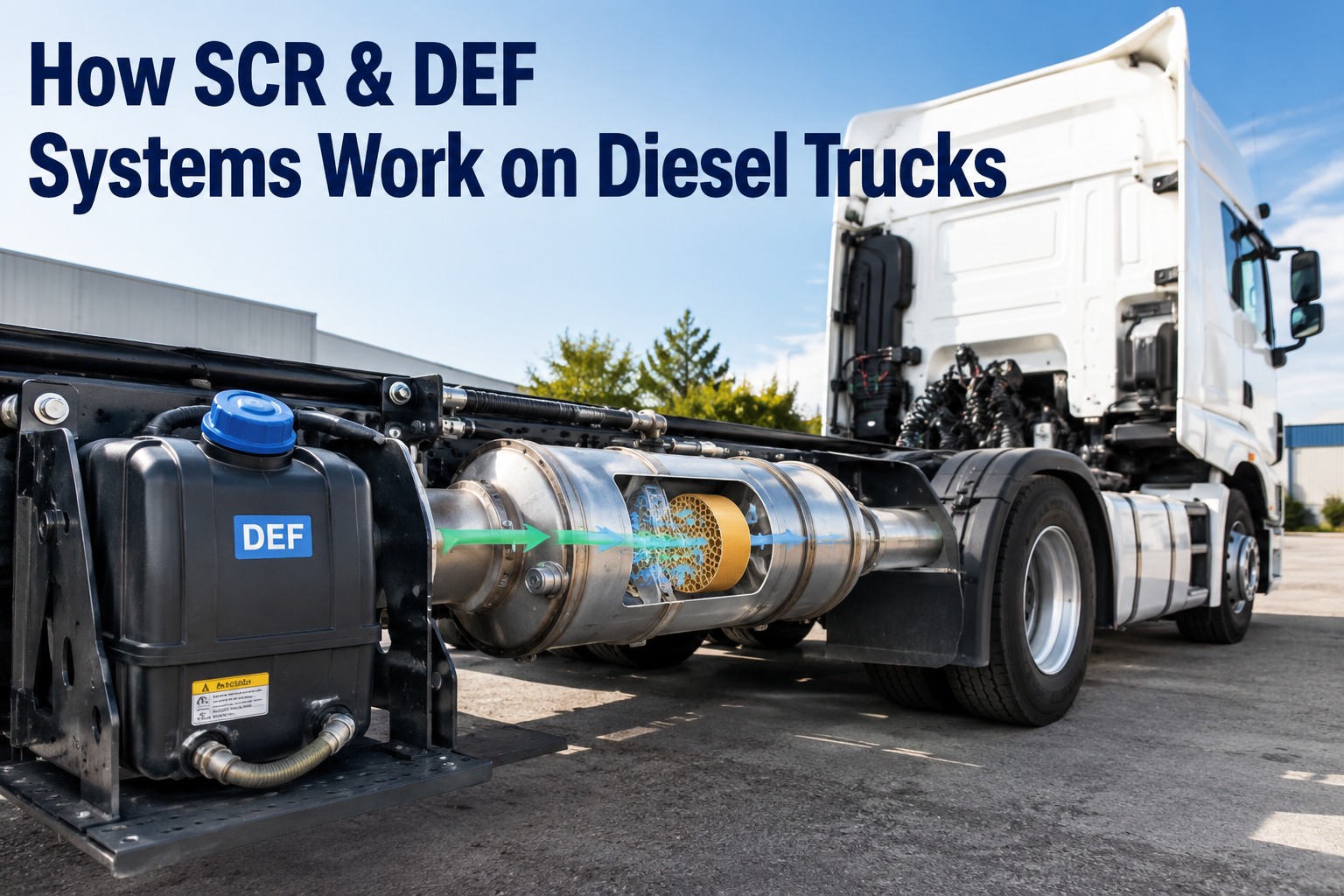
Diesel Exhaust Fluid freezing is one of the most misunderstood aspects of modern diesel truck operation — a mix of engineering fact and shop-floor myth that leads fleet managers to either panic unnecessarily about frozen DEF or fail to protect the SCR system properly. Here's the actual truth: DEF freezes at 12°F (-11°C) because it's precisely 32.5% urea and 67.5% deionized water by mass — an ISO 22241 specification chosen specifically because that ratio produces both the lowest achievable freeze point AND the correct urea concentration for SCR chemistry. Frozen DEF is not damaged. The urea and water freeze together at the same rate, preserving the 32.5% mix perfectly. When it thaws, it returns to full spec and works exactly as before. What matters is what happens between freezing and thawing: DEF expands approximately 7% when frozen (tanks are built to accommodate this — but only if you don't overfill), the SCR system needs the fluid in liquid form to inject into the exhaust stream, and every OEM SCR system since roughly 2010 includes tank heaters, heated supply lines, and a shutdown purge cycle that pulls DEF back into the tank to prevent frozen lines. Miss the details and you get derates, extended thaw times, cracked tanks, and expensive SCR component failures. Get them right and DEF freeze is genuinely a non-event — the truck starts, the heater thaws the DEF within 20–90 minutes of operation, and the SCR system comes online seamlessly. This guide walks through DEF composition and chemistry, the freeze/thaw science with expansion math, the OEM heating system anatomy every technician should understand, storage best practices, tank management rules, the myths that need to die, and how Truck Inspection & Maintenance tracks DEF supply, purity, and heater function across your fleet — free forever for up to 3 vehicles.
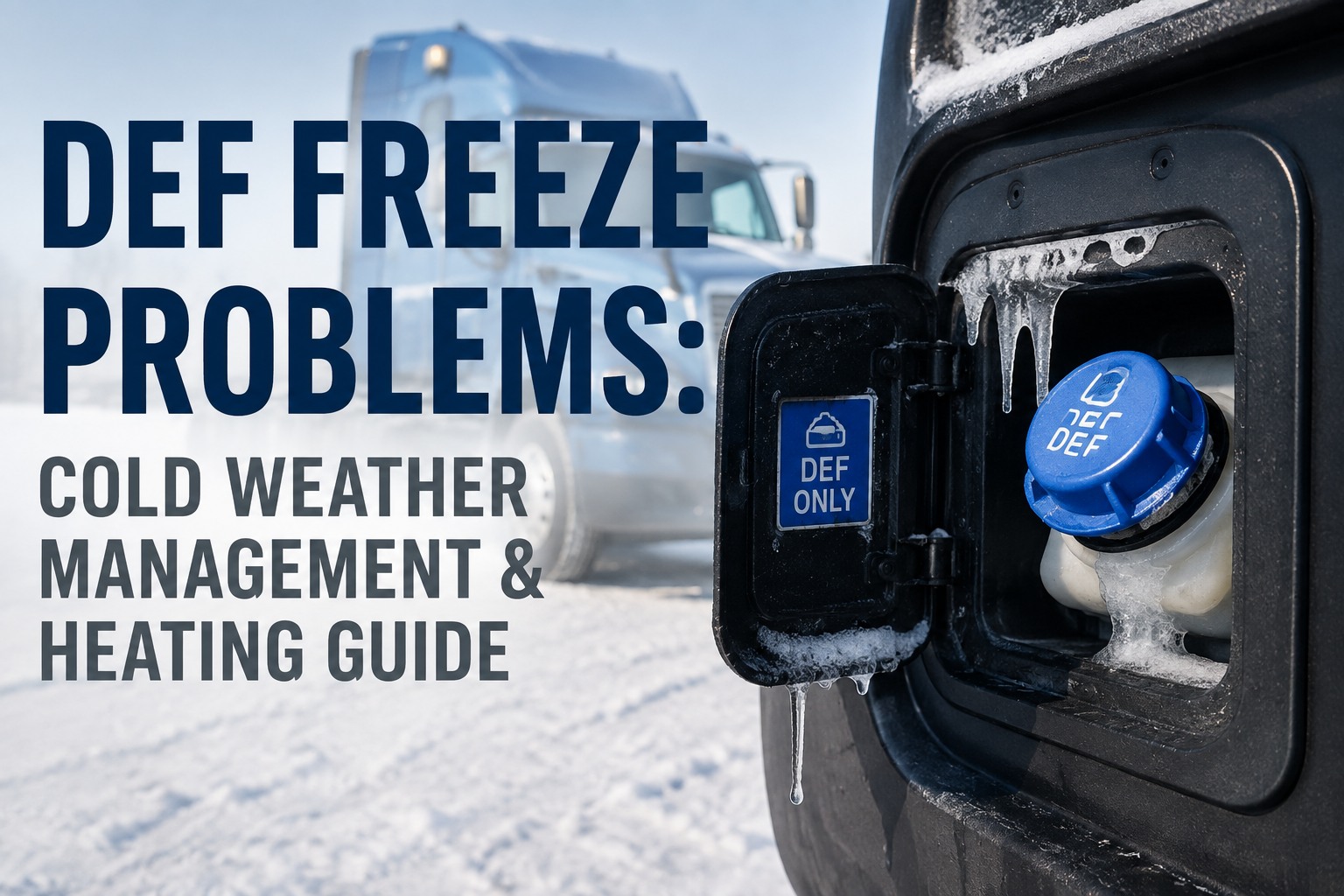
DEF Freeze Problems: The Complete 2026 Cold Weather Management & Heating Guide
Freezes at 12°F. Expands 7%. Thaws with no damage. What every fleet operator needs to know about DEF in winter.
What DEF Actually Is
Before understanding the freeze problem, understand the fluid. DEF is not an antifreeze, not a fuel additive, and not something you can substitute. It's a precisely engineered chemistry that only works at exact composition:
The ISO 22241 Specification
The 32.5% urea / 67.5% deionized water ratio is not arbitrary — it's the specific eutectic composition that produces the lowest achievable freeze point (12°F / -11°C) while providing exactly the right urea concentration for SCR chemistry. Any deviation degrades both performance and freeze protection. At operating temperature in the SCR catalyst, the urea decomposes to ammonia (NH3), which reduces nitrogen oxides (NOx) to harmless nitrogen and water. Get the concentration wrong and the SCR system fails to meet emissions specs — triggering ECM warnings and eventually torque derate.
The Freeze/Thaw Science
Understanding what happens physically when DEF freezes eliminates most of the fear around it. Three facts define the entire behavior — and they're all more benign than most operators believe:
Same-Rate Freezing
Because DEF is a properly mixed solution, the urea and water freeze together at the same rate. The 32.5% ratio is preserved during freeze. When it thaws, the fluid returns to spec — no separation, no dilution, no concentration. Quality DEF is completely stable through freeze/thaw cycles.
7% Volume Expansion
When DEF freezes, it expands approximately 7% in volume. All OEM DEF tanks are engineered with expansion room built in. The problem occurs when operators fill tanks to 100% capacity in cold weather — no room for expansion means potential tank crack or seal damage.
Slush Before Solid
DEF doesn't flash-freeze — it becomes slush first, then progressively solidifies as temperature drops further. Slush is often still usable by heated SCR systems. Full-solid freezing requires sustained temperatures well below 12°F for extended periods.
OEM Heating System Anatomy
Every modern diesel truck with SCR (roughly 2010+) includes multiple heating provisions specifically for DEF cold-weather operation. Understanding these systems tells you exactly what to expect and where to troubleshoot:
DEF Tank Heater
Electric heating element mounted inside the DEF tank. Activates on cold-start when temperature sensor detects frozen or near-freezing fluid. Uses coolant loop or resistive heater depending on OEM. Primary thaw mechanism.
Heated Supply Lines
Coolant-jacketed or electrically heated supply lines run from tank to dosing injector. Prevents refreeze once initial thaw occurs. Line freeze is what causes SCR faults — not tank freeze.
Purge Cycle at Shutdown
When engine shuts down, ECU commands DEF to be pulled back from injector and lines into the tank. Thin lines and injector tip would freeze first — purge eliminates that risk. NEVER interrupt shutdown.
Insulated Injector
DEF dosing injector at the exhaust stream is insulated and thermally isolated from cold ambient air. Exhaust heat during operation keeps it warm — but only if it started operation before deep freeze.
Cold-Start Timeline — What Actually Happens
Here's the sequence every SCR-equipped truck follows on a cold winter morning with frozen DEF. Knowing this timeline eliminates confusion about what's normal vs what indicates a real problem:
Ignition & Engine Start
Engine cranks and starts normally. DEF status irrelevant to starting — the engine runs on diesel, not DEF. No error codes, no warnings at this stage.
ECU Detects Frozen DEF
Temperature sensor in DEF tank reports below freezing. ECU logs "DEF Frozen" status. This is informational, not a fault. SCR dosing suspended until fluid thaws — engine operates in warmup mode.
Automatic Thaw Cycle
Tank heater activates. Coolant circulates through DEF heater as engine warms. Typical thaw time 20–90 minutes depending on ambient temp and heater type. Truck drives normally throughout. No operator action required.
SCR Dosing Resumes
Once tank temperature sensor reads above freezing and lines flow, ECU resumes DEF injection. NOx conversion returns to normal. All emissions systems fully operational. No permanent record of the freeze event.
Extended Thaw = Derate Warning
If DEF remains frozen beyond ~2 hours of operation, ECU escalates. First: warning lamp. Then: torque derate. Root cause is typically heater failure — not the freeze itself. Diagnose heater circuit, not fluid quality.
Storage Best Practices
DEF storage is where fleet-level errors compound. Bulk drums stored wrong, small containers left in the wrong place, and refills done incorrectly all shorten shelf life and can contaminate the SCR system. Four rules cover 95% of storage discipline:
Optimal Storage Range
Ideal storage between 20°F and 80°F (-6°C to 26°C). Best shelf life at 46–77°F. Avoid direct sunlight and heat swings. Warehouse ambient in most climates works fine.
Shelf Life at Spec
Sealed DEF stored at proper temperature lasts 12+ months. Extreme heat reduces to 6 months or less. Track manufacture dates on bulk drums — first-in-first-out inventory rotation.
Container Material
HDPE plastic or stainless steel containers only. DEF is corrosive to aluminum, brass, copper, and mild steel. Contamination from wrong container material destroys SCR system components.
Winter Tank Fill Rule
In freezing conditions, fill DEF tank to 3/4 maximum. Leaves ~25% expansion space. 100% fills can crack tanks or damage seals when 7% expansion has nowhere to go. Simple rule, high impact.
The Critical "Never Do" List
Every operational rule around DEF cold-weather management comes down to preserving the fluid's ISO 22241 specification. Break these rules and you damage the SCR system, void warranty, or both:
Never Add Antifreeze or Additives
No amount of antifreeze, methanol, or "DEF anti-gel" is approved. Any additive changes the urea concentration, contaminates SCR components (dosing injector, NOx sensors, catalyst), and voids warranty. There is no legitimate DEF freeze-point improver on the market.
Never Fill Tank Completely in Cold
Fill to 3/4 maximum in freezing weather. 7% expansion has to go somewhere — a fully filled tank cracks, splits seals, or damages the level sender. Air space above the fluid absorbs expansion safely.
Never Interrupt Shutdown Purge
When you turn off the truck, ECU runs a 30–90 second purge pulling DEF back from lines into tank. This prevents frozen lines and injector tip. Cutting battery power or interrupting shutdown leaves DEF in thin lines that freeze first.
Never Use Aluminum or Brass Containers
DEF corrodes aluminum, brass, copper, and mild steel. Contaminated fluid destroys $2,000+ NOx sensors, damages the dosing injector, and can foul the SCR catalyst. HDPE plastic or stainless steel only for storage, transfer, and refill equipment.
Track DEF supply, tank fill discipline, and heater function across every truck
Truck Inspection & Maintenance captures DEF fill levels, storage temperature logs for bulk tanks, DEF heater fault codes, and cold-weather PM checklists. Driver DVIRs record cold-start observations and any SCR warning lamps. Pre-winter reminders fire in September for annual DEF system verification — tank heater test, coolant loop check, purge cycle verification. Sign up free for up to 3 vehicles.
Common Myths Busted
Six persistent myths cause more DEF-related bad decisions than any technical issue. Let's kill them with facts:
"Frozen DEF is ruined"
"Frozen DEF prevents engine start"
"You can add antifreeze to DEF"
"DEF loses potency after each freeze"
"SCR system damage is common in cold"
"DEF tank heaters are optional aftermarket"
Frequently Asked Questions
At what temperature does DEF freeze?
Diesel Exhaust Fluid freezes at 12°F (-11°C). This freeze point comes directly from the ISO 22241 specification of 32.5% urea and 67.5% deionized water — an intentionally chosen eutectic composition that gives the lowest achievable freeze point while providing the correct urea concentration for SCR chemistry. Any deviation from 32.5% urea produces a higher freeze point, worse performance, or both. This is why no approved freeze-point improver exists for DEF.
Does frozen DEF damage my truck?
No — as long as the tank isn't overfilled. Frozen DEF is a normal, expected operating condition on any diesel truck in cold climates. The fluid itself isn't damaged (urea and water freeze together, preserving the 32.5% mix). OEM DEF tanks are engineered with expansion space for the 7% volume increase. Tank heaters and heated supply lines thaw the fluid automatically once the engine warms. Damage occurs only when operators overfill tanks in cold weather (no expansion space = cracked tank) or add unapproved additives.
Can I add antifreeze to DEF to prevent freezing?
Absolutely not. Any additive contaminates the ISO 22241 specification — damaging SCR system components including the dosing injector, NOx sensors, and catalyst. Repairs typically run $2,000–$8,000. Warranty is voided immediately. There is no legitimate DEF freeze-point improver on the market from any reputable source. The 32.5% urea concentration is chemically required for SCR to work; changing it kills both freeze protection and emissions performance.
Can I start my truck if the DEF is frozen?
Yes. The engine runs on diesel, not DEF. Frozen DEF has zero effect on engine starting. The truck starts, drives, and operates completely normally while the OEM tank heater thaws the fluid in the background. Typical thaw time is 20–90 minutes of operation depending on ambient temperature and heater type. The ECU suspends SCR dosing during thaw (informational, not a fault) and resumes automatically once the tank temperature sensor reads above freezing.
How should I store DEF in winter?
Store DEF between 20°F and 80°F for optimal quality. Best shelf life at 46–77°F. Avoid direct sunlight and extreme temperature swings. Use HDPE plastic or stainless steel containers only — DEF corrodes aluminum, brass, copper, and mild steel. Track manufacture dates and rotate stock first-in-first-out; sealed DEF at spec temperature lasts 12+ months. In freezing conditions, DEF containers can freeze but won't be damaged if the container has expansion space (never fill to 100%). Talk to our team about DEF supply tracking.
How does Truck Inspection & Maintenance help manage DEF in cold weather?
Truck Inspection & Maintenance tracks DEF fill levels per vehicle, bulk supply inventory with temperature logs, DEF heater fault codes captured from driver DVIRs, and cold-weather PM checklists that verify tank heater function, coolant loop condition, and shutdown purge cycle operation. Pre-winter reminders fire in September for annual DEF system verification. Driver observations of SCR warning lamps or unusual cold-start behavior get captured and routed to shop for diagnosis before derate. Free forever for up to 3 vehicles. Sign up in 10 minutes.
DEF fill tracking, tank heater diagnostics, and pre-winter SCR verification — for every truck.
DEF freeze is a non-event when systems work correctly. Truck Inspection & Maintenance tracks DEF fill levels, storage temperature logs, heater fault codes from driver DVIRs, and cold-weather PM checklists that verify tank heater function, coolant loop condition, and shutdown purge operation. Pre-winter reminders fire in September for annual SCR verification. Free forever for up to 3 vehicles with no hardware and no contracts. Set it up in 10 minutes.