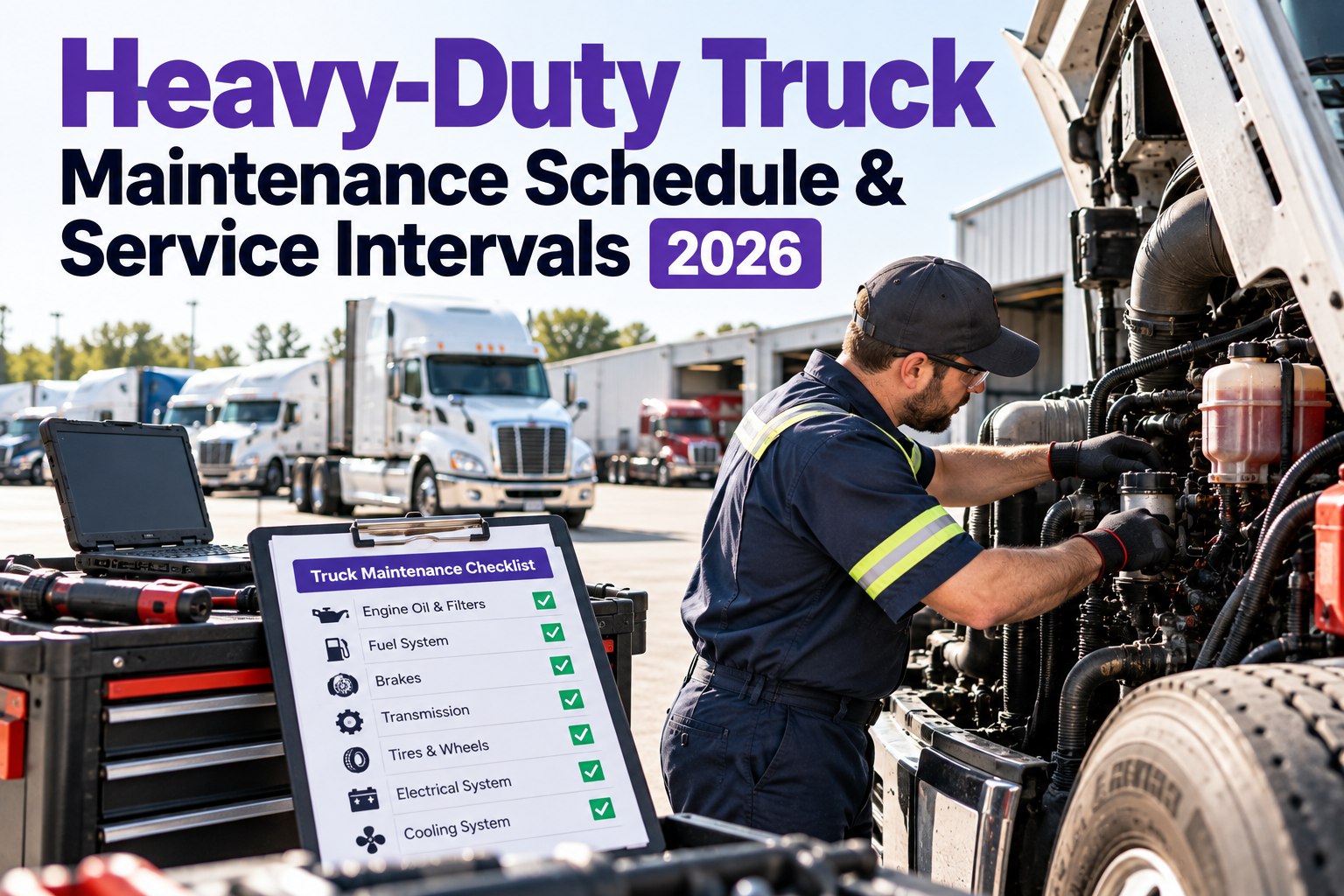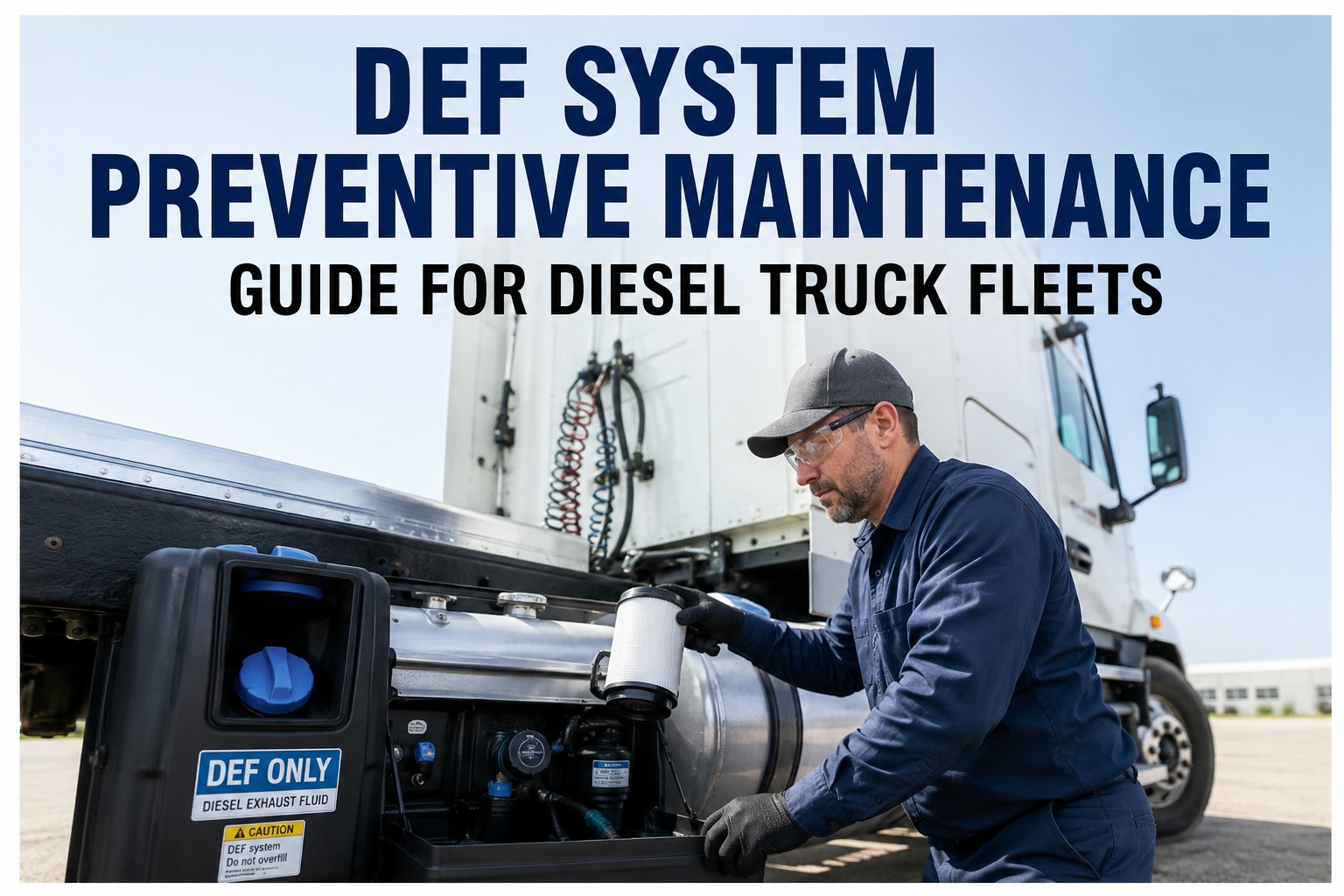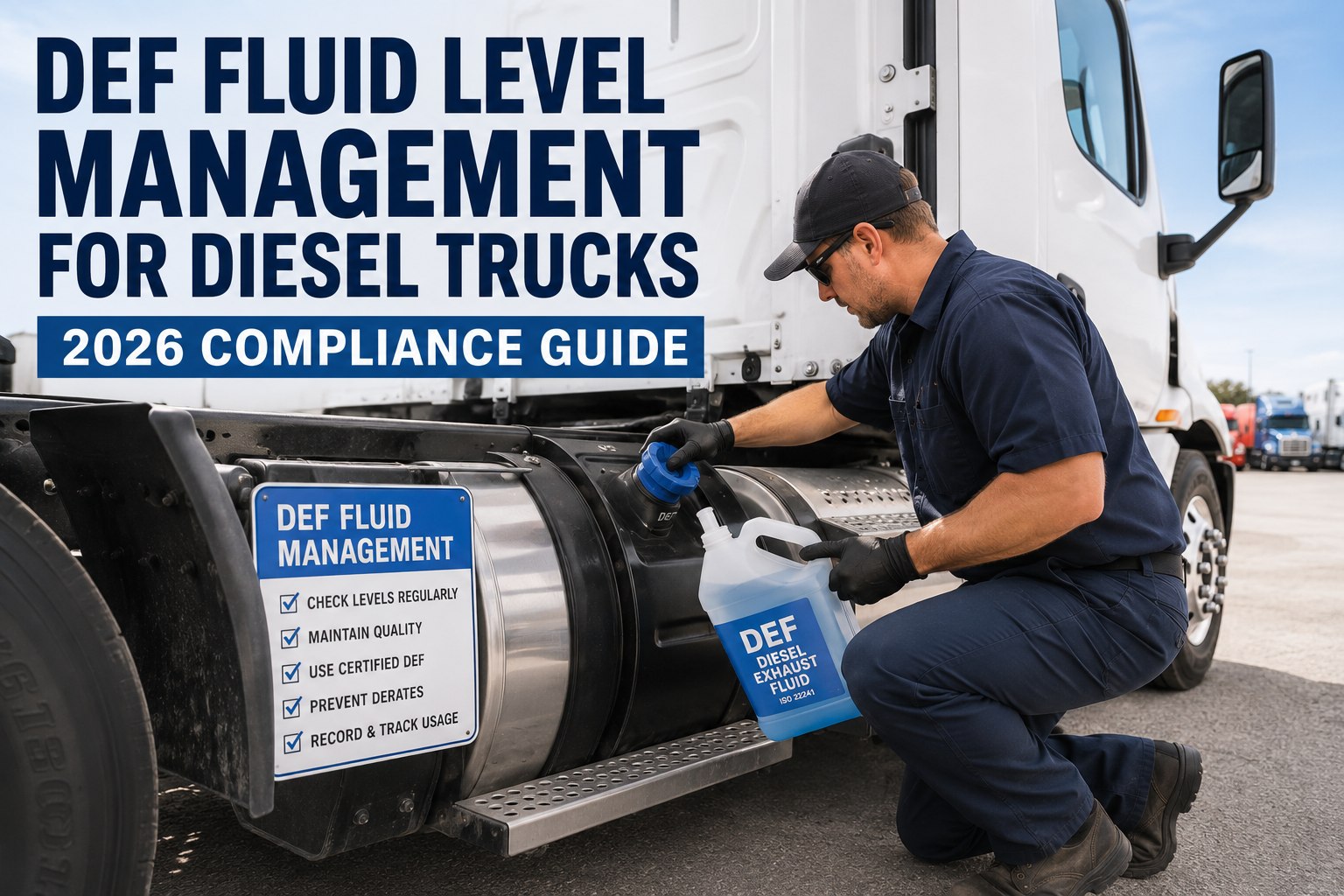
Every diesel truck built after January 1, 2010 carries a chemistry lab in its exhaust system — and most drivers have no idea how it works until it stops. The Selective Catalytic Reduction (SCR) system uses Diesel Exhaust Fluid (DEF), a precisely engineered mix of 32.5% urea and 67.5% deionized water, to convert nitrogen oxides (NOx) into harmless nitrogen gas and water vapor. Done correctly, SCR reduces NOx emissions by up to 90%, cuts hydrocarbons and CO by 50–90%, drops particulate matter by 30–50%, and delivers 3–5% fuel economy gains as a bonus. Done incorrectly — or when it fails — the truck goes into a two-stage derate that cuts power, drops top speed, and eventually forces a stop until the DEF tank is refilled or the system is repaired. This guide walks through exactly how SCR and DEF work together, the components that can fail, the warning lights that predict trouble, the chemistry of DEF fluid, and how Truck Inspection & Maintenance pairs SCR warnings with DVIRs so early codes become tracked defects instead of roadside breakdowns.
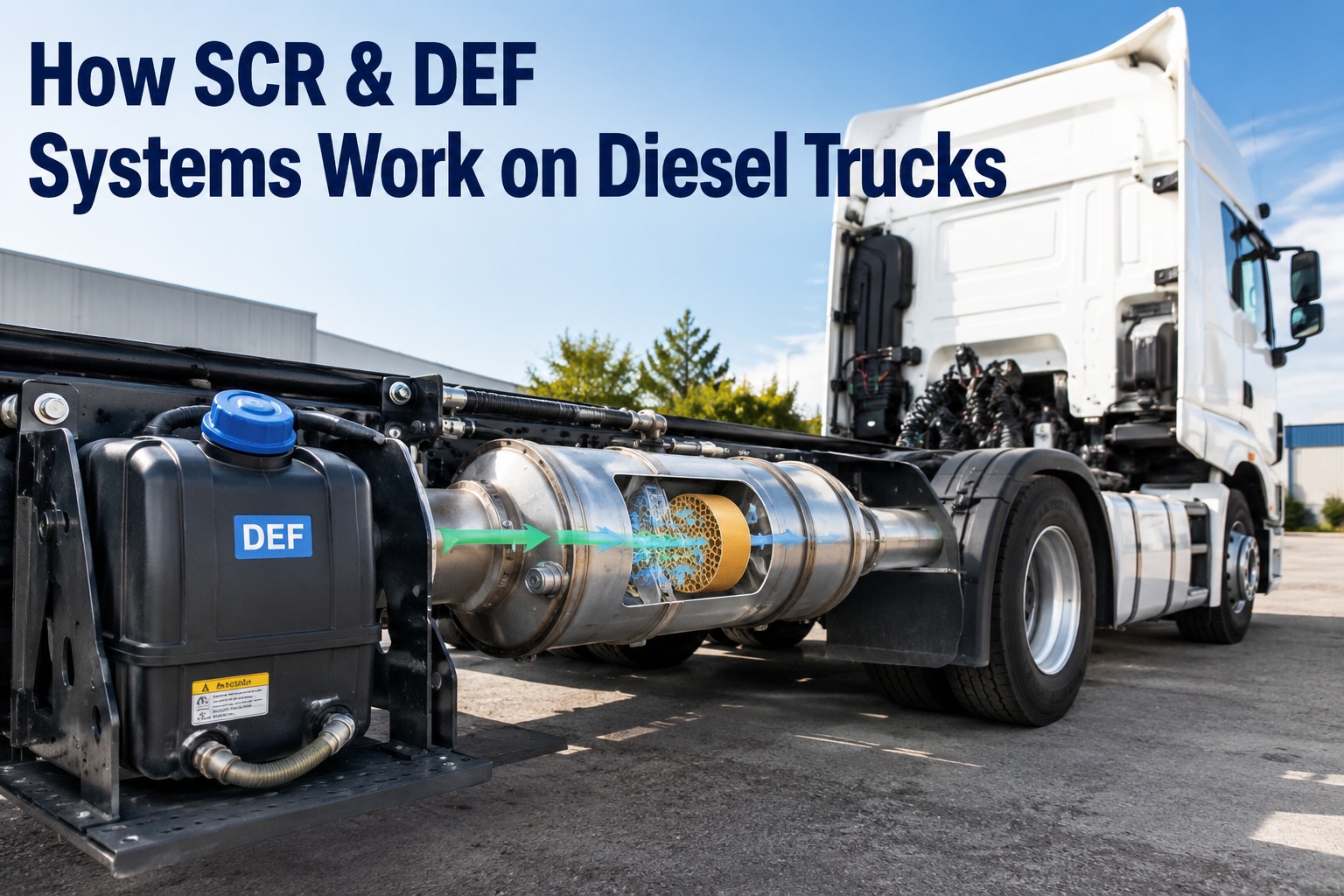
How SCR & DEF Systems Work on Diesel Trucks
The chemistry lab in your exhaust — how it cuts NOx by 90% and what happens when it fails.
What SCR Actually Does
Diesel engines burn hot and lean — great for efficiency, terrible for nitrogen oxides. Every gallon of diesel burned at high temperature and pressure produces NOx, which contributes to smog, ozone, and acid rain. SCR is the elegant chemistry solution: instead of forcing the engine to run less efficiently to control NOx, it lets the engine run optimally and cleans up NOx in the exhaust after combustion. The result is cleaner emissions AND better fuel economy — a rare win-win in diesel engineering.
The SCR Chemical Reaction
from engine exhaust
from DEF vaporization
250–450°C
78% of the air we breathe
harmless steam
The 5 Core SCR System Components
An SCR system isn't a single part — it's a chain of five components working in precise coordination. When one fails, the whole system degrades, and diagnostic codes cascade through the truck's ECU. Here's the anatomy every driver, mechanic, and fleet manager should know:
DEF Tank
Holds 15–30 gallons of DEF on a Class 8 truck. Insulated and heated to prevent freezing (DEF freezes at 12°F). Filled at a dedicated pump — same nozzle size as diesel but marked blue.
DEF Pump / Supply Module
Pumps DEF from tank to the injector at precise pressure (typically 5–9 bar). Contains filters, sensors, and heaters. First component to fail from contaminated DEF or long storage.
DEF Injector (Dosing Valve)
Atomizes DEF into the hot exhaust stream upstream of the catalyst. Meters exact quantity based on NOx sensor readings — too little means high NOx, too much means ammonia slip.
SCR Catalyst
Ceramic honeycomb coated with platinum, vanadium, or zeolite. This is where the NOx + NH3 reaction happens. Operating temperature 250–450°C. Slow-wear component but sensitive to sulfur.
NOx Sensors
Two sensors — one before the catalyst, one after. Measure NOx to control DEF dosing and verify catalyst efficiency. Common failure point after 100K miles.
DEF Fluid — The Chemistry That Matters
DEF is not windshield washer fluid dyed blue. It's a precisely engineered chemical solution with tight specifications — deviate from them and the SCR system stops working within hours. Here's what every fleet needs to know about the fluid itself:
The 2-Stage Engine Derate — What Happens When DEF Runs Out
The EPA doesn't rely on driver honesty to keep SCR systems working. Every SCR-equipped truck runs a mandatory 2-stage derate program when DEF runs low or the system fails. Ignore the warnings and the truck forces you off the road. Here's the exact escalation ladder every driver needs to recognize:
Warning Lights Only
Solid amber DEF warning light on dashboard. Chime alert. Truck operates normally at full power. Refill DEF at the next fuel stop — you have hundreds of miles of runway.
Flashing Warning + Escalated Alerts
Amber light flashes. More insistent chime. Some engines add a check engine light or malfunction indicator lamp (MIL). No power reduction yet, but the countdown is on.
First Power Derate (25%)
Engine power cut by approximately 25%. Red DEF warning light. Truck is still driveable but noticeably sluggish under load. Highway speeds achievable but acceleration is compromised.
Full Derate to 5 MPH
Engine limited to 5 MPH (some manufacturers 25 MPH before final cut). Truck cannot merge or maintain highway speeds. This is the EPA's forced-stop mechanism. Only refill or shop repair restores normal power.
DEF warnings belong on your DVIR — not the driver's memory
Every DEF light, level check, and refill event is a compliance and maintenance data point. Truck Inspection & Maintenance turns them into documented DVIR items — GPS-tagged, timestamped, and routed to your shop so no truck ever hits Stage 3 derate on a delivery run. Sign up free for up to 3 vehicles.
Common SCR & DEF Failures
SCR problems rarely announce themselves clearly. Most start as intermittent codes, unexplained MPG drops, or occasional derates — all easy to dismiss until they cascade. Here are the six most common failure modes fleets see, ranked by frequency:
DEF Contamination
Diesel fuel, water, dirt, or the wrong DEF grade gets into the tank. Instant crystallization or catalyst poisoning. Symptoms: sudden codes, derate within hours.
DEF Injector Clogging
Crystallized DEF blocks the injector spray pattern. Poor atomization, incomplete NOx reduction, downstream NOx sensor throws codes.
NOx Sensor Failure
Sensors degrade after 100K miles. False readings trigger incorrect DEF dosing. Common source of "phantom" derate events. Replace, don't just clear codes.
Frozen DEF Line
Tank is heated but supply lines can freeze in extreme cold. Engine won't build ammonia until thawed. Recovery is automatic but wastes fuel while running.
Catalyst Poisoning
Sulfur, oil, coolant, or contaminated DEF permanently damages the catalyst substrate. No cleaning fix. Full SCR module replacement — $2,000–$4,000.
Supply Module Pump Failure
DEF pump can't maintain pressure. Injector doesn't dose correctly. Complete SCR system offline until pump replaced. Common after 250K miles or contaminated DEF.
SCR & DEF Maintenance Best Practices
SCR systems are largely self-managing — but a few operational habits keep them running for 500K+ miles without major failures. Fleets that follow these five practices consistently avoid the top failure modes above:
Buy Fresh, Sealed DEF
Check manufacture date — under 6 months old is ideal. Sealed containers only. Never use DEF that's been sitting in a hot warehouse or exposed to sunlight for months.
Never Cross-Contaminate
Dedicated DEF pump, dedicated funnel, dedicated storage. One drop of diesel in the DEF tank destroys the catalyst. Train drivers on the visual difference (blue vs green/yellow nozzles).
Refill Before Stage 3
Treat DEF like fuel — top off at every fuel stop when tank is below 50%. Zero downtime, zero derate risk. Waiting for the warning light is planning to fail.
Store Between 12°F and 86°F
DEF freezes at 12°F, degrades above 86°F. Warehouse storage matters. Keep bulk DEF in climate control — outdoor summer storage on a Texas dock cuts shelf life in half.
Use ULSD Diesel Only
Ultra-low sulfur diesel (ULSD) is mandatory for SCR systems. Higher-sulfur fuel poisons the catalyst irreversibly. Every US diesel pump sells ULSD — but verify in remote areas and Mexico.
Log Every DEF Warning
Every DEF light, unexpected derate, or MPG drop belongs on the DVIR. A pattern building over 2 weeks catches failing NOx sensors and dying pumps before they trigger a roadside stop.
Frequently Asked Questions
What's the difference between DPF and SCR?
They target different pollutants. The DPF (Diesel Particulate Filter) traps soot particles physically. The SCR (Selective Catalytic Reduction) system uses a chemical reaction with DEF to convert NOx (nitrogen oxides) into harmless nitrogen and water. Modern diesel trucks have both — the DPF sits upstream of the SCR in the exhaust flow, and each has separate maintenance requirements.
How much DEF does a truck use?
Approximately 2% of diesel consumption — roughly 1 gallon of DEF for every 50 gallons of diesel burned. A truck averaging 6 MPG that burns 100 gallons per day uses about 2 gallons of DEF daily. Modern DEF tanks hold 15–30 gallons on Class 8 trucks, giving a range of about 7–15 days of continuous operation between refills.
Can I use any DEF or does brand matter?
Any DEF meeting the ISO 22241 / AUS 32 standard is chemically identical — brand doesn't matter, but purity and freshness do. Look for the API certification mark. Avoid off-brand or unmarked products, DEF that's been sitting in warehouses for months, or containers stored in direct sun. Contaminated DEF is the #1 cause of SCR system failures. Talk to our team about DEF tracking.
What happens if I run out of DEF completely?
The EPA-mandated derate system takes over. Below 5% DEF triggers escalating warnings; below 2.5% cuts power by 25%; empty tank limits the truck to 5 MPH (some models allow 25 MPH) until refilled. This is deliberately punitive — the intent is to make ignoring DEF impossible. Refilling immediately restores normal power once the ECU reads a valid tank level.
Why does my truck warn about DEF quality?
Modern SCR systems detect DEF quality through NOx sensor feedback and dosing efficiency. If the catalyst isn't reducing NOx as expected despite adequate DEF dosing, the ECU concludes the DEF is degraded, contaminated, or the wrong grade. Common causes: expired DEF, tap water dilution, diesel cross-contamination, or off-brand fluid that doesn't meet AUS 32 specs.
How does Truck Inspection & Maintenance help with SCR issues?
Every SCR warning light, DEF level check, refill event, and derate incident belongs on the daily DVIR — GPS-tagged, timestamped, and routed straight to your shop as a defect work order. A single DEF warning is data; three in ten days is a pattern that catches a dying NOx sensor before it triggers a roadside Stage 3 derate. Sign up free to see the workflow.
Your SCR system runs on chemistry. Your compliance stack runs on records.
Every DEF warning, unexpected derate, and MPG anomaly is a maintenance signal — invisible in isolation, obvious in a log. Truck Inspection & Maintenance captures them on every DVIR alongside your emissions system status, GPS-tagged and timestamped, routed to your shop before the roadside breakdown. Free for up to 3 vehicles, no hardware, no contracts. Set it up in 10 minutes.