The EGR system is where emissions hardware and the engine's cooling system share a wall — and when that wall cracks, coolant ends up somewhere it was never meant to be. A clogged valve chokes performance; a cracked cooler pushes coolant into the intake, and in the worst case hydrolocks the engine. The symptoms show up early and quietly — a reservoir that keeps needing a top-up, a wisp of white at the stack and reading them before the big failure is the whole game. Start free and track EGR symptoms before they become engine damage.
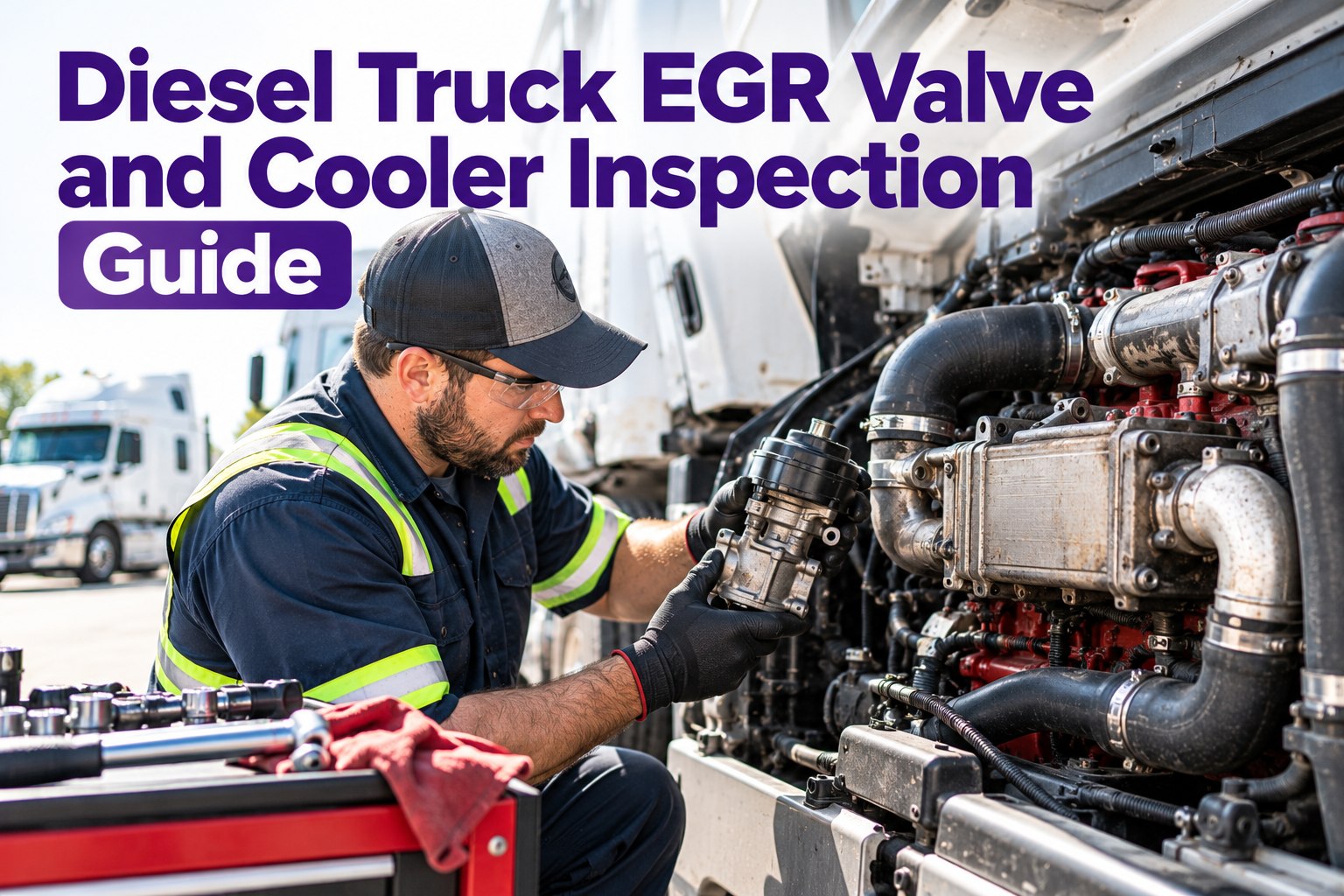
Diesel Truck EGR Valve & Cooler Inspection Guide
Two components, two different failures. The EGR valve clogs with carbon and chokes airflow; the EGR cooler cracks under thermal stress and leaks coolant into the exhaust. This guide walks the gas path, decodes the symptoms, and shows what to inspect on each. Truck Inspection & Maintenance Management Software logs every EGR symptom and fault code against the truck, so a slow coolant loss becomes a tracked work order — not a surprise hydrolock.
What the System Does — and Where It Breaks
EGR routes a small amount of inert exhaust gas back into the intake to lower combustion temperature and cut NOx. It works best when that gas is cool, so the cooler lowers its temperature with engine coolant first, and the valve meters how much goes through. That's also the fault line: the valve fails from carbon, the cooler fails from heat.
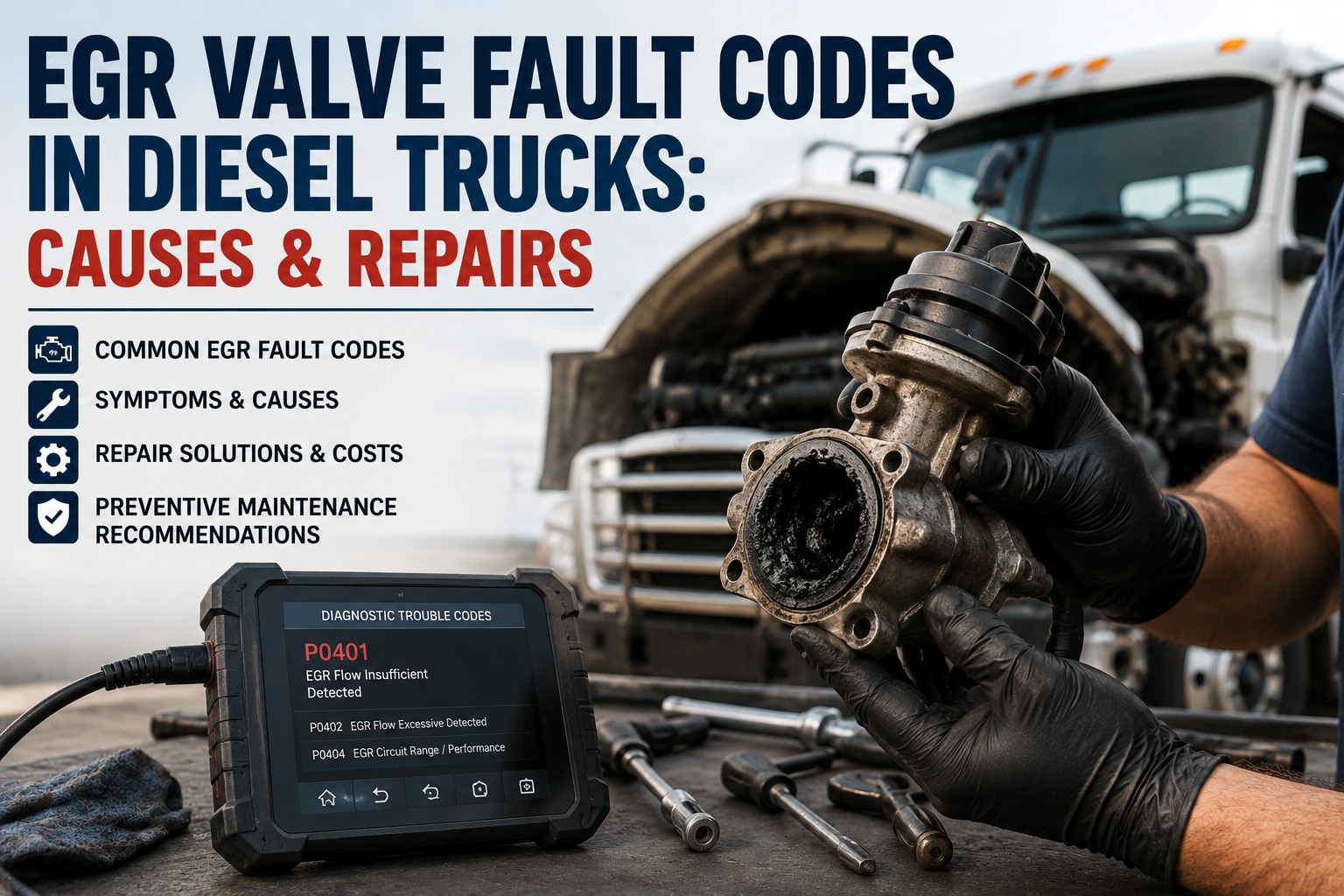
Soot and carbon cake the valve until it sticks — open or closed. Stuck open floods the intake with hot exhaust; stuck closed kills EGR flow and trips a code. A valve normally looks black; wet, tar-like, or steam-cleaned residue means coolant is reaching it.
Coolant surrounds the exhaust tubes to pull heat out. Repeated heating and cooling fatigues the metal until the bulkheads split — and then coolant leaks into the exhaust stream, which is where the dangerous symptoms start.
Read the Symptom, Find the Fault
EGR failures announce themselves — if you know what each sign points to. This is the decoder: the symptom on the left, what it usually means in the middle, and how serious it is on the right.
Why the Cooler Cracks — the Failure Chain
A cooler rarely fails out of nowhere. It's worn down by the conditions it runs in, then finished off by one thermal event. Knowing the drivers tells you which trucks to watch.
This is why the coolant-loss symptom can't wait. When a cooler leaks enough coolant into the intake, it reaches the cylinders — and coolant doesn't compress like air and fuel. On the next compression stroke it can hydrolock the engine, and the pressure has to go somewhere: bent rods, stretched head bolts, blown head gaskets. A cooler is one repair; the engine it takes with it is many. Catch the coolant loss while it's still just a top-up.
How to Inspect the EGR System
You don't need the engine apart to catch most EGR trouble — the signs are at the tailpipe, the reservoir, and the valve. Walk these in order on any truck showing a symptom or a code.
Turn an EGR Symptom Into a Tracked Work Order
The danger with EGR failures is how slowly they build — a reservoir topped up a little too often, a code that clears itself, a faint steam nobody logs. Truck Inspection & Maintenance Management Software captures each of those against the truck: coolant-level notes on every inspection, EGR fault codes, the symptom a driver flags. A pattern that would hide across weeks of paper becomes a trend you can see, and a confirmed symptom becomes a dated work order — every safety defect acknowledged, graded, and assigned within 4 hours, long before a top-up turns into a hydrolock.
Keeping the Whole EGR System Healthy
Most EGR failures are downstream of something else — soot, heat, a tired cooling system. Maintain the inputs and the EGR hardware lasts far longer.
Frequently Asked Questions
Catch the EGR Fault Before It Catches the Engine
Truck Inspection & Maintenance Management Software logs coolant notes, EGR fault codes, and driver-flagged symptoms against each truck — so a slow coolant loss shows up as a trend and a confirmed symptom becomes a dated work order. Every safety defect acknowledged, graded, and assigned within 4 hours, before a top-up turns into a rebuild.