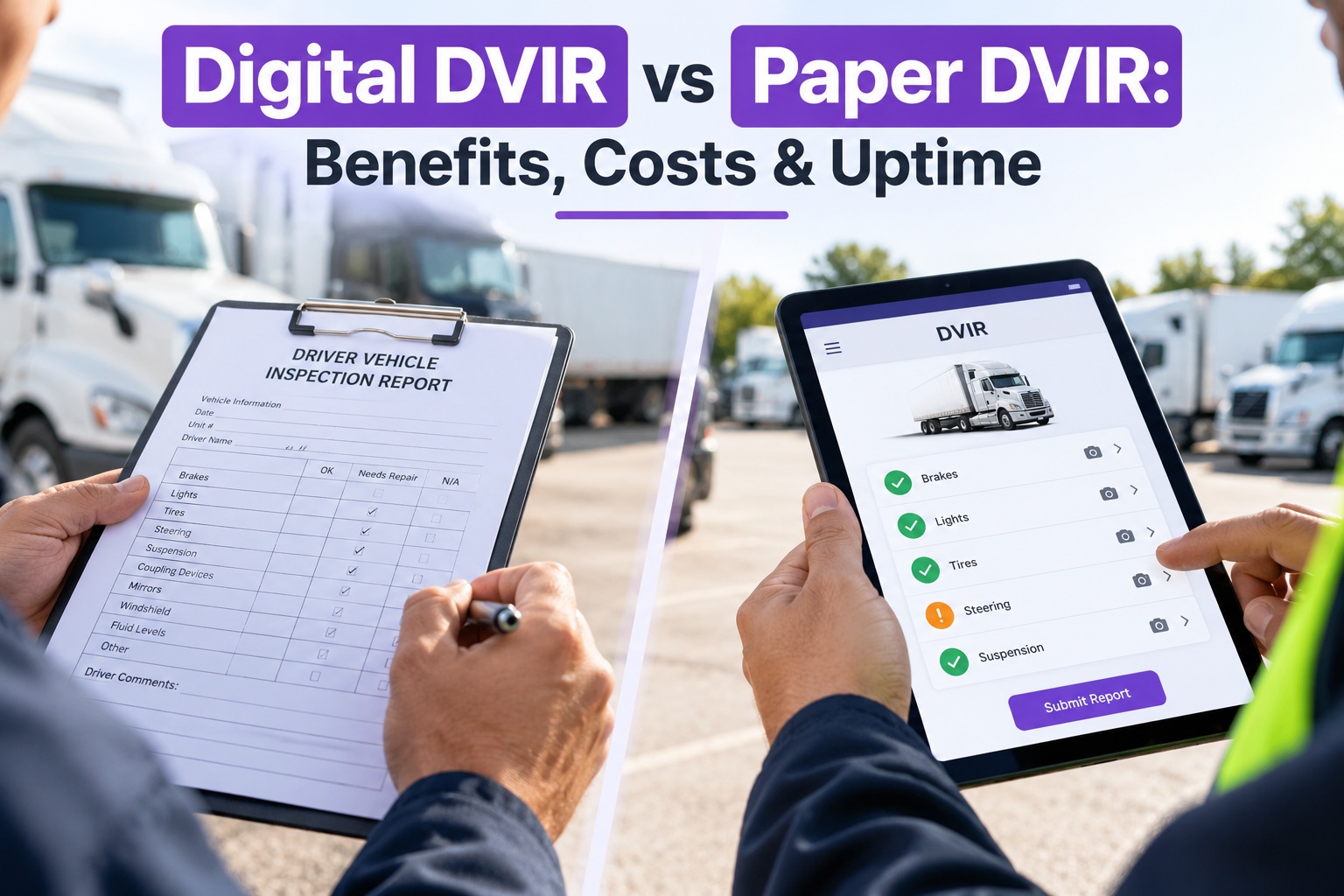
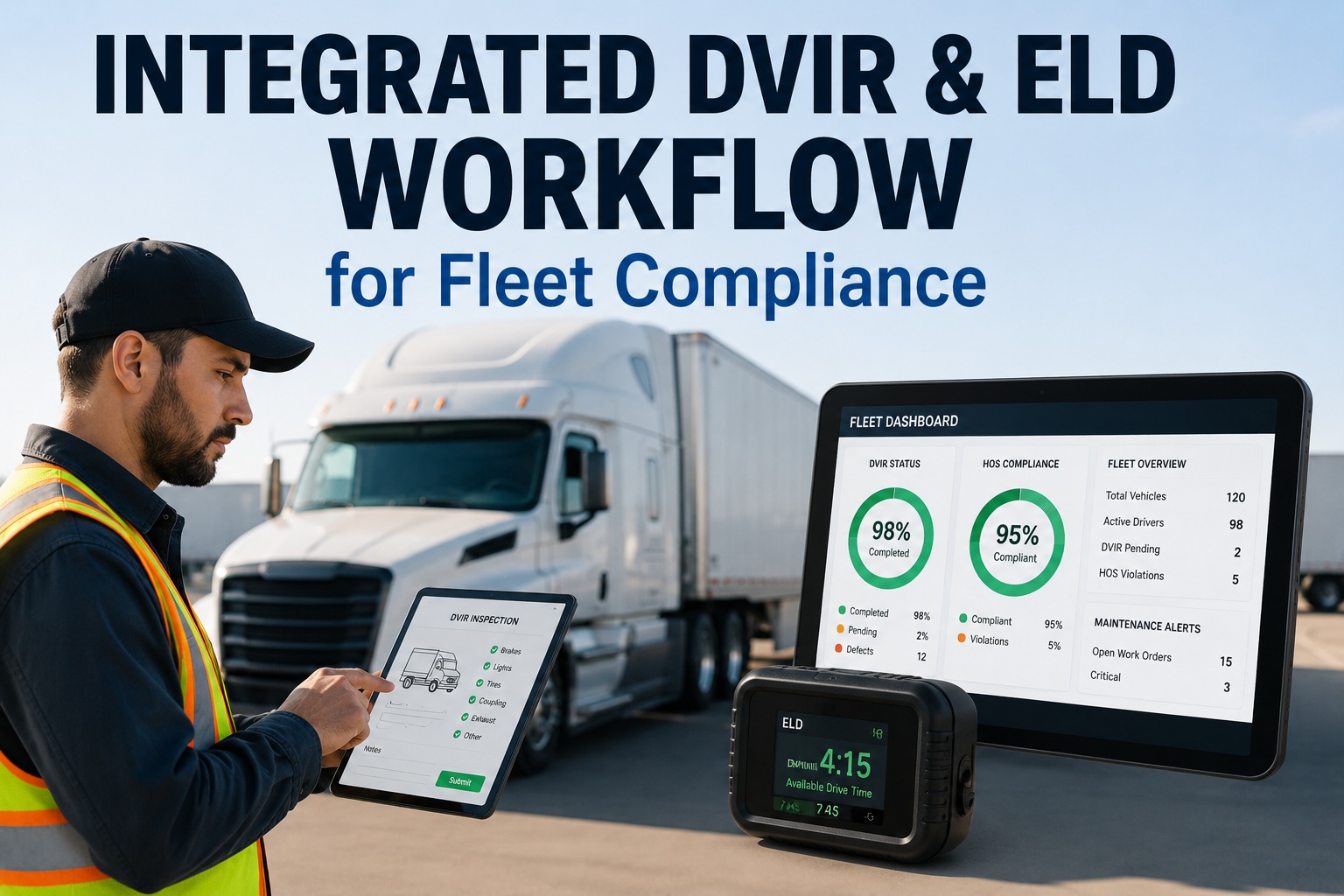
A driver finds a cracked air line on the post-trip, writes it on a paper slip, and clocks out. That slip now has to be carried to an office, read by whoever gets to it, and re-typed into a repair queue — and if it's lost, skipped, or illegible, the defect never reaches the shop at all. A digital DVIR removes every one of those steps: the defect is filed from a phone with a photo, routed to maintenance in real time, and turned into a work order the moment it's submitted. This is the paper-vs-digital comparison, measured where it counts — benefits, costs, and uptime — and how Truck Inspection & Maintenance Management Software (TIM) runs the whole loop. Start free and move your fleet off paper DVIRs with TIM.
TIM · Paper DVIR vs Digital DVIR
A Defect on a Paper Slip Is a Repair Waiting to Get Lost.
Paper DVIRs get lost, skipped, and left illegible — and by the time a manager reads one, the truck may already be back on the road with the defect unfixed. A digital DVIR closes that gap. TIM runs the loop end to end: a driver's inspection defect becomes a graded work order, routes to the right technician by severity, and sets the next PM by mileage and engine hours — on one record, nothing re-typed, nothing forgotten.
Our promise: every DVIR defect gets a 4-hour first response — acknowledged, graded, and assigned.
PAPER DVIR
Write it on a slip
↓
Carried to the office
↓
Maybe reaches the shop
DIGITAL DVIR
Tap the defect + photo
↓
Auto work order, routed
↓
Tech fixing it today
Head-to-Head: Where the Two Really Differ
A DVIR is only useful if the defect on it reaches someone who can fix it. Line paper up against digital on the things that decide whether that happens — and the gap is hard to miss.
What matters
Paper DVIR
Digital DVIR
Speed to the shop
✕Hours or days — if the slip arrives at all
✓Real time — seen the moment it's filed
Legible & complete
✕Skipped fields, handwriting nobody can read
✓Required fields — nothing left blank
Evidence
✕A line of text, no proof
✓Photo, timestamp, and GPS on every defect
Defect to repair
✕Re-typed by hand into the repair queue
✓Becomes a work order automatically
Compliance & retention
✕Boxes of forms to sort at audit time
✓Searchable, signed, dated — found in seconds
Fleet visibility
✕None until someone reads the slip
✓Live view of every truck's inspection status
Every row comes back to the same thing: paper adds steps that lose the defect, and digital removes them. Contact our team to see a digital DVIR on your own fleet.
The Benefits of Going Digital
Switching the DVIR from paper to a screen changes more than the form — it changes what happens after the driver hits submit.
⚡
Faster repairsA flagged defect becomes a work order the instant it's filed — no transcription, no delay.
✓
Nothing missedRequired fields and a photo mean no blank boxes and no guessing what the driver meant.
🛡
Audit-ready alwaysEvery report is signed, dated, and searchable — no scramble when an inspector shows up.
📄
Less paperworkNo re-typing, no filing, no boxes — the record files itself the moment it's submitted.
📍
Real proofPhoto, GPS, and timestamp on every defect, so the shop knows exactly what it's walking into.
📊
Fleet-wide visibilityA live dashboard shows who inspected, what they found, and what's still open across the fleet.
None of this requires new trucks or new hardware — just moving the report off the clipboard. Start free and put every benefit to work with TIM.
The Real Cost of Paper
A paper DVIR looks free — it's a pad and a pen. The cost is everywhere else, hidden in the steps between the slip and the fix.
01
Transcription laborSomeone re-types every slip into the repair system — paid time that produces nothing but a chance to mistype.
02
Lost & skipped formsSlips that never arrive are defects that never get fixed — until they become a roadside event.
03
Delayed repairsEvery hour a slip waits in a tray is an hour the truck sits or runs with the defect unfixed.
04
Missed defectsIllegible or half-filled reports hide the very problem the inspection was meant to catch.
05
Storage & audit prepThree months of forms in boxes — and the hours it takes to find the right one when it matters.
The pad is cheap; the workflow around it is not. Contact our team to put a number on your paper DVIR costs.
The Uptime Math
Uptime is decided by one clock: how long from a defect being found to it being fixed. Paper stretches that clock at every handoff; digital collapses it.
ON PAPER
The defect sits on a slip for hours — sometimes days — before the shop even knows it exists. The truck keeps running in the meantime, and a small fix becomes a breakdown.
DIGITAL WITH TIM
Filed, graded, and assigned within a 4-hour first response, with the parts and photo already on the work order — so the truck comes in when the fix can actually happen, not after it fails.
Shorter detect-to-repair time is the whole game — and it's the one thing paper can't give you. Start free and shrink your detect-to-repair clock with TIM.
COMPLIANCE
Digital DVIRs are built for the same rules as paper — 49 CFR 396.11 (report defects found on the post-trip) and 396.13 (review and sign before driving) — and electronic records are accepted when they carry the required content, the driver's signature, and the certification of repairs. The difference is that a digital record keeps all of it for the required three months and hands it over in seconds instead of boxes.
How TIM Helps
Digital DVIR to Certified Repair — On One Record
TIM is where a digital DVIR actually pays off: the defect a driver files is the same record the technician closes, so nothing is re-typed, routed by hand, or forgotten in a tray. Here's the loop TIM runs.
1DVIR defect filed
→
2Graded work order
→
3Right tech notified
→
4Repair certified
Mobile DVIR checklistDrivers inspect and report from a phone, with required fields and a photo on every defect.
Defect becomes a work orderA flagged item turns into a work order the moment it's submitted — no re-keying.
Severity-based routingA brake fault pages someone now; a worn wiper joins the planned queue.
PM by mileage & hoursThe same record schedules the next preventive service, so nothing rides to failure.
Photo, GPS & signatureEvidence rides with the record, so the shop and the auditor both have what they need.
Audit-ready archiveEvery report is retained and searchable — produced on demand, not dug out of a box.
Frequently Asked Questions
Are electronic DVIRs accepted by the FMCSA?
Yes. A digital DVIR satisfies the same federal rules as a paper one as long as it captures the required content — the vehicle, the defects found, the driver's signature, and the certification that any defects affecting safety were repaired. Electronic records are widely used and are accepted for audit, provided they're retained and can be produced on request.
Start free and keep audit-ready DVIRs with TIM.
What has to be on a DVIR?
Under 49 CFR 396.11, the post-trip report has to identify the vehicle and list any defect or deficiency that would affect safe operation — brakes, steering, lighting, tires, coupling devices, and the rest of the required components. If a defect is found, the carrier certifies the repair (or that none was needed) before the vehicle is dispatched again, and the next driver reviews and signs under 396.13.
How long do I have to keep DVIRs?
The motor carrier must retain the original DVIR and the certification of repairs for three months from the date it was prepared. On paper that means physical files; digitally it means the record is stored, searchable, and retrievable in seconds — which is the difference an auditor notices first.
Do drivers still inspect the truck with a digital DVIR?
Absolutely — the inspection itself doesn't change. What changes is the reporting: instead of scribbling on a pad, the driver walks the same checklist on a phone, taps each item, and adds a photo where it helps. The truck still gets inspected; the defect just reaches the shop faster and with better evidence.
How does a digital DVIR actually speed up repairs?
It removes the handoffs. On paper, a defect has to be carried, read, and re-typed before anyone can act. With a digital DVIR in TIM, the flagged item becomes a graded work order the moment it's submitted, routes to the right technician by severity, and carries its photo and notes — so the shop starts on the fix instead of re-diagnosing from a line of handwriting.
Report · Route · Repair · Retain
Stop Letting Defects Sit in a Slip
Paper doesn't just slow the DVIR down — it loses defects, hides proof, and keeps trucks running on problems nobody acted on. Digital fixes that at the source: filed from the cab, routed in real time, and closed on one record. TIM runs the whole loop, so the only time left between a defect and its repair is the time it takes to turn a wrench.
No credit card required · Free for up to 3 trucks · Mobile DVIR, defect-to-work-order, and audit-ready records built in