A false coupling looks exactly like a good one. The jaws seem closed, the handle looks seated, the trailer pulls away — and then it separates at highway speed, because a worn jaw or a bent lock never truly caught the kingpin. This is the full fifth-wheel and kingpin checklist, the CVSA limits that put a truck out of service, and how to log every check. Start free and turn the coupling inspection into a logged check that routes any defect to a work order.
DOT Coupling Inspection · Fifth-Wheel & Kingpin
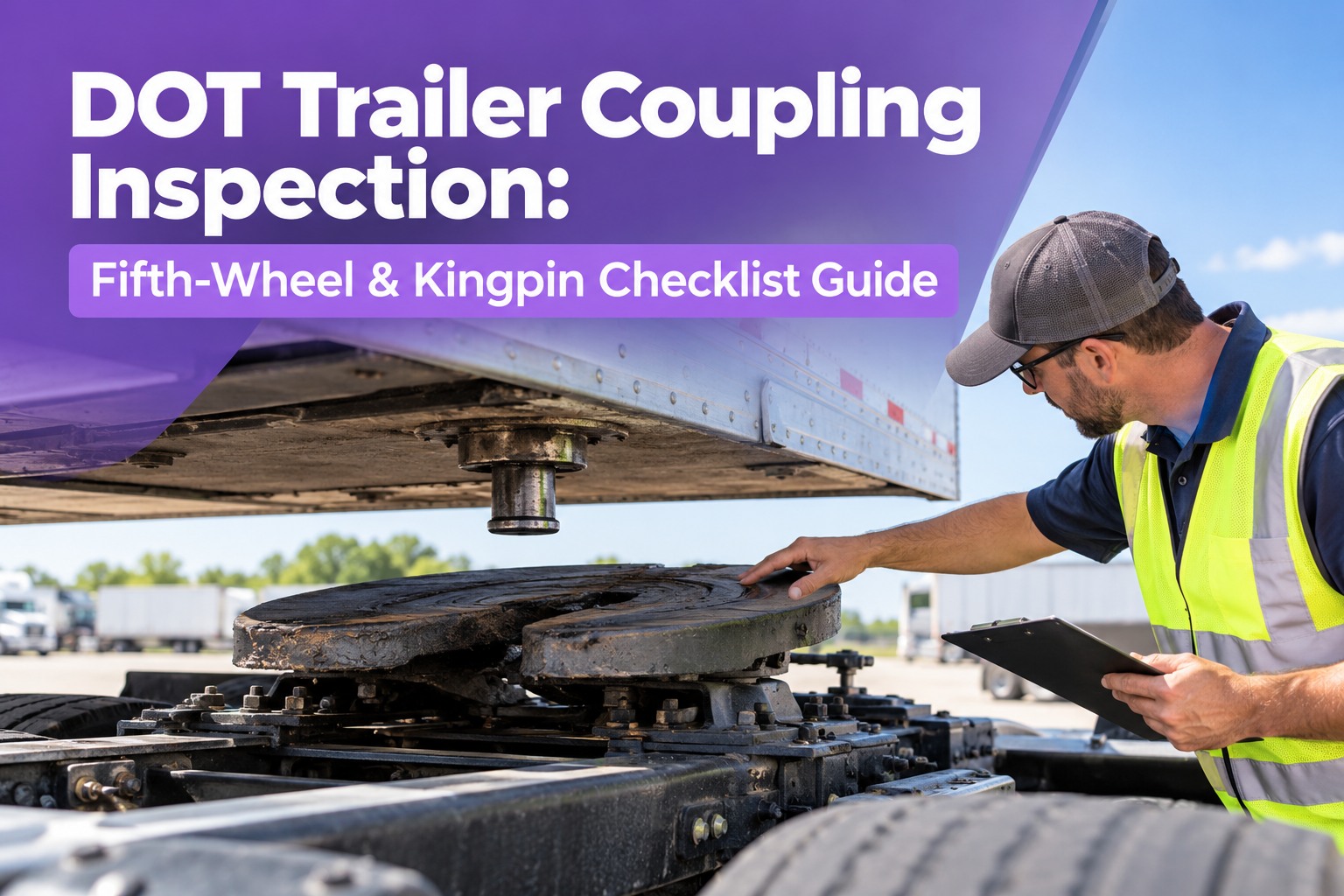
DOT Trailer Coupling Inspection: Fifth-Wheel & Kingpin Checklist Guide.
The fifth wheel and kingpin are the single point keeping a loaded trailer behind the tractor, and a defect in them can be invisible right up to the moment of separation. A proper inspection catches the worn jaw, the hairline plate crack, the loose mounting bolt before the road does. Truck Inspection & Maintenance Management Software runs that inspection as a guided checklist and turns any failed item into a graded work order, tied to the unit.
4-hour first response, guaranteed — a coupling defect acknowledged, graded, and assigned
Look, don't assumeconfirm jaws around the shank, not the head
Tug test supplementsit never replaces the under-trailer look
396.11 appliesdrivers must report coupling defects
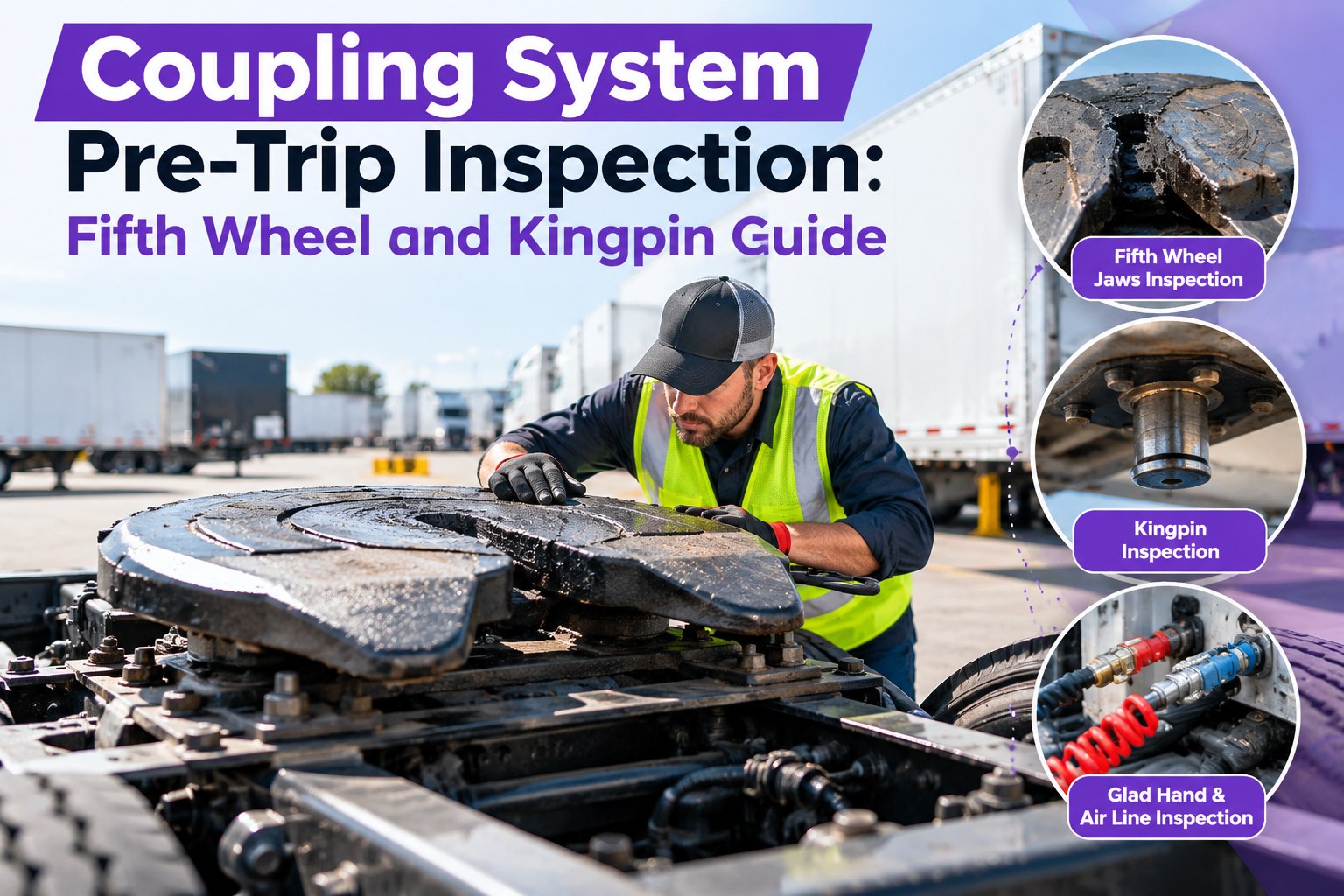
The Fifth-Wheel & Kingpin Inspection Checklist
Work the coupling zone by zone. Every item here is a go/no-go — a yes on all of them is a safe coupling, and a single no is a defect that gets reported, not driven. Always inspect against the manufacturer's limits and your fleet's procedure.
FWFifth-wheel plate & throat
No cracks in the plateInspect the top plate and throat for cracks in the parent metal — grease can hide a hairline, so clean and look.
No gap between platesThe fifth-wheel surface sits flush against the trailer plate — any visible space between the two halves is a defect.
No excessive up-and-down movementMinimal play between the upper and lower halves; separation or lift between them signals wear.
LJLocking jaws & mechanism
Jaws fully closed on the shankLook under the trailer and confirm the jaws wrap the kingpin shank, not the head, with no partial hook.
Lock spans the full throatThe lock extends all the way across the throat; a bent operating lever that stops it short is a failure.
Release handle seated & secondary lock engagedThe handle is in the closed position and the secondary lock is behind its latch — not just resting near it.
No missing, broken, or deformed partsNothing in the locking mechanism is cracked or bent enough to let the kingpin sit loose.
KPKingpin
No wear past the manufacturer limitGauge the kingpin — check the neck and shank for jaw-contact wear or extruded metal against the maker's limits.
Proper engagement, no play by handThe kingpin seats fully and does not move by hand in any direction once coupled.
No improper weld repairNo signs of poor welds or heat-affected cracking from a past kingpin repair.
MPMounting & pivot
Mounting bolts present & tightAll fasteners of the right size and grade are in place and secure — none missing or loose.
No cracks in mounting angle or weldsThe mounting angle iron, brackets, and their welds are free of cracks.
Pivot pins secure, stops in placePivot brackets don't move excessively, pins are secure, and the fore-and-aft stops are present.
LBLubrication
Top plate & locks greased, not contaminatedThe plate, locks, and bracket points are lubricated — but not caked with dirty grease that hides cracks or blocks the lock.
The CVSA Out-of-Service Limits
These are the hard thresholds. Hit any one and the vehicle is placed out of service on the spot — no judgment call, no grace. Know them cold, because an officer does.
20%
Plate crackA crack extending more than 20% across the fifth-wheel metal.
1/8"
Crack or corrosion gapA crack or corrosion gap of at least one-eighth of an inch.
1/2"
Upper-to-lower movementRelative movement between the upper and lower halves above one-half inch.
By hand
Movable kingpinA kingpin that can be moved by hand in any direction.
How to Actually Check It
The checklist tells you what; this is the method that catches the defects a quick glance misses. The order matters — the visual comes first, and nothing substitutes for it.
1
Get under and lookCrouch at the coupling and confirm the jaws are closed around the kingpin shank with no gap between the plates. This is the check that catches a false coupling.
2
Confirm the lock indicatorsVerify the handle is seated, the lock spans the throat, and the secondary lock is engaged behind its latch.
3
Clean and inspect for cracksWipe away thick grease so a hairline crack or deformation can't hide, and check the plate, throat, and mounting.
4
Tug test lastWith trailer brakes locked and landing gear slightly raised, pull forward. It confirms the lock holds — but it supplements the visual, never replaces it.
The Defects That Cause Separations
Nearly every coupling failure traces to one of these — and most are invisible unless you look for them directly.
✕
High-and-dry couplingThe trailer sat too high, so the kingpin rode over the closed jaws instead of seating — the plates never fully met.
✕
Partially hooked jawThe jaw caught the kingpin only partway and can unhook under vibration and road loads.
✕
Worn jaws or kingpinCumulative wear leaves too much slack, so the lock no longer holds the pin securely.
✕
Loose or missing mounting boltsThe whole fifth wheel can shift on the frame when fasteners fail or go missing.
✕
Adjusting to mask kingpin wearTightening the fifth wheel to hide a worn kingpin covers the defect instead of fixing it.
From Checked to Fixed, on One Record
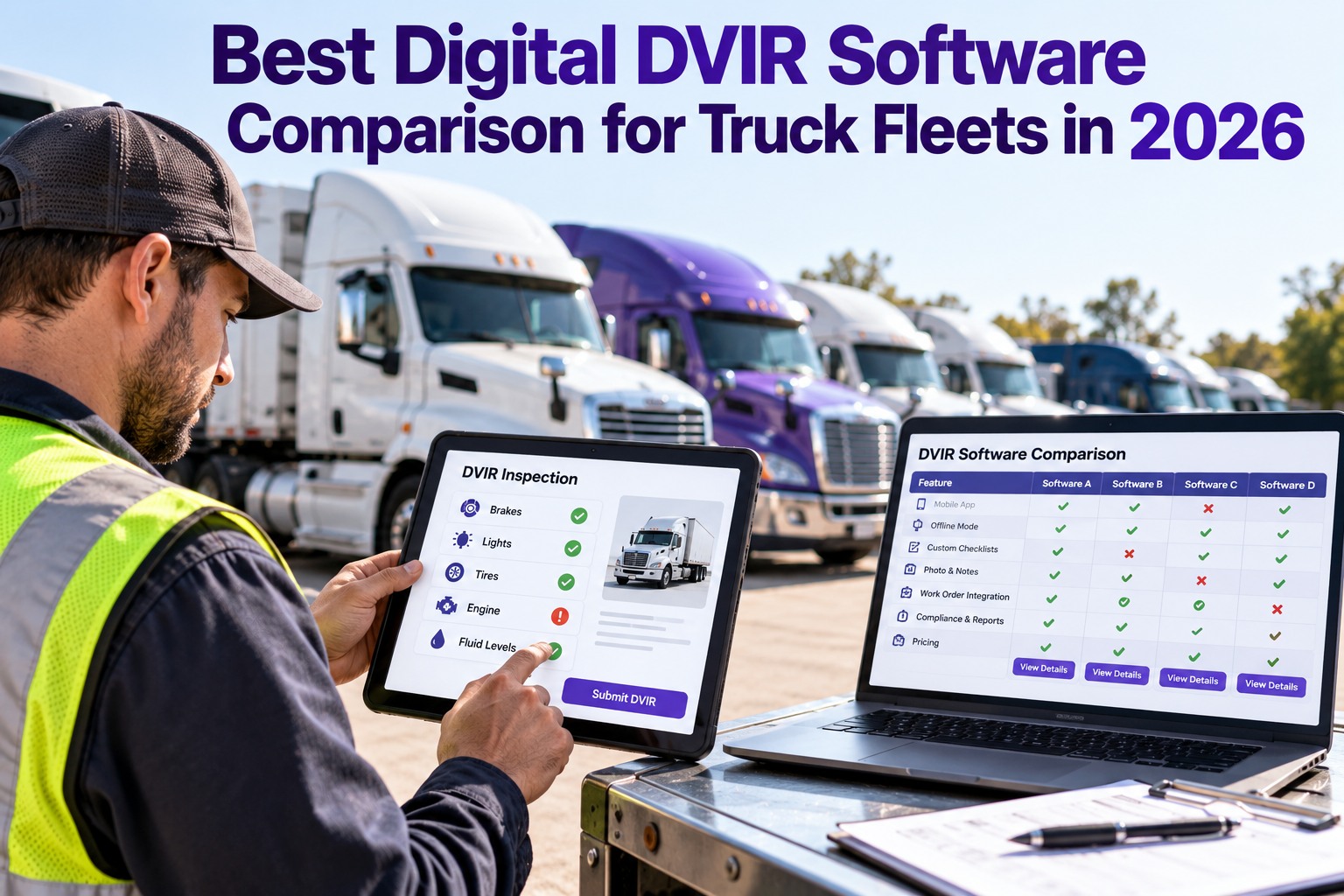
A coupling inspection is only worth as much as what happens to a defect it finds. Truck Inspection & Maintenance Management Software runs the fifth-wheel and kingpin checklist on the driver's phone, captures a photo of the issue, and routes any failed item into a graded work order against the unit — with the inspection and repair kept on one record for your compliance file. When a defect is found, the first response is guaranteed within four hours.
Service Cadence That Keeps It Safe
Inspection catches what's wrong today; a service schedule keeps the coupling from getting there. These are the rhythms that matter.
Every trip
Pre-trip coupling checkThe under-trailer visual and lock confirmation before the truck rolls — every driver, every time.
Each coupling
LubricationKeep the top plate, locks, and bracket points greased; a dry fifth wheel accelerates jaw and kingpin wear.
3 mo / 30k mi
Inspect & adjustA deeper inspection and adjustment of the fifth wheel on the manufacturer's interval — JOST cites roughly every three months or 30,000 miles.
How Truck Inspection & Maintenance Software Helps
The coupling is checked by a person; the software makes sure the check is complete, the defect goes somewhere, and the record is kept.
Guided coupling checklistThe fifth-wheel and kingpin items run in order on the driver's phone, so no zone gets skipped.
Defect becomes a work orderA failed item routes to a graded work order against the unit — the squawk becomes a tracked repair.
Photo on the defectA picture of the crack, worn jaw, or loose bolt is captured as evidence on the record.
Per-unit coupling historyEvery inspection and repair stays tied to the truck, building a full coupling history.
Service on scheduleLubrication and the periodic inspect-and-adjust are scheduled so the cadence doesn't slip.
Records for the fileThe DVIR and repair are retained and produced on demand for a 396.11 compliance check.
Frequently Asked Questions
What is checked in a fifth-wheel and kingpin inspection?
Five zones. The fifth-wheel plate and throat for cracks and gaps; the locking jaws and mechanism to confirm the jaws close fully on the kingpin shank and the lock spans the throat; the kingpin for wear, proper engagement, and no play by hand; the mounting and pivot for tight bolts, crack-free angle iron, and secure pins and stops; and lubrication that's present but not caked with grease that hides defects. The single most important step is getting under the trailer to confirm the jaws caught the shank and not the head — that visual check is what catches a false coupling.
Start free and run the checklist as a guided inspection.
What puts a fifth wheel out of service?
The CVSA out-of-service thresholds are specific: a crack extending more than 20% across the fifth-wheel metal, a crack or corrosion gap of at least one-eighth of an inch, relative movement between the upper and lower halves above one-half inch, or a kingpin that can be moved by hand in any direction. Any one of these places the vehicle out of service immediately — there's no judgment call involved. Because the limits are exact, catching wear and cracks well before they reach these thresholds is the whole point of a disciplined inspection routine.
Is a tug test enough to confirm a safe coupling?
No. A tug test — pulling forward with the trailer brakes locked and landing gear slightly raised — confirms the lock is holding, but it supplements the visual inspection and never replaces it. A partially hooked jaw or a high coupling can sometimes pass a tug test and still separate later under road vibration. The reliable confirmation is getting under the trailer and seeing the jaws closed around the kingpin shank with no gap between the plates and the locks fully engaged. Relying on the tug test, handle position, or air-line connection alone is how false couplings slip through.
How often should a fifth wheel be serviced?
The coupling gets a visual check before every trip and lubrication at each coupling, with a deeper inspection and adjustment on the manufacturer's interval — JOST, for example, recommends inspecting and adjusting roughly every three months or 30,000 miles. Lubrication matters more than it seems: a dry or contaminated fifth wheel accelerates wear on the jaws and kingpin, which is what eventually pushes a coupling toward the out-of-service limits. Following the maker's schedule rather than adjusting the fifth wheel to compensate for wear is what keeps the component genuinely safe.
Do drivers have to report coupling defects?
Yes. Under 49 CFR 396.11, drivers must report any defect that would affect safe operation, and the coupling is squarely covered — slack, clunking, hard coupling, or a handle that won't seat all belong on the DVIR. The report then needs to drive a repair and an acknowledgment that it was corrected, which is the chain auditors check. Keeping that inspection-to-repair record complete and retrievable is where a digital inspection system earns its place, turning a verbal "it felt loose" into a logged defect that's tracked to closure.
Inspect · Catch It · Fix It · Log It
The Connection That Can't Fail — Checked Like It Matters.
A coupling defect hides in plain sight until the trailer comes off. The fifth-wheel and kingpin checklist, the CVSA limits, and the under-trailer look are what keep that from happening — and a logged inspection is what proves it was done. Truck Inspection & Maintenance Management Software runs the check on the phone, routes any defect to a graded work order, and keeps the record for your file, with a guaranteed four-hour first response on anything flagged.
Free to start. Inspect against manufacturer limits and CVSA criteria — not a substitute for a qualified inspection or legal advice.