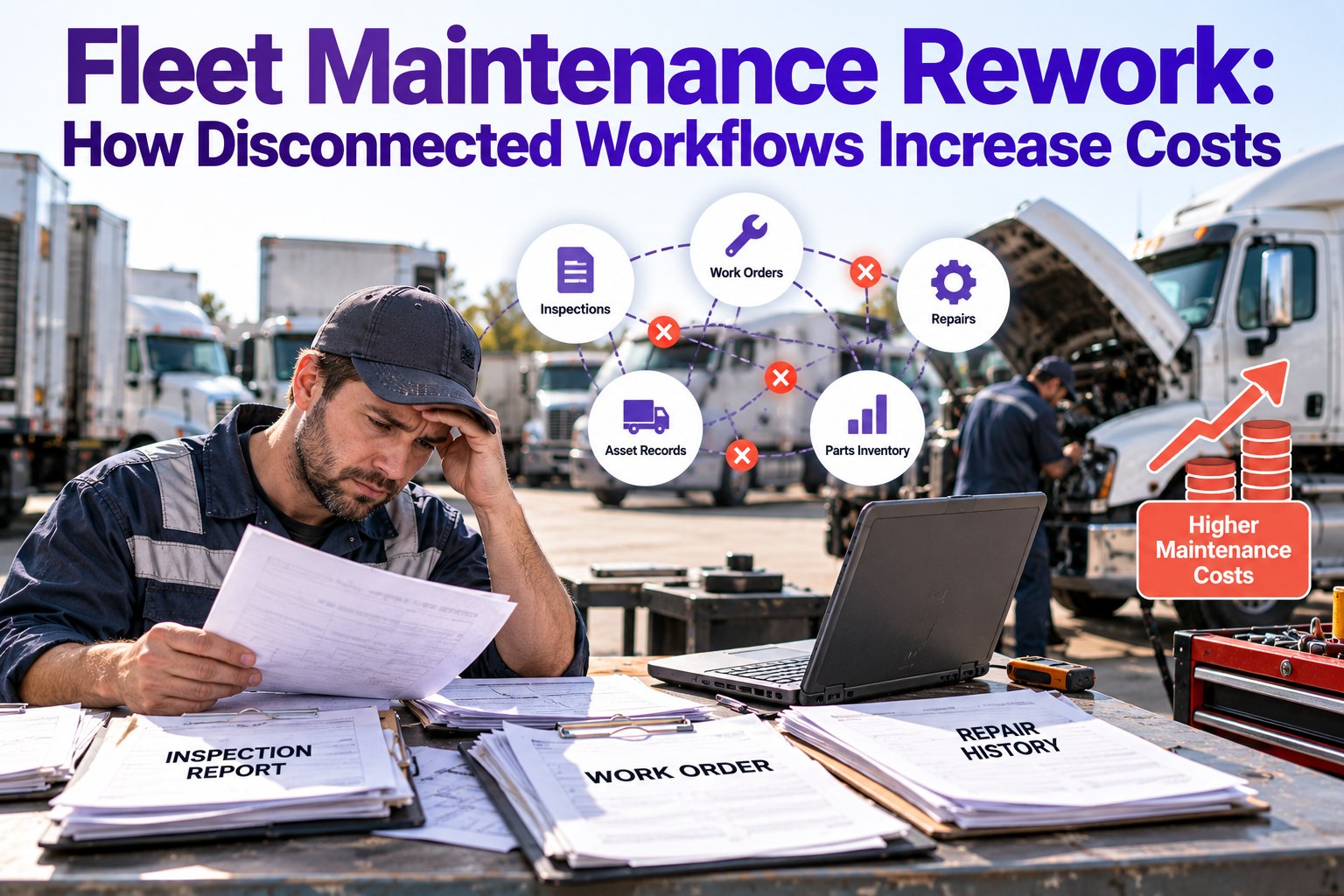
Most fleets don't have a truck problem — they have a workflow problem that only looks like a truck problem. A fault gets flagged out loud and forgotten. A preventive service slips one week, then every week. A work order opens and never closes. The trucks get blamed because the trucks are what break down, but the breakdowns were scheduled by the gaps upstream. This is a self-check: twelve signs your maintenance workflow is quietly costing you, a quick score, and how to close each gap. Start free and put the whole loop on one screen with TIM.
Top 12 Signs of Poor Fleet Maintenance Workflow and How to Fix Them.
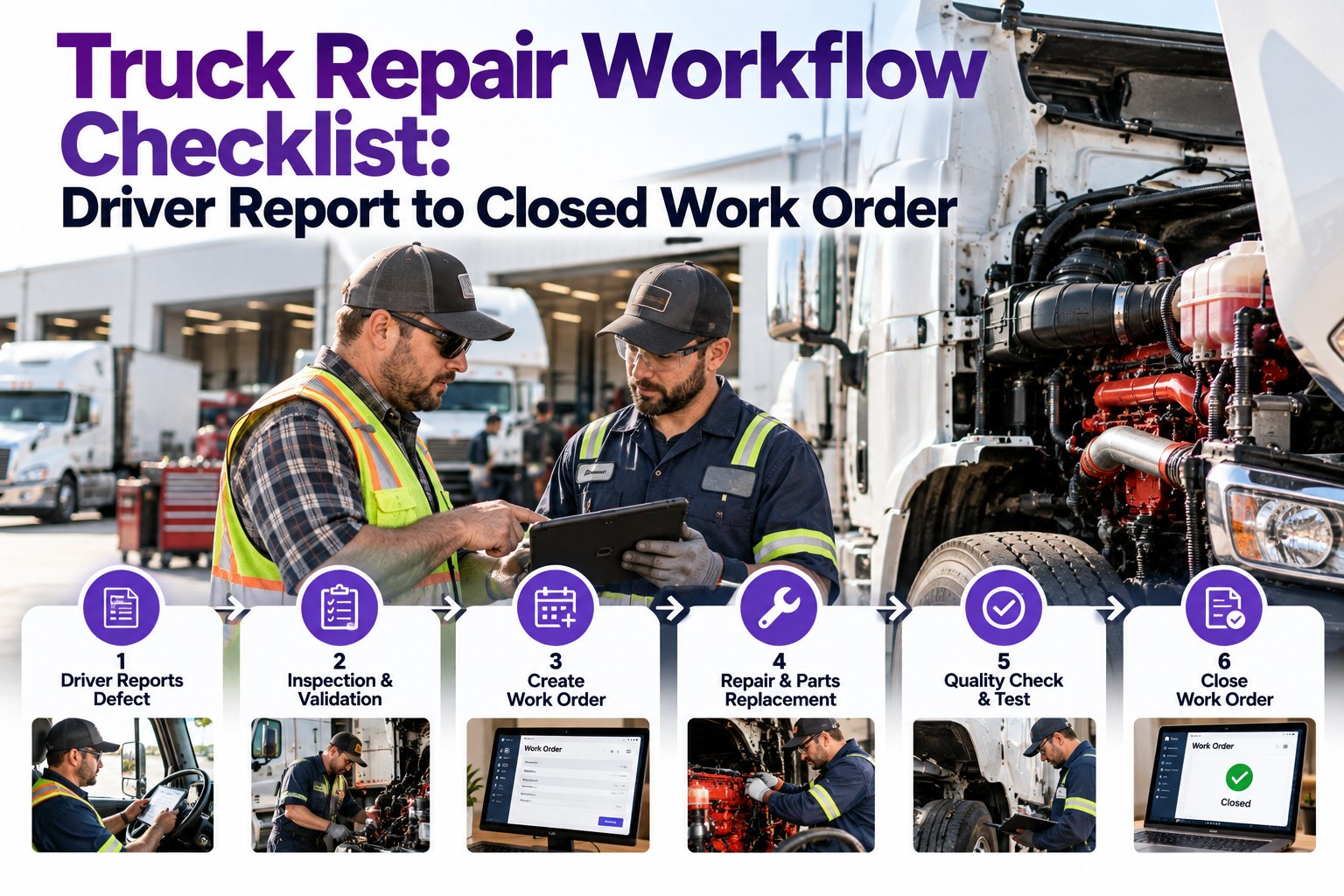
When defects live on clipboards, intervals live in spreadsheets, and overdue work lives in someone's head, breakdowns aren't bad luck — they're the schedule you didn't know you had. Truck Inspection & Maintenance Management Software (TIM) runs one connected loop: inspection and DVIR, to graded defect, to assigned work order, to the next preventive service — so nothing you catch gets lost before it's fixed.
How to Use This Self-Check
Read each sign and tap the box if it describes your operation today. There's no judgment in the count — it's a map of where the workflow leaks, grouped by where in the loop the gap sits. Your score waits at the bottom, and the fixes right after it.
Read Your Score
Count the boxes you ticked — it's a guide to how much of your workflow runs on memory instead of a system.
How to Fix the 12 Signs
Group the fixes the way the signs group. Each cluster has a single move that closes all three of its gaps — and every one of them is a step in the same connected loop. Contact our team to map these fixes to your fleet.
Put every inspection and DVIR item into one system, so a flagged fault becomes a logged defect the moment a driver taps it — nothing survives only in memory. Each defect links to its work order and history, so a repeat fault is obvious and gets fixed properly the second time, and overdue items sit on one board instead of three.
Move a graded defect straight into an assigned work order so detection and action aren't separated by a clipboard. Track open-versus-closed at a glance to catch a growing backlog early, and tie parts to the job so the truck isn't torn down before the shop knows what it needs.
Schedule preventive maintenance by mileage, engine hours, or calendar against each asset's real usage, and let the system escalate a service before it slips. The schedule gets set by the plan, not by the next breakdown — which is how a reactive shop, where repairs cost three to nine times more, becomes a planned one.
Keep cost and repair history per vehicle and inspection due dates in plain sight, so a problem asset, a climbing downtime trend, or a lapsing compliance date surfaces while you can still act. The signals that normally show up on an invoice or a violation show up on a board first.
The Signs Differ. The Root Cause Rarely Does.
Eleven of these twelve problems trace back to the same thing: a step in the loop that happens off-system, so the next step can't see it. Put inspection, defects, work orders, and preventive service on one connected record and the gaps close together.
What One Connected Loop Replaces
Most of the twelve signs are visibility problems, not effort problems — the work is getting done, but it's scattered where no one can see the whole picture. Here's what TIM puts in its place.
Frequently Asked Questions
What's the most common sign of a broken fleet maintenance workflow?
How do I know if my preventive maintenance compliance is actually bad?
Why do reactive repairs cost so much more than planned ones?
Can I fix these problems without hiring more staff?
Where should I start if several signs apply to us?
Stop Managing the Symptoms. Fix the Loop.
You can keep chasing breakdowns one truck at a time, or you can put inspection, defects, work orders, and preventive service on one connected record and watch most of these signs close together. TIM gives your fleet that single loop — start free and score your own workflow against the twelve signs above.