On a diesel truck, a wrong move costs a part. On an electric one, it can stop your heart. The orange cables in an EV truck can kill instantly — and a powered-down pack can still be lethal, because energy stays stored after the key is off. You can't tell a live circuit from a dead one by looking. The fix is one procedure: shut it down, lock it out, prove it's dead, then work. Start free and make the HV safety steps a logged, required part of every EV job.
EV HV Safety · Shut Down · Lock Out · Verify
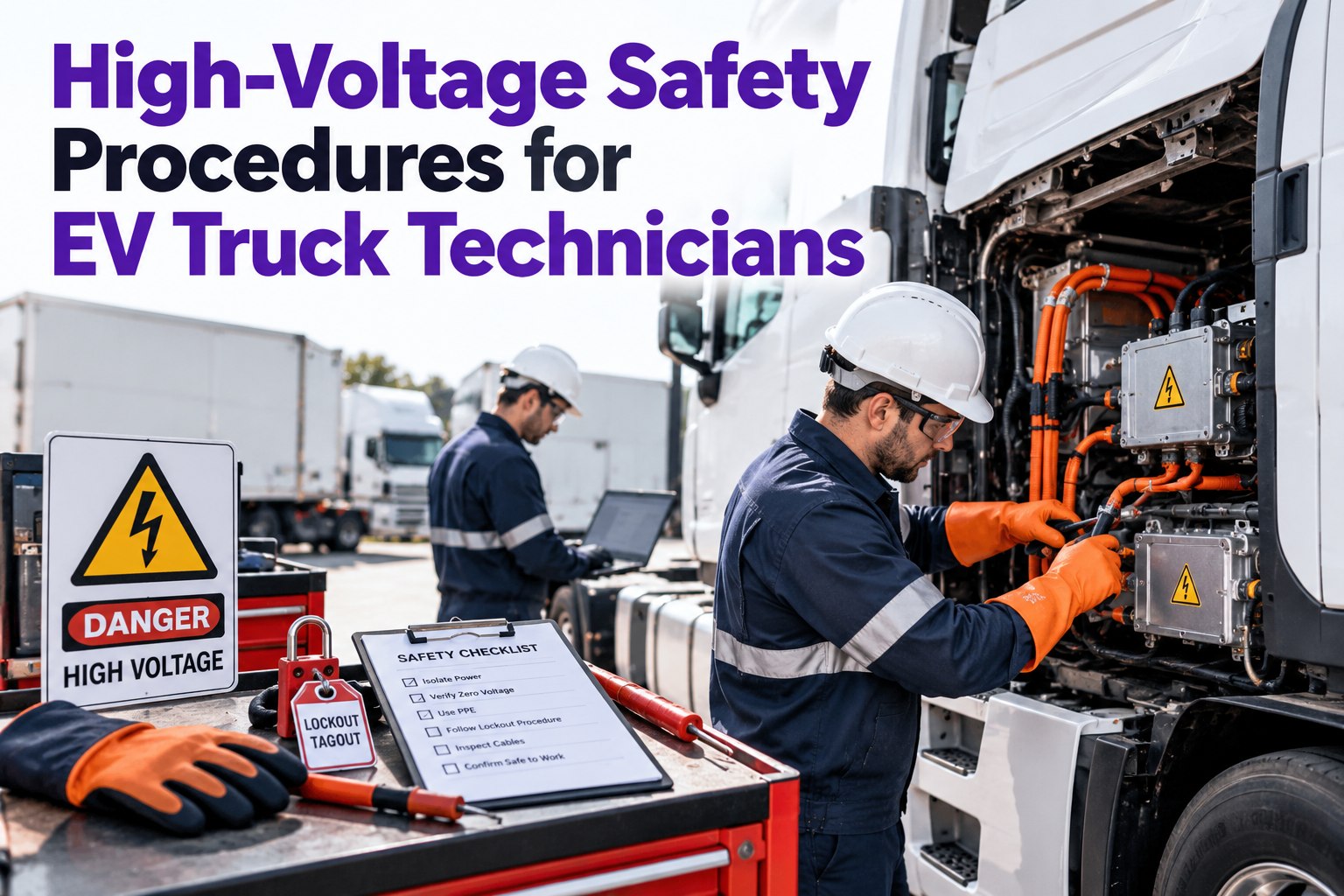
High-Voltage Safety Procedures for EV Truck Technicians.
An EV truck's high-voltage system can hold a lethal charge after shutdown, and nothing on the surface tells you whether a cable is live. Only the procedure makes it safe — done in order, every time, by a qualified technician. Truck Inspection & Maintenance Management Software turns that procedure into a required checklist on the work order: each isolation and zero-energy step logged, tied to the unit, and signed by the tech who did it.
Orange = liveHV cabling is colored orange by convention
Stored energya pack can stay lethal after power-down
Verify, never assumeprove zero energy with a rated meter
What "High Voltage" Means on an EV Truck
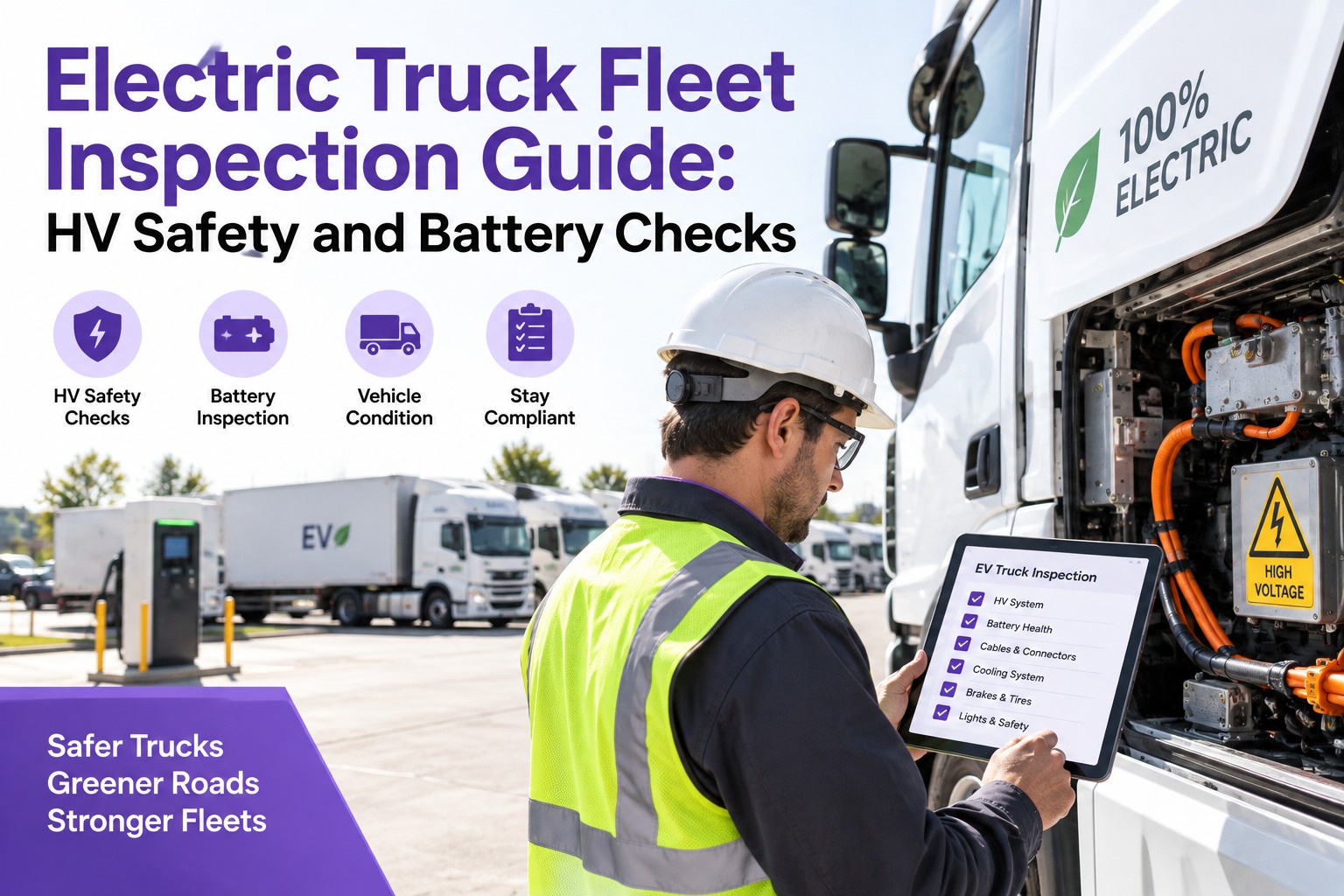
Electric and hybrid truck packs commonly run at 400 volts and up, with many newer platforms at 800 — far above the roughly 60-volt line where a system is treated as high voltage. The industry marks every HV cable and connector in orange, but orange tells you where the danger is, not whether it's live. A disconnected pack can hold a charge in its capacitors for minutes after shutdown — which is exactly why "I turned it off" is never enough.
The De-Energization Sequence
This is the heart of HV safety — a fixed order that takes a live system down to a proven-dead one. Skip or reorder a step and the protection breaks. Always follow the vehicle maker's specific procedure; the sequence below is the shape it takes.
1
Plan and secure the areaPull the OEM shutdown procedure for that exact vehicle, gather your PPE, set a boundary around the work area, and move the vehicle keys well away — at least several meters — so no one powers it up mid-job.
2
Power down the low-voltage sideDisable the 12-volt system and allow the vehicle's safety systems their built-in timeout, so the HV contactors open as the manufacturer intends.
3
Isolate the high-voltage systemOpen the manufacturer-designated HV service disconnect using the correct method and PPE. This is the physical break between the pack and the rest of the truck.
4
Lock it out, tag it outApply an EV lockout device and tag to the isolating point, so the disconnect cannot be closed and the truck cannot be re-energized while anyone is working on it.
5
Observe the wait timeGive the system the manufacturer-specified time to let stored energy in the capacitors bleed down. This wait is not optional and it varies by platform — follow the number the maker gives.
6
Verify zero energy — never skip thisProve the absence of voltage with a rated meter, at the exact test points the manufacturer specifies. This is what turns "should be dead" into "is dead" — the one step that most separates a safe job from a fatal one.
7
Work, then re-energize by the bookOnly now is it safe to work. When finished, follow the OEM re-energizing steps in order, removing the lockout only when the vehicle is clear and ready.
The PPE That Stands Between You and the Current
The procedure assumes you're geared for the moment something goes wrong. None of this is optional, and damaged or expired gear is the same as no gear — inspect it before every use.
Insulated rubber glovesRated for the system's voltage class, worn with leather protector gloves over them. Inspect for damage and air-test before every use.
Arc-rated clothingFlame-resistant, arc-rated layers to protect against an arc flash — the explosive release of energy a short can cause.
Face and eye protectionA face shield and safety glasses guard against arc flash and debris during isolation and testing.
Insulating footwearRated footwear keeps you from becoming the path to ground if a hand contact goes wrong.
Insulated toolsTools rated for HV work, so a slipped wrench doesn't bridge a live connection.
No conductive itemsRings, watches, chains, and metal badges come off before you go near the system. Metal plus voltage is a direct path.
The Four Hazards You're Guarding Against
Every rule above exists because of one of these four. Knowing what each one does is what makes the procedure feel non-negotiable instead of bureaucratic.
Electrical
Shock
Direct contact with a live HV circuit can be instantly fatal. This is the hazard the whole de-energize-and-verify sequence is built to remove.
Electrical
Arc flash
A short across HV can release a burst of heat and light violent enough to burn and injure from a distance — the reason for arc-rated clothing and a face shield.
Electrical
Stored energy
Capacitors hold a charge after power-down. Stranded energy is why the wait time and the zero-energy check exist — the system can bite after it's "off."
Chemical · Thermal
Thermal runaway
A damaged battery can overheat, off-gas toxic and flammable fumes, and ignite with little warning. A pack that's been in a crash or is visibly damaged is a different, higher-risk job.
Make the Procedure Impossible to Skip
The danger isn't that technicians don't know the steps — it's that one gets skipped under time pressure and no one sees it. Truck Inspection & Maintenance Management Software puts the HV sequence on the work order as a required checklist: each isolation, lockout, and zero-energy step confirmed, time-stamped, and signed on the unit's record. The safe way becomes the only way the job closes.
The Mistakes That Get People Hurt
Nearly every HV incident traces back to a shortcut. These are the ones to design out of your shop entirely.
✕
Assuming off means deadTreating a powered-down truck as safe without the meter check. The capacitors don't care that the key is out.
✕
Skipping the lockoutRelying on "everyone knows I'm working on it" instead of a physical lock and tag on the disconnect.
✕
Using the wrong meterVerifying with a meter not rated for the system's voltage — a false reading is more dangerous than no reading.
✕
Working damaged glovesSkipping the pre-use inspection and air test. A pinhole in a glove is invisible and lethal.
✕
Untrained hands on the packLetting a tech without HV qualification work the system because the shop was short-staffed that day.
Who Is Allowed to Do This Work
HV work is not a job anyone in the bay can pick up. It requires specific training and qualification, and the shop carries the duty to prove the person who did it was qualified.
1
Qualified by trainingOnly technicians with recognized high-voltage EV training should isolate, verify, or work the HV system — not general shop staff.
2
Current, not expiredHV qualification has to be kept current. Training from years ago on a different platform isn't the same as being current on this one.
3
On the recordKeep proof of who is qualified and tie it to the HV jobs they sign off — so there's never a question about whether the right person did the work.
How Truck Inspection & Maintenance Software Supports HV Safety
The software doesn't make the system safe — the procedure and a qualified technician do that. What it does is make sure the procedure is followed, logged, and signed by the right person every time.
HV steps as a required checklistThe isolation, lockout, and zero-energy steps appear on the work order and have to be confirmed before the job can close.
Signed and time-stampedEach safety step is tied to the technician who completed it and when — a real record, not a memory.
Qualification on fileTechnician HV training records are kept and linked to the jobs they sign, so only qualified hands close HV work.
Per-unit safety historyEvery HV service on a truck stays on its record, building a full safety and maintenance history for the unit.
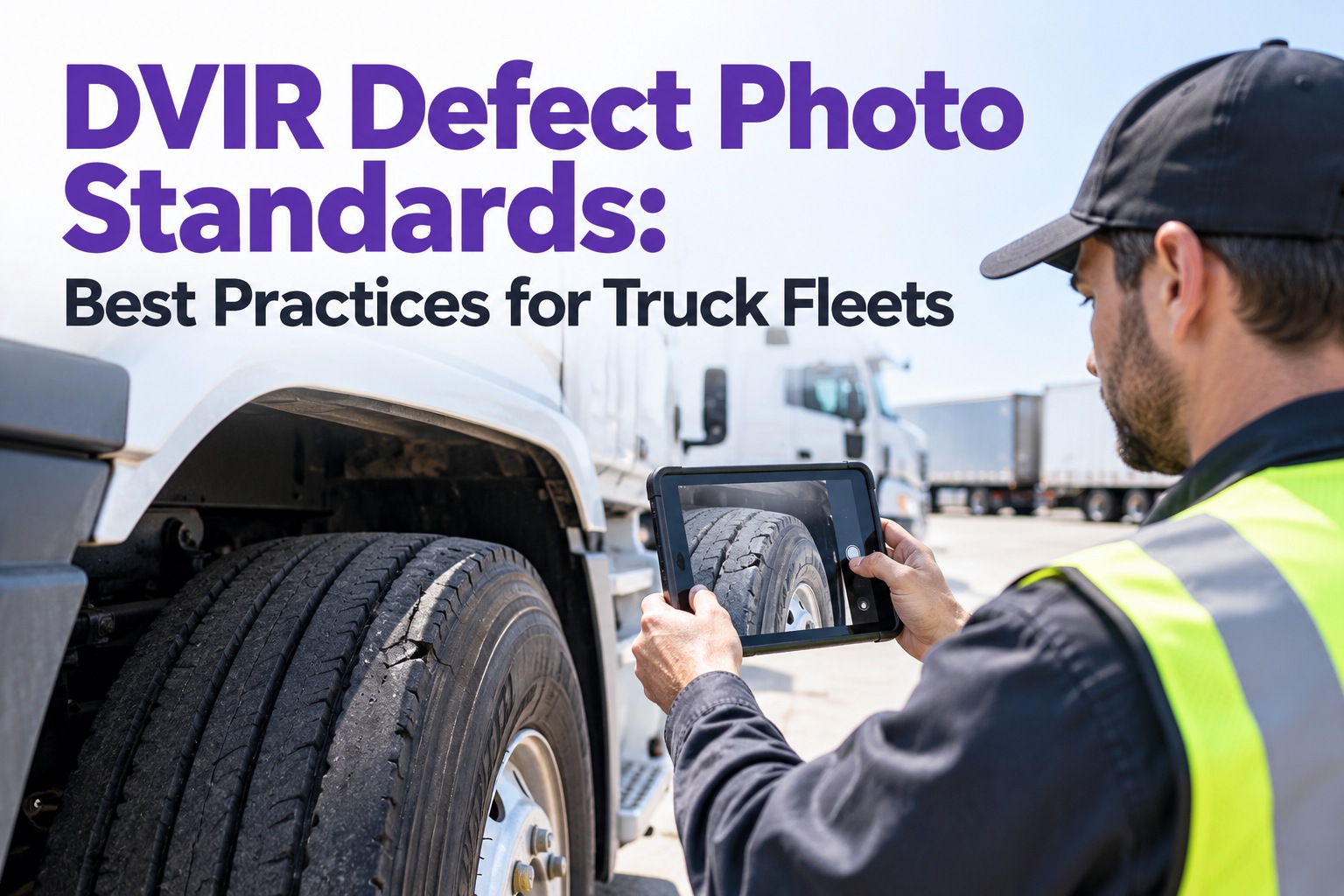
Photos on the recordLockout applied, meter reading, damaged components — captured as evidence against the job.
Produced on demandThe safety record exports cleanly when a manager, auditor, or insurer asks what was done and by whom.
Frequently Asked Questions
What voltage counts as "high voltage" on an EV truck?
In automotive terms, a system is generally treated as high voltage above roughly 60 volts DC — far below what EV trucks actually carry. Electric and hybrid truck packs commonly operate at 400 volts and up, with many newer platforms running at 800 volts. At those levels, contact can be instantly fatal, which is why every high-voltage cable and connector is marked in orange and why the full de-energization and verification procedure applies before any work. Always treat an orange cable as live until you have proven otherwise with a properly rated meter.
Start free and keep the HV procedure on every EV work order.
Is a powered-down EV safe to work on?
No — not on power-down alone. The high-voltage system can hold a lethal charge in its capacitors for minutes after the vehicle is shut off, so "the key is out" tells you nothing about whether a circuit is live. The system is only safe to touch after you've isolated it at the manufacturer's service disconnect, locked and tagged it out, waited the manufacturer-specified time for stored energy to bleed down, and verified zero energy with a rated meter at the specified test points. Until that verification is done and reads zero, every HV component is treated as live.
What PPE is required for EV high-voltage work?
At minimum: insulated rubber gloves rated for the system's voltage class, worn with leather protector gloves and inspected before every use; arc-rated flame-resistant clothing; a face shield and eye protection; insulating footwear; and tools rated for high-voltage work. All conductive personal items — rings, watches, chains — come off before going near the system. Damaged or expired gear counts as no gear, so the pre-use inspection and air test on gloves is part of the routine, not an extra. The exact ratings follow the voltage class of the system you're working on.
Why is the "verify zero energy" step so important?
Because it's the only step that confirms reality instead of assuming it. Every step before it — shutdown, isolation, lockout, wait time — is designed to make the system dead, but none of them proves it. A contactor can stick, a disconnect can fail, a capacitor can hold charge longer than expected. Measuring zero energy with a meter rated for the system, at the manufacturer's test points, is what turns "it should be de-energized" into "it is." It's the single step most directly between a technician and electrocution, which is why it is never skipped, even when every prior step went perfectly.
Can any technician work on an EV high-voltage system?
No. HV work requires specific, current high-voltage EV training, and general shop technicians should not isolate, verify, or work the HV system without it. Beyond the safety case, the shop carries the responsibility to show the person who performed the work was qualified to do it. That means keeping each technician's HV training record current and tying it to the jobs they sign off. Letting an unqualified tech work the pack because the shop was short-handed is one of the most dangerous shortcuts there is, and one of the easiest to prevent with a clear qualification record.
Shut Down · Lock Out · Verify · Log It
The Procedure Is the Safety. Make Sure It Happens Every Time.
HV work is safe when a qualified technician follows the sequence, and dangerous the moment a step is skipped. Truck Inspection & Maintenance Management Software puts the shut-down, lockout, and zero-energy steps on the work order as a required, signed checklist, keeps each tech's HV qualification on file, and holds the safety record per unit — so the right way becomes the only way it closes.
Free to start. Not a substitute for certified HV training or the vehicle maker's safety procedures.