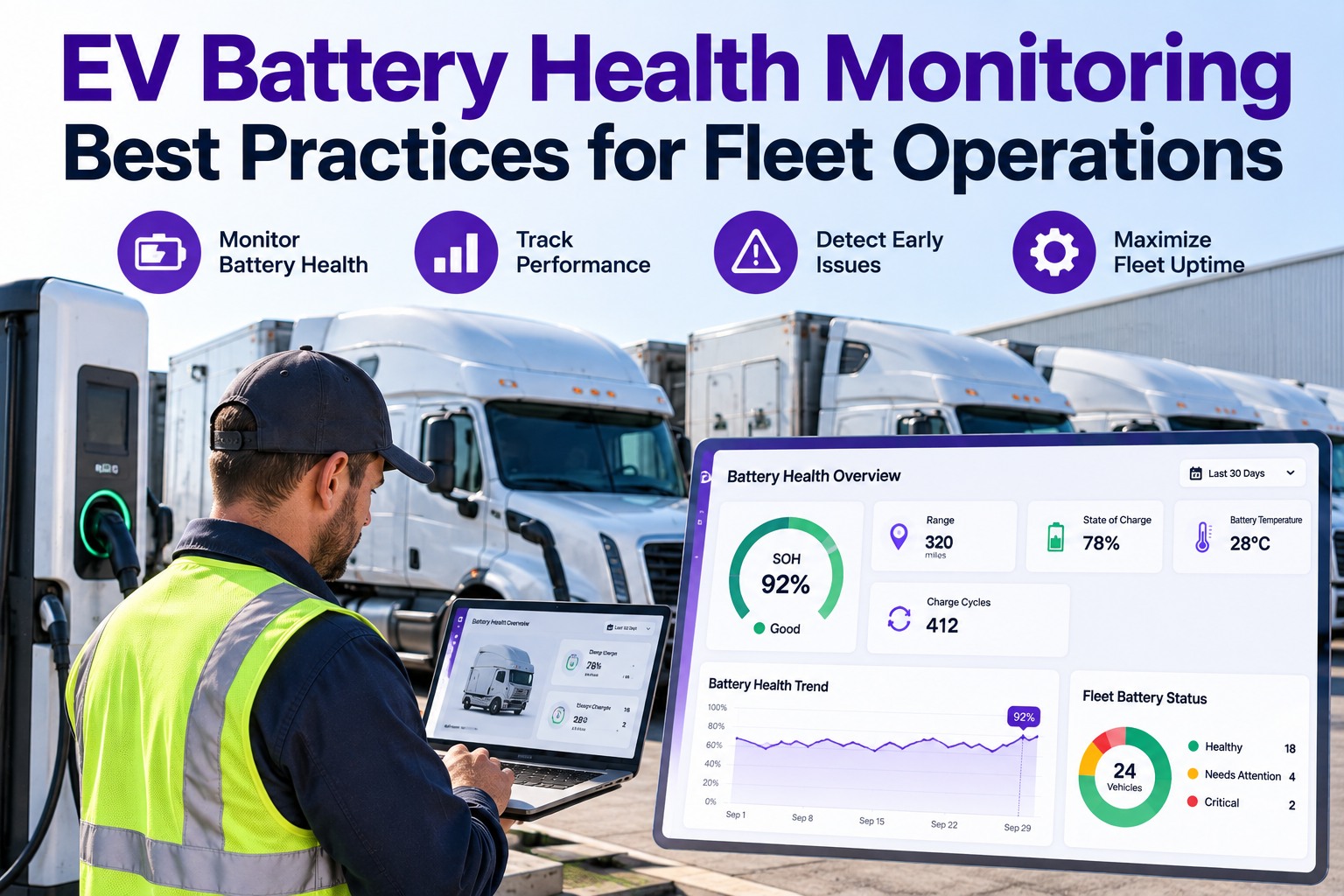
Two EVs can roll off the same assembly line, rack up identical mileage, and end up with completely different battery health two years later — because mileage was never the variable that mattered. Charging habits, thermal exposure, and how deep each battery gets discharged before a recharge write a different aging story for every truck, and a fleet that isn't watching state of health is finding out about the damage only when a route suddenly comes up short on range. Start free and track battery state of health across your EV fleet automatically.
State of Health · Charging Behavior · Thermal Stress
Mileage Doesn't Age an EV Battery. Charging Habits Do.
Two trucks with identical odometers can have very different battery health depending on how they were charged and driven — and that gap shows up as range loss, resale value, or a safety incident long before anyone thought to check. Truck Inspection & Maintenance Management Software pulls state-of-health, charging cycle counts, and thermal event data straight from your EVs' battery management systems, so degradation shows up as a trend on a dashboard instead of a surprise on a route.
State of Health — The One Number That Drives Everything Else
State of health (SoH) is the ratio of a battery's current maximum capacity to its original rated capacity, and it's the number range, resale value, and safety all trace back to. A large-scale study of roughly 50,000 real-world SoH readings found a reassuring median of around 96%, with a notable degradation tipping point emerging near 90,000 km of use — meaning the thermal and charging habits built in the first phase of a truck's life matter more than people assume.
100%New Battery
→
~96%Median Fleet SoH
→
85%Watch Threshold
Five Causes of Degradation a Fleet Can Actually Control
Most EV battery degradation isn't random chemistry — it's the predictable outcome of charging and operating habits, and all five of the biggest contributors are within a fleet's control.
1Excessive DC Fast ChargingAccelerates degradation meaningfully faster than Level 1 or Level 2 charging over the same number of cycles
2Charging Above 80% RoutinelyRegularly topping off to 100% adds cumulative stress that a fleet charging to 80% largely avoids
3Thermal EventsHeat stress from fast charging beyond the battery's thermal management threshold compounds over time
4High-Speed, Cold-Weather DrivingOperating outside the battery's normal safe range can meaningfully reduce SoH on its own
What the data shows on charging frequency One multi-year telematics study found that vehicles using DC fast charging more than three times a month in hot or cold climates showed noticeably more degradation over four years than vehicles that avoided fast charging almost entirely — a clear, actionable signal that charging policy, not just mileage, is driving the difference.
The Metrics Worth Watching on a Battery Health Dashboard
State of Health TrendTracked over time per vehicle, not just a single snapshot reading
Charging Cycle CountCompared against the manufacturer's expected capacity curve at that cycle count
DC Fast Charge FrequencyFlagged when a vehicle relies on fast charging more than the policy target
Thermal Event LogHeat stress incidents tracked as their own data point, separate from SoH alone
Battery Health You Can See Before It Becomes a Route Problem
Our Truck Inspection & Maintenance Management Software pulls SoH, charging cycle counts, and thermal event logs directly from your EV fleet's battery management systems, flags degradation trending faster than expected, and turns a battery concern into a scheduled work order — not an unplanned range failure.
Frequently Asked Questions
How is battery state of health actually measured?
Does fast charging really damage the battery, or is that overstated?
The thermal stress from repeated DC fast charging is a real and well-documented contributor to accelerated degradation, particularly in hot or cold climates where the battery is already working outside its ideal temperature range. Occasional fast charging isn't the concern — routine, frequent reliance on it is.
Why does battery health matter for resale value, not just daily range?
A used EV buyer increasingly wants to know a vehicle's state of health before purchase, the same way a buyer of a conventional truck wants an engine's maintenance history. A documented SoH trend — showing degradation stayed within expected parameters — supports resale value in a way an undocumented battery simply can't.
At what SoH level should a fleet start planning for battery replacement?
Many fleets treat roughly 85% SoH as a meaningful watch threshold, since performance loss and range variability tend to become more noticeable below that point — though the right number depends on the vehicle's duty cycle and how much range margin the routes actually require.
Contact us to set a replacement-planning threshold for your fleet.
SoH · Charging Cycles · Thermal Events — One Dashboard
Protect the Most Expensive Component in Your Electric Fleet
Our Truck Inspection & Maintenance Management Software monitors battery state of health, charging behavior, and thermal events across your entire EV fleet, flagging degradation while there's still time to act — not after a route comes up short.
No credit card required. Free for up to 3 trucks.