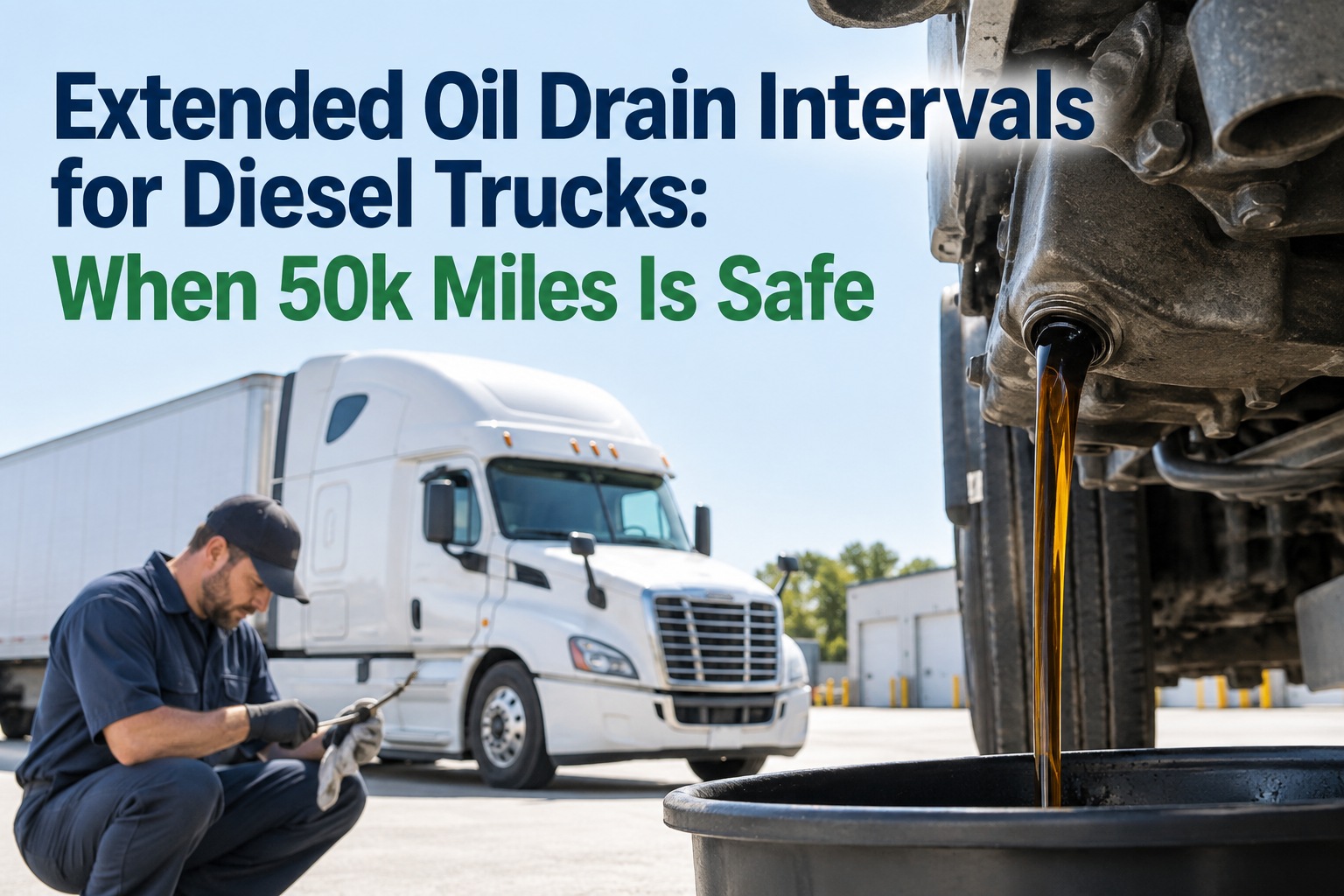
"Rated for 50,000 miles" is printed on a lot of oil jugs. It is not permission to run your trucks that far. A 50K drain interval is something a fleet earns — through the right oil, filtration matched to the interval, and an oil analysis program that proves the oil is still protecting the engine at mile 49,000. Skip any one of those and 50K stops being a savings strategy and becomes a bearing-failure strategy. The good news: fleets that get all three right routinely bank $10,000–$56,000 a year across 20 trucks and extend engine life at the same time. This guide lays out exactly when 50K is safe, the three gates you have to clear, what oil analysis is actually telling you, and the hard-stop numbers that mean "drain now." Start a free trial and schedule sampling and intervals per truck automatically.
When Is a 50,000-Mile Oil Drain Actually Safe?
Extended drains aren't a spec you switch on — they're earned by clearing three gates: the right oil, matched filtration, and oil analysis that proves it. Here's when 50K is safe, and the numbers that say stop.
The Three Gates You Must Clear
Reaching 50K safely isn't one decision — it's three conditions that all have to be true at once. Miss one and the interval isn't extended, it's just overdue.
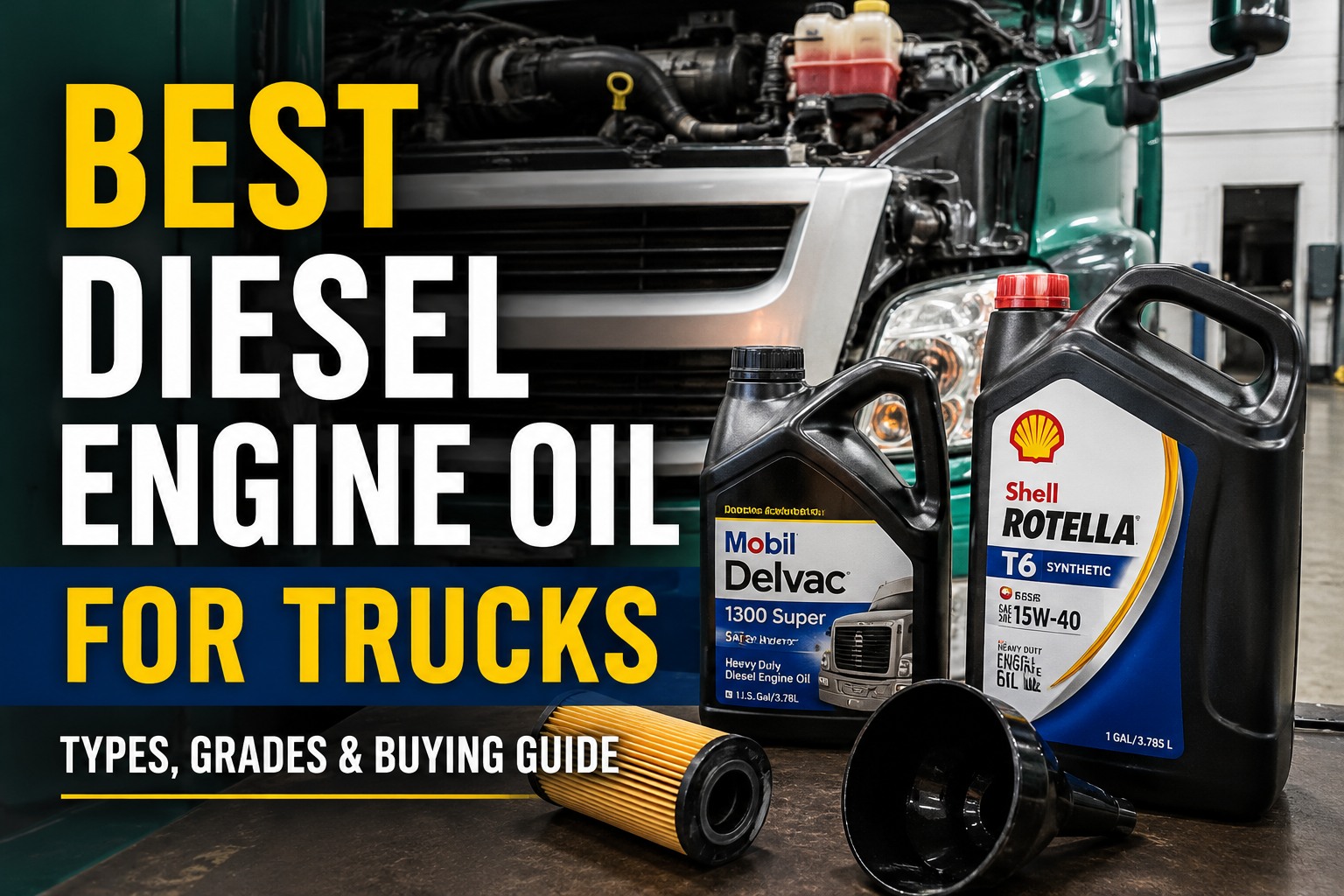
Full-synthetic API CK-4 (or FA-4 where the engine specs it), formulated for extended service, meeting or exceeding your OEM's approval — Cummins, Detroit, Mack/Volvo. Higher TBN buys more acid-neutralizing reserve for the long haul. "Meets requirements" is not "approved" — cross-check the OEM list.
A filter rated for the same distance you're asking the oil to run. Combination full-flow plus bypass filtration is what makes the long numbers reachable on modern engines. A standard filter on a 50K interval loads up and stops protecting long before the oil does.
The gate that makes the other two safe. Consistent used-oil analysis is the only reliable way to confirm the oil is still doing its job — and to catch a developing engine problem before it becomes a failure. No sampling program, no extended drain. Full stop.
The 2026 OEM Interval Reality Check
Before you set 50K as a fleet default, know that the "right" number varies dramatically by engine and fuel economy. These are current published baselines — always confirm against your exact engine and duty cycle.
What the Oil Sample Is Actually Telling You
A single used-oil sample returns six categories of data, each a different part of the story. This is the instrument panel that turns an extended drain from a gamble into a managed decision.
Iron (cylinders/rings), copper (bearings/cooler), aluminum (pistons), chromium, lead. A rising trend flags the failing part before it lets go.
Still in grade? A drop means fuel dilution or shear; a rise means oxidation or soot loading. Either way, actionable.
The oil's remaining alkaline reserve for neutralizing combustion acids. When it runs out, acid attacks metal.
High soot points at the charge-air cooler, exhaust restriction, or low operating temps — and thickens the oil.
Often the first sign of a failing injector. Left alone, it thins the oil and drives bearing wear.
Glycol means coolant intrusion — it strips zinc and spikes wear metals. Caught early on a sample; catastrophic if missed.
Run Every Truck's Interval and Sampling on One System
Truck Inspection & Maintenance gives dispatch, drivers, and the shop a single system for it: a per-engine interval matrix so a Cummins X15 and a Volvo D13 each get the right number, sampling scheduled automatically at every drain, and results tracked as a trend so a rising wear metal or a dropping TBN flags before it's a failure. Oil changes generate work orders, and every sample and service stays as an audit-ready record — no PM or DOT document slips.
The Hard-Stop Numbers: Drain Now, Don't Push
Extended drains run on data, and some readings override the schedule entirely. When a sample shows any of these, the interval is over — regardless of the miles on it.
The oil has lost its alkaline reserve. Drain immediately — do not push the interval another mile.
Drift beyond ±15% of grade means fuel dilution (low) or soot/oxidation (high). Both flag a deeper problem to chase.
Coolant intrusion. Pull the truck off the road and find the source before it destroys the engine.
When 50K Is NOT Safe: The Severe-Duty Disqualifier
Every number above assumes a favorable highway duty cycle. The single biggest mistake in extended drains is applying a linehaul interval to a truck that doesn't earn it.
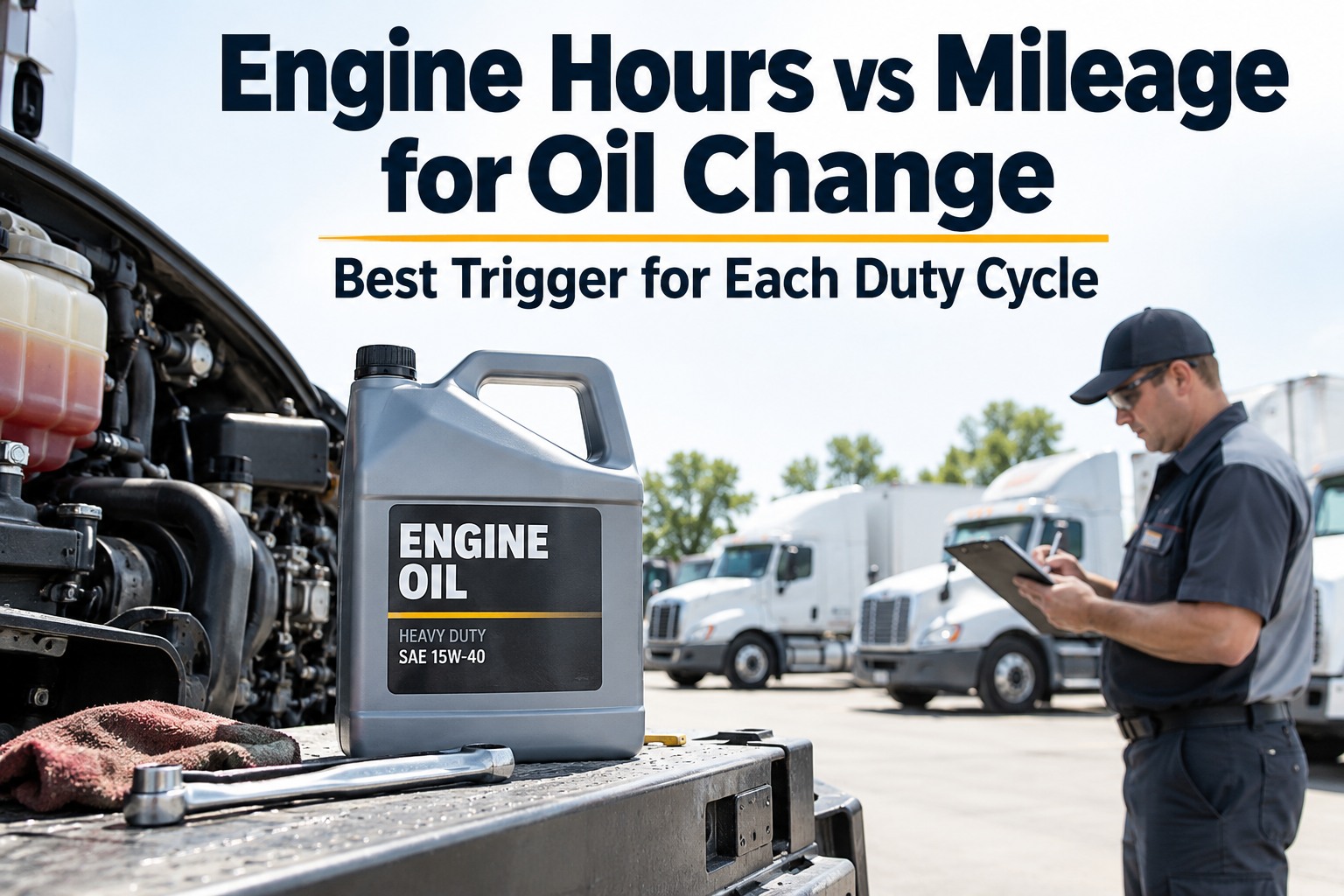
Idling engines run cooler, so the oil never gets hot enough to boil off water and unburned fuel. The result is fuel dilution and acid formation — the exact conditions that shorten oil life. If your trucks idle more than 30–40% of the time, cut the interval by hours, not miles, and let analysis confirm it.
Frequently Asked Questions
Earn Your Extended Drains — Don't Assume Them
Truck Inspection & Maintenance turns extended-drain management into a system: per-engine interval matrices, oil sampling scheduled automatically at every drain, wear-metal and TBN trends that flag before a failure, and audit-ready records for every service. Dispatch, drivers, and the shop work from one platform — so you capture the $10,000–$56,000 in savings without ever guessing on an interval.